Lenderking Accuses Iran of Playing 'Very Detrimental Role' in Yemen

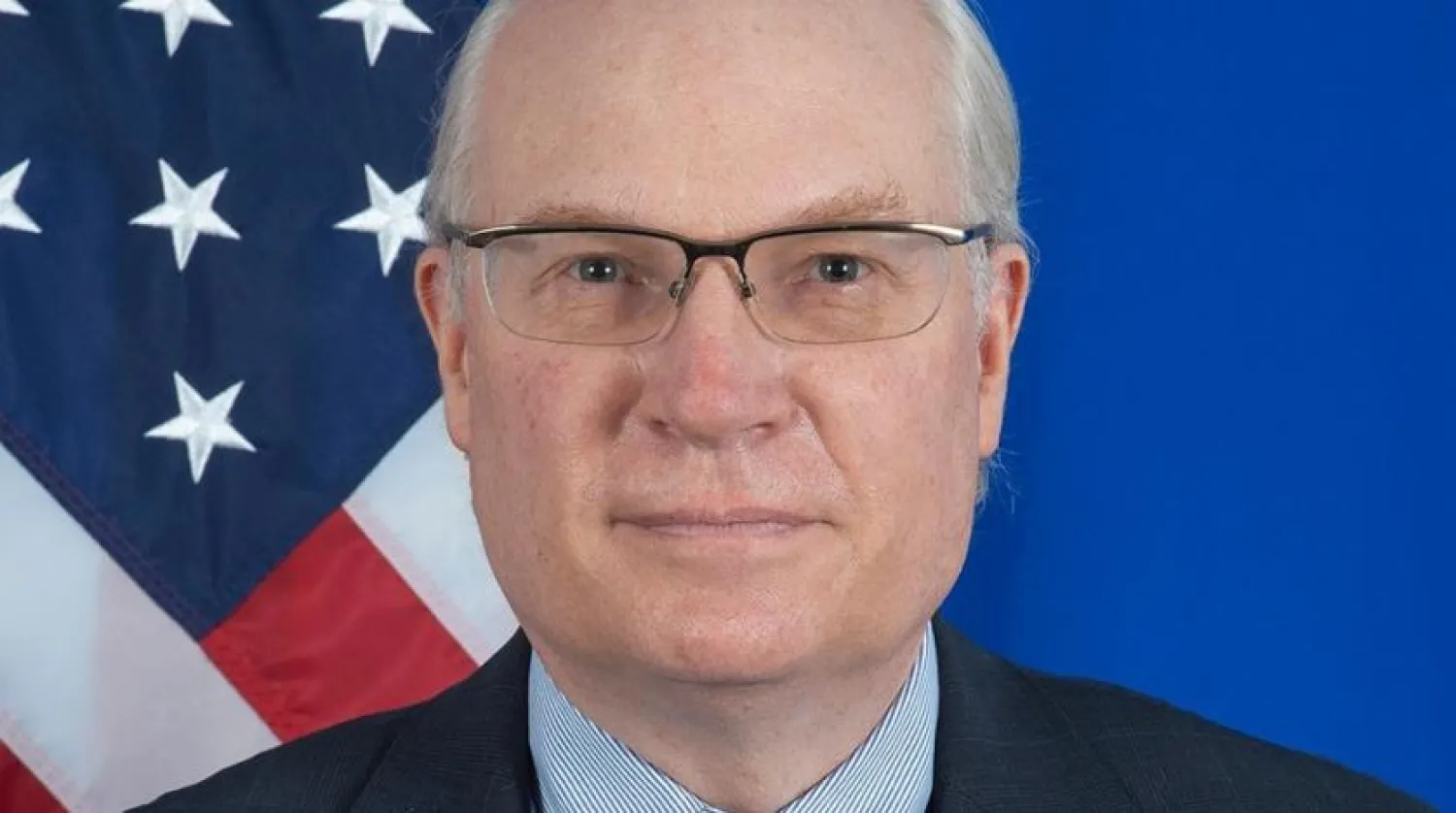
US envoy to Yemen, Tim Lenderking. (US State Department)
TT

Lenderking Accuses Iran of Playing 'Very Detrimental Role' in Yemen

US envoy to Yemen, Tim Lenderking. (US State Department)

The United States' envoy to Yemen, Tim Lenderking, accused Iran of playing a "very detrimental role" in the conflict.

In remarks to The World website, he said Tehran continues to arm, train, equip the Houthi militias.

"They continue to try to smuggle weapons into Yemen in defiance of UN Security Council resolutions. This is very, very troubling, of course," he added.

He noted that just over two years ago the Houthis attacked Saudi Arabia itself, setting its oil platforms aflame.

"So, the key factor that really plays the most detrimental influence, I think, in our view, is Iran," stressed Lenderking.

The envoy believes that the war in Yemen is "basically a civil conflict, but it's been complicated by the presence of outside actors" - a reference to Iran

"And so, one of the first principles that we approach in the United States is to get outside actors out of the conflict," he explained.

"That's a priority for this administration and certainly part of the solution that the president, the secretary of state, has asked me to push on. So, it's a matter of getting enough leverage and pressure on the warring parties to realize that their aims will be better achieved through negotiation rather than continuing to fight, which does lead to the world's worst humanitarian crisis," he stressed.

Asked if he was in contact with the Houthis, Lenderking replied that he was in touch with "all the parties in Yemen."

"There's no restraint placed on my ability to conduct the kind of engagement that I need to do with the Yemeni parties," he went on to say.

Moreover, he remarked that the Houthis are in control of the capital, Sanaa, and other parts of the country, "but they're not in control of the whole country. Nor is it clear that they would be able to or even wish to."

"So, we have to, first of all, deal with the reality that they are a strong military power (...) And for any negotiation that we would support happening, it's clear that the Houthis would enjoy that level of recognition," Lenderking said.

"The Houthis are responsive to US engagement, and I think despite the fact that they don't like everything we do, everything we say, and that's the same for us with regard to them. They do see that we have an important role to play," he added.

"They realize that the US plays an indispensable role," he stated. "There's nobody else who can play the role that we play in terms of guaranteeing any type of ceasefire or any type of political settlement that will come out of this."

The Saudi-led Arab coalition and Washington have accused the Iranian regime of supplying the Houthis with ballistic missiles and armed drones, training members and providing them with military experts.

UN inspectors have often found evidence that rockets and drones used by the Houthis in attacks against Saudi Arabia were manufactured by Iran.

Iran has denied arming the militias.

The US has previously said that the Houthis were an obstacle in resolving the conflict in Yemen.

Their terrorist attacks against the Yemeni people and Saudi Arabia have united the world against them, it added.

It also said the militias were not interested in diplomacy and peace.

Washington has vowed that it will sanction Houthi members and entities, revealing that they have carried out some 375 cross-border attacks against Saudi Arabia in 2021. It renewed its support to its Saudi partners, who are being targeted by terrorist attacks carried out by the Houthis in Yemen.


Tetteh Accuses Libyan Stakeholders of Stalling Political Progress

Special Representative of the Secretary-General for Libya Hanna Tetteh (Getty)
TT

Tetteh Accuses Libyan Stakeholders of Stalling Political Progress

Special Representative of the Secretary-General for Libya Hanna Tetteh (Getty)

Special Representative of the Secretary-General for Libya and Head of the United Nations Support Mission in Libya Hanna Tetteh has accused Libya’s stakeholders of stalling political progress on the UN-backed roadmap intended to lead the country toward national election.

“Four months have elapsed since I first presented the Roadmap to this Council on 21 August and UNSMIL has been engaging Libyan stakeholders with regard to its implementation, which I admit has been quite challenging,” Tetteh told the Security Council in New York on Friday.

She said efforts to advance electoral preparations had failed to meet agreed timelines, despite repeated engagement with Libya’s rival political bodies.

She recalled that committees from the House of Representatives and the High Council of State had agreed in October to reconstitute the High National Elections Commission within two weeks, but “despite multiple efforts and engagements with these institutions, this did not happen.”

Tetteh said a subsequent agreement signed last November, under UN auspices, established a mechanism to select new HNEC board members, with a deadline of December 11 to finalize the process. That deadline also passed without action.

“It is my assessment that the delays are a manifestation of the lack of trust between the two institutions, their own internal divisions, and the inability to overcome their differences and agree on the way forward to resolve the current impasse,” Tetteh said.

She listed the obstacles facing the amendment of the constitutional and legal framework for elections.

Despite the setbacks, Tetteh highlighted the launch of a new UN-facilitated dialogue process held in Libya earlier this month, describing it as a key component of the roadmap.

On December 14 and 15 “UNSMIL launched the inaugural meeting of the Structured Dialogue which is one of the three core components of the Roadmap,” she said. “This is the first process of this magnitude to be held on Libyan soil.”

She said 124 participants included representatives from sovereign institutions, civil society, political parties, academia and cultural and linguistic groups, alongside other state institutions.

The dialogue aimed to define guiding principles for state-building, formulate political and legislative recommendations covering governance, economy, security, and national reconciliation.

On the economy, Tetteh said Libya's persistent financial fragmentation continues to undermine its dinar.

The UN envoy also said that the security environment in Tripoli has stabilized to a certain extent, however the situation remains fragile with sporadic outbreaks of armed clashes in southern Tripoli and elsewhere.

Tetteh commented on UN Security Council Resolution 2796 (2025) of October 31, which extended UNSMIL’s mandate for one year.

She said UNISMIL formed an internal task force to gradually implement key decisions and recommendations, due to limited resources.


Sanaa's GPC Wing Deepens Submission to Houthis

A view of previous meetings of the General People’s Congress wing in Sanaa (local media)
TT

Sanaa's GPC Wing Deepens Submission to Houthis

A view of previous meetings of the General People’s Congress wing in Sanaa (local media)

A wing of Yemen’s General People’s Congress (GPC) operating in areas under Houthi control has moved to consolidate its alignment with the Iran-backed group, dismissing the party’s secretary general, Ghazi Ali al-Ahwal, and replacing Ahmed Ali Saleh, son of the late Yemeni president, with a figure closely associated with the Houthis in the post of deputy party leader.

The party’s General Committee, its political bureau, held a meeting in Sanaa on Thursday, chaired by Sadiq Amin Abu Ras, head of the party wing in Houthi-controlled areas.

The meeting ended with the selection of Abdulaziz bin Habtoor, the former head of the unrecognized Houthi government, as deputy party leader.

The move was widely seen as a direct response to public Houthi demands to remove the former president’s son, coupled with repeated threats to shut down the party and ban its activities.

The decision to sideline Ahmed Ali Saleh came after weeks of mounting pressure by the Houthis on the wing’s leadership.

Measures included tight security restrictions on Abu Ras’s movements and threats to dissolve the party and seize what remained of its political and organizational activity, citing the group’s full control over party headquarters and finances in Sanaa and other areas under its influence.

According to party sources, the Houthis did not stop at imposing the removal, but also demanded the appointment of a loyal figure as deputy leader in an effort to tighten their grip on what remains of the party’s decision-making structures and to prevent any potential communication with party leaders abroad or with rival political forces.

The most controversial decision was the final expulsion of al-Ahwal from party membership, around four months after his arrest by the Houthis on charges of communicating with party leaders outside the country, foremost among them Ahmed Ali Saleh.

At an earlier meeting, the wing had approved the appointment of Yahya al-Raai as secretary general to replace al-Ahwal, in addition to his role as deputy party leader alongside Abu Ras.

The party’s Organizational Oversight Authority submitted a report to the General Committee accusing al-Ahwal of harming party unity and national unity, violating internal regulations, the constitution and national principles.

The leadership used the report to justify the expulsion decision, which it said was taken unanimously, despite criticism that the secretary general remains detained under unlawful conditions without even minimal guarantees of defense or trial.

Houthi grip

Political sources in Sanaa said the appointment of bin Habtoor as deputy party leader was an attempt by the wing’s leadership to ease pressure and avoid a scenario in which the Houthis imposed a more hardline and openly loyal figure, such as Hussein Hazeb, whom the group had been pushing to appoint as first deputy leader or secretary general.

However, the same sources said the move did not prevent the Houthis from pressing ahead with their demand to permanently expel al-Ahwal, underscoring how limited the leadership’s room for maneuver has become and how key decisions are effectively made outside the party’s organizational framework.

In an apparent attempt to justify the moves, the General Committee said the General People’s Congress “has always been and will remain keen to resolve disputes within the framework of national unity,” speaking of visions related to decentralized governance and reducing centralization.

By contrast, senior party figure Jamal al-Humairi, who is based abroad, said the recent decisions were “an extension of a clear trajectory of Houthi pressure,” stressing that they were issued in a “kidnapped political and security reality” where intimidation and blackmail are used to subjugate a long-established party and strip it of its historic leadership.

He said organizational legitimacy “is derived from the grassroots, not from decisions imposed by force,” adding that the decisions “do not represent the party or its base.”

Internal anger

Inside Sanaa, party sources said there was widespread anger and rejection among party cadres over the decision to expel al-Ahwal, as well as criticism of the General Committee meeting for failing to address his detention or demand his release. They also cited frustration over the failure to address the siege imposed on the home of the wing’s leader and other senior figures.

Observers say the treatment of the Sanaa-based wing reflects a broader picture of political life being stifled in Houthi-controlled areas, where a single ideological vision is imposed on parties and only a narrow margin of activity is allowed for organizations that orbit the group.

Since the killing of former president Ali Abdullah Saleh at the end of 2017, the General People’s Congress has been deeply divided. Most of its historic leadership left Houthi-controlled areas without agreeing on a unified leadership abroad, while the Sanaa wing opted to adapt to the reality of Houthi dominance.

Meanwhile, Tareq Saleh formed a political bureau for the National Resistance Forces on the Red Sea coast, which has attracted party figures and members of parliament.

Analysts agree that the latest decisions mark a new stage in the dismantling of the party in Sanaa, turning it into a body stripped of independent will and operating under Houthi conditions, further entrenching the erosion of political pluralism in Yemen.


Lebanon: Return of Residents Dominates Naqoura Ceasefire Mechanism Meeting

Lebanese President Joseph Aoun met with Simon Karam at Baabda Palace. Photo: Lebanese presidency
TT

Lebanon: Return of Residents Dominates Naqoura Ceasefire Mechanism Meeting

Lebanese President Joseph Aoun met with Simon Karam at Baabda Palace. Photo: Lebanese presidency

The committee overseeing the ceasefire between Israel and Lebanon, known as the “mechanism,” convened its 15th meeting in Naqoura, the second to include civilian representatives, with renewed focus on the return of residents to their homes on both sides of the border.

The statement issued after the meeting highlighted the importance of the return of residents on both sides of the border to their homes, and said Lebanese and Israeli representatives reaffirmed their commitment to continue efforts to support stability and work toward a permanent halt to hostilities, according to the US Embassy in Beirut.

Earlier this month, two civilian representatives, one Lebanese and one Israeli, joined the committee’s meetings in the first direct talks between the two countries in decades. The committee is led by the United States and includes representatives from France and the United Nations Interim Force in Lebanon (UNIFIL).

Aoun: Return of residents is the entry point for further talks

Lebanese President Joseph Aoun met with the head of the Lebanese delegation, Simon Karam, after he took part in the meeting in Naqoura.

Aoun stressed that “the priority is the return of residents of the border villages to their towns, homes and land as an entry point to discussing all other details.”

He added that the meeting included a detailed presentation of what the Lebanese army has achieved, supported by documentation. It was agreed that Jan. 7, 2026, would be the date of the next meeting.

Netanyahu’s office: Discussion on boosting economic projects

While the US Embassy said participants focused on strengthening military cooperation between the two sides, the office of Israeli Prime Minister Benjamin Netanyahu said the deputy head of the National Security Council represented Israel at the Naqoura meeting to discuss the disarmament of Hezbollah.

It added that talks also covered ways to boost economic projects to demonstrate the shared interest in removing the Hezbollah threat and ensuring lasting security for residents on both sides of the border.

US Embassy: Political and economic progress is essential

In its statement, the US Embassy in Beirut said military participants in the mechanism meeting “offered operational updates and remained focused on deepening the cooperation” between the two sides “by finding ways to increase coordination.”

“All agreed a strengthened Lebanese Armed Force, the guarantors of security in the South Litani Sector, is critical to success.”

“Civilian participants, in parallel, focused on setting conditions for residents to return safely to their homes, advancing reconstruction, and addressing economic priorities. They underscored that durable political and economic progress is essential to reinforcing security gains and sustaining lasting peace,” the statement added.

The embassy also said “participants reaffirmed that progress on security and political tracks remain mutually reinforcing and essential to ensuring long-term stability and prosperity for both parties. They look forward to the next round of regularly scheduled meetings in 2026.”

Lebanese authorities had approved earlier this month the appointment of former ambassador Simon Karam as a civilian representative to the committee’s meetings, in a move aimed at “warding off the specter of a second war” on Lebanon amid Israeli threats and continued airstrikes that Israel says target Hezbollah positions.

The authorities stressed the technical nature of the talks with Israel, aimed at halting its attacks and securing the withdrawal of its forces from areas they advanced into during the latest war.

Hezbollah described the appointment of a civilian delegate at the time as a “misstep” added to what it called the government’s “sin” of deciding to disarm the group under the ceasefire agreement.

Lebanon is facing mounting pressure from the United States and Israel to accelerate the disarmament of Hezbollah under a plan approved by the government as part of implementing the ceasefire agreement.

The Lebanese army is expected to complete the first phase of the plan in the border area south of the Litani River by the end of the year.