


What Happens to Europe’s Energy If Russia Acts?

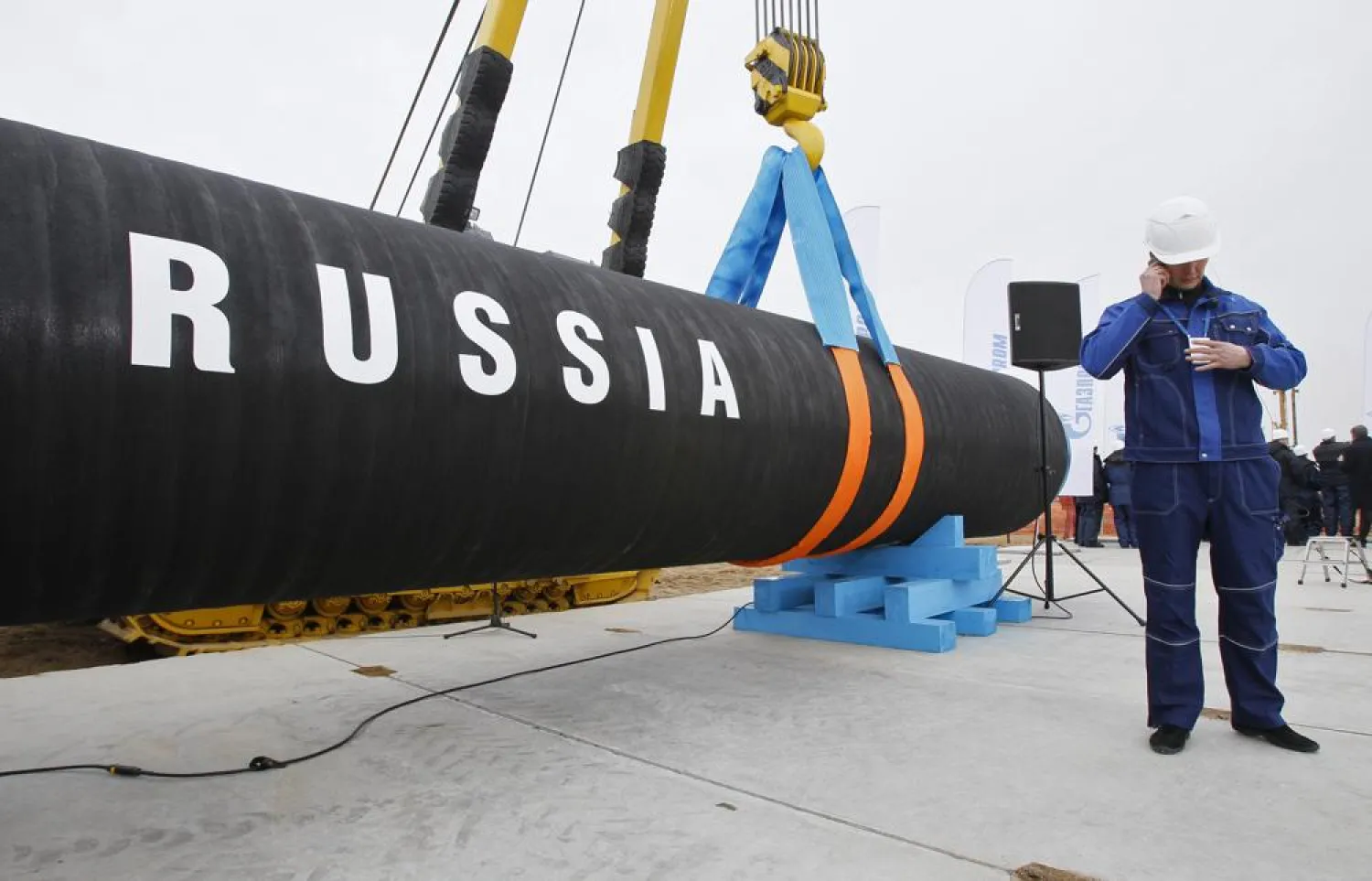
A Russian construction worker speaks on a mobile phone during a ceremony marking the start of Nord Stream pipeline construction in Portovaya Bay some 170 kms (106 miles) north-west from St. Petersburg, Russia on April 9, 2010. (AP)
TT

What Happens to Europe’s Energy If Russia Acts?

A Russian construction worker speaks on a mobile phone during a ceremony marking the start of Nord Stream pipeline construction in Portovaya Bay some 170 kms (106 miles) north-west from St. Petersburg, Russia on April 9, 2010. (AP)

Fears are rising about what would happen to Europe’s energy supply if Russia were to invade Ukraine and then shut off natural gas exports in retaliation for US and European sanctions.

The tensions show the risk of Europe’s reliance on Russia for energy, which supplies about a third of the continent’s natural gas. And Europe’s stockpile is already low. While the US has pledged to help by boosting exports of liquefied natural gas, or LNG, there’s only so much it can produce at once.

It leaves Europe in a potential crisis, with its gas already sapped by a cold winter last year, a summer with little renewable energy generation and Russia delivering less than usual. Prices have skyrocketed, squeezing households and businesses.

Here’s what to know about Europe’s energy supply if tensions boil over into war and Russia is hit with sanctions:

Will Russia cut off gas supplies to Europe?
No one knows for sure, but a complete shutoff is seen as unlikely, because it would be mutually destructive.

Russian officials have not signaled they would consider cutting supplies in the case of new sanctions. Moscow relies on energy exports, and though it just signed a gas deal with China, Europe is a key source of revenue.

Europe is likewise dependent on Russia, so any Western sanctions would likely avoid directly targeting Russian energy supplies.

More likely, experts say, would be Russia withholding gas sent through pipelines crossing Ukraine. Russia pumped 175 billion cubic meters of gas into Europe last year, nearly a quarter of it through those pipelines, according to S&P Global Platts. That would leave pipelines under the Baltic Sea and through Poland still operating.

“I think in the event of even a less severe Russian attack against Ukraine, the Russians are almost certain to cut off gas transiting Ukraine on the way to Germany,” said former US diplomat Dan Fried, who as State Department coordinator for sanctions policy helped craft 2014 measures against Russia when it invaded and annexed Ukraine’s Crimea peninsula.

Russia could then offer to make up the lost gas if Germany approves the new Nord Stream 2 pipeline, whose operators may potentially face US sanctions even though a recent vote to that effect failed. German officials also have said blocking operation of the pipeline would be “on the table” if there’s an invasion.

Interrupting gas supplies beyond the Ukrainian pipelines is less likely: “If they push it too far, they’re going to make a breach with Europe irreparable, and they have to sell the oil and gas someplace,” Fried said.

What can the US do?
It’s a major gas producer and already is sending record levels of liquefied natural gas, or LNG, by ship worldwide. It could only help Europe a little.

“We’re talking about small increases to the size of US exports, whereas the hole that Europe would need to fill if Russia backed away or if Europe cut Russia off would be much larger than that,” said Ross Wyeno, lead analyst for Americas LNG at S&P.

The Biden administration has been talking with gas producers worldwide about whether they can boost output and ship to Europe, and it has been working to identify supplies of natural gas from North Africa, the Middle East, Asia and the US

The administration also is talking with buyers about holding off.

“Is there some other country that was planning to get an LNG shipment that doesn’t need it and could give it to Europe?” said Amy Myers Jaffe, managing director of the Climate Policy Lab at Tufts University, mentioning Brazil or countries in Asia.

Over the past month, two-thirds of American LNG exports went to Europe. Some ships filled with LNG were heading to Asia but turned around to go to Europe because buyers there offered to pay higher prices, S&P said.

Is there enough liquefied gas worldwide to solve the problem?
Not in the event of a full cutoff, and it can’t be increased overnight. Export terminals cost billions of dollars to build and are working at capacity in the US.

Even if all Europe’s LNG import facilities were operating at capacity, the amount of gas would only be about two-thirds of what Russia sends via pipelines, Jaffe said.

And there could be challenges distributing the LNG to parts of Europe that have fewer pipeline connections.

If Russia stopped sending just the gas that goes through Ukraine, it would take the equivalent of about 1.27 shiploads of additional LNG per day to replace that supply, said Luke Cottell, senior LNG analyst at S&P. Russia also could reroute some of that gas through other pipelines, reducing the need for additional LNG to about a half-shipload per day, he said.

Is Russia already supplying less gas?
Russia has been fulfilling its long-term contracts to supply gas to Europe, but it’s been selling less on the spot market and hasn’t been filling the storage containers it owns in Europe, experts say.

“It’s already happened. It’s not theoretical,” Jaffe said.

Russian cutbacks to spot gas supplies have contributed to sharply higher natural gas prices in Europe. They went as high as 166 euros ($190) per megawatt hour in December, more than eight times their level at the start of 2021. Prices have fallen to under 80 euros per kilowatt hour as more LNG arrives.

But consumers are feeling the crunch in higher electric and gas bills. European governments are rolling out subsidies and tax breaks to ease the financial stress on households.

Is there impact in the US?
As the US ramped up LNG exports, domestic prices of natural gas also rose. More than 10% of gas produced in the US last year was exported, said Clark Williams-Derry, analyst at the Institute for Energy Economics and Financial Analysis.

US gas prices spiked by more than 30% in the last week of January, primarily because of an approaching winter storm in New England, Williams-Derry said. But prices also were affected by tighter US supplies amid uncertainty over Russia, he said.

“Russia is disturbing European gas markets, with the US talking about exporting basically the next ‘Berlin airlift’ for natural gas to Europe,” he said.

If the US pushes for increased LNG exports, prices at home would likely rise, Williams-Derry added.

Ten Democratic senators, led by Jack Reed of Rhode Island and Angus King of Maine, recently urged the Energy Department to study the effect of higher exports on domestic prices and pause approvals of proposed terminals. They said they understood “geopolitical factors” give rise to sending more gas.

“However, the administration must also consider the potential increase in cost to American families,” the senators said.



Third ‘Mirkaz AlBalad AlAmeen Platform’ to Open in Makkah on Sunday 

A street in the holy city of Makkah is decorated with Ramadan lights. (SPA)
TT

Third ‘Mirkaz AlBalad AlAmeen Platform’ to Open in Makkah on Sunday 

A street in the holy city of Makkah is decorated with Ramadan lights. (SPA)

The third edition of the “Mirkaz ABalad AlAmeen”, a leading platform for exchanging opportunities in Makkah, will kick off on Sunday, under the theme “Makkah Inspires the World.”

The platform, organized by the Holy Makkah Municipality, will feature 15 exceptional Ramadan evenings focused on dialogue, knowledge exchange, and cross-sector engagement.

Makkah Mayor Musad Aldaood said the platform redefines development from Makkah, where faith meets inspiration and values are transformed into a comprehensive civilizational experience.

He noted that the initiative reflects the ambitions of Saudi Vision 2030 and showcases Makkah to the world as a living model of creativity, leadership, and innovation.

The upcoming edition will host more than 65 speakers, including executive leaders and decision-makers from across all three sectors, alongside futurists, entrepreneurs, and leading voices in culture and inspiration from artists, writers, media professionals, and innovators.

The program targets 12 key sectors: technology and digital transformation, financial investment, communications and media, real estate development, transport and logistics, banking services, youth and sports, tourism and culture, hospitality and catering, Hajj and Umrah, the third sector, and healthcare.


Saudi Arabia’s Mawani Grants Unified License to Global Shipping Line 

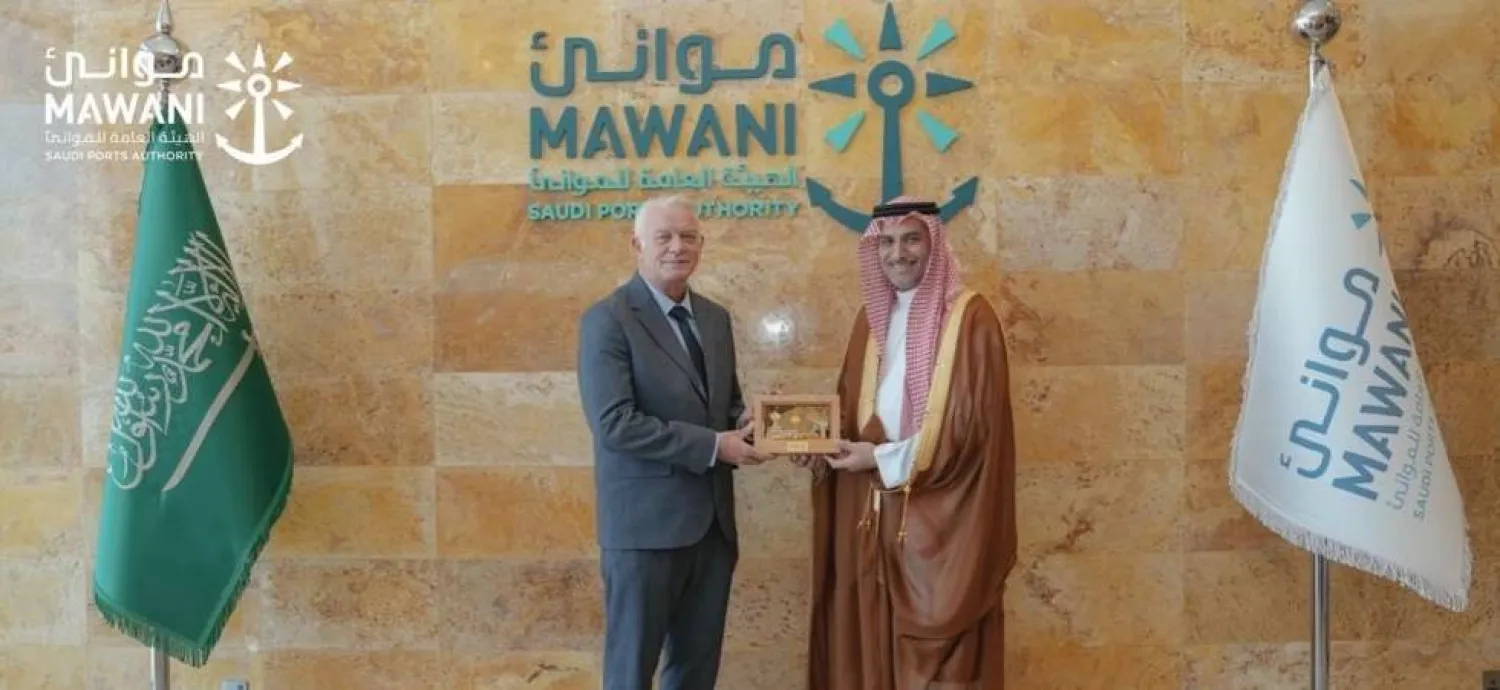
The initiative is part of Mawani's ongoing efforts to develop the maritime business environment, enable international companies to invest in the Saudi market, and increase competitiveness within the maritime sector. (Mawani)
TT

Saudi Arabia’s Mawani Grants Unified License to Global Shipping Line 

The initiative is part of Mawani's ongoing efforts to develop the maritime business environment, enable international companies to invest in the Saudi market, and increase competitiveness within the maritime sector. (Mawani)

The Saudi Ports Authority (Mawani) granted on Thursday a unified license to international shipping line Global Shipping Line (PIL), officially recognizing it as an authorized foreign investor to operate maritime agencies in the Kingdom's ports, reported the Saudi Press Agency.

The license is issued in accordance with the regulations outlined in the Maritime Agency Services, reflecting Mawani's commitment to boosting the efficiency of the maritime sector and improving the quality of operational services provided at ports.

It aims to attract global expertise and facilitate knowledge transfer within the Kingdom, aligning with international best practices in the maritime transport industry.

The initiative is part of Mawani's ongoing efforts to develop the maritime business environment, enable international companies to invest in the Saudi market, and increase competitiveness within the maritime sector.

PIL, which operates from its regional headquarters in Riyadh, manages operations in 29 countries.

The move strengthens the Kingdom's position as a crucial logistics hub, in line with the National Transport and Logistics Strategy, while attracting more international shipping lines. It reinforces Saudi Arabia's role as a key link among three continents.


IMF: Restoring Lebanon's Economic Growth Will Require Comprehensive Reforms

FILE PHOTO: A view of the International Monetary Fund (IMF) logo at its headquarters in Washington, D.C., US, November 24, 2024. REUTERS/Benoit Tessier//File Photo
TT

IMF: Restoring Lebanon's Economic Growth Will Require Comprehensive Reforms

FILE PHOTO: A view of the International Monetary Fund (IMF) logo at its headquarters in Washington, D.C., US, November 24, 2024. REUTERS/Benoit Tessier//File Photo

Lebanon's economy has shown resilience despite conflicts in the region, with tourism fueling a bit of a rebound, but restoring growth will require comprehensive reforms, the International Monetary Fund said on Thursday.

IMF spokeswoman Julie Kozack said the global lender remains engaged in complex discussions with Lebanese ‌authorities following their ‌request for an IMF-supported ‌program ⁠in March 2025. The ⁠IMF sent a staff mission to Beirut earlier this month, said Reuters.

The talks have been focused on two big issues, she said, citing the need for banking sector restructuring and a medium-term fiscal ⁠strategy. "The economy has shown resilience ‌despite the impact ‌of conflicts in the region. It has had ‌a bit of a rebound ‌on the back of tourism from the strong diaspora," Kozack said.

"But at the same time, really restoring strong and sustainable growth will ‌require a comprehensive set of reforms to tackle some of the ⁠structural ⁠weaknesses that have really hampered Lebanon's economic performance for many years," she said. Reforms also are needed to attract international support to help Lebanon address its substantial reconstruction needs.

Kozack said Lebanon needs an updated medium-term fiscal framework that includes concrete measures to mobilize additional revenues for much-needed capital spending, as well as a sovereign debt restructuring to restore debt sustainability.