


Venture Capital Investments on the Rise in Saudi FinTech

Saudi officials inaugurating the Financial Technology Center (Asharq Al-Awsat)
TT

Venture Capital Investments on the Rise in Saudi FinTech

Saudi officials inaugurating the Financial Technology Center (Asharq Al-Awsat)

The governor of Saudi Central Bank (Sama), Fahad al-Mubarak, announced that growth in financial technology companies (FinTech) contributed to the provision of crowdfunding and deferred payment activity, amounting to $533 million.

Mubarak noted that the participation of FinTech companies in payments increased the total number of operations in national payment systems to 5 percent by the end of January 2022, compared to 2.5 percent last year.

Speaking at the Financial Technology Center opening in Saudi Arabia, Mubarak indicated that the number of financial technology companies increased from ten in 2018 to 80 companies, with seven in the insurance sector.

According to the governor, the financial technology sector witnessed a remarkable increase in the volume of venture capital investments, with a cumulative value of about SR2.02 billion, through more than 45 investment deals.

Mubarak said in his opening speech that utilizing new technologies and accelerating the growth of financial technology undoubtedly contributed to building and developing new business models and practices.

“We firmly believe in the importance of integration between all parties and the need for concerted efforts to develop this sector under an ambitious national strategy within the Financial Sector Development Program,” said Mubarak.

Meanwhile, CMA Chairman Mohammad al-Kuwaiz explained that the real impact of financial technology on the financial services sector and the entire economy has become tangible.

Kuwaiz explained that Saudi Arabia seeks to become the hub of FinTech, hoping the Financial Technology Center will develop applicable business models for the financial sector and all its beneficiaries.

Fintech Saudi Arabia has officially opened the first of its kind center in the Kingdom, located in King Abdullah Financial District in Riyadh.

The project comes as part of the efforts of the Saudi Central Bank in cooperation with the Capital Markets Authority to stimulate growth in the financial technology sector in the Kingdom.

The Center includes two main sections, with co-working spaces, private offices, meeting rooms, event spaces, and an innovation area that meets all the needs of entrepreneurs and emerging financial technology companies.

The Center will provide entrepreneurs and people with innovative and pioneering ideas to communicate and collaborate to contribute to the development of the financial technology system in Saudi Arabia.



Third ‘Mirkaz AlBalad AlAmeen Platform’ to Open in Makkah on Sunday 

A street in the holy city of Makkah is decorated with Ramadan lights. (SPA)
TT

Third ‘Mirkaz AlBalad AlAmeen Platform’ to Open in Makkah on Sunday 

A street in the holy city of Makkah is decorated with Ramadan lights. (SPA)

The third edition of the “Mirkaz ABalad AlAmeen”, a leading platform for exchanging opportunities in Makkah, will kick off on Sunday, under the theme “Makkah Inspires the World.”

The platform, organized by the Holy Makkah Municipality, will feature 15 exceptional Ramadan evenings focused on dialogue, knowledge exchange, and cross-sector engagement.

Makkah Mayor Musad Aldaood said the platform redefines development from Makkah, where faith meets inspiration and values are transformed into a comprehensive civilizational experience.

He noted that the initiative reflects the ambitions of Saudi Vision 2030 and showcases Makkah to the world as a living model of creativity, leadership, and innovation.

The upcoming edition will host more than 65 speakers, including executive leaders and decision-makers from across all three sectors, alongside futurists, entrepreneurs, and leading voices in culture and inspiration from artists, writers, media professionals, and innovators.

The program targets 12 key sectors: technology and digital transformation, financial investment, communications and media, real estate development, transport and logistics, banking services, youth and sports, tourism and culture, hospitality and catering, Hajj and Umrah, the third sector, and healthcare.


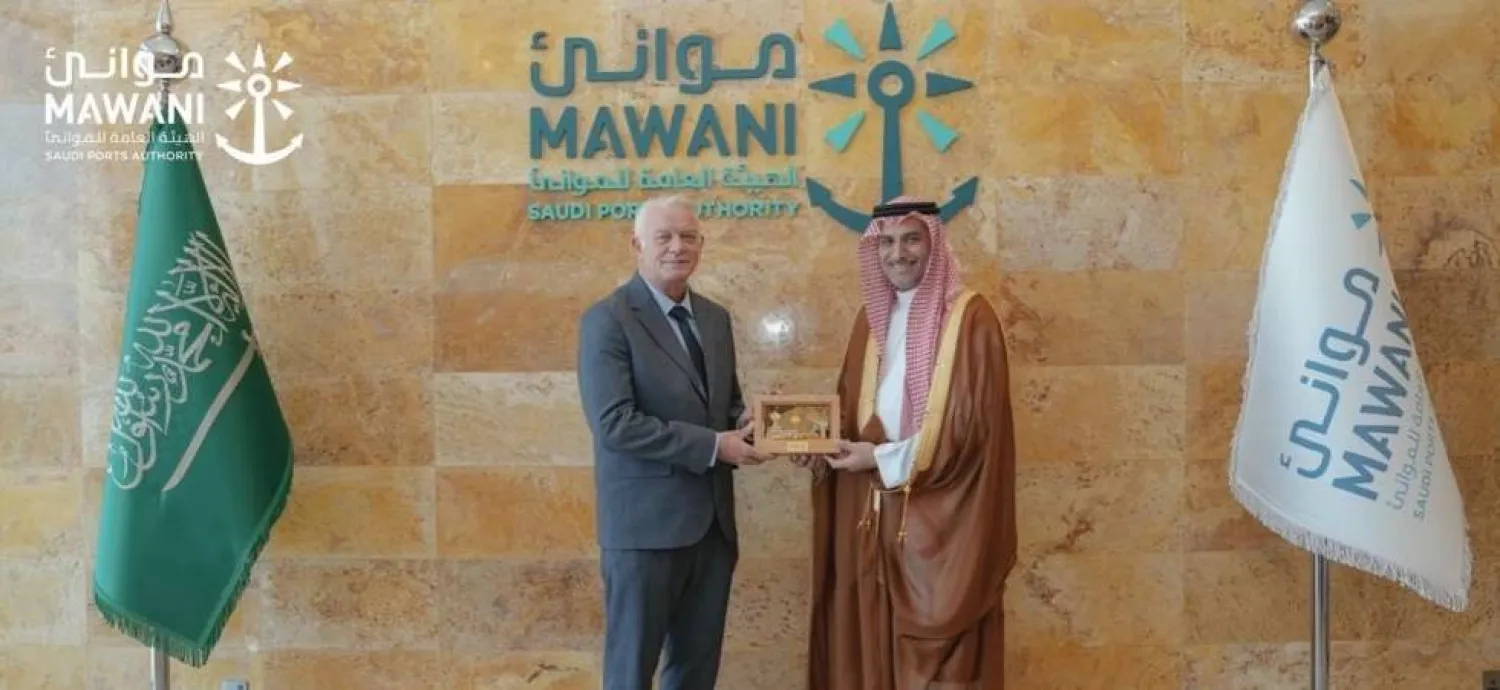
Saudi Arabia’s Mawani Grants Unified License to Global Shipping Line 

The initiative is part of Mawani's ongoing efforts to develop the maritime business environment, enable international companies to invest in the Saudi market, and increase competitiveness within the maritime sector. (Mawani)
TT

Saudi Arabia’s Mawani Grants Unified License to Global Shipping Line 

The initiative is part of Mawani's ongoing efforts to develop the maritime business environment, enable international companies to invest in the Saudi market, and increase competitiveness within the maritime sector. (Mawani)

The Saudi Ports Authority (Mawani) granted on Thursday a unified license to international shipping line Global Shipping Line (PIL), officially recognizing it as an authorized foreign investor to operate maritime agencies in the Kingdom's ports, reported the Saudi Press Agency.

The license is issued in accordance with the regulations outlined in the Maritime Agency Services, reflecting Mawani's commitment to boosting the efficiency of the maritime sector and improving the quality of operational services provided at ports.

It aims to attract global expertise and facilitate knowledge transfer within the Kingdom, aligning with international best practices in the maritime transport industry.

The initiative is part of Mawani's ongoing efforts to develop the maritime business environment, enable international companies to invest in the Saudi market, and increase competitiveness within the maritime sector.

PIL, which operates from its regional headquarters in Riyadh, manages operations in 29 countries.

The move strengthens the Kingdom's position as a crucial logistics hub, in line with the National Transport and Logistics Strategy, while attracting more international shipping lines. It reinforces Saudi Arabia's role as a key link among three continents.


IMF: Restoring Lebanon's Economic Growth Will Require Comprehensive Reforms

FILE PHOTO: A view of the International Monetary Fund (IMF) logo at its headquarters in Washington, D.C., US, November 24, 2024. REUTERS/Benoit Tessier//File Photo
TT

IMF: Restoring Lebanon's Economic Growth Will Require Comprehensive Reforms

FILE PHOTO: A view of the International Monetary Fund (IMF) logo at its headquarters in Washington, D.C., US, November 24, 2024. REUTERS/Benoit Tessier//File Photo

Lebanon's economy has shown resilience despite conflicts in the region, with tourism fueling a bit of a rebound, but restoring growth will require comprehensive reforms, the International Monetary Fund said on Thursday.

IMF spokeswoman Julie Kozack said the global lender remains engaged in complex discussions with Lebanese ‌authorities following their ‌request for an IMF-supported ‌program ⁠in March 2025. The ⁠IMF sent a staff mission to Beirut earlier this month, said Reuters.

The talks have been focused on two big issues, she said, citing the need for banking sector restructuring and a medium-term fiscal ⁠strategy. "The economy has shown resilience ‌despite the impact ‌of conflicts in the region. It has had ‌a bit of a rebound ‌on the back of tourism from the strong diaspora," Kozack said.

"But at the same time, really restoring strong and sustainable growth will ‌require a comprehensive set of reforms to tackle some of the ⁠structural ⁠weaknesses that have really hampered Lebanon's economic performance for many years," she said. Reforms also are needed to attract international support to help Lebanon address its substantial reconstruction needs.

Kozack said Lebanon needs an updated medium-term fiscal framework that includes concrete measures to mobilize additional revenues for much-needed capital spending, as well as a sovereign debt restructuring to restore debt sustainability.