


Scientists Create New Device to Improve Deep Sleep

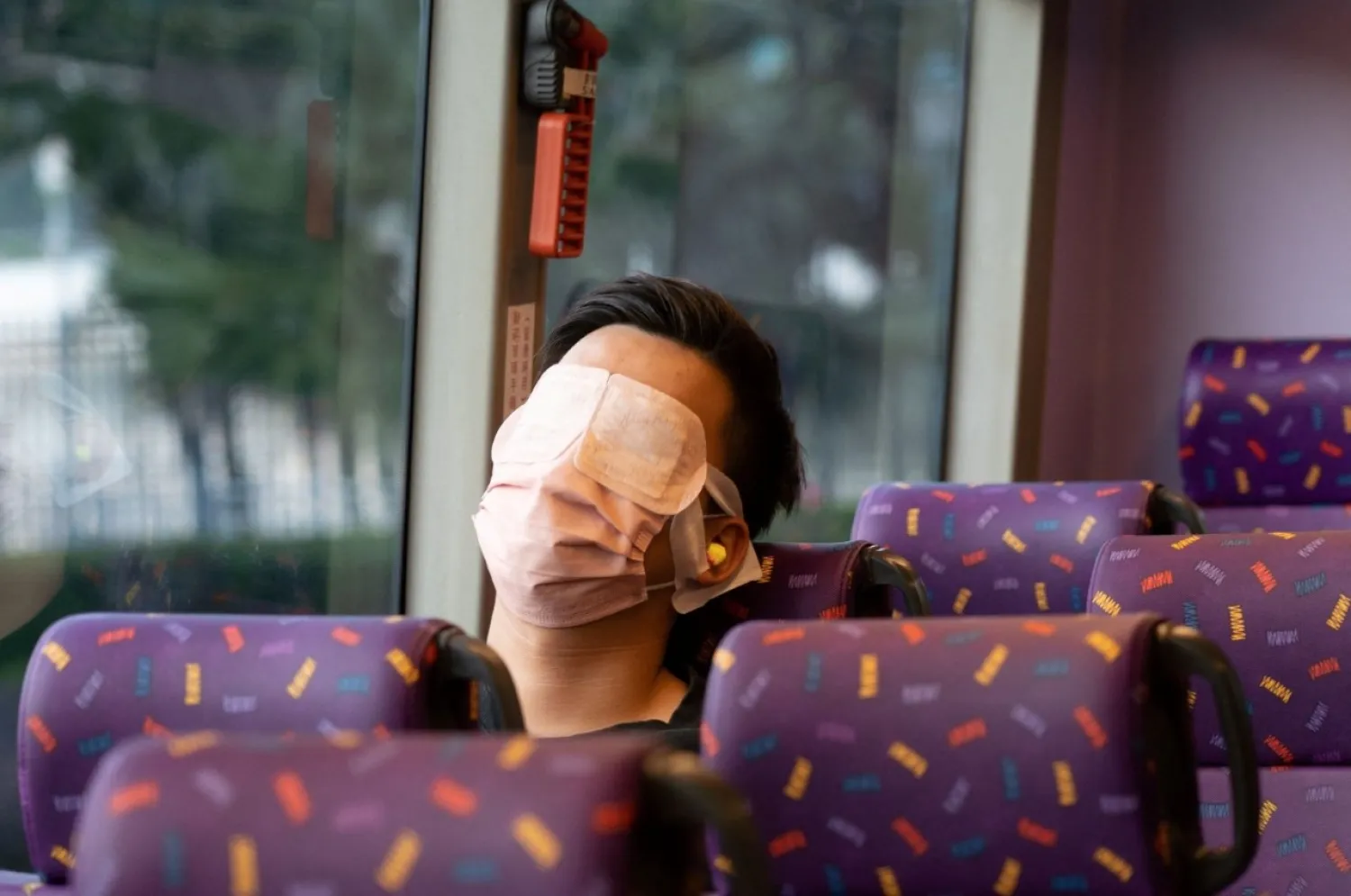
A passenger sleeps on a bus operated by a Hong Kong travel agency offering a five-hour "quiet bus" tour marketed as a "route to nowhere" for travel-craving and restless residents to snooze on board in Hong Kong, Nov. 14, 2021. (AFP Photo)
TT

Scientists Create New Device to Improve Deep Sleep

A passenger sleeps on a bus operated by a Hong Kong travel agency offering a five-hour "quiet bus" tour marketed as a "route to nowhere" for travel-craving and restless residents to snooze on board in Hong Kong, Nov. 14, 2021. (AFP Photo)

Researchers have shown that the brain waves characterizing deep sleep, so-called slow waves, can be improved by playing precisely timed sounds through earphones while sleeping. While this works well in the sleep laboratory under controlled conditions, there has thus far been no at home solution.

To address this problem, researchers at ETH Zurich have developed a device named SleepLoop that can be used at home and aims to promote deep sleep through auditory brain stimulation.

The SleepLoop system consists of a headband that is put on at bedtime and worn throughout the night. This headband contains electrodes and a microchip that constantly measure the brain activity of the person sleeping. Data from this is analyzed in real-time on the microchip using custom software. As soon as the sleeping person shows slow waves in the brain activity characterizing deep sleep, the system triggers a short auditory signal (clicking). This helps to synchronize the neuronal cells and enhance the slow waves. What makes the solution unique is that the person sleeping is not consciously aware of this sound during deep sleep.

Researchers from ETH Zurich and University Hospital Zurich have conducted a clinical study with this device for the first time. The results have been published in the latest issue of the journal Communications Medicine.

The study involved equipping participants, between 60 -- 80 years old, with the SleepLoop system, which they were required to operate themselves in their own home. The system is designed to function independently even by users with little technical experience.

The results of the study show that it was indeed possible to enhance the slow waves through auditory signals during deep sleep in most participants. However, the individual differences were extensive with some of the subjects responding very well to the stimuli, while others responded minimally or not at all.

In a report posted April 10 on the ETH Zurich’s website, the researchers said they are currently using these individual differences to better predict how a given individual will respond to the auditory stimulus. This in turn helps them to optimize and improve the performance of SleepLoop, which will be produced and marketed by Tosoo AG, a company affiliated with the institute.



Sydney Man Jailed for Mailing Reptiles in Popcorn Bags 

Investigators recovered 101 Australian reptiles from parcels destined for Hong Kong, South Korea, Sri Lanka and Romania. (AFP file)
TT

Sydney Man Jailed for Mailing Reptiles in Popcorn Bags 

Investigators recovered 101 Australian reptiles from parcels destined for Hong Kong, South Korea, Sri Lanka and Romania. (AFP file)

A Sydney man who tried to post native lizards, dragons and other reptiles out of Australia in bags of popcorn and biscuit tins has been sentenced to eight years in jail, authorities said Tuesday.

The eight-year term handed down on Friday was a record for wildlife smuggling, federal environment officials said.

A district court in Sydney gave the man, 61-year-old Neil Simpson, a non-parole period of five years and four months.

Investigators recovered 101 Australian reptiles from seized parcels destined for Hong Kong, South Korea, Sri Lanka and Romania, the officials said in a statement.

The animals -- including shingleback lizards, western blue-tongue lizards, bearded dragons and southern pygmy spiny-tailed skinks -- were posted in 15 packages between 2018 and 2023.

"Lizards, skinks and dragons were secured in calico bags. These bags were concealed in bags of popcorn, biscuit tins and a women's handbag and placed inside cardboard boxes," the statement said.

The smuggler had attempted to get others to post the animals on his behalf but was identified by government investigators and the New South Wales police, it added.

Three other people were convicted for taking part in the crime.

The New South Wales government's environment department said that "the illegal wildlife trade is not a victimless crime", harming conservation and stripping the state "and Australia of its unique biodiversity".


Two Snowboarders Dead after Austrian Avalanche

A member of the CRS Alpes Grenoble mountain rescue team operates as he searches for potential buried victims during an avalanche emergency response rescue mission in an off-piste area of the Ecrins massif, French Alps on January 29, 2026. (Photo by JEFF PACHOUD / AFP)
TT

Two Snowboarders Dead after Austrian Avalanche

A member of the CRS Alpes Grenoble mountain rescue team operates as he searches for potential buried victims during an avalanche emergency response rescue mission in an off-piste area of the Ecrins massif, French Alps on January 29, 2026. (Photo by JEFF PACHOUD / AFP)

Two snowboarders have been confirmed dead after their bodies were recovered following an avalanche in western Austria over the weekend, police said Monday.

Avalanches across the Alps have claimed several victims in recent days following heavy snowfall.

An avalanche struck two 37-year-old off-piste snowboarders on the Stubai glacier in Tyrol province, burying them under the snow, police said in a statement.

The two Austrian men were reported missing after they had not returned from their snowboarding trip, prompting a large-scale search operation that included dogs and drones.

The buried snowboarders were located on Sunday night, but emergency services "could only confirm the death of the two men", Reuters quoted the statement as saying.

A level-four avalanche risk warning -- out of five -- is currently in place in the area following heavy snowfall in recent days.

In neighboring Italy, two skiers were killed on Sunday and another was in serious condition after an avalanche struck a slope near Courmayeur.

Avalanches have already killed several dozen people across the French, Swiss, Italian and Austrian Alps so far this season.


Wild New Zealand Storm Disrupts Transport, Leaves Thousands Without Power

Trees lie amid the floodwaters after heavy rain and wild winds in Puketotara, Waikato region, New Zealand, February 14, 2026, in this picture obtained from social media. Wayne Feisst/via REUTERS
TT

Wild New Zealand Storm Disrupts Transport, Leaves Thousands Without Power

Trees lie amid the floodwaters after heavy rain and wild winds in Puketotara, Waikato region, New Zealand, February 14, 2026, in this picture obtained from social media. Wayne Feisst/via REUTERS

Heavy rain and strong winds disrupted flights, trains and ferries, forcing the closure of roads across large parts of New Zealand's North Island on Monday, while snapping power links to tens of thousands.

Domestic media reported a few flights had resumed operating by afternoon from the airport in Wellington, the capital, although cancellations were still widespread after airport authorities said most morning flights were disrupted.

Air New Zealand said it hoped to ‌resume services when conditions ‌ease later on Monday, after it paused ‌operations at ⁠Wellington, Napier and ⁠Palmerston North airports.

Online images showed flooded semi-rural neighborhoods, inundated homes, trees fallen on vehicles and collapsed sections of road after waters receded.

The weather had been "absolutely terrifying", Marilyn Bulford, who lives in the rural town of Bunnythorpe, about 160 km (100 miles) north of Wellington, told the New Zealand Herald newspaper.

"I've never seen huge trees blowing around this much," she added. "It's so bad. ⁠I haven't seen anything like it."

The Wellington region accounted ‌for more than half the ‌852 emergency calls received overnight, said Ken Cooper, assistant national commander of the emergency services.

"We ‌had a very busy night, and our firefighters are continuing to ‌respond to calls," Reuters quoted him as saying.

More than 30,000 properties were without power, including about 10,000 customers in Wellington, said authorities, who have urged motorists to stay off roads, while several schools were closed as emergency crews tackled widespread damage.

The storm is ‌forecast to bring heavy rains as it heads for the east coast of the South Island on ⁠Tuesday, the ⁠weather bureau said, with authorities warning of further disruption.

Raw sewage discharged after this month's failure of Wellington's main wastewater treatment plant in a storm was washed back onto the south coast by the weekend storm, in an incident some residents called a "poonami" on social media.

A low-pressure system east of the North Island has battered several regions since the weekend, bringing heavy rain and severe gales. A man was found dead on Saturday in a submerged vehicle on a highway.

The storm follows six deaths last month in a landslide triggered by heavy rains at Mount Maunganui on the North Island's east coast, bringing down soil and rubble on a site crowded with families on summer holidays.