Saudi Film Festival to Screen 69 Films this Year, New Awards are on Offer

Saudi Film Festival to Screen 69 Films this Year, New Awards are on Offer
TT

Saudi Film Festival to Screen 69 Films this Year, New Awards are on Offer

Saudi Film Festival to Screen 69 Films this Year, New Awards are on Offer

The Saudi Film Festival announced that 106 movies of the 117 registered by late March have been accepted and that 69 movies were nominated to take part in the Festival’s eighth edition launching on the second of June.

Thirty six of these movies were nominated for all categories, 8 were chosen for the feature film category, 28 for the short films category, and 32 will be screened in parallel.

In an effort to shed light on the pioneers of the film industry in the Gulf, this year’s festival will honor the Saudi filmmaker Khalil bin Ibrahim Al-Rawaf, who is considered the first Arab actor to play a role in a Hollywood movie, and the Kuwaiti filmmaker Khaled Al-Siddiq.

The Saudi and Gulf movies taking part for the first time are competing for the Golden Palm awards and the cash prizes that come with them. Added to older categories like best film, best actor, and best cinematography are new ones like best Gulf film and best screenplay.

In addition to screening Golden Palm films and parallel screenings, children’s films, and poetry films, the Festival offers an array of cultural programs, including seminars and advanced training workshops. It also provides production companies, producers, and filmmakers with a space to find funding for their projects.

The Saudi Film Festival is also working on publishing and translating 15 books as part of the knowledge series it publishes every year.

The 8th edition of the Saudi Film Festival is scheduled to run between the second and ninth of June, and it is organized by the Saudi Cinema Association in partnership with the King Abdulaziz Center for World Culture (Ithraa) and with the support of the Ministry of Culture’s Film Commission.

This year, the Festival chose poetic cinema as its theme, dedicating several symposia to discussion on the place of poetic cinema in filmmaking.


Singapore Seizes Record Asian Pangolin Scales Disguised as 'Dried Fish Skin'

This undated handout received on March 28, 2026 from Singapore's National Parks Board and Immigration and Checkpoints Authority shows pangolin scales being examined following their seizure in Singapore on December 29, 2025. (Photo by Handout / Singapore's National Parks Board and Immigration & Checkpoints Authority / AFP)
TT

Singapore Seizes Record Asian Pangolin Scales Disguised as 'Dried Fish Skin'

This undated handout received on March 28, 2026 from Singapore's National Parks Board and Immigration and Checkpoints Authority shows pangolin scales being examined following their seizure in Singapore on December 29, 2025. (Photo by Handout / Singapore's National Parks Board and Immigration & Checkpoints Authority / AFP)

Singapore has seized over 830 kilograms of Asian pangolin scales hidden in a shipment bound for Cambodia, authorities said Saturday, calling it the largest haul of its kind discovered in the city-state.

Falsely declared as "dried fish skin", the scales -- estimated to be from more than 2,200 pangolins -- were found in 30 bags on December 29 after officials intercepted an inbound lorry carrying sea cargo, Singapore's National Parks Board said in a statement.

The announcement came as Singapore released a report Saturday on the nation's role in tackling illegal wildlife trade in the shipping sector.

"Based on preliminary investigations, the cargo was transiting through Singapore en route from Indonesia to Cambodia," AFP quoted the statement as saying.

"This marks the largest seizure of Asian pangolin scales in Singapore to date," it added, noting that investigations are ongoing.

The scales were identified as belonging to Sunda pangolins, a critically endangered species native to Southeast Asia, including Singapore.

Pangolins are protected under the wildlife protection treaty CITES, to which Singapore is a signatory.

"Singapore adopts a zero-tolerance stance on the illegal trade of endangered wildlife species, and their parts and derivatives," the statement read.

Pangolins are among the world's most endangered species, and their scales are prized in countries like China and Vietnam where they are used in traditional medicine as remedy for various ailments.

Their scales are similar in constitution to fingernails and provide no scientifically proven medicinal benefit.

Under Singaporean law, those found guilty of trading in protected species without a valid CITES permit face a fine of up to S$200,000 ($154,702) per specimen (not exceeding S$1 million or the market value of the items) and up to eight years in prison.


Saudi Arabia Reaffirms Commitment to Environmental Action on Saudi Green Initiative Day

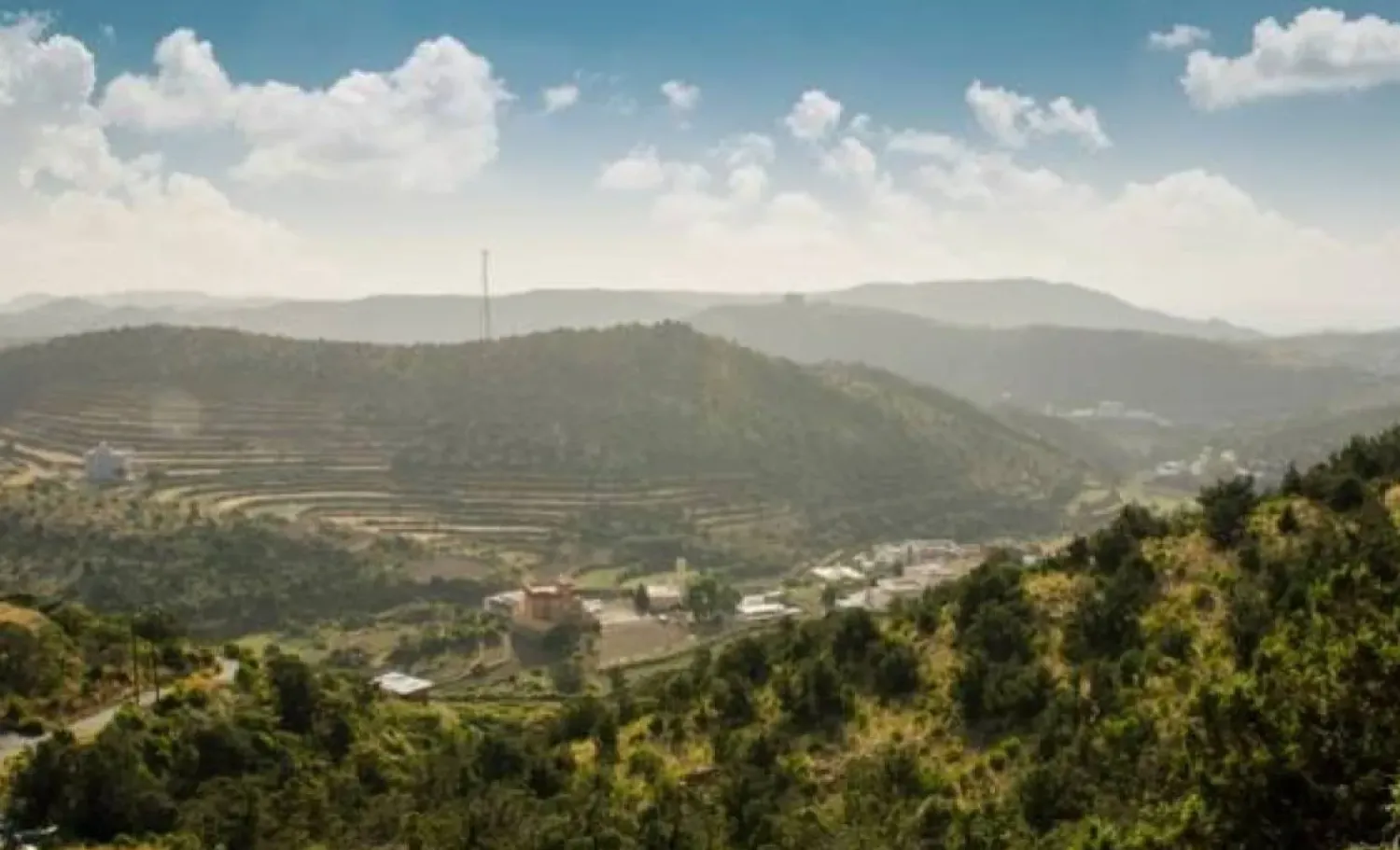
One of the mountainous areas located in the south of the Kingdom of Saudi Arabia (Asharq Al-Awsat)
TT

Saudi Arabia Reaffirms Commitment to Environmental Action on Saudi Green Initiative Day

One of the mountainous areas located in the south of the Kingdom of Saudi Arabia (Asharq Al-Awsat)

The Saudi Green Initiative (SGI) Day, observed annually on March 27 following a Cabinet decision, reflects the Kingdom's commitment to establishing a culture of sustainability, enhancing national environmental efforts, and encouraging all sectors to achieve sustainable development goals in line with Vision 2030, SPA reported.

The initiative recently achieved a significant national milestone by rehabilitating one million hectares of degraded land through the National Greening Program, overseen by the National Center for Vegetation Cover Development and Combating Desertification. This objective aims to expand vegetation cover, reduce desertification, improve quality of life, and enhance the natural capacity of local environments to adapt to climate change.

The achievement is an extension of the Kingdom's broader efforts to protect natural resources, reduce emissions, promote reliance on clean energy, and preserve biodiversity, thereby strengthening Saudi Arabia's regional and international standing in environmental action.

Over the past year, the initiative has continued to make tangible progress. More than 159 million trees were planted across the Kingdom, and environmental reserves saw the birth of Arabian oryx calves for the third consecutive year. Furthermore, the National Water Efficiency and Conservation Center currently saves 120,000 cubic meters of water daily, with plans to increase this capacity to 300,000 cubic meters.

These combined efforts align with the objectives of Vision 2030 and contribute to strengthening the Kingdom’s regional and international standing in environmental sustainability.

SGI Day is observed annually to highlight the initiative’s achievements, review its future goals, and encourage broad sector participation in environmental efforts and sustainable development.

These efforts reflect the Kingdom’s approach to environmental and climate action, driven by the Saudi Green Initiative and the Middle East Green Initiative, both launched by Prince Mohammed bin Salman bin Abdulaziz Al Saud, Crown Prince and Prime Minister, underscoring its ongoing commitment to supporting the transition toward a more sustainable development model.


Satellite Observations Offer Insight into a Tsunami’s Early Stages

A person shows a cell phone displaying a message to evacuate to a tsunami safety zone during an evacuation of the coast following a tsunami warning issued by local authorities after an earthquake struck the Kamchatka Peninsula in the far east of Russia, triggering warnings and evacuations across the South Pacific, in Dichato, near Concepcion, Chile, July 30, 2025. (Reuters)
TT

Satellite Observations Offer Insight into a Tsunami’s Early Stages

A person shows a cell phone displaying a message to evacuate to a tsunami safety zone during an evacuation of the coast following a tsunami warning issued by local authorities after an earthquake struck the Kamchatka Peninsula in the far east of Russia, triggering warnings and evacuations across the South Pacific, in Dichato, near Concepcion, Chile, July 30, 2025. (Reuters)

Observations made by a satellite operated by the US and French space agencies shortly after a strong earthquake struck off Russia's Kamchatka Peninsula last year are giving scientists a better understanding of how tsunamis originate and propagate.

The researchers said the findings may help improve understanding of future tsunamis and earthquakes at subduction zones, particularly near the ocean trench where two tectonic plates meet and one slides beneath the other. The strongest tsunamis often are generated by such quakes.

The magnitude 8.8 quake struck on July 29, 2025, triggering a tsunami that spread across the Pacific Ocean. A tsunami - a series of extremely long and powerful ocean waves - is caused by large movements of the seafloor that push water up or down, often during earthquakes or landslides that occur under water.

The NASA-CNES Surface Water and Ocean Topography, or SWOT, satellite ‌made its observations ‌within 70 minutes of the start of the earthquake. It observed not ‌only ⁠the leading wave ⁠of the tsunami, but also a distinct pattern of smaller waves trailing behind it.

Such wave patterns had long been predicted in computer models and theoretical studies, but had been difficult to confirm with real-world observations, the researchers said.

"I believe SWOT represents a new lens for observing and studying tsunamis and their generation," said Ignacio Sepúlveda, a professor of coastal engineering at San Diego State University and lead author of the study published this week in the journal Science.

"It is also likely to improve our understanding of the physical mechanisms that generate tsunamis, including earthquakes," ⁠Sepúlveda added.

Traditional deep-ocean pressure sensors and other satellites have limitations in coverage ‌and measurement, making it difficult to capture the full structure of ‌the waves, especially near the trench, the researchers said.

SWOT scans a wide swath of the ocean, producing two-dimensional maps ‌of sea surface height. This allows scientists to see the shape, direction and spacing of tsunami waves ‌in much greater detail.

Tsunamis are among the strongest and most destructive natural forces, with powerful waves radiating from a point of origin outward in all directions. These waves can cause damaging and deadly coastal flooding.

The tsunami in this study did not cause significant loss of life, but others have caused huge death tolls such as the 2004 Indian Ocean ‌tsunami that killed some 230,000 people.

The July 2025 tsunami originated within about 10 kilometers (six miles) of the trench, the place in the seafloor ⁠where two tectonic plates intersect, ⁠the researchers found. This location could not previously be determined using traditional land-based instruments or sparse sensors on the seafloor alone.

Earth's surface is made up of immense plates that move very gradually in a geological process called plate tectonics.

The researchers found that when earthquake-caused movement extends close to the trench, it can generate shorter waves that travel more slowly and spread out over time, forming a trailing pattern behind the main tsunami front. This behavior means that different parts of the wave move at different speeds, with longer waves moving more quickly and leading, while shorter ones lag behind.

The study also showed that the strength of the trailing waves increases when earthquake movement extends closer to the trench, suggesting these waves are linked to where and how the tsunami was generated near the trench.

"This opens a new window to understand in a better way what happens with earthquakes and tsunamis near the trench," Sepúlveda said, referring to SWOT observations. "In the future, this knowledge will allow us to improve models we use to evaluate tsunami hazards in coastal communities and make them more resilient."