


Scientists Use Gel to Make Pill Swallowing Easier for Children

Pharmaceutical tablets and capsules are arranged on a table in a photo illustration shot September 18, 2013. REUTERS/Srdjan Zivulovic/Illustration/File Photo
TT

Scientists Use Gel to Make Pill Swallowing Easier for Children

Pharmaceutical tablets and capsules are arranged on a table in a photo illustration shot September 18, 2013. REUTERS/Srdjan Zivulovic/Illustration/File Photo

For most children and even some adults, swallowing pills or tablets is difficult. To make it easier to give those medicines, researchers at MIT and Brigham and Women’s Hospital have created a drug-delivering gel to facilitate pills swallowing. The findings were published in the latest issue of the journal Science Advances.

The gels, made from plant-based oils such as sesame oil, can be prepared with a variety of textures, from a thickened beverage to a yogurt-like substance.

“The gels are stable without refrigeration, which could make them easier to get to children in developing nations. They could also help adults who have difficulty swallowing pills, such as older people or people who have suffered a stroke,” the researchers explain in a report published on MIT website.

Nearly 10 years ago, while working on other kinds of ingestible drug-delivery systems, the research team started to think about new ways to make it easier for children to take medications that are normally given as pills.

There are existing strategies that can help with this, but none is a perfect solution. Some antibiotics and other drugs can be suspended in water, but that requires clean water to be available, and the drugs need to be refrigerated after being mixed. Also, this strategy doesn’t work for drugs that are not soluble in water.

To try to address those issues, the researchers set out to develop a new drug-delivery system that would be inexpensive, palatable, stable at extreme temperatures, and compatible with many different drugs. They also wanted to make sure that drugs would not need to be mixed with water.

Because they wanted their formulation to work with drugs that can’t be dissolved in water, the researchers decided to focus on oil-based gels. Such gels, also known as oleogels, are commonly used in the food industry to change the texture of oily foods, and also to raise the melting point of chocolate and ice cream.
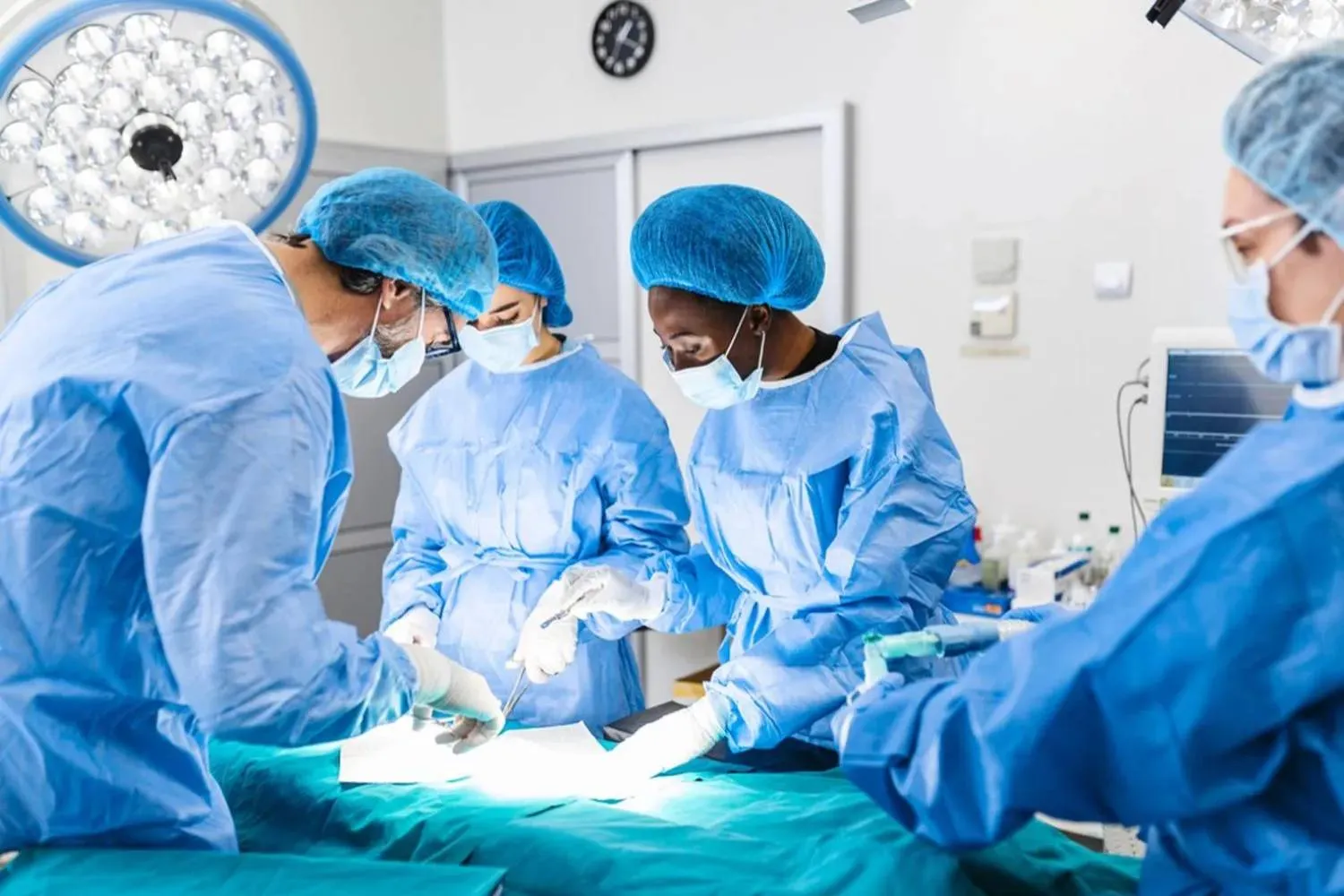



Serious Medical Errors in Britain: Gloves Left Inside Patients and Accidental Organ Removal

The total number of health safety incidents for the year is 403 cases (Shutterstock)  
TT

Serious Medical Errors in Britain: Gloves Left Inside Patients and Accidental Organ Removal

The total number of health safety incidents for the year is 403 cases (Shutterstock)  

Among 403 patient safety incidents in England, 17 cases had a procedure intended for another patient, one patient who had an organ or body part wrongly removed, and two who were left with surgical gloves inside them, according to Sky News.

Hundreds of National Health Service (NHS) patients have been harmed due to errors that should never have occurred, including operations on the wrong body part and medical objects being left inside them, new data shows.

Annual figures from NHS England show that there were 403 “never events” for the year from April 2025 to March this year, according to an analysis by the Press Association.

Never events are patient safety incidents that are so serious that they should never happen and are preventable.

There were 166 incidents related to wrong site surgery, including 17 people who had a procedure intended for another patient, and 40 where treatments were to the wrong side or part of the body.

In one case, a patient had an organ or body part removed when the plan had been to conserve it.

Overall, 121 of the never events related to foreign objects being left in patients after procedures or surgery, including 26 cases of guide wires, two cases of cotton wool balls, one nasal pack, and one of a central catheter line.

Two cases involved surgical gloves, 22 were surgical instruments, five were surgical needles, 21 were surgical swabs, and 32 were vaginal swabs.

The data also showed there were eight cases where patients received a procedure that was not part of the surgical plan.

There were four other cases where the patient had the wrong procedure altogether.

Six people suffered incisions to the wrong part of the body, and 30 received injections in the wrong place.

In addition, 38 patients had nerve blocks given on the wrong side and 22 had the wrong skin lesion removed or the incorrect biopsy.

An NHS spokesperson said: “NHS staff work exceptionally hard to keep patients safe and incidents like these are extremely rare, but when they do occur NHS trusts are required to investigate what has happened and take effective steps to learn from them and make improvements.”


Great White Shark Caught on Underwater Footage During Mediterranean Clean-up

People fish at sunset near the Corniche Al-Manara seafront promenade on the Mediterranean coast in Beirut, Lebanon, 05 June 2026. (EPA)
TT

Great White Shark Caught on Underwater Footage During Mediterranean Clean-up

People fish at sunset near the Corniche Al-Manara seafront promenade on the Mediterranean coast in Beirut, Lebanon, 05 June 2026. (EPA)

Divers removing abandoned ‌fishing nets from the central Mediterranean, between Italy and North Africa, have captured what they believe is the first-ever underwater footage of an adult great white shark in the region.

The sighting occurred as a team led by the Healthy Seas Foundation recovered so-called ghost nets from a shipwreck in the Strait of Sicily -- a biodiversity hotspot heavily impacted by industrial fishing.

The video, taken ‌last week and ‌released on Monday, shows the shark ‌accompanied ⁠by a dozen ⁠striped pilot fish, that often flank large predators in the hope of picking up leftovers.

Footage and photographs of the shark were filmed by volunteer diver Derk Remmers of Ghost Diving, one of the project partners.

"An offshore underwater shark encounter ⁠in the Mediterranean is insane," Remmers ‌said in a statement.

Another ‌member of the diving team, Pascal van Erp, ‌said on Facebook that the shark had likely ‌been drawn to dead marine life entangled in the abandoned fishing net, including lots of sea turtles.

While there have been occasional sightings of great whites in the ‌Mediterranean, the size of the population is unknown and previous encounters are not ⁠believed ⁠to have been filmed by divers, the foundation said.

"Moments like this remind us how much life can still exist in offshore Mediterranean waters and how important it is to protect it from preventable threats like abandoned fishing gear or overfishing," said Healthy Seas director Veronika Mikos.

Researchers working with the mission said the sighting could improve understanding of the distribution and behavior of the critically endangered species, though further analysis would be required before broader conclusions are drawn.


Aging France to See Population Fall After 2037 Peak

People walk along the Seine river in Paris on June 2, 2026 with in the background "La Caverne du Pont Neuf" ("The Pont Neuf Cave") artwork by French street artist and photographer JR on the Pont-Neuf bridge after it was damaged and torn by the wind. (Photo by SIMON WOHLFAHRT / AFP)
TT

Aging France to See Population Fall After 2037 Peak

People walk along the Seine river in Paris on June 2, 2026 with in the background "La Caverne du Pont Neuf" ("The Pont Neuf Cave") artwork by French street artist and photographer JR on the Pont-Neuf bridge after it was damaged and torn by the wind. (Photo by SIMON WOHLFAHRT / AFP)

France's population is expected to peak in 2037, seven years earlier than previously estimated, before shrinking back to around its 2014 level in the following decades, statistics agency INSEE said on Monday.

France has long had stronger demographics than most of Europe, but an ageing population and falling birth rates show it is not immune to the pressures straining public finances across the continent.

France's ⁠natural population growth ⁠turned negative in 2025 and will remain so, with gains until 2037 driven entirely by migration, INSEE said in its latest projections.

The population is expected to rise from 69.1 million in 2026 ⁠to a peak of 69.8 million in 2037, before falling to 65.9 million by 2070, roughly its 2014 level, Reuters reported.

INSEE's previous projections in 2021 put the peak later, in 2044, at about 69.3 million.

If migration weakens or fertility falls below the central assumption of 1.45 children per woman, the population could drop to as low ⁠as ⁠54.6 million by 2070.

As well as shrinking, the population will age significantly.

By 2070, one in three people in France will be aged 65 or older, about double the share under 20.

The sharpest shift will be among the oldest groups, with the number aged 80 and over more than doubling to around 9 million, while centenarians could quadruple to about 160,000