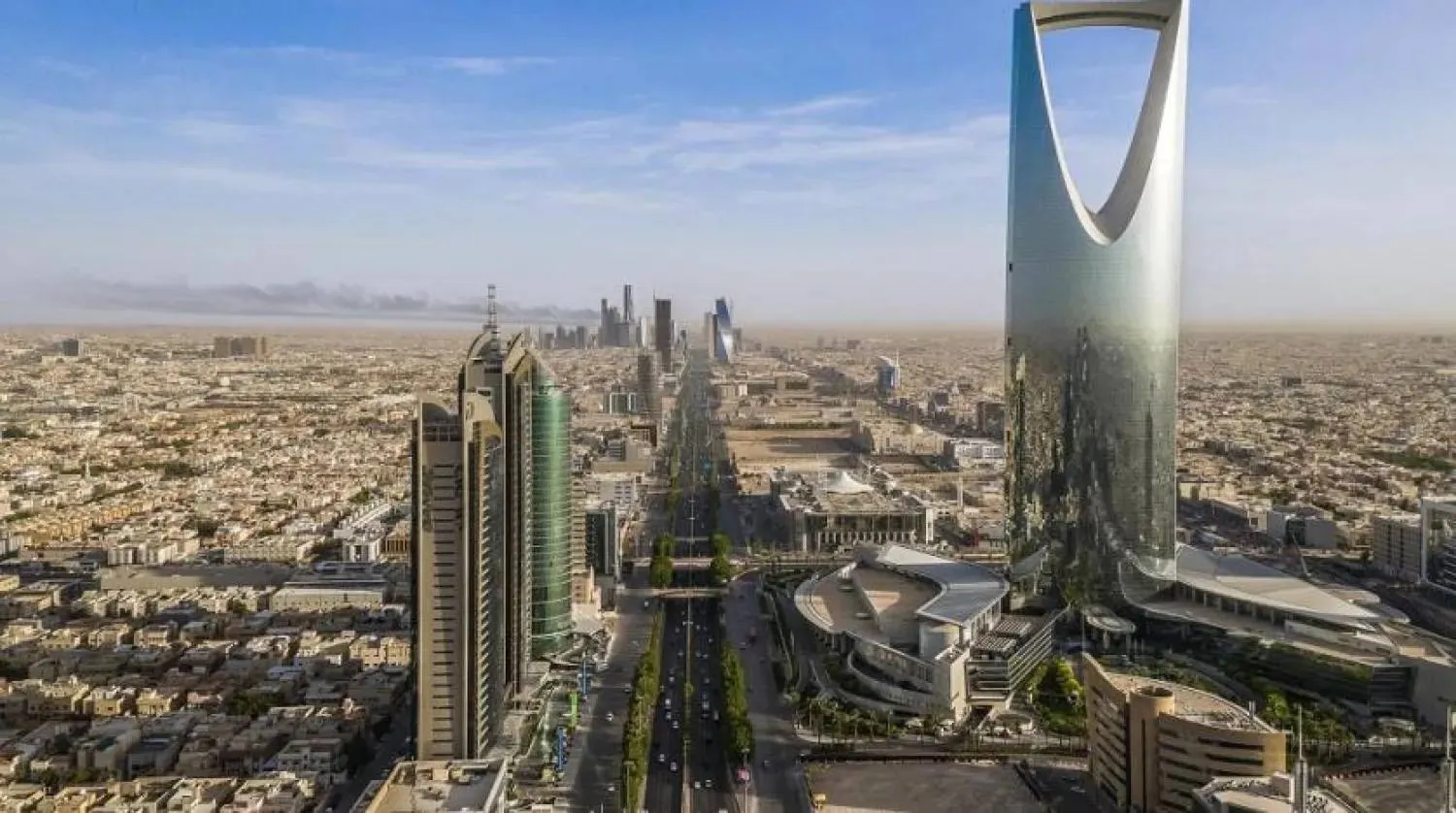
Saudi Arabia Operates New Salwa Crossing with Qatar

The Emir of the Eastern Province in Saudi Arabia at the inauguration of the Salwa border crossing with Qatar (Asharq Al-Awsat)
TT

Saudi Arabia Operates New Salwa Crossing with Qatar

The Emir of the Eastern Province in Saudi Arabia at the inauguration of the Salwa border crossing with Qatar (Asharq Al-Awsat)

Prince Saud bin Nayef bin Abdulaziz, Governor of the Eastern Province, launched on Monday the trial operation of the passengers’ section at the new Salwa crossing, which links Saudi Arabia with Qatar.

He noted that the crossing would primarily contribute to enhancing vehicle and passenger traffic, in addition to promoting trade volume exchange and economic relations between the two Gulf states.

“The Kingdom’s advancement in various fields contributed to achieving sustainable development,” Prince Saud said, adding that many vital projects implemented in Saudi Arabia have become the focus of the world’s attention.

These projects “draw a road map towards a promising future in line with the Kingdom’s 2030 vision, through the development of the infrastructure of the land ports in the Kingdom,” he remarked.

For his part, Governor of Zakat, Tax and Customs Authority of Saudi Arabia Eng. Suhail bin Mohamed Abanmi said that the new Salwa border crossing project has been fully equipped with the essential integrated services and utilities for the clearance of all passing vehicles and passengers.

The border crossing would represent a vital factor in enhancing vehicle and passenger traffic, in addition to promoting trade volume and economic relations between the two countries, he added.

He stressed that the authority has worked on holding a number of strategic partnerships with entities in the public and private sectors, relying on best practices in the design, development and operation of the port infrastructure, thus contributing to strengthening the Kingdom’s economy, and facilitating all land transit operations between the Kingdom and neighboring countries.


About 90 Ships Cross the Strait of Hormuz Despite the War

Indian vessel 'Nanda Devi' carrying liquefied petroleum gas (LPG) arrives at Vadinar Port in the Jamnagar district of Gujarat state on March 17, 2026 after Iran allowed it to pass through the Strait of Hormuz. (Photo by AFP)
TT

About 90 Ships Cross the Strait of Hormuz Despite the War

Indian vessel 'Nanda Devi' carrying liquefied petroleum gas (LPG) arrives at Vadinar Port in the Jamnagar district of Gujarat state on March 17, 2026 after Iran allowed it to pass through the Strait of Hormuz. (Photo by AFP)

About 90 ships including oil tankers have crossed the Strait of Hormuz since the outset of the war with Iran and it is still exporting millions of barrels of oil at a time when the waterway has been effectively closed, according to maritime and trade data platforms.

Many of the vessels that passed through the strait were so-called “dark” transits evading Western government sanctions and oversight that likely have ties to Iran, maritime data firm Lloyd’s List Intelligence said. More recently, vessels with ties to India and Pakistan have also successfully crossed the strait as governments stepped up negotiations.

As crude prices spiked above $100 a barrel, US President Donald Trump pressured allies and trade partners to send warships and reopen the strait, hoping to bring oil prices lower.

Most shipping traffic through the Strait of Hormuz, a waterway for global oil and gas transport that supplies roughly one-fifth of the world’s crude oil, has been halted since early March, after the war started. About 20 vessels have been attacked in the area.

However, Iran has still managed to export well above 16 million barrels of oil since the beginning of March, trade data and analytics platform Kpler estimated. Due to Western sanctions and associated risks, China has been the biggest buyer of Iranian oil.

There has been “continued resilience” in Iran's oil export volumes, said Kpler trade risk analyst Ana Subasic.

Iran has managed to profit from oil sales and also “preserve its own export artery” by using control over the chokepoint, said Kun Cao, client director at consulting firm Reddal.

Iran's oil export data estimates are largely aligned with maritime traffic data.

At least 89 ships crossed the Strait of Hormuz between March 1 and 15 – including 16 oil tankers, according to Lloyd’s List Intelligence, down from roughly 100 to 135 vessel passages per day before the war, The Associated Press reported. More than one-fifth of the 89 vessels were believed to be Iran-affiliated, while Chinese and Greece affiliated ships are among the rest, it said.

Other vessels also have been getting through.

The Pakistan-flagged crude oil tanker Karachi, controlled by the Pakistan National Shipping Corp., passed through the strait on Sunday, Lloyd’s List Intelligence said.

Shariq Amin, a spokesman at the Pakistan Port Trust, refused to confirm or deny which route the MT Karachi had used but he said the ship would soon safely reach Pakistan.

The India-flagged liquefied petroleum gas (LPG) carriers Shivalik and Nanda Devi, both owned by state-owned Shipping Corp. of India, also traveled through the strait around March 13 or 14, according to Lloyd’s List Intelligence. LPG is used as a primary cooking fuel by millions of Indian households.

India’s foreign minister, Subrahmanyam Jaishankar, told the Financial Times the two vessels’ were able to pass following talks with Iran. Iraq was also in talks with Iran to allow Iraqi oil tankers through the Strait of Hormuz, its state-run news agency reported.

Vessels may be transiting “with at least some level of diplomatic intervention,” said Richard Meade, editor-in-chief of Lloyd’s List. So, Iran may have “effectively created a safe corridor” with some ships passing close to the Iranian coast.

Some vessels near or in the strait were found to have declared themselves as China-linked or with all Chinese crew to reduce risks of being attacked, based on an earlier analysis on ship tracking platform MarineTraffic. Analysts believe they were taking advantage of China’s closer ties with Iran.

Oil prices have jumped more than 40% to above $100 per barrel since the Iran war began, and Iran has threatened it won't allow “even a single liter of oil” destined for the US, and Israel and their allies to pass through.


South Korea Says it Secures Priority UAE Crude

FILE PHOTO: A board shows oil prices as cars wait in a line at a gas station in Seoul, South Korea, March 9, 2026. REUTERS/Kim Hong-Ji/File Photo
TT

South Korea Says it Secures Priority UAE Crude

FILE PHOTO: A board shows oil prices as cars wait in a line at a gas station in Seoul, South Korea, March 9, 2026. REUTERS/Kim Hong-Ji/File Photo

South Korea has secured a pledge from the United Arab Emirates to supply 24 million barrels of crude oil, its presidential office said on Wednesday, as authorities roll out measures to cushion the economy from fallout from the Middle East conflict.

Kang Hoon-sik, President Lee Jae Myung's chief of staff, told a briefing at the Blue House that the UAE had said it would give South Korea - the world's fourth-biggest oil importer - top priority for crude supplies.

"They clearly promised that there would be no country that receives oil ahead of South Korea, and that Korea would be number one priority in crude oil supply," Kang said, after returning from the UAE.

However, while ⁠he confirmed plans ⁠to urgently import 18 million barrels, Kang gave no time frame for their delivery and no details on potential shipping routes that would avoid the Strait of Hormuz, Reuters reported.

Iran's effective closure of the strait has forced the UAE to shut in production, cutting its oil output by more than half, while loadings at its Fujairah terminal have been disrupted by drone attacks.

Two supertankers carrying a total of 4 million barrels of Abu Dhabi's Murban crude that loaded at Fujairah are ⁠due to arrive in South Korea on March 29 and April 1, Kpler data shows.

The last cargo of naphtha loaded on February 20 and offloaded in South Korea on March 14, according to Kpler data.

Total emergency imports from the UAE would reach 24 million barrels, Kang said. Deliveries would be made on three UAE-flagged vessels and six South Korean-flagged ships.

South Korea imports almost all of its energy, with about 70% of its crude oil shipments and 20% of liquefied natural gas typically sourced from the Middle East, according to Korea International Trade Association data.

It is also a big importer of naphtha, which is broken down into petrochemicals used in plastics for automobiles, electronics, clothing and construction.

The emergency ⁠supply agreement comes as ⁠South Korea moves to shield companies and consumers from surging energy costs triggered by the Middle East crisis.

Finance Minister Koo Yun-cheol said earlier on Wednesday the country will limit naphtha exports and temporarily designate the feedstock as a supply-chain economic security item.

The government will boost financial support for affected petrochemical companies by 1.5 trillion won ($1.01 billion), including for the cost of alternative imports and preferential interest rates for firms handling high-risk economic security items, Koo said.

President Lee said on Tuesday the government should draw up contingency plans to restrict vehicle use on designated days if the Middle East crisis drags on.

The government has also imposed the country's first fuel price cap in nearly 30 years.

To ease reliance on oil and LNG, Asia's fourth-largest economy on Monday lifted caps on coal-fired power generation and moved to raise nuclear reactor utilization to around 80%.


Iraq Resumes Limited Oil Exports via Türkiye

Iraq's Oil Minister Hayan Abdel Ghani during a meeting on December 28, 2025. (Iraqi Ministry of Oil)
TT

Iraq Resumes Limited Oil Exports via Türkiye

Iraq's Oil Minister Hayan Abdel Ghani during a meeting on December 28, 2025. (Iraqi Ministry of Oil)

Iraq announced on Wednesday it had resumed limited oil exports of 250,000 bpd through the Turkish port of Ceyhan after the country's output plunged due to disruptions in the Strait of Hormuz.

A founding member of the OPEC cartel, crude oil sales make up 90 percent of Iraq's budget revenues. Before the outbreak of war on February 28, Iraq mainly shipped its oil -- roughly 3.5 million barrels per day -- from the southern Basra fields via the Strait of Hormuz.

The state-owned North Oil Company said it "has begun operating the Sarlo pumping station to resume pumping and exporting Kirkuk oil to the port of Ceyhan with an initial capacity of 250,000 barrels per day".

Iraq resumed oil exports from its fields in the northern Kirkuk province "after a disruptive period that posed a significant challenge to the oil sector," and in agreement with the autonomous Kurdistan Region, through which the pipeline to Türkiye’s port of Ceyhan runs.

Iraq has been scrambling to find a solution to export its oil, and there have been long-running talks with Iraqi Kurdistan to ship it through the autonomous region.

Kurdish authorities had asked for several measures in return, before agreeing to let the oil flow through the region's pipeline.

The Kurdistan natural resources ministry said that the Sarlo oil station began operating at 6:30 am (0330 GMT) to enable exports via the Kurdistan region pipeline to the port of Ceyhan.

Iran has closed the strait, through which as much as a fifth of the world's global crude oil and liquefied natural gas is normally shipped, to vessels from most countries.

Iraq's Oil Minister Hayan Abdel Ghani said his country was in contact with Iran to try to arrange passage for some of its oil tankers through the waterway.