


EU Studies Imposing New Set of Sanctions on Iran

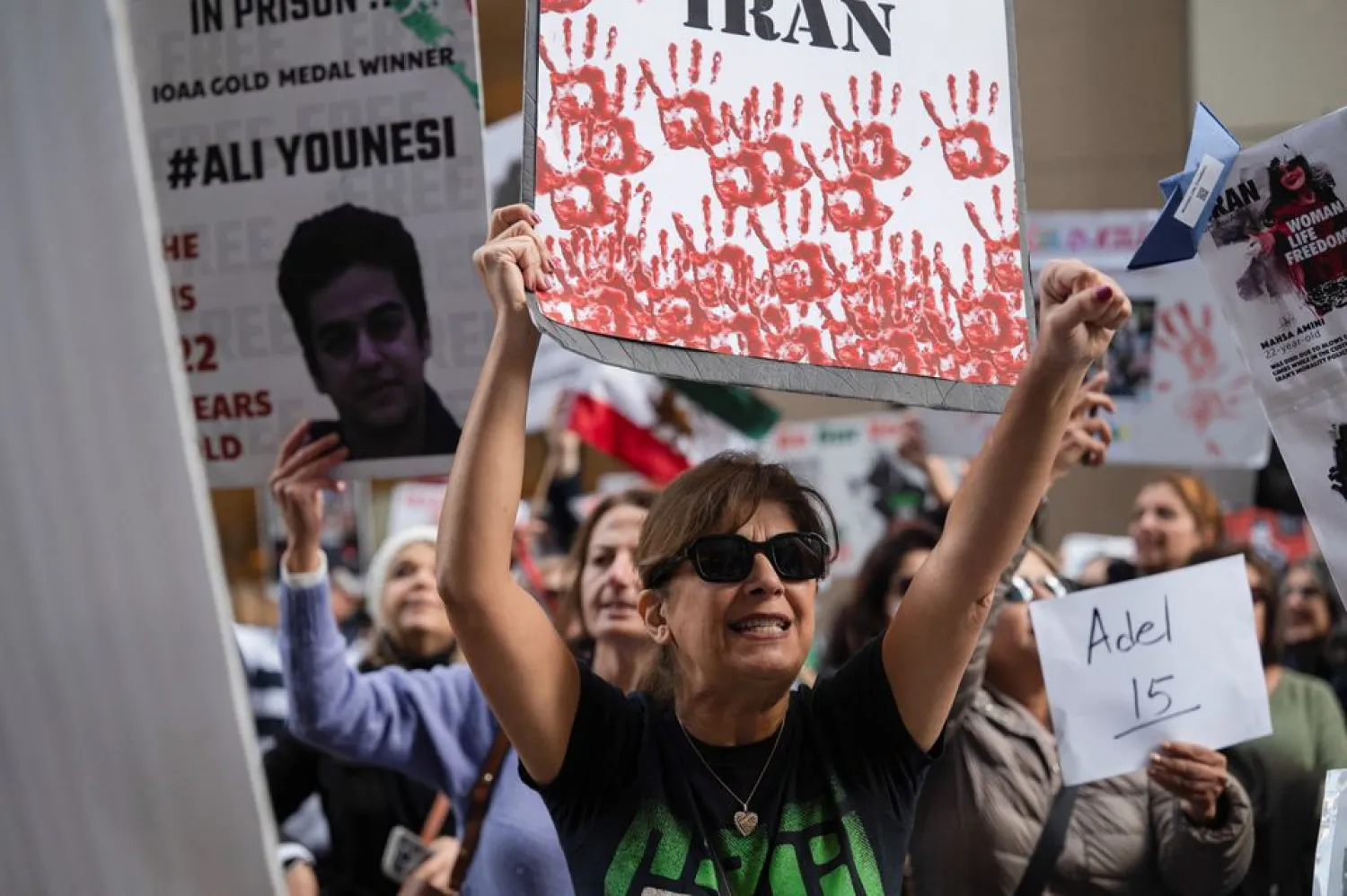
A woman chants during a protest against violence in Iran, in front of the United Nations Children’s Fund (UNICEF) office in San Francisco, California, US, November 30, 2022. REUTERS/Amy Osborne
TT

EU Studies Imposing New Set of Sanctions on Iran

A woman chants during a protest against violence in Iran, in front of the United Nations Children’s Fund (UNICEF) office in San Francisco, California, US, November 30, 2022. REUTERS/Amy Osborne

The European Union is considering imposing new sanctions on nearly 40 Iranian individuals and entities, according to draft documents seen by the American Politico website.

Additional sanctions are being studied as part of the EU’s response to the Iranian authorities’ deadly crackdown on protesters following the passing away last September of 22-year-old Mahsa Amini, who died in custody after being held by the morality police.

Politico reviewed 27 of the EU documents, which are called the “evidence pack” because they include information - mostly press reports - that support the proposed sanctions.

According to the documents, the European Union is considering imposing sanctions on 17 people, including regional governors, a lawmaker, a minister and a senior official of the Iran Broadcasting Service (IRIB).

The sanctions will also target current and former officials of the IRGC, which has played a major role in suppressing the demonstrators.

Included on the list is the Iranian sports minister, Seyed Hamid Sajjadi Hazaveh, who the document says is “responsible for pressurizing Iran’s athletes into silence, to prevent them from speaking out internationally against repression in Iran.”

The list also included 12 regional corps from the Revolutionary Guard, as well as Iran’s Communication Regulation Authority (CRA), which “enforces the Iranian government’s requirements to filter Internet content through a spyware called SIAM” and the Ravin Academy, a body that has trained hackers “involved in directly disrupting the communication of those protesting against the Iranian regime.”

According to the Oslo-based NGO Iran Human Rights, Iran government forces have killed at least 481 people, including 64 children and 35 women, in recent months.

European Union countries, led by Germany, France and the Netherlands, are separately debating whether to take further steps against the IRGC and designate it as a terrorist organization.

Last Monday, German Foreign Minister Analina Baerbock tweeted support for the proposal, saying: “This step is politically important and meaningful.”


Iran Condemns 'Flagrant Ceasefire Violation' after US Strikes

Iranian Foreign Ministry spokesman  Esmaeil Baghaei (Iranian News Agency)
Iranian Foreign Ministry spokesman Esmaeil Baghaei (Iranian News Agency)
TT

Iran Condemns 'Flagrant Ceasefire Violation' after US Strikes

Iranian Foreign Ministry spokesman  Esmaeil Baghaei (Iranian News Agency)
Iranian Foreign Ministry spokesman Esmaeil Baghaei (Iranian News Agency)

Iran condemned on Saturday a nighttime US attack on coastal radar installations in the Gulf, calling it a "flagrant" violation of the ceasefire in place since April.

The foreign ministry said it was an attack "on the national sovereignty and territorial integrity of the Islamic republic", denouncing Washington's "hostile and provocative behavior".

It added that the United States would bear responsibility for any consequences arising from its unlawful actions and any further escalation.

Tensions between Iran and the United States escalated on Saturday after Iran's Revolutionary Guard Corps (IRGC) announced attacks on US bases in the region following confrontations linked to shipping traffic in the Strait of Hormuz and strikes on sites inside Iran.

While Tehran said it had launched missile attacks on US bases, Washington said it intercepted most of the projectiles and rejected Iranian claims that facilities associated with the US Fifth Fleet in Bahrain had been hit.

The IRGC said on Saturday that it had carried out attacks on US bases in the region following an attack on the city of Sirik and Qeshm Island, as well as the targeting of four oil tankers that had attempted to transit the Strait of Hormuz without coordination, according to dpa.

For its part, US Central Command (CENTCOM) said in a statement posted on X on Saturday that Iran had launched seven missiles toward Kuwait and Bahrain after US forces shot down four drones that had been launched toward the Strait of Hormuz.


Pope Urges Leaders to Temper Divisions at Start of Spain Trip

Spain's King Felipe VI (L), Queen Letizia (R), Crown Princess Leonor (L, rear), and Princess Sofia (R, rear) go up the Ambassadors Staircase with Pope Leo XIV during the welcoming ceremony held at the Royal Palace in Madrid, Spain, 06 June 2026.   EPA/DANIEL GONZALEZ
Spain's King Felipe VI (L), Queen Letizia (R), Crown Princess Leonor (L, rear), and Princess Sofia (R, rear) go up the Ambassadors Staircase with Pope Leo XIV during the welcoming ceremony held at the Royal Palace in Madrid, Spain, 06 June 2026. EPA/DANIEL GONZALEZ
TT

Pope Urges Leaders to Temper Divisions at Start of Spain Trip

Spain's King Felipe VI (L), Queen Letizia (R), Crown Princess Leonor (L, rear), and Princess Sofia (R, rear) go up the Ambassadors Staircase with Pope Leo XIV during the welcoming ceremony held at the Royal Palace in Madrid, Spain, 06 June 2026.   EPA/DANIEL GONZALEZ
Spain's King Felipe VI (L), Queen Letizia (R), Crown Princess Leonor (L, rear), and Princess Sofia (R, rear) go up the Ambassadors Staircase with Pope Leo XIV during the welcoming ceremony held at the Royal Palace in Madrid, Spain, 06 June 2026. EPA/DANIEL GONZALEZ

Pope Leo on Saturday urged global leaders to avoid dividing their electorates with "sterile simplifications" to gain popularity and called on them to listen to the world's cries for peace, in a forceful speech opening a week-long tour of Spain.

"Today, the temptation to gain popularity by fanning the flames of polarization seems to have grown rather than diminished, and human dignity continues to be violated," Leo said in a speech before King Felipe VI at the Royal Palace in Madrid, Reuters reported.

"I invite everyone to set aside the divisive and polarizing narratives of your societal reality and history, so as to overcome sterile simplifications through the fruitful appreciation of complexity," he added.

Technology was partly to blame for creating an environment which magnifies prejudices and weakens critical thinking, Leo said. The world was crying "from its depths for peace," he said.

He drew on Spain's history as an example of peaceful co-habitation between religions and cultures, making reference to how Christians, Muslims and Jews cooperated during medieval times to enhance human knowledge by translating Arabic texts into Latin, Spanish and Hebrew at the School of Translators in Toledo.

"Your own history suggests that a culture of encounter, not confrontation, is what fosters stability and prosperity. In reality, the message of peace, which at present unfortunately strikes some as naïve and others as confrontational, is welcomed by those who do not shut themselves off in preconceived ideologies, but are rather open to the truth," he said.

Thousands lined the streets of central Madrid, some waving Vatican and Spanish flags under clear spring skies, as Leo toured in an open-air popemobile. Huge gatherings are expected in the coming days for the first visit to Spain by a pope since 2011.

Leo, who has adopted a more assertive tone against the direction of global leadership in recent months, is scheduled to give more than 20 speeches during his first trip to a European Union country outside Italy, and will be the first pope to address the Spanish parliament.

Leo spent decades as a missionary and bishop in Peru before becoming pope last May, and will speak Spanish throughout most of the trip.


Pakistan's Interior Minister Heads to Iran for Talks

Pakistani Interior Minister Mohsin Naqvi (from his account on X).
TT

Pakistan's Interior Minister Heads to Iran for Talks

Pakistani Interior Minister Mohsin Naqvi (from his account on X).

Officials said on Saturday that Pakistan's Interior Minister Mohsin Naqvi was heading to Tehran as part of Islamabad's diplomatic efforts to promote dialogue between Iran and the United States amid renewed attacks.

Diplomatic and security sources said: "Interior Minister Mohsin Naqvi is travelling to Tehran today for a series of high-level meetings with Iranian officials."

Naqvi is widely seen as being close to Army Chief Field Marshal Asim Munir, who has also visited Iran as part of Islamabad's efforts to mediate between the warring parties.

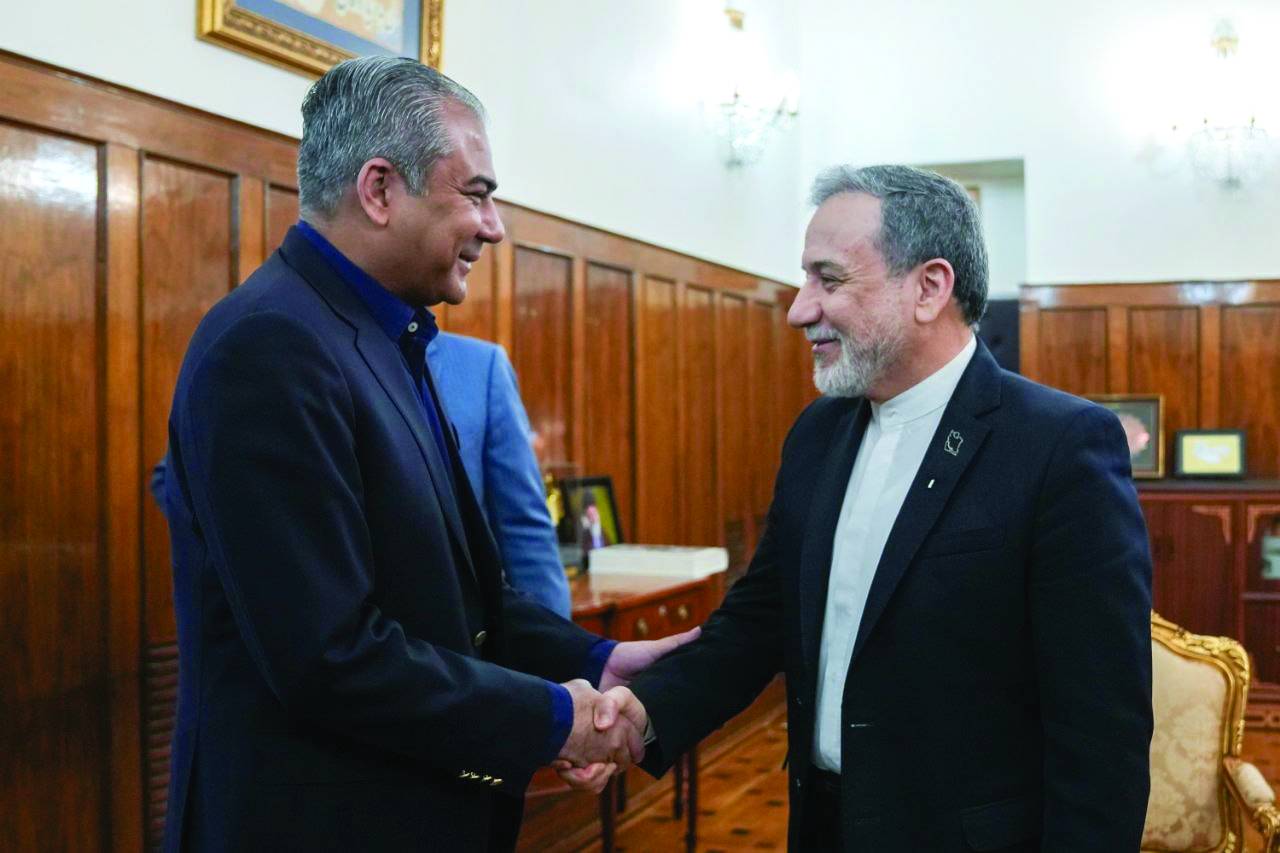
Photo released by Iran's Foreign Ministry showing Iranian Foreign Minister Abbas Araghchi and Pakistani Interior Minister Mohsin Naqvi in Tehran.

The interior minister has made repeated visits to Tehran and Islamabad since the first round of direct talks between Iran and the United States.

The visit comes after Naqvi met his Iranian counterpart, Eskandar Momeni, on the sidelines of a meeting of Shanghai Cooperation Organization interior ministers in Kyrgyzstan on Thursday and Friday.

In a statement issued after the meeting, Pakistan's Interior Ministry said: "The two interior ministers emphasized the need to continue diplomatic efforts steadfastly in pursuit of lasting peace in the region."

The visit also comes after the United States and Iran recently resumed attacks against each other in the Gulf despite a ceasefire that has been in place for nearly two months since the outbreak of the war on Feb. 28.
