


Lebanon Launches ‘National Survey’ Campaign to Register Syrian Refugees

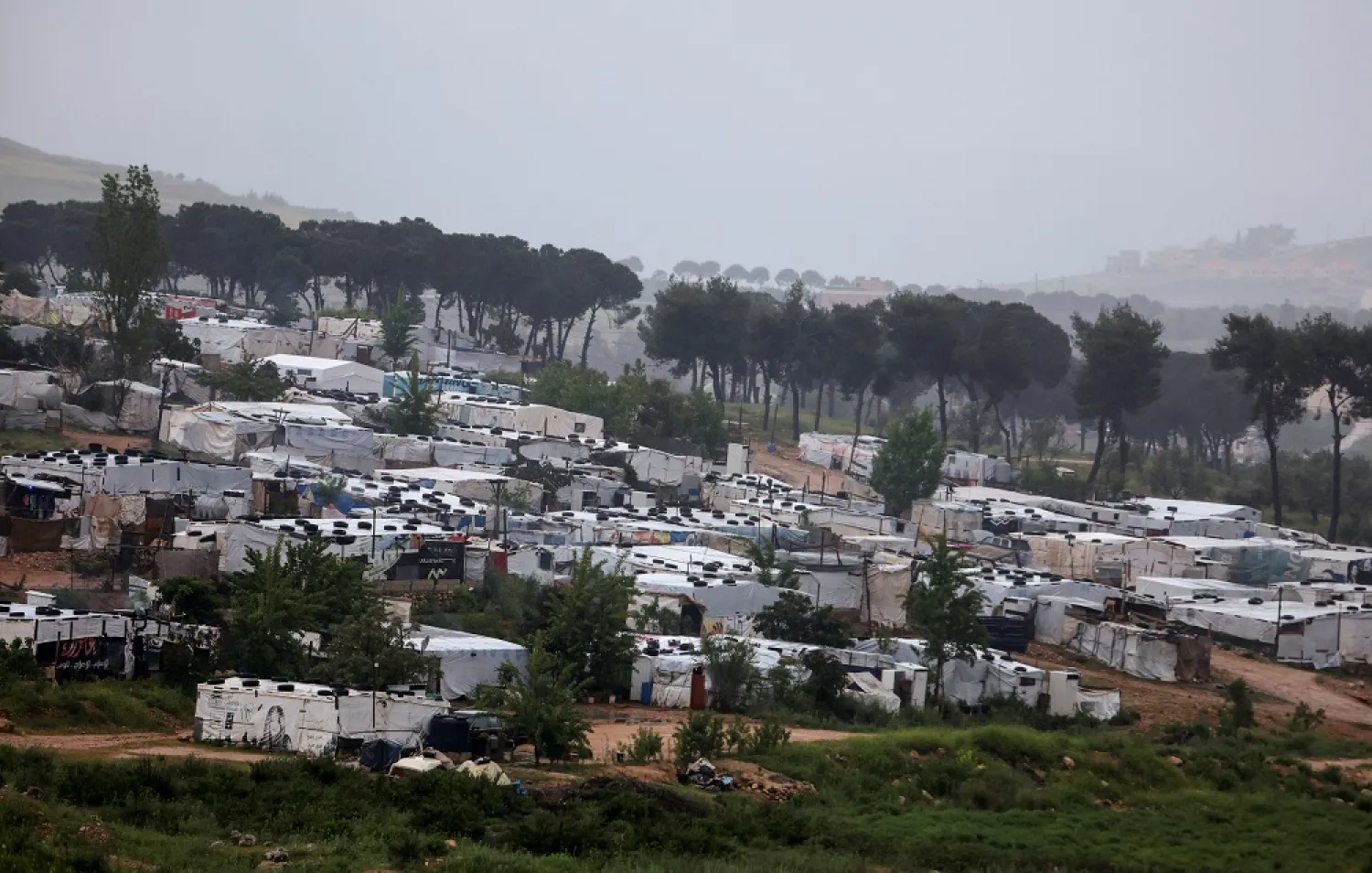
A general view shows tents at a camp for Syrian refugees, in Ibl al-Saqi village, southern Lebanon April 30, 2023. (Reuters)
TT

Lebanon Launches ‘National Survey’ Campaign to Register Syrian Refugees

A general view shows tents at a camp for Syrian refugees, in Ibl al-Saqi village, southern Lebanon April 30, 2023. (Reuters)

The Lebanese Interior Ministry kicked off on Tuesday a “national survey” campaign to enumerate and register Syrian refugees in the country.

The survey is part of a series of new measures aimed at setting legal guidelines for the refugees’ stay in the country.

The move comes in wake of political pressure from Lebanese parties wanting to return the refugees back to their homes.

Interior Minister Bassam Mawlawi ordered governors and head of municipalities to kick off the survey and register the Syrians.

He ordered the officials against processing any official document for Syrians without first ensuring that they are registered legally in the country.

No property will be rented to Syrians without proof being presented that they are registered in the municipality and possess a residency permit.

The survey will also cover all businesses run by Syrian refugees to determine that they have legal permits to operate their businesses.

Mawalwi urged the United Nations High Commissioner for Refugees to inform Syrians that their refugee status does not constitute a residency permit in Lebanon. He called on it to provide the General Security Directorate with detailed information about the Syrians in the country.

The latest measures were announced amid a growing political and government campaign to return the Syrians back to their country.

The Lebanese Forces vowed to “enforce all legal measures to prevent the integration of Syrians” in Lebanon.

MP George Adwan said the refugee issue is a “national affair that concerns everyone.”

“We must draft all laws that prevent their integration and everyone must cooperate to that end,” he added in televised remarks.

Moreover, he urged Arab countries to set as a condition the return of refugees to their homeland even before Syria’s membership in the Arab League is reinstated.

The Free Patriotic Movement had years ago demanded the return of the refugees to Syria. Other political parties are now joining it, along with Christian church authorities that view their stay in Lebanon as burden on society in a country that is already suffering an unprecedented economic crisis.

Catholic church authorities in the Bekaa urged the Lebanese state to speed up the accurate and comprehensive survey of all non-Lebanese residents, specifically Syrians.

They must determine how the Syrians entered the country and why they are staying here. All non-Lebanese workers must legalize their presence in the country and abide by the laws and pay taxes they owe to the state.

They noted that now that calm has been restored nearly throughout Syria, refugees, who came to Lebanon for security purposes and who are residing in camps, must have their names registered ahead of their return to their homeland.

Moreover, the church authorities demanded the deportation of all non-Lebanese, regardless of their nationality, who do not have legal papers and who are residing in the country illegally.



Hamas Says Path for Gaza Must Begin with End to ‘Aggression’ 

Makeshift tents of displaced Palestinian families among the ruins of their homes at sunset during the holy month of Ramadan in Jabaliya northern Gaza Strip on, 19 February 2026. (EPA)
TT

Hamas Says Path for Gaza Must Begin with End to ‘Aggression’ 

Makeshift tents of displaced Palestinian families among the ruins of their homes at sunset during the holy month of Ramadan in Jabaliya northern Gaza Strip on, 19 February 2026. (EPA)

Discussions on Gaza's future must begin with a total halt to Israeli "aggression", the Palestinian movement Hamas said after US President Donald Trump's Board of Peace met for the first time.

"Any political process or any arrangement under discussion concerning the Gaza Strip and the future of our Palestinian people must start with the total halt of aggression, the lifting of the blockade, and the guarantee of our people's legitimate national rights, first and foremost their right to freedom and self-determination," Hamas said in a statement Thursday.

Trump's board met for its inaugural session in Washington on Thursday, with a number of countries pledging money and personnel to rebuild the Palestinian territory, more than four months into a fragile ceasefire between Israel and Hamas.

Israeli Prime Minister Benjamin Netanyahu has insisted however that Hamas must disarm before any reconstruction begins.

"We agreed with our ally the US that there will be no reconstruction of Gaza before the demilitarization of Gaza," Netanyahu said.

The Israeli leader did not attend the Washington meeting but was represented by his foreign minister Gideon Saar.

Trump said several countries had pledged more than seven billion dollars to rebuild the territory.

Muslim-majority Indonesia will take a deputy commander role in a nascent International Stabilization Force, the unit's American chief Major General Jasper Jeffers said.

Trump, whose plan for Gaza was endorsed by the UN Security Council in November, also said five countries had committed to providing troops, including Morocco, Kazakhstan, Kosovo and Albania.


Official Contacts Aim to Keep Lebanon out of War on Iran as Israel Raises Readiness on Northern Front 

This photograph shows a memorial for slain Lebanese Hezbollah longtime leader Hassan Nasrallah at the entrance of the southern village of Qannarit on February 16, 2026. (AFP)
TT

Official Contacts Aim to Keep Lebanon out of War on Iran as Israel Raises Readiness on Northern Front 

This photograph shows a memorial for slain Lebanese Hezbollah longtime leader Hassan Nasrallah at the entrance of the southern village of Qannarit on February 16, 2026. (AFP)

Israel has raised the alert level of its military along the border with Lebanon, raising questions that Lebanon’s south may again be involved in a regional confrontation should the US attack Iran.

Given the heightened tensions between the US and Iran, questions have been asked over whether Hezbollah will become involved in a new war. Its Secretary-General Sheikh Naim Qassem had recently announced that the party will not remain on the side if Iran is attacked.

On the ground, Israel blew up houses in southern Lebanon border towns and carried out air strikes in the south. Israeli military spokesman Avichay Adraee said the raids targeted “Hezbollah infrastructure,” including arms caches and rocket launchers.

Their presence in the south is a violation of current agreements, he added.

Amid the high regional tensions, Israel’s Maariv quoted a military source as saying that the army has come up with plans, including a preemptive strike against Hezbollah, which would drag the south and the whole of Lebanon into a new war.

Ministerial sources told Asharq Al-Awsat that the presidency has been carrying out internal and foreign contacts since Thursday morning to keep Lebanon out of any escalation.

Hezbollah had launched a “support front” war against Israel a day after Hamas’ October 7, 2023 attack. In 2024, the war spiraled into an all-out conflict, with Israel decimating the Hezbollah leadership and severely weakening the party.

Israel believes that Hezbollah has been rebuilding its capabilities since the ceasefire that was struck in November 2024.

Kassim Kassir, a political analyst who is close to Hezbollah, told Asharq Al-Awsat: “No one knows what Hezbollah will do because the situation is tied the extent of the attack, should it happen.”

He noted that Qassem was ambiguous when he said the party will decide what to do when the time is right, but at any rate, he stressed that the party will not remain on the sidelines or abandon Iran.

“No one knows what Hezbollah’s abilities are, so everything is possible,” Kassir said.

Riad Kahwaji, a security and defense affairs expert, said he does not rule out the possibility that Hezbollah would join the war should the US attack Iran.

Speaking to Asharq Al-Awsat, he stressed that Iran is now the United States’ main target, when previously it used to confront its proxies.

It has now taken the fight directly to the heart of the problem, which is the Iranian regime, he remarked.

The extent of the military mobilization in the region and the frequent American statements about regime change all indicate that a major military operation may be imminent, he added.

Israel’s military also favors preemptive operations, so it is watching Hezbollah, which remains Iran’s most powerful regional proxy despite the blows it received in 2024 war, Kahwaji said.

Hezbollah still possesses a rocket arsenal that can threaten Israel, he remarked.

Israel’s high level of alert on the border with Lebanon could be in readiness for any development. Should Tel Aviv receive word from Washington that it intends to attack Iran, then it could launch operations against Hezbollah as part of preemptive strikes aimed at preventing the party from launching attacks against it, Kahwaji said.

“As long as Hezbollah possesses heavy weapons, such as rockets, and drones, that it has not handed over to the army, then Lebanon will continue to be vulnerable to attacks in the next confrontation. It will be exposed to Israeli strikes as long as this issue remains unresolved,” he added.


Israel Keen to Attack Iran’s Regional Proxies before they Can Join the War

Two Israeli soldiers launch a drone. (Israeli Army)
TT

Israel Keen to Attack Iran’s Regional Proxies before they Can Join the War

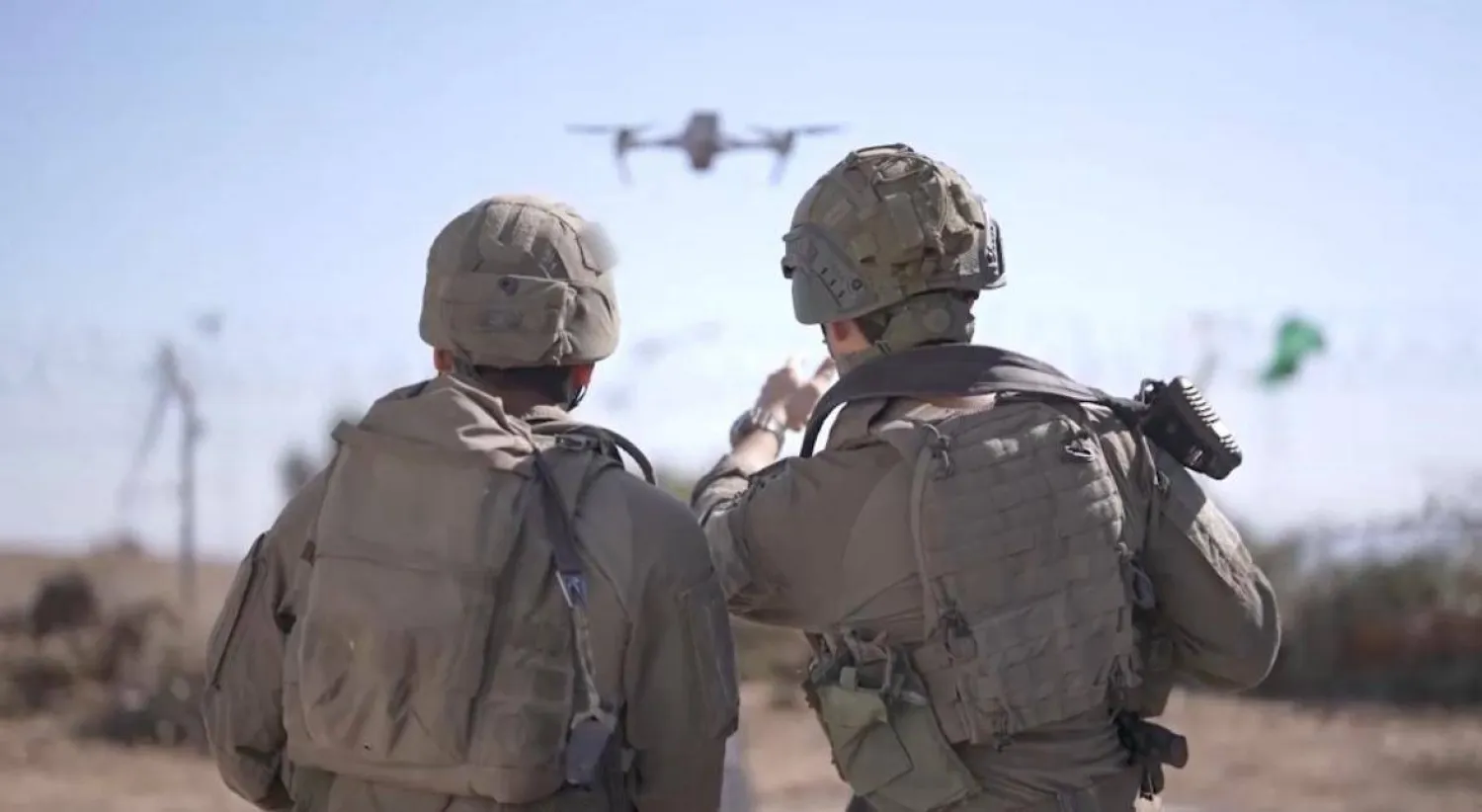
Two Israeli soldiers launch a drone. (Israeli Army)

The Israeli army is preparing to carry out “massive and unprecedented” strikes against groups backed by Iran, including the Houthis in Yemen, Hezbollah in Lebanon and armed factions in Iraq, should they join a potential war in the region, revealed Israeli military sources.

Iran is applying great pressure on these groups to take part in any upcoming conflict because the regime in Tehran concluded that their staying on the sidelines during the 12-day June war in 2025 was a strategic error, the sources said according to Israeli estimates.

Israeli Prime Minister Benjamin Netanyahu had on Thursday warned Iran that his country is making its own preparations for possible Iranian missile strikes in response to any US action.

“We are prepared for any scenario,” he said, adding that if Iran attacks Israel, “they will experience a response they cannot even imagine.”

A military source said the Houthis pose a “direct threat not just to Israel, but to the whole world.” He accused the Houthis of impeding international trade in the Red Sea.

Even though the Houthis are not firing at all ships, they are still a threat to everyone, added the source. The militants are producing weapons and possess advanced technology, he warned, comparing them to a “dangerous ticking timebomb that must be swiftly neutralized.”

Israeli and foreign experts revealed that Iran is providing large financial support to its allied armed groups in the region in order for them to join a war should US President Donald Trump act on his threat to strike Iran.

In 2025, Iran allotted a billion dollars to these groups so that they can carry out rocket attacks against Israel.

It remains to be seen if these groups will respond to Iran’s pressure. Israeli estimates believe that the Kataib Hezbollah in Iraq are unlikely to join a war, while Hezbollah and the Houthis are more prepared to do so.

Israel has turned to mediators to warn these parties that any attack against it will be met with a “massive and unprecedented response.”

In Lebanon, the sources said that the military operations Israel is carrying out against Hezbollah and other armed groups are aimed at undermining the party’s efforts to bolster its combat abilities.

They acknowledged, however, that the Israeli military establishment senses that Hezbollah is rebuilding its capabilities at a faster pace than Israel’s operations at reining it in.

The Houthis, meanwhile, have a relatively greater margin of independence, but they are always ready to take part in any regional war to shift attention away from the situation inside Yemen, said Israeli estimates.

The Houthis are receiving Iranian funds to boost their military capabilities and produce more weapons. They also continue to smuggle weapons to Hamas in Gaza. Israel also accuses them of extorting several countries, whereby they pledge not to attack their ships in exchange for money.

The Houthis are ultimately fully supportive of Iran’s goals despite the blows they have been dealt by Israel. The Houthis are suffering from a drop in combat abilities. The pace of their training of fighters has also dropped, while their airports have been damaged in Israeli attacks and the Houthis are facing difficulties in rebuilding them.

Despite the losses, the Houthis are still a threat. They possess heavy long-range missiles and drones and still have the ability to shut Israel’s southern Eilat port.