


Flydubai Seals Landmark Agreement to Purchase 225 Airplanes from Boeing

Emirates Chairman Sheikh Ahmed bin Saeed al-Maktoum and Boeing Commercial Airplanes President & Chief Executive Kevin McAllister attend a news conference at the Dubai Airshow in Dubai, UAE November 15, 2017. REUTERS/Satish Kumar
TT

Flydubai Seals Landmark Agreement to Purchase 225 Airplanes from Boeing

Emirates Chairman Sheikh Ahmed bin Saeed al-Maktoum and Boeing Commercial Airplanes President & Chief Executive Kevin McAllister attend a news conference at the Dubai Airshow in Dubai, UAE November 15, 2017. REUTERS/Satish Kumar

Boeing and flydubai signed on Wednesday a record-breaking agreement for 225 737 MAX airplanes with a list price value of $27 billion. The agreement includes a commitment for 175 MAX airplanes and purchase rights for 50 additional MAXs. Also, Airbus reached a preliminary deal to sell 430 airplanes to Indigo Partners.

“We welcome the continuation of our long partnership with Boeing. Their airplanes have provided a foundation for the success of our business model, providing us with the operational flexibility and range to build a network of 95 destinations in 44 countries,” said flydubai Chairman Sheikh Ahmed bin Saeed Al Maktoum.

He added, “Understanding the demand for travel across our network, our innovative approach to our cabin design and developing a product unique to our market have allowed us to exceed our passengers' expectations in their flying experience.”

Boeing Commercial Airplanes President & CEO Kevin McAllister said that “This record-breaking agreement builds on our strong partnership with flydubai and the other leading carriers of this region." He added: “With flydubai's proven business model and ambitious growth plans, we look forward to seeing these airplanes connecting Dubai with the rest of the world."

The 737 MAX is the fastest-selling airplane in Boeing history, having surpassed 4,000 total orders from 92 customers. flydubai placed its first order for 50 Next-Generation 737-800s in 2008. To date, flydubai has taken delivery of 63 737-800s and three 737 MAX airplanes.

“This has been a very successful show for Boeing,” said Bernard Dunn, president of Boeing’s regional office. “We signed agreements with key airline partners including Emirates, flydubai, Azerbaijan Airlines, ALAFCO, Ethiopian Airlines and Egyptair,” during Dubai Air Show 2017, he added.

Further, UAE Armed Forces purchased five C295 MW transport aircraft and related services from Airbus Defence and Space.

On the sidelines of Dubai Air Show 2017, Major General Ishaq Saleh al-Baloushi, the head of the executive administration of industries and development of defense capabilities at the Ministry of Defense and deputy chairman of the supreme organising committee for the event for operations, said that the purchase of the aircraft forms part of the UAE's push to support and promote the development of the Armed Forces.

Baloushi added that the commitment constitutes top national priority so that the Armed Forces remain at a high level of readiness to assume their responsibilities in defending the homeland and protecting its security and stability.



IMF and Arab Monetary Fund Sign MoU to Enhance Cooperation

The MoU was signed by IMF Managing Director Dr. Kristalina Georgieva and AMF Director General Dr. Fahad Alturki - SPA
TT

IMF and Arab Monetary Fund Sign MoU to Enhance Cooperation

The MoU was signed by IMF Managing Director Dr. Kristalina Georgieva and AMF Director General Dr. Fahad Alturki - SPA

The International Monetary Fund (IMF) and the Arab Monetary Fund (AMF) signed a memorandum of understanding (MoU) on the sidelines of the AlUla Conference on Emerging Market Economies (EME) to enhance cooperation between the two institutions.

The MoU was signed by IMF Managing Director Dr. Kristalina Georgieva and AMF Director General Dr. Fahad Alturki, SPA reported.

The agreement aims to strengthen coordination in economic and financial policy areas, including surveillance and lending activities, data and analytical exchange, capacity building, and the provision of technical assistance, in support of regional financial and economic stability.

Both sides affirmed that the MoU represents an important step toward deepening their strategic partnership and strengthening the regional financial safety net, serving member countries and enhancing their ability to address economic challenges.


Saudi Chambers Federation Announces First Saudi-Kuwaiti Business Council

File photo of the Saudi flag/AAWSAT
TT

Saudi Chambers Federation Announces First Saudi-Kuwaiti Business Council

File photo of the Saudi flag/AAWSAT

The Federation of Saudi Chambers announced the formation of the first joint Saudi-Kuwaiti Business Council for its inaugural term (1447–1451 AH) and the election of Salman bin Hassan Al-Oqayel as its chairman.

Al-Oqayel said the council’s formation marks a pivotal milestone in economic relations between Saudi Arabia and Kuwait, reflecting a practical approach to enabling the business sectors in both countries to capitalize on promising investment opportunities and strengthen bilateral trade and investment partnerships, SPA reported.

He noted that trade between Saudi Arabia and Kuwait reached approximately SAR9.5 billion by the end of November 2025, including SAR8 billion in Saudi exports and SAR1.5 billion in Kuwaiti imports.


Leading Harvard Trade Economist Says Saudi Arabia Holds Key to Success in Fragmented Global Economy

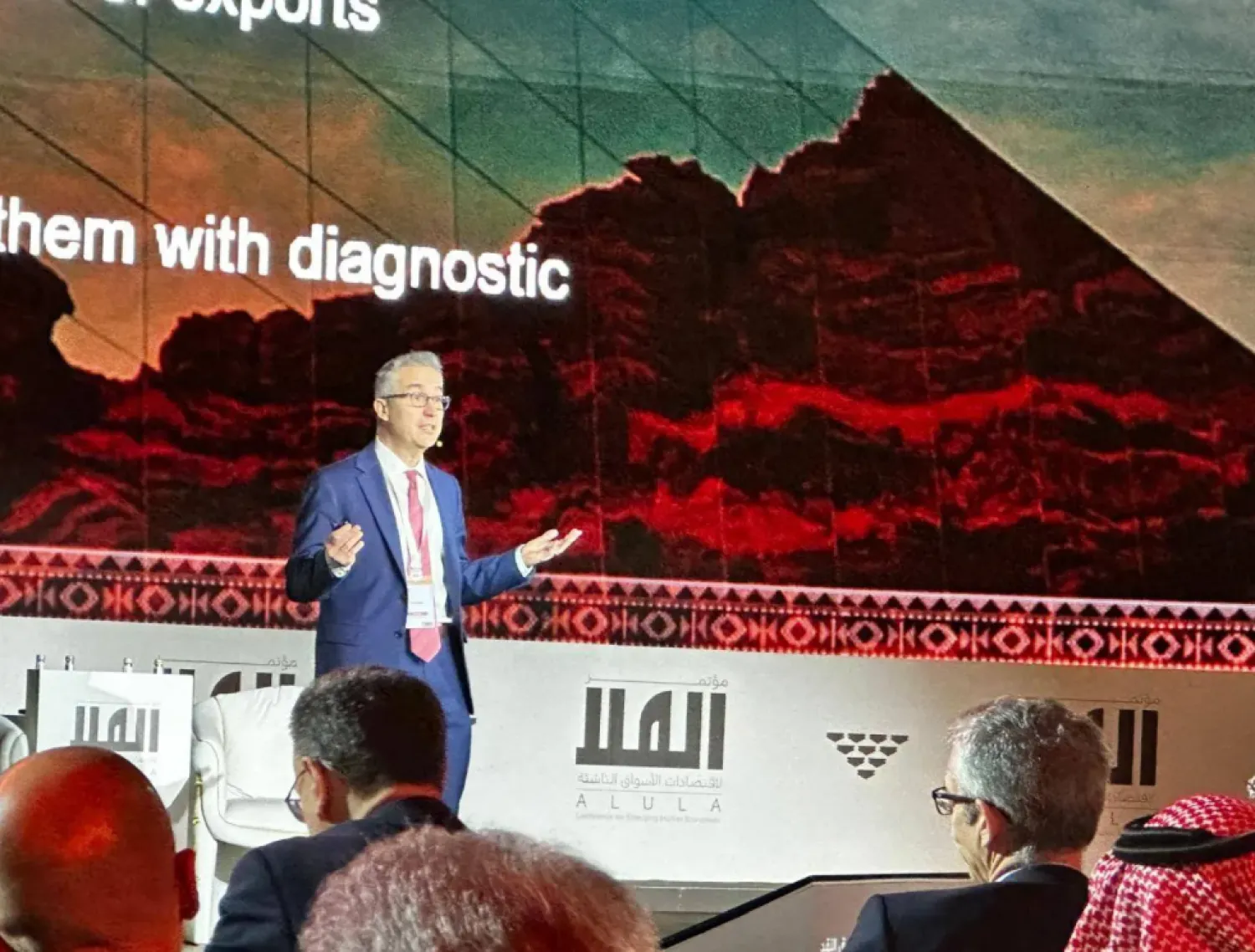
Professor Pol Antràs speaks during a panel discussion at the AlUla Conference for Emerging Market Economies (Asharq Al-Awsat).
TT

Leading Harvard Trade Economist Says Saudi Arabia Holds Key to Success in Fragmented Global Economy

Professor Pol Antràs speaks during a panel discussion at the AlUla Conference for Emerging Market Economies (Asharq Al-Awsat).

Harvard University economics professor Pol Antràs said Saudi Arabia represents an exceptional model in the shifting global trade landscape, differing fundamentally from traditional emerging-market frameworks. He also stressed that globalization has not ended but has instead re-formed into what he describes as fragmented integration.

Speaking to Asharq Al-Awsat on the sidelines of the AlUla Conference for Emerging Market Economies, Antràs said Saudi Arabia’s Vision-driven structural reforms position the Kingdom to benefit from the ongoing phase of fragmented integration, adding that the country’s strategic focus on logistics transformation and artificial intelligence constitutes a key engine for sustainable growth that extends beyond the volatility of global crises.

Antràs, the Robert G. Ory Professor of Economics at Harvard University, is one of the leading contemporary theorists of international trade. His research, which reshaped understanding of global value chains, focuses on how firms organize cross-border production and how regulation and technological change influence global trade flows and corporate decision-making.

He said conventional classifications of economies often obscure important structural differences, noting that the term emerging markets groups together countries with widely divergent industrial bases. Economies that depend heavily on manufacturing exports rely critically on market access and trade integration and therefore face stronger competitive pressures from Chinese exports that are increasingly shifting toward alternative markets.

Saudi Arabia, by contrast, exports extensively while facing limited direct competition from China in its primary export commodity, a situation that creates a strategic opportunity. The current environment allows the Kingdom to obtain imports from China at lower cost and access a broader range of goods that previously flowed largely toward the United States market.

Addressing how emerging economies should respond to dumping pressures and rising competition, Antràs said countries should minimize protectionist tendencies and instead position themselves as committed participants in the multilateral trading system, allowing foreign producers to access domestic markets while encouraging domestic firms to expand internationally.

He noted that although Chinese dumping presents concerns for countries with manufacturing sectors that compete directly with Chinese production, the risk is lower for Saudi Arabia because it does not maintain a large manufacturing base that overlaps directly with Chinese exports. Lower-cost imports could benefit Saudi consumers, while targeted policy tools such as credit programs, subsidies, and support for firms seeking to redesign and upgrade business models represent more effective responses than broad protectionist measures.

Globalization has not ended

Antràs said globalization continues but through more complex structures, with trade agreements increasingly negotiated through diverse arrangements rather than relying primarily on multilateral negotiations. Trade deals will continue to be concluded, but they are likely to become more complex, with uncertainty remaining a defining feature of the global trading environment.

Interest rates and artificial intelligence

According to Antràs, high global interest rates, combined with the additional risk premiums faced by emerging markets, are constraining investment, particularly in sectors that require export financing, capital expenditure, and continuous quality upgrading.

However, he noted that elevated interest rates partly reflect expectations of stronger long-term growth driven by artificial intelligence and broader technological transformation.

He also said if those growth expectations materialize, productivity gains could enable small and medium-sized enterprises to forecast demand more accurately and identify previously untapped markets, partially offsetting the negative effects of higher borrowing costs.

Employment concerns and the role of government

The Harvard professor warned that labor markets face a dual challenge stemming from intensified Chinese export competition and accelerating job automation driven by artificial intelligence, developments that could lead to significant disruptions, particularly among younger workers. He said governments must adopt proactive strategies requiring substantial fiscal resources to mitigate near-term labor-market shocks.

According to Antràs, productivity growth remains the central condition for success: if new technologies deliver the anticipated productivity gains, governments will gain the fiscal space needed to compensate affected groups and retrain the workforce, achieving a balance between addressing short-term disruptions and investing in long-term strategic gains.