



Head of Bahrain Journalists Association: Print Media Won’t Disappear

Head of Bahrain Journalists Association: Print Media Won’t Disappear
TT

Head of Bahrain Journalists Association: Print Media Won’t Disappear

Head of Bahrain Journalists Association: Print Media Won’t Disappear

The Chairman of Bahrain Journalists Association, Ahdeya Ahmed, believes that print media will not be disappearing anytime soon, but says changes need to be administered. In today’s digital age, the once-thriving industry struggles to secure an income.

Ahmed noted that innovation needs to come through in replacing losses caused by the advertisement industry’s stifling exodus. Most modern-day ad agencies prefer employing digital platforms. As for journalism in Bahrain, Ahmed cited a growing desire for updated regulations to help the industry stay relative to developments experienced by the country.

Ahmed, the first-ever female chair to preside over the Gulf state’s journalists association and Editor in Chief of Bahrain’s Daily Tribune, told Asharq Al-Awsat that Bahraini women gaining power in the country’s press echelons will enable her to sense the needs of colleagues and address pressing matters.

“Bahraini women journalists were able to enrich various media fields and serve as a catalyst for significant development in media,” Ahmed said on the role played by women in Bahrain media.

“Women attaining leadership positions in media bodies is iconic in its own right, especially that international reports on sustainable development involving women is given great importance,” she added.

“For my premiership over the Association, I look forward to reducing obstacles faced by women journalists in the field, especially in terms of helping them balance between their home and media careers.”

On the support Ahmed received while running for her post, she said: “Here, too, I would like to pay tribute to the support of colleagues in Saudi dailies that lasted throughout my campaign and later celebrated the results.”

She added that the warm support she received from fellow Saudi journalists has amplified her drive to take coming challenges head-on.

According to Ahmed, there are several concerns haunting media professionals. But a newly-issued press law, announced by Bahraini King Hamad bin Isa Al Khalifa and included in the National Action Charter, will guarantee greater protection for journalists and media professionals.

Ahmed also positively reviewed plans for the establishment of a fund to support journalists.

“When the media establishment and news organizers realize the role and responsibility of the media in the society, its role as a fourth estate is automatically activated for raising vital issues at a high level of professionalism,” Ahmed said on the press being the fourth estate.

“I repeat again that continuous training of young cadres will also activate this role,” she added.

When asked about the difficult experience Bahrain has undergone over the past period, Ahmed notes that the role of press is to “support not destroy nations.”

“There have been difficult times indeed, but now we have gone beyond all that we have been subjected to, and Bahrain has returned as before, and will always be better,” she said.

“As in every society, there are also reckless writers that have exploited freedom of expression and abused the homeland…The role of newspapers must be to protect and not destroy nations, no matter how we disagree with each other,” she said, while adding that the first and foremost objective upheld by the association was the protection of the security and stability of the Kingdom of Bahrain and fellow Gulf states.

Lebanese Army Breaks Up Armed Clash in Hezbollah Stronghold

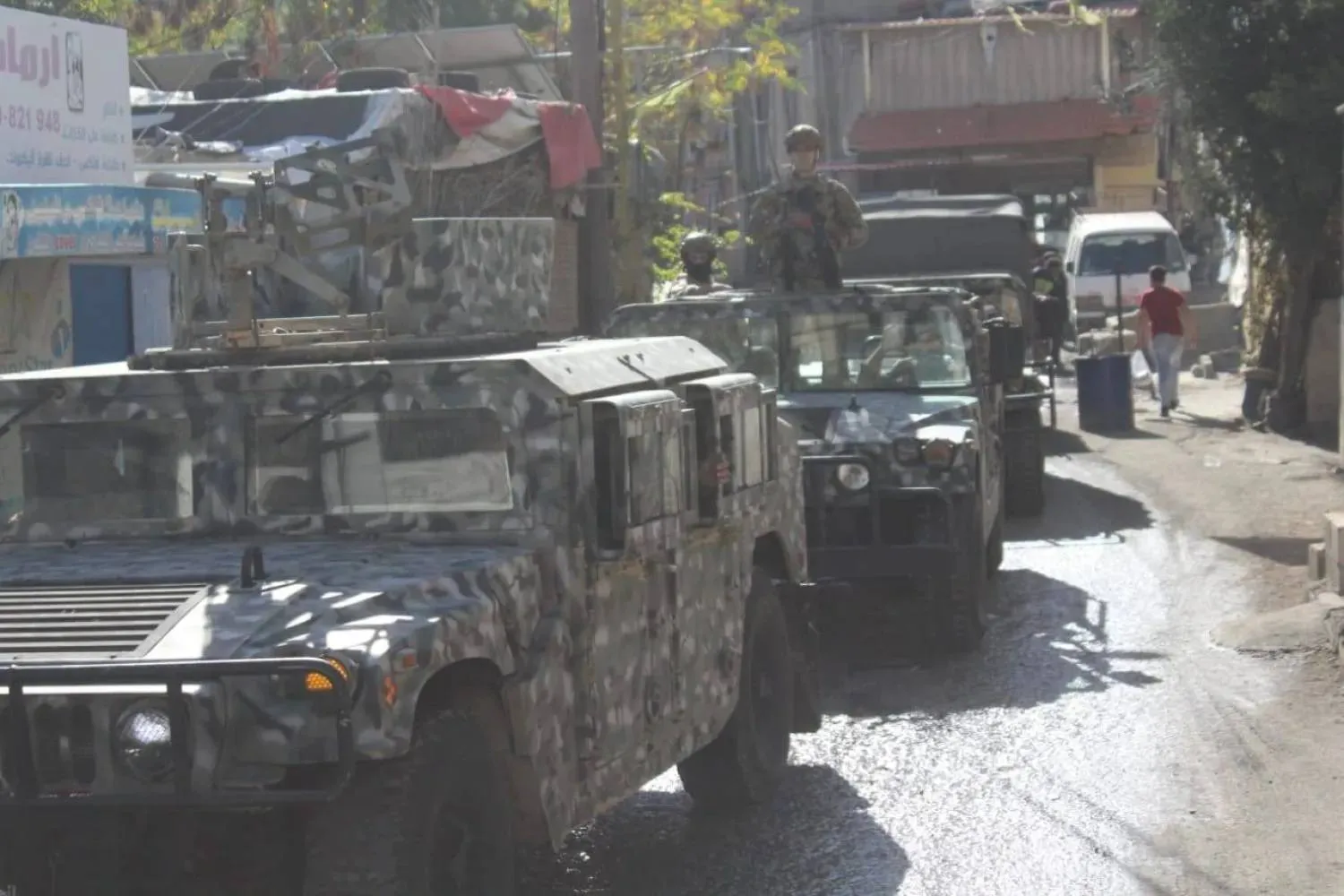
Lebanese army vehicles deployed at the scene of the clashes in Beirut’s southern suburbs. (Army Orientation Directorate)
TT

Lebanese Army Breaks Up Armed Clash in Hezbollah Stronghold

Lebanese army vehicles deployed at the scene of the clashes in Beirut’s southern suburbs. (Army Orientation Directorate)

The Lebanese army broke up an armed clash in the Kafaat area of Beirut's southern suburbs, a Hezbollah stronghold, that left several people wounded and sparked public anger over the gunfire, with residents calling on authorities to arrest those responsible.

The confrontation erupted between minibus drivers at the No. 4 bus stop in the Hay al-Jamaa neighborhood. Shots were fired, leaving several people wounded who were taken to the Lebanon Medical Center for treatment. The dispute later spread to the nearby Laylaki area, prompting residents to call on the army to intervene and put an end to the violence.

Videos circulating on social media showed individuals exchanging gunfire in Hay al-Jamaa, with one of the gunmen seen being struck by a bullet.

The area frequently sees armed clashes involving members of clans from eastern Lebanon’s Bekaa Valley who reside in the southern suburbs.

Army patrols swiftly deployed in force, driving the gunmen into hiding, field sources told Asharq Al-Awsat. The army sent reinforcements and began pursuing those involved in the shooting, the sources added.

Lebanon’s National News Agency (NNA) reported Thursday afternoon that a tense calm had returned to Hay al-Jamaa following the clashes between the minibus drivers.

Troops deployed across Kafaat, around Lebanon Medical Center and in Laylaki and Hay al-Jamaa to contain the violence and restore calm, the agency said.

The Lebanese Army Command later said an army unit had intervened to contain a personal dispute that escalated into an armed clash in Laylaki, carrying out raids that led to the arrest of four Lebanese nationals.

Security operations were ongoing to apprehend the remaining suspects, it added.

Armed clashes are a recurring problem in Beirut’s southern suburbs, where the widespread possession of firearms and machine guns among numerous groups has fueled confrontations that often leave people wounded and terrorize residents.

The violence has repeatedly drawn condemnation from residents frustrated by the persistent clashes and gunfire.

Kafaat residents said the problem was compounded by the presence of individuals who enjoy preferential treatment and protection.

“People here are demanding that the state put an end to uncontrolled weapons as a priority to protect residents. ... We can no longer endure the risks and intimidation,” one resident told Asharq Al-Awsat, pointing to disruptions to daily life and mounting risks to schoolchildren as clashes recur.

The Lebanese army pursues suspects wanted for gunfire offenses in the southern suburbs, as it does elsewhere in the country.

Last week, an army unit raided several homes of wanted suspects in the southern suburbs in pursuit of two individuals accused of opening fire on previous occasions, seizing weapons and military ammunition.

On Nov. 13, the Lebanese Army Command announced that its Intelligence Directorate had carried out a targeted security operation following close monitoring of weapons transportation and trafficking activities.

The operation involved a raid on a warehouse in Musharrafieh, in Beirut’s southern suburbs, where the army seized a large cache of weapons and military ammunition and arrested one person.


Lebanon’s Judiciary Becomes New Battleground Between State and Hezbollah

The Justice Palace in Beirut (circulating photo)
TT

Lebanon’s Judiciary Becomes New Battleground Between State and Hezbollah

The Justice Palace in Beirut (circulating photo)

Lebanon’s judiciary has emerged as a key battleground between the state and Hezbollah as prosecutions widen to target the group’s officials and members in the Dahr al-Baidar explosives case and the suspected cell in northern Lebanon.

The proceedings come amid mounting calls to refer the explosives case to the Judicial Council and demands by Hezbollah that the state release the detainees.

Judge Claude Ghanem, the government commissioner to the Military Court, issued three search notices on Wednesday for Hezbollah officials, including Bilal al-Asaad, after they failed to appear for questioning in the case involving the Bcharre and Batroun highlands.

Meanwhile, First Military Investigating Judge Ghada Abu Alwan issued in-person arrest warrants for the five suspects detained in northern Lebanon.

The five were arrested on Nov. 10 and charged with forming an armed group and recruiting, equipping and arming its members. Defense lawyers denied that they had carried out a security reconnaissance mission.

The prosecutions follow the government’s March 2 decision to ban Hezbollah’s military and security activities and restrict its role to politics. The charges have yet to be proven.

On Oct. 22, the cabinet deferred a decision on Justice Minister Adel Nassar’s request to refer the Dahr al-Baidar and Qasr explosives case to the Judicial Council pending further progress in the investigation, prompting Lebanese Forces ministers to walk out.

Under Article 355 of the Code of Criminal Procedure, cases are referred to the Judicial Council by a cabinet decree. A judicial investigator appointed by the justice minister with the approval of the Higher Judicial Council conducts the investigation. The council’s rulings cannot be challenged except through objections or retrials.

The embassies of the United States, Britain, Australia, Canada and Japan have called for swift and independent judicial proceedings in the Dahr al-Baidar case.

Hezbollah Secretary-General Naim Qassem, meanwhile, demanded the release of those detained in the Bcharre and Batroun case and defended the legality of the activities of those held in the Dahr al-Baidar case, warning that “patience in the face of injustice has its limits.”

Ending Hezbollah’s Exceptional Status

Lebanese MP Ibrahim Mneimneh described the judicial action against Hezbollah as a crucial step toward ending the exceptional status the group has enjoyed for years and ensuring equality before the law.

He said the state may have found in the judiciary a way to enforce its decisions on establishing a state monopoly on arms.

“This is the turning point we have been calling for: ensuring that all Lebanese are equal before the law,” Mneimneh told Asharq Al-Awsat.

“The exceptional status Hezbollah enjoyed under the ‘army, people and resistance’ formula is now history. The party must realize that it is subject to the law.”

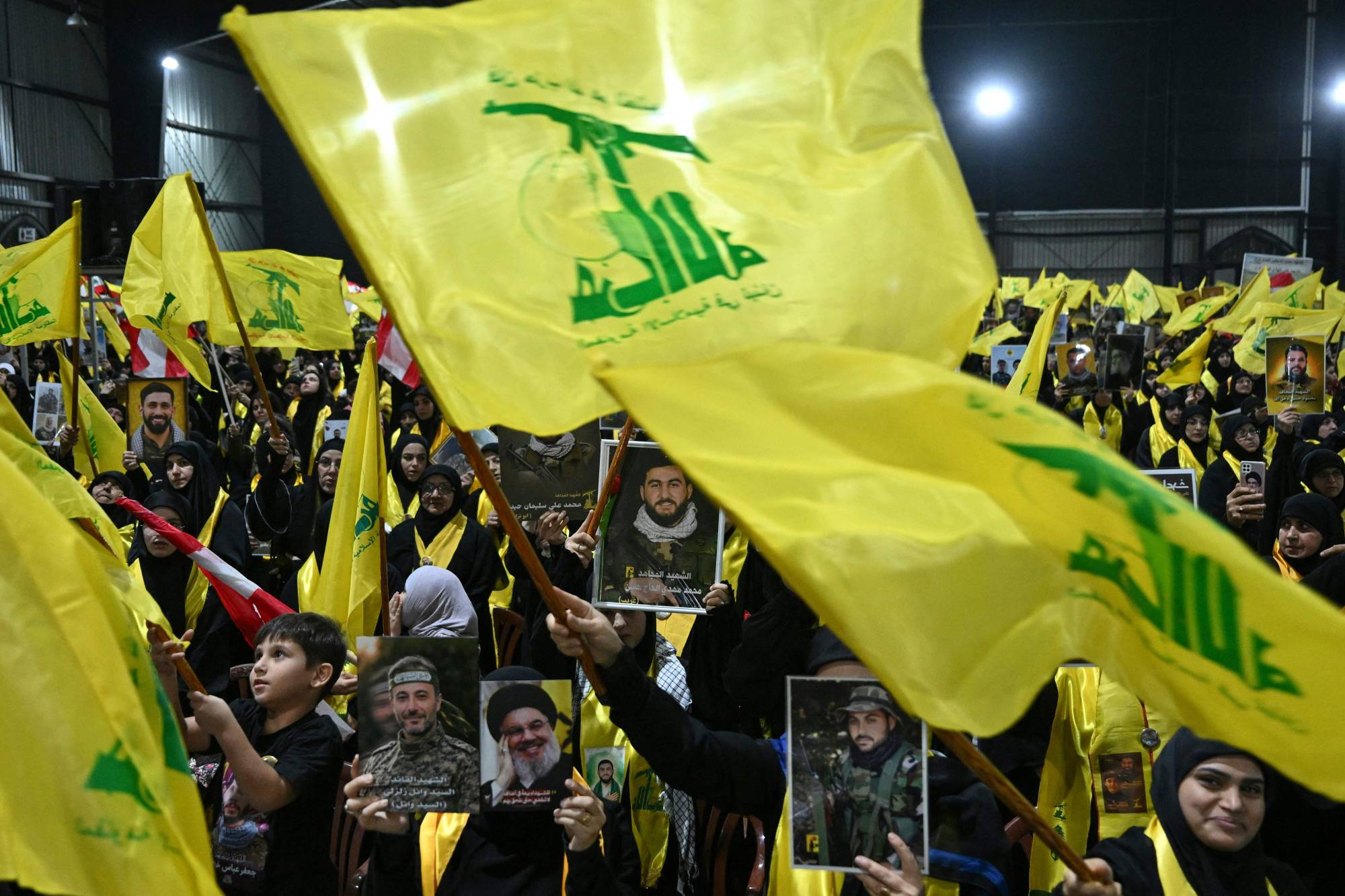
Hezbollah supporters wave flags of the group as they attend a ceremony commemorating the Iran-backed group's annual Martyrs' Day in Beirut's southern suburbs on November 11, 2026. (Photo by Joseph EID / AFP)

He said turning to the law, legal authorities and the Lebanese judiciary to deliver justice and reinforce the state’s monopoly on arms was “the right starting point.”

“Once the law and the judiciary become the ultimate authority, this will go beyond the weapons issue to encompass other matters that, in recent years, became exceptions to the law and undermined the very concept of the state,” he added.

Mneimneh stressed that the judiciary must be the authority to which both the Lebanese people and the state turn in dealing with Hezbollah.

“The Lebanese state is finally showing seriousness in addressing this issue and may have found the right way forward,” he said.

“Until recently, despite the government’s bold decisions, we sensed an inability to implement them. But the state appears to have found its way forward through the judiciary. This is a positive development that must be built upon and extended to all cases.”

Asked whether the Dahr al-Baidar truck case could be referred to the Judicial Council, Mneimneh said: “I don’t know whether that is possible, but it could be useful. Judicial action and the issuance of an arrest warrant are, in themselves, an achievement.”

“What matters is sustaining this process, not only in the Dahr al-Baidar truck case, important as it is, but also in upholding the rule of law against all violations across the country, foremost among them Hezbollah’s weapons, as well as anyone else bearing arms or breaking the law in other cases.”

He stressed that the supremacy of the law was fundamental to the very concept of the state and to building it.

Dual Authority

Constitutional expert Antoine Messarra said Lebanon’s judicial, administrative and security challenges were inseparable from its incomplete sovereignty and dual authority.

He stressed that the current judicial action, made possible by the positions taken by the president and prime minister, needed broad public support to gain traction.

“There are two types of occupation in Lebanon: a hostile Israeli occupation and a ‘brotherly occupation,’” Messarra told Asharq Al-Awsat, using the latter term to describe weapons held outside state control.

“All problems facing the administration, security institutions and judiciary must be understood in the context of occupation. No constitution or system of governance can function effectively under such conditions, even in Switzerland, France or Denmark,” he said.

Messarra said the country’s leadership and several judges were making tremendous efforts, but public support for the process remained sorely lacking.

He criticized a broad segment of Lebanese society for what he described as “political posturing, mutual deception, feigned cleverness and maintaining equal distance from all sides,” even on matters of national sovereignty.

Messarra noted that steps and positions once deemed impossible were now within reach. Lebanon, he said, was undergoing a “slow process” that still lacked broad-based public backing.


Syrian President Appoints Ilham Ahmad to People's Assembly

Syrian President Ahmad al-Sharaa meets with Mazloum Abdi and Ilham Ahmad on Tuesday evening (Syrian Presidency)
TT

Syrian President Appoints Ilham Ahmad to People's Assembly

Syrian President Ahmad al-Sharaa meets with Mazloum Abdi and Ilham Ahmad on Tuesday evening (Syrian Presidency)

Syrian President Ahmad al-Sharaa has issued Decree No. 200 of 2026 appointing Ilham Hanan Ahmad to the People's Assembly to fill a vacant seat designated for an independent member, bringing the assembly's membership from 205 to 206, the legislative body announced Thursday.

The decree is based on provisions of the Constitutional Declaration, particularly Article 24, as well as Article 45 of Decree No. 143.

According to the assembly, Article 45 authorizes the president to appoint a replacement for any member who dies, resigns or loses their membership.

People's Assembly member Mudar Wafiq Hamdan was removed from his position several weeks ago over his previous ties to the former regime, which had sparked public and media criticism.

Ahmad's appointment brings the number of Syrian Kurdish lawmakers in the assembly to nine.

The appointment comes months after the Syrian Democratic Forces (SDF) announced their dissolution as part of an agreement to integrate their structures into central state institutions.

On March 10, 2025, President al-Sharaa and SDF commander Mazloum Abdi signed an agreement providing for a ceasefire and the integration of the Kurdish-led forces into Syrian state institutions.

The agreement initiated a process to integrate Kurdish forces in the region, including the formation of a military division comprising three SDF brigades and a separate brigade for the forces of Ain al-Arab (Kobani), within a division affiliated with Aleppo province.

In August, following a military escalation with Damascus, Abdi announced the dissolution of the SDF, whose backbone consisted of Kurdish fighters who had played a major role in combating ISIS. President al-Sharaa subsequently appointed him as an adviser.

Since the agreement, several former SDF officials have been appointed to positions in the Syrian government.

These include Abdi's appointment as presidential adviser on Kurdish affairs, Sipan Hamo (Samir Aso) as deputy defense minister for the eastern region, and Nour al-Din Issa Ahmad, also known as Abu Omar Khanika, as governor of Hasakah, alongside other appointments.

The dissolution of the SDF marked the end of a significant chapter in the history of Syria's Kurds, who had hoped to consolidate self-rule and preserve the gains achieved during years of conflict. Ilham Ahmad was among the most prominent advocates of those aspirations.

Born in 1972 in Afrin, northern Syria, Ilham Hanan Ahmad has spent decades playing a prominent role in advocating for Kurdish rights and women's political participation, both domestically and internationally.

She began her political activism as one of the early advocates of women's rights at the University of Aleppo, where she studied Arabic literature.

Ahmad later became one of the founders of the autonomous administration established by Kurdish groups after the outbreak of the Syrian conflict, which developed organized civilian and military institutions.

She strongly advocated a decentralized, pluralistic system of government in Syria, a proposal firmly opposed by Damascus.

Alongside Abdi, Ahmad became one of the principal negotiators with the central government, participating in talks that culminated in the signing and implementation of the integration agreement.

The start of the agreement's implementation, which included provisions for the return of displaced Kurds to areas they had fled following Turkish military operations, enabled Ahmad to visit her hometown of Afrin in May 2026 for the first time in nine years.
