Washington Welcomes GCC Letter to Extend Iran Arms Embargo

Washington Welcomes GCC Letter to Extend Iran Arms Embargo
TT

Washington Welcomes GCC Letter to Extend Iran Arms Embargo

Washington Welcomes GCC Letter to Extend Iran Arms Embargo

US Secretary of State Mike Pompeo welcomed a letter by the Gulf Cooperation Council (GCC) backing an extension of a United Nations arms embargo on Iran, just two months before it is set to expire.

In an interview with Fox News, Pompeo expressed US keenness on implementing all regulations and sanctions against Iran because its access to weapons would destabilize the Middle East and jeopardize the UAE and Saudi Arabia. He stressed that the Middle East countries should seek the truth, especially amid news circulating about possible military and commercial agreements with China.

General-Secretary Nayef al-Hajraf sent a letter to the UN Security Council on behalf of the six GCC countries, backing an extension of the arms embargo on Iran. The six countries are Saudi Arabia, UAE, Kuwait, Bahrain, Oman, and Qatar.

The GCC Secretary-General pointed out that Iran has continued to arm terrorist and sectarian organizations and movements throughout the region, the council said in a statement.

While political and diplomatic sources reported that Washington postponed submission of the draft in order to finish consultations and mobilization, they added that the draft requires a minimum of nine votes to be approved under the condition that Russia and China don't use the veto.

The US is facing international challenges inside the Security Council to persuade its members to extend the embargo, amid a tug-of-war with China and Russia as they wish to exploit this issue to push the US towards concessions.

The US warned that in case it failed to extend the embargo, then it will renew the US sanctions against Iran - a move known as snapback – this process was agreed upon when signing the nuclear deal with Iran in 2015.

Several analysts and experts believe that Trump’s administration might have no other option but to implement this mechanism. The concession at this phase – close to presidential elections - would send a negative message to democratic rivals who might exploit this in their election rallies.


Saudi Arabia Grants Stranded Syrians, Egyptians Transit Visas

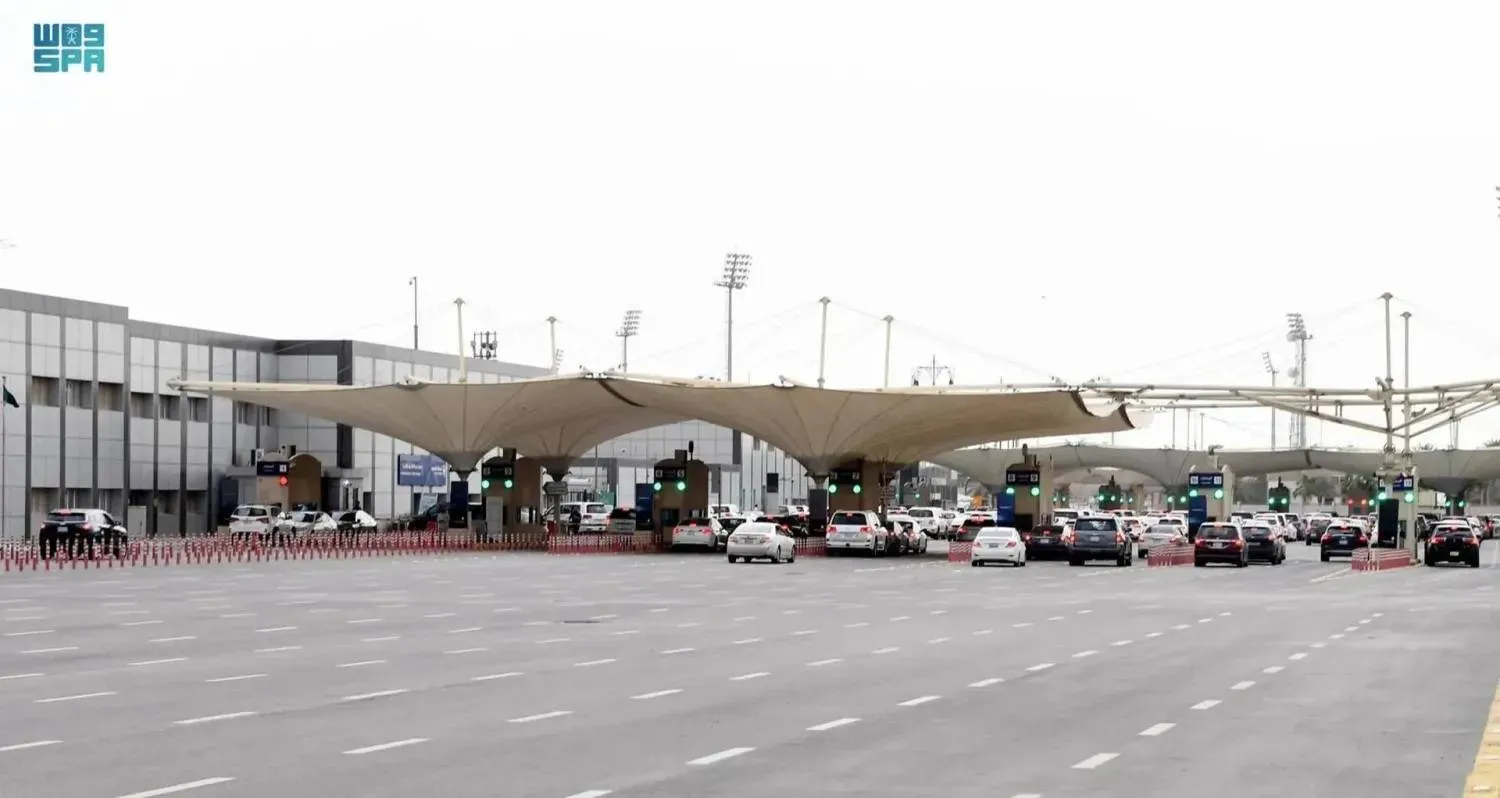
The King Fahd Causeway linking Saudi Arabia and Bahrain. (SPA)
TT

Saudi Arabia Grants Stranded Syrians, Egyptians Transit Visas

The King Fahd Causeway linking Saudi Arabia and Bahrain. (SPA)

Several ambassadors accredited to Saudi Arabia said their countries are coordinating closely with Saudi authorities to facilitate the entry and transit of their citizens through the Kingdom’s land crossings, amid the instability in the region.

Mohsen Mahbash, chargé d’affaires at the Syrian Embassy in Riyadh, said the embassy receives daily lists — coordinated with Syrian embassies across Gulf countries — that are sent to the Saudi Foreign Ministry to help stranded Syrian citizens obtain visas needed to transit overland through Saudi territory to Syria or other destinations.

Speaking to Asharq Al-Awsat, Mahbash said the embassy formed a committee from its diplomatic staff after flights were suspended to follow the issue. It also launched a WhatsApp hotline to receive inquiries from stranded citizens about procedures for obtaining visas that allow them to pass through the Kingdom to Syria by land or to third countries.

He said that from the first moments of the regional escalation and the suspension of flights due to military operations, the embassy began receiving inquiries and requests for assistance from Syrian citizens stranded at Saudi airports after their flights were canceled.

The embassy immediately contacted the Saudi Foreign Ministry to inquire about procedures that could help those cases obtain the visas needed to leave the Kingdom or transit through it to other destinations, he said.

Mahbash added that the Saudi Foreign Ministry circulated procedures for granting visas through official diplomatic channels to streamline the process and remove obstacles for citizens needing assistance.

Regarding pilgrims and visitors, Mahbash said the embassy continues coordinating with Syria’s ministries of religious endowments and tourism to monitor the movement of pilgrims and ensure their return to Syria.

He praised the Saudi Ministry of Hajj and Umrah for its immediate and daily coordination, noting that Umrah pilgrims’ trips and returns to Syria have so far proceeded without significant obstacles.

He reiterated his country’s position, issued by the Ministry of Foreign Affairs and Expatriates, condemning what it described as Iran’s unjustified escalation and attacks against countries in the region.

He also praised the Saudi Foreign Ministry, the Ministry of Hajj and Umrah, and the Interior Ministry for their direct and supportive response in assisting Syrian citizens affected by the current situation.

Egypt’s ambassador to Saudi Arabia Ehab Abu Srei told Asharq Al-Awsat that Saudi Arabia has shown a strong understanding of the difficult situation facing Egyptian visitors stranded in Gulf countries.

He said communication has taken place with the consular department at the Saudi Foreign Ministry regarding residents and visitors in the Kingdom and across Gulf countries, particularly Bahrain, adding that residents in all Gulf states face no restrictions on entering Saudi Arabia.

The Egyptian Embassy in Riyadh has urged Egyptian citizens stranded in neighboring Gulf countries that share land borders with Saudi Arabia to contact Egyptian embassies in those countries to take the necessary measures.

The embassy said this falls within the framework of the Saudi Foreign Ministry's generous initiative to allow emergency entry visas at land crossings, so that Saudi territory can be used for returning to Egypt.

Abu Srei also praised the political coordination between the two countries under the current circumstances, describing it as “high-level coordination.”

He reiterated Egypt’s position, condemning violations of the sovereignty of any Gulf Cooperation Council state, including Saudi Arabia, stressing that dialogue — not military operations — is the path to resolving disputes.

Meanwhile, Iraq’s Foreign Ministry welcomed Saudi Arabia’s approval of a request submitted by the Iraqi Embassy in Riyadh to grant transit visas to Iraqi citizens wishing to return home via Saudi territory through the Arar border crossing.

The ministry said the move followed ongoing diplomatic coordination among the Iraqi Embassy in Riyadh, the Saudi Foreign Ministry, and the relevant authorities.

It added that the necessary official approvals were obtained to grant entry visas for overland transit, in line with the Kingdom’s laws and regulations, ensuring smooth movement through air and land border crossings.



Saudi Arabia Affirms Its Full Right to Take all Necessary Measures to Protect its Security, Territorial Integrity

Saudi Crown Prince Mohammed bin Salman bin Abdulaziz Al Saud - SPA
TT

Saudi Arabia Affirms Its Full Right to Take all Necessary Measures to Protect its Security, Territorial Integrity

Saudi Crown Prince Mohammed bin Salman bin Abdulaziz Al Saud - SPA

Prince Mohammed bin Salman bin Abdulaziz Al Saud, Crown Prince and Prime Minister, chaired a Cabinet session held on Tuesday via video conference.

The Crown Prince briefed the Cabinet on the content of recent phone calls with the leaders of several brotherly and friendly countries, within the framework of ongoing consultations on the latest developments in the region and their repercussions on regional and international security and stability.

The Cabinet strongly condemned the heinous Iranian attacks on the Kingdom of Saudi Arabia, the Gulf Cooperation Council (GCC) countries, and a number of Arab, Islamic, and friendly countries, the insistence on threatening security and stability, and the blatant violation of international conventions and international law by attacking civilian targets, airports, and oil facilities.

The Cabinet affirmed the Kingdom's full right to take all necessary measures to protect its security, sovereignty, and territorial integrity, and to deter aggression. It commended the capabilities of the Saudi air defenses in intercepting and destroying hostile missiles and drones that attempted to target sites and facilities within the Kingdom.

Minister of Media Salman Al-Dossary stated to the SPA, following the session that the Cabinet reviewed the Kingdom of Saudi Arabia's ongoing role, stemming from its approach of supporting solidarity, cooperation, and coordination with its Gulf and Arab neighbors in addressing current regional challenges.

The Cabinet expressed its appreciation for the statements issued by the GCC-European Union ministerial meeting and the League of Arab States ministerial meeting, which both condemned the blatant Iranian attacks.

The Cabinet then discussed several reports on domestic affairs, noting the recommendations from the 33rd annual meeting of the governors of the regions, which focused on supporting development opportunities, enhancing the capabilities of various sectors, and continuing to improve development services.

The Cabinet also addressed the state's keen interest in strengthening the charitable sector, consolidating the values of giving, and presenting a model to be emulated in philanthropy and solidarity. It commended the success of the sixth edition of the National Campaign for Charitable Work (Ehsan), building upon the successes achieved in previous years.

The Cabinet considered the celebration of Flag Day, which falls on March 11, as a reaffirmation of pride in its significance and symbolism in the history of the Saudi state, its founding, unification, and development, and in its embodiment of the Kingdom's established principles and national identity.


Qatar Says Iran Must Halt Attacks before Any Talks

Qatar's Foreign Ministry spokesman Majed al-Ansari. (Qatari Foreign Ministry)
TT

Qatar Says Iran Must Halt Attacks before Any Talks

Qatar's Foreign Ministry spokesman Majed al-Ansari. (Qatari Foreign Ministry)

Qatar's Foreign Ministry spokesman Majed al-Ansari stressed on Tuesday that Iran needed to halt its attacks before any talks can be held.

Speaking at a press conference in Doha, he said Qatar is being attacked daily by Iran, “so we cannot speak of any talks with it before it ceases its assaults.”

Contacts are ongoing with all parties to ensure an end to the conflict, he added, while accusing Iran of attacking civilian infrastructure in Qatar.

Moreover, he described as a “dangerous precedent” Iran’s attacks on energy facilities, saying they will cause economic losses in the region and have global consequences.

“The best solution lies in ending attacks on our energy facilities,” al-Ansari said in response to whether escorting ships in the Hormuz Strait was a viable option.

He revealed that since the eruption of the war, Qatari Prime Minister and Foreign Minister Sheikh Mohammed bin Abdulrahman Al Thani had held only one telephone call with Iran’s foreign minister.

However, channels of contact with Tehran have not been completely severed, al-Ansari said. Doha is now focusing on de-escalation and ending the attacks.

Furthermore, he hoped that Iranian President Masoud Pezeshkian’s apology to Gulf countries over the attacks would have actually meant that they would end.

Instead, the attacks continued, rendering the apology meaningless, al-Ansari stressed.

“Any attack on Qatar will be handled in the appropriate manner,” he went on to say. “Confronting the Iranian aggression has become a priority given its impact on Qatar’s and the global economy.”

Al-Ansari said the armed forces have succeeded in defending the nation and repelling rocket and drone attacks that have targeted vital and civilian installations.

Qatar still believes in diplomacy and welcomes any role that can end the war, he continued. “Attacks against Qatar and its people are unacceptable. Leaders are working tirelessly to stop the assaults.”

Earlier, the Defense Ministry said the armed forces repelled a rocket attack.

On Monday, Doha confronted 17 ballistic missile and six drone attacks.