


Aramco Announces World’s First Blue Ammonia Shipment

The logo of Aramco at the Plaza Conference Center in Dhahran, Saudi Arabia (File photo: Reuters)
TT

Aramco Announces World’s First Blue Ammonia Shipment

The logo of Aramco at the Plaza Conference Center in Dhahran, Saudi Arabia (File photo: Reuters)

Saudi Aramco announced it will be producing the first shipment of blue ammonia in partnership with the Institute of Energy Economics, Japan (IEEJ), and SABIC.

Aramco have successfully demonstrated the production and shipment of blue ammonia to Japan with support from the Japanese Ministry of Economy, Trade and Industry.

This step highlights the pathways within the concept of a global circular carbon economy, a framework in which CO2 emissions are reduced, removed, recycled and reused, rather than being released into the atmosphere.

Saudi Arabia has universally adopted the concept of the carbon economy. Last week, Riyadh chaired the 2020 Clean Energy Ministerial and Mission Innovation Ministerial virtual meetings to promote the carbon economy and support sustainable energy.

Through its current presidency of the G20, Saudi Arabia is pushing towards expanding the circular carbon economy, as a framework for promoting access to sustainable and reliable energy at a lower cost.

Riyadh reiterated the need to encourage the use of energy technologies based on research, development and innovation that enhance such an economy.

Aramco indicated that 40 tons of high-grade blue ammonia has already been dispatched to Japan for use in zero-carbon power generation.

This shows the role hydrogen will play in the global energy system.

Ammonia, a compound consisting of three-parts hydrogen and one-part nitrogen, can contribute to addressing the challenge of meeting the world’s growing energy demands in a reliable, affordable and sustainable manner.

It contains approximately 18 percent hydrogen by weight and is already a widely traded chemical around the world, and has the potential to make a significant contribution to an affordable and reliable low-carbon energy future.

SABIC and Mitsubishi Corporation, which is represented on the IEEJ study team involved in the project, are overseeing the transport logistics in partnership with JGC Corporation, Mitsubishi Heavy Industries Engineering, Mitsubishi Shipbuilding and UBE Industries.

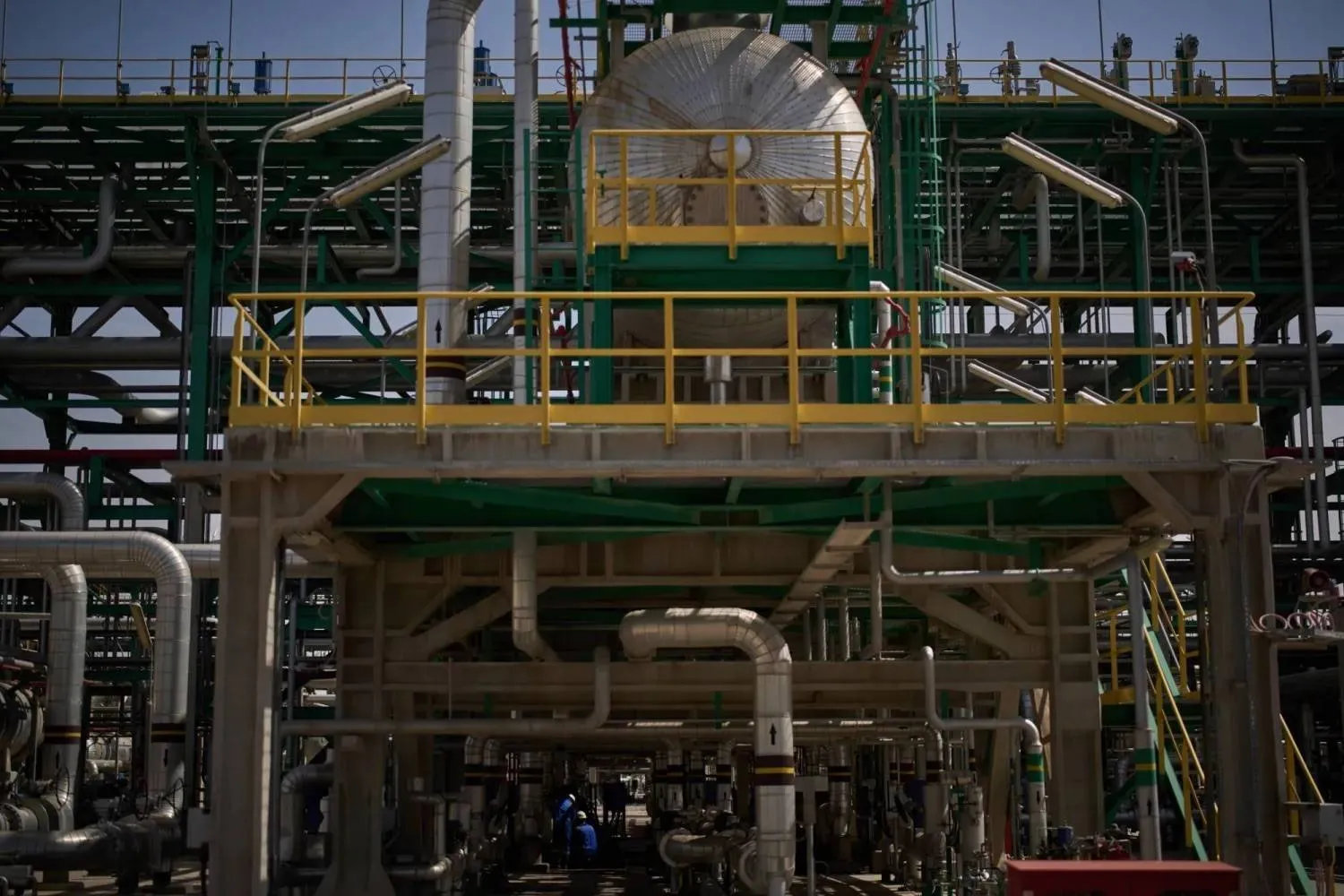
The Saudi-Japan blue ammonia supply network includes the conversion of hydrocarbons to hydrogen and then to ammonia, as well as the capture of associated CO2 emissions.

The company overcame challenges associated with shipping blue ammonia to Japan by capturing 30 tons of CO2 during the process designated for use in methanol production at SABIC’s Ibn-Sina facility and another 20 tons used for Enhanced Oil Recovery at Aramco’s Uthmaniyah field.

Speaking on the occasion, Aramco’s Chief Technology Officer, Ahmad al-Khowaiter, expects the use of hydrogen to grow in the global energy system.

He indicated that the world’s first shipment is an exciting opportunity for Aramco to showcase the potential of hydrocarbons as a reliable and affordable source of low-carbon hydrogen and ammonia.

This milestone also highlights a successful transnational, multi-industry partnership between Saudi Arabia and Japan, according to Khowaiter.

He added that Aramco continues to work “with various partners to find solutions through the deployment of breakthrough technologies to produce low-carbon energy and address the global climate challenge.”

For his part, IEEJ Chairman Toyoda Masakazu asserted that blue ammonia is critical to Japan’s zero carbon emission ambitions to sustain the balance between the environment and the economy.

He indicated that about 10 percent of power in Japan can be generated by 30 million tons of blue ammonia.

The Vice President of Energy Efficiency and Carbon Management at SABIC, Fahad al-Sherehy, announced that SABIC can economically leverage the existing infrastructure for hydrogen and ammonia production with CO2 capture.

“Our experience in the full supply chain along with integrated petrochemicals facilities will play an important role in providing blue ammonia to the world.”

The Institute of Energy Economics, Japan was established in 1966 and became a certified incorporated foundation by the Ministry of International Trade and Industry in September that year.

The aim of its establishment was to carry out research activities specialized in energy from the viewpoint of the national economy in a bid to contribute to the development of Japanese energy-supplying and energy-consuming industries and help improve people’s life.

It objectively analyzes energy problems and provides basic data, information and reports necessary for the formulation of policies.

With the diversification of social needs, IEEJ expanded its activities to include topics such as environmental problems and international cooperation closely related to energy.

Saudi Aramco aims to become an integrated global leader in the field of energy and chemicals, as it is currently producing one barrel for every eight barrels of global oil supply.

Aramco continues to develop new energy technologies, focusing on the reliability and sustainability of its resources which help enhance stability and long-term growth around the world.



Meta Buys China-founded AI Agent Manus

FILE PHOTO: The logo of Meta is seen at Porte de Versailles exhibition center in Paris, France, June 11, 2025. REUTERS/Gonzalo Fuentes/File Photo/File Photo
TT

Meta Buys China-founded AI Agent Manus

FILE PHOTO: The logo of Meta is seen at Porte de Versailles exhibition center in Paris, France, June 11, 2025. REUTERS/Gonzalo Fuentes/File Photo/File Photo

Facebook owner Meta has agreed to acquire Manus, an artificial intelligence agent created by a company founded in China but now based in Singapore, the two firms said.

However, analysts warned the deal could fall foul of regulators at a time of fierce technological rivalry between Washington and Beijing.

Exceeding the capabilities of AI chatbots like ChatGPT, AI agents can autonomously perform complex tasks for users, and are seen as having huge potential.

Manus, created by startup Butterfly Effect, can for example sift through and summarize resumes or create a stock analysis website, according to its website.

Meta said Monday that the deal -- the financial details of which were not disclosed -- will "bring a leading agent to billions of people and unlock opportunities for businesses across our products".

"The era of AI that doesn't just talk, but acts, creates, and delivers, is only beginning," Manus chief executive Xiao Hong said on X.

"And now (with Meta), we get to build it at a scale we never could have imagined."

Meta CEO Mark Zuckerberg is making a huge push into AI, spending billions of dollars on acquisitions, hiring engineers and building data centers.

Bloomberg Intelligence analysts said the purchase is likely aimed at expanding Meta's AI agent task capabilities, and that it could be worth more than $2 billion.

However, "it could draw regulatory scrutiny given that Singapore-based Manus was founded in China", the analysts said.


Precious Metals Fall again, Asian Stocks Swing as Traders Wind Down

Gold and silver prices have fallen from record highs this week. DAVID GRAY / AFP/File
TT

Precious Metals Fall again, Asian Stocks Swing as Traders Wind Down

Gold and silver prices have fallen from record highs this week. DAVID GRAY / AFP/File

Precious metals extended losses Tuesday on profit-taking after hitting recent records, while equities fluctuated in quiet trade as investors wound down ahead of the New Year break.

Traders were taking it easy in the last few days of 2025 following a stellar 12 months that have seen tech firms push several stock markets to all-time highs, while bitcoin, gold and silver have also enjoyed multiple peaks, said AFP.

Minutes from the Federal Reserve's most recent policy meeting -- at which it cut interest rates a third straight time -- are due to be released later in the day and will be scanned for an idea about whether a fourth can be expected in January.

The US central bank's monetary easing in the back end of this year has been a key driver of the markets' rally, compounding a surge in the tech sector on the back of the vast amounts of cash pumped into all things AI.

It has also helped offset recent worries about a possible tech bubble and warnings that traders might not see a return on their investments in artificial intelligence for some time.

Still, Asian markets have enjoyed a healthy year, with Seoul's Kospi piling on more than 75 percent and Tokyo's Nikkei 225 more than 25 percent -- both having hit records earlier in the year.

Still, both edged down Tuesday, with Shanghai, Sydney and Taipei also lower. Hong Kong, Singapore, Wellington and Jakarta rose.

The mixed performance followed losses for all three main indexes on Wall Street.

The big moves of late have been seen in precious metals, with gold hitting a record just shy of $4,550. Silver, meanwhile, topped out at $84 after soaring around 150 percent this year.

Investors have been piling into the commodities on bets for more US rate cuts, a weaker dollar and geopolitical tensions.

Silver has also been boosted by increased central bank purchases and supply concerns.

However, both metals have pulled back sharply this week on profit-taking, with gold now around $4,340 and silver at $73.50.

Oil dipped, having jumped more than two percent Monday when investors rowed back bets on peace talks to end Russia's war with Ukraine as a meeting between US President Donald Trump and Ukrainian counterpart Volodymyr Zelensky ended with little progress.

That surge followed Friday's similar-sized rally on optimism for a breakthrough to end the nearly four-year conflict.

An end to the war could see sanctions on Russian oil removed, which would see a huge fresh supply hit the market.

Bitcoin, which has tumbled since spiking above $126,000 in October, was stabilizing just below $90,000 after a shaky end to the year.


Quality of Life Program Center Launches 'Smart Cities' Report

The Quality of Life Program Center has launched its new report on "Smart Cities". (SPA)
TT

Quality of Life Program Center Launches 'Smart Cities' Report

The Quality of Life Program Center has launched its new report on "Smart Cities". (SPA)

The Quality of Life Program Center has launched its new report on "Smart Cities," highlighting key global trends in the development of smart cities and their role in improving quality of life and enhancing urban sustainability.

This launch aims to promote human-centered cities and advance smart urban development, in line with Saudi Vision 2030 objectives, the Saudi Press Agency reported on Tuesday.

The report notes that smart cities are among the most important pillars of modern urban development, as they rely on the use of advanced technologies, data analytics, and the Internet of Things to improve service efficiency, enhance quality of life, and address growing urban challenges such as traffic congestion, pollution, and resource management.

It also reviews several global indicators demonstrating the ability of smart solutions to reduce emergency response times, improve educational outcomes, increase residents' satisfaction with public services, and reduce energy consumption and carbon emissions through smart grids and advanced transportation systems.

The report emphasizes that adopting smart city concepts constitutes a fundamental pillar for achieving sustainable urban development, improving quality of life, and building more resilient and prosperous communities, thereby enhancing the competitiveness of Saudi cities at the regional and global levels.