Moscow Pressures US-backed SDF Near Syria’s Ain Issa

The humanitarian corridor in northwestern Syria’s Saraqib empty of civilians (Asharq Al-Awsat)
TT

Moscow Pressures US-backed SDF Near Syria’s Ain Issa

The humanitarian corridor in northwestern Syria’s Saraqib empty of civilians (Asharq Al-Awsat)

Russian forces in Syria attempted pressuring the US-backed Syrian Democratic Forces (SDF) into giving up control of some areas near the Ain Issa subdistrict, located northeast of the war-torn country.

This coincided with Russian forces also announcing plans for opening a humanitarian corridor between areas controlled by opposition armed factions and regime-held territory in Syria’s northwestern Idlib province.

A UK-based war monitor, the Syrian Observatory for Human Rights, reported the death of three fighters from the Turkey-backed Suleiman Shah faction and the injury of seven others after SDF fighters fired a heat-seeking missile at frontlines in Al-Musharefah town in Ain Issa.

Turkish forces, for their part, fired several rockets on Houshan and Abu Sorrah villages, located along the M4 Motorway. They also attacked an SDF mechanized digger nearby the silos in the east of Ain Issa.

The Observatory pointed out that Russian troops that abandoned the Ain Issa military base on Sunday had returned on Monday morning.

“Eight Russian armored vehicles were seen arriving in the base where the Russian flag has been raised again,” it reported, adding that it wasn’t clear what was accomplished by the withdrawal.

“No information has been reported about the gains Russians achieved and made them return so fast,” said the Observatory, explaining that Russia frequently extorts the SDF through repeated threats of withdrawal from Ain Issa.

Russians pulling out from the military base ignited anger and discontent among locals who fear of a possible military operation by Turkey.

The Observatory also revealed that Russian forces had pulled out from the main base in Ain Issa in a bid to pressure the SDF to make a deal with the Assad government.

“Russians are attempting to put pressure on the SDF after it rejected demands of the Russians and the Syrian government, including the demand to hand over villages near Ain Issa to Turkey, which would have cut off the road from Ain Issa to Kobani,” said the human rights watchdog.

The SDF also refused to hand over wheat stored in Shirakrak silos to regime forces.


EU Condemns Israel's West Bank Control Measures

The Israeli settlement of Har Homa, seen from the West Bank city of Bethlehem, Tuesday, Dec. 17, 2024. (AP)
TT

EU Condemns Israel's West Bank Control Measures

The Israeli settlement of Har Homa, seen from the West Bank city of Bethlehem, Tuesday, Dec. 17, 2024. (AP)

The European Union on Monday condemned new Israeli measures to tighten control of the West Bank and pave the way for more settlements in the occupied Palestinian territory, AFP reported.

"The European Union condemns recent decisions by Israel's security cabinet to expand Israeli control in the West Bank. This move is another step in the wrong direction," EU spokesman Anouar El Anouni told journalists.


Atrocities in Sudan's El-Fasher Were 'Preventable Human Rights Catastrophe'

Sudanese displaced people who left El Fasher after its fall, sit in the shade in Tawila at the Rwanda camp reception point on December 17, 2025. (Photo by AFP)
TT

Atrocities in Sudan's El-Fasher Were 'Preventable Human Rights Catastrophe'

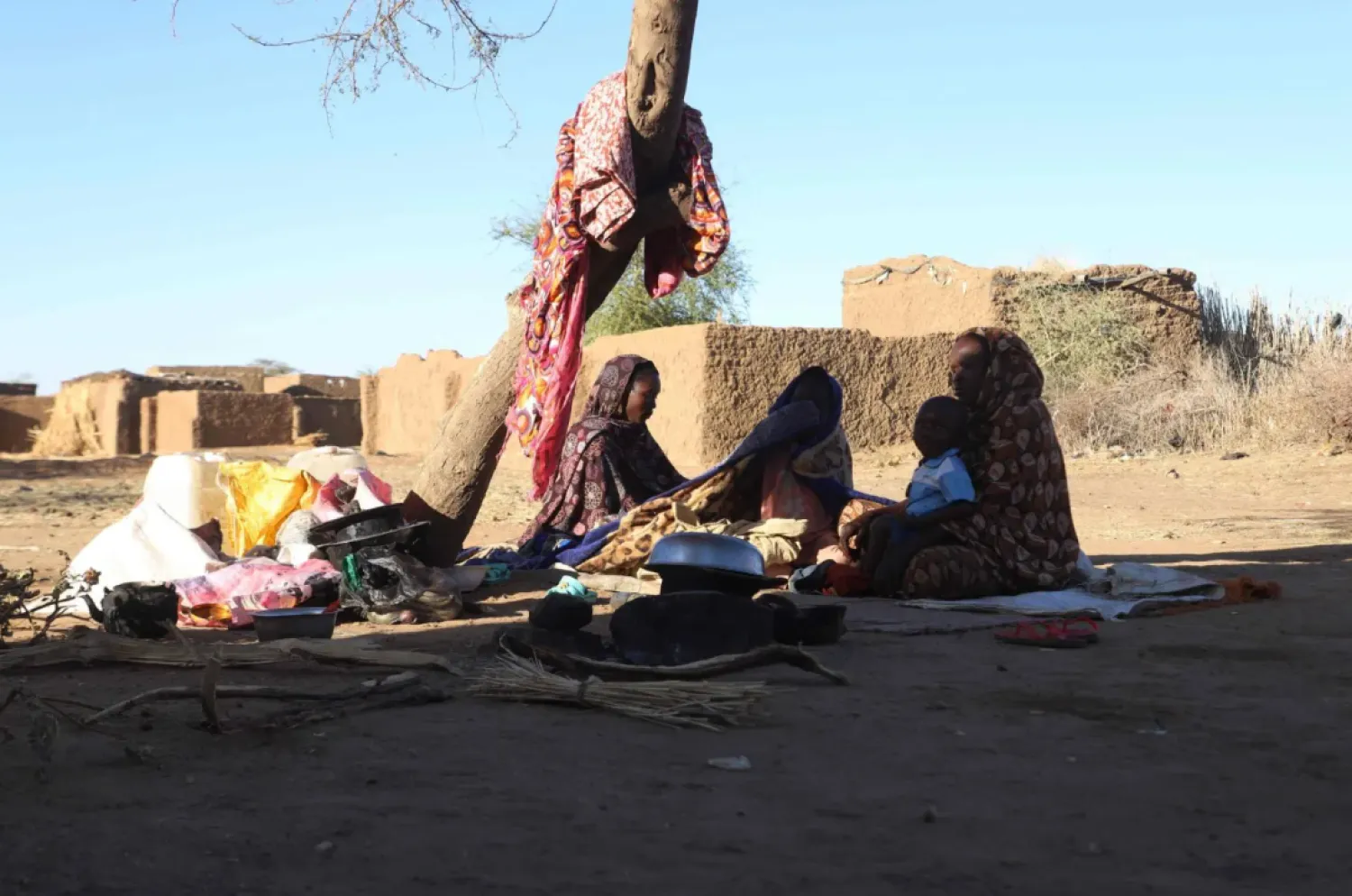
Sudanese displaced people who left El Fasher after its fall, sit in the shade in Tawila at the Rwanda camp reception point on December 17, 2025. (Photo by AFP)

The atrocities unleashed on El-Fasher in Sudan's Darfur region last October were a "preventable human rights catastrophe", the United Nations said Monday, warning they now risked being repeated in the neighbouring Kordofan region.


"My office sounded the alarm about the risk of mass atrocities in the besieged city of El-Fasher for more than a year ... but our warnings were ignored," UN rights chief Volker Turk told the Human Rights Council in Geneva.


He added that he was now "extremely concerned that these violations and abuses may be repeated in the Kordofan region".


Arab League Condemns Israel's Decisions to Alter Legal, Administrative Status of West Bank

A general view shows the opening session of the meeting of Arab foreign ministers at the Arab League Headquarters (Reuters)
TT

Arab League Condemns Israel's Decisions to Alter Legal, Administrative Status of West Bank

A general view shows the opening session of the meeting of Arab foreign ministers at the Arab League Headquarters (Reuters)

The General Secretariat of the Arab League strongly condemned decisions by Israeli occupation authorities to impose fundamental changes on the legal and administrative status of the occupied Palestinian territories, particularly in the West Bank, describing them as a dangerous escalation and a flagrant violation of international law, international legitimacy resolutions, and signed agreements, SPA reported.

In a statement, the Arab League said the measures include facilitating the confiscation of private Palestinian property and transferring planning and licensing authorities in the city of Hebron and the area surrounding the Ibrahimi Mosque to occupation authorities.

It warned of the serious repercussions of these actions on the rights of the Palestinian people and on Islamic and Christian holy sites.

The statement reaffirmed the Arab League’s firm support for the legitimate rights of the Palestinian people, foremost among them the establishment of their independent state on the June 4, 1967 borders, with East Jerusalem as its capital.