Syria Court Gets 1st Applications for Presidential Vote

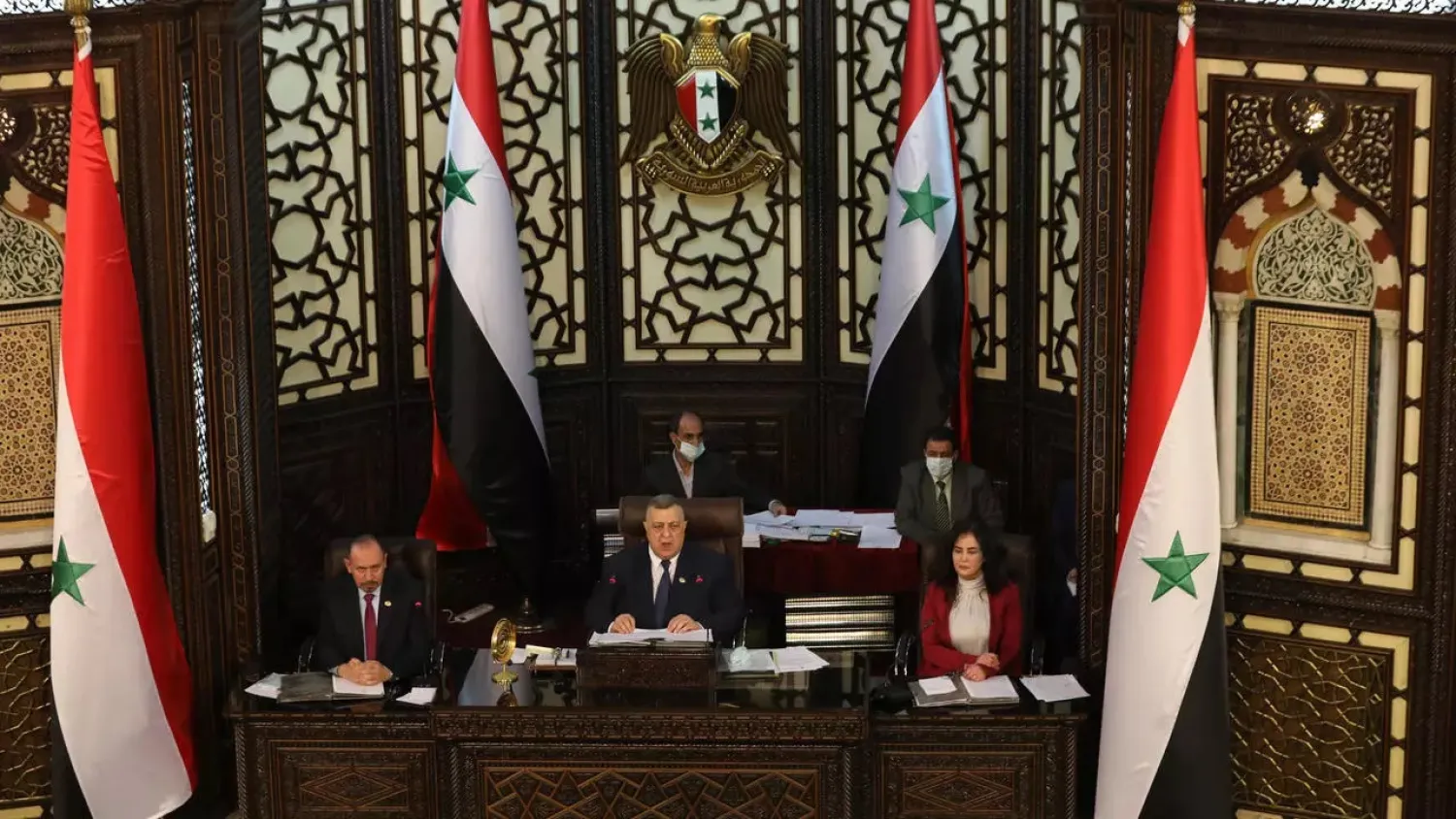
Hammouda Al-Sabbagh (C), head of the Syrian People's Assembly, presides over a parliamentary session to discuss upcoming presidential elections, in the capital Damascus, on April 18, 2021. (AFP)
TT

Syria Court Gets 1st Applications for Presidential Vote

Hammouda Al-Sabbagh (C), head of the Syrian People's Assembly, presides over a parliamentary session to discuss upcoming presidential elections, in the capital Damascus, on April 18, 2021. (AFP)

A Syrian court Monday started receiving applications from presidential hopefuls, the state news agency said, for polls next month expected to keep Bashar al-Assad in power in the war-torn country.

Two candidates filed applications with the high constitutional court, state news agency SANA said, a day after the speaker of parliament announced the poll will take place on May 26.

The first was a former lawmaker, while the other had applied for the last presidential elections in 2014, but did not meet the criteria.

They will now have to garner support from at least 35 members of the 250-seat parliament, which is dominated by Assad's Baath party.

Fifty-five-year-old Assad, who succeeded his father in 2000 and has managed to cling on to power through a decade of conflict, has not yet announced his own candidacy.

Presidential hopefuls have until April 28 to put forth their candidacy for the second such vote to be held during the war.

They must have lived continuously in Syria for at least 10 years, meaning that opposition figures in exile are barred from running.

The last presidential elections in 2014 were the first such multi-candidate polls in Syria, but only two other candidates were approved and Assad won with an official 88 percent of the vote.

The government has since won back large parts of the country from opposition and extremist factions.

But Syria is also battling a dire economic crisis compounded by Western sanctions and a financial crisis in neighboring Lebanon.

The war has killed more than 388,000 people since it started in 2011 with the brutal repression of anti-government protests, but endless rounds of talks have failed to find a political solution.


Israeli Troops Block Olive Harvest in West Bank

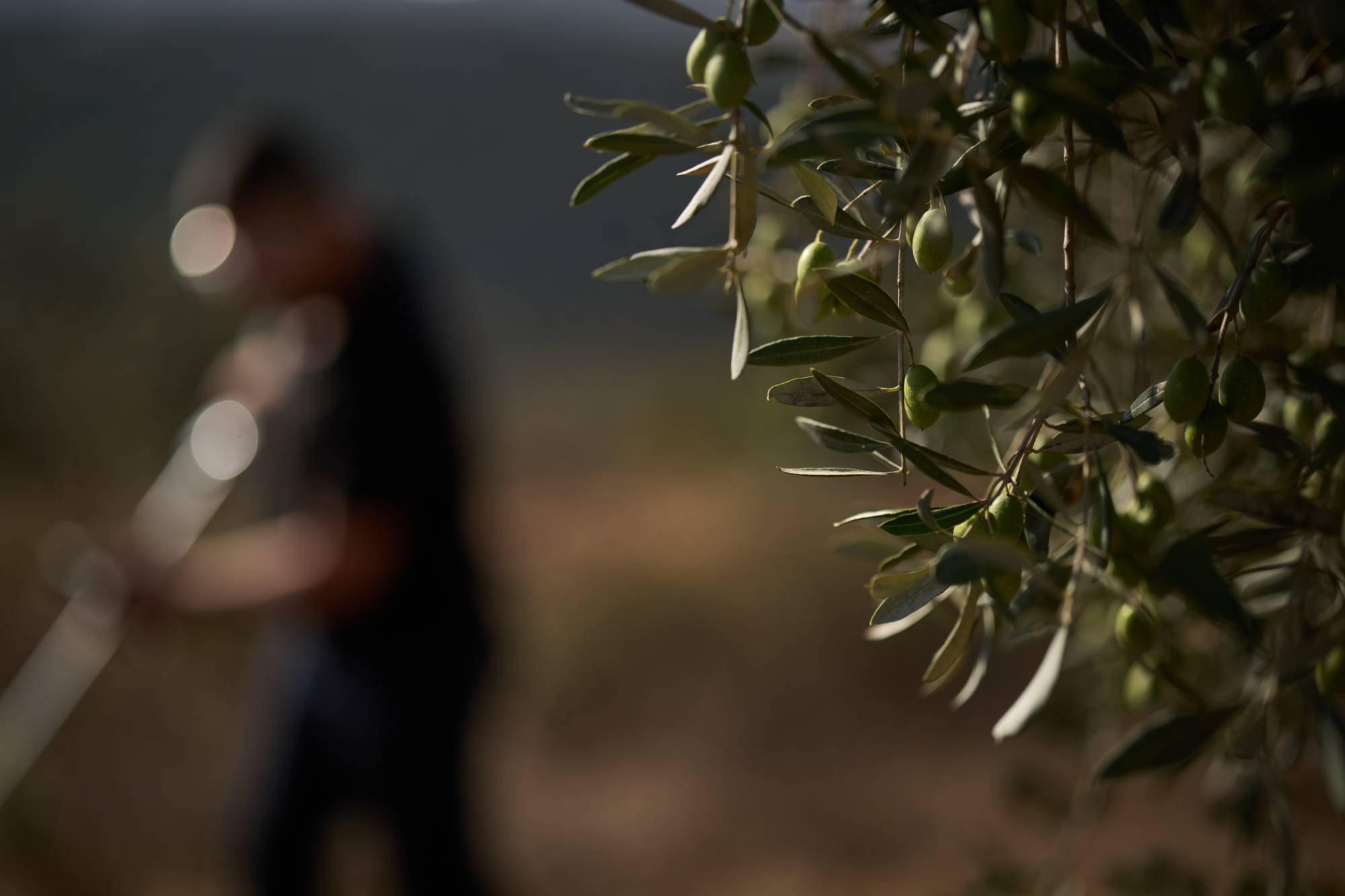
A Palestinian takes part in a community action to clear the area around the olive trees in preparation for the upcoming harvest season on the outskirts of the West Bank town of Birzeit, Friday, Oct. 2, 2026, in an area that, according to residents, they were unable to access last year due to Israeli army restrictions and settler attacks. (AP Photo/Leo Correa)
TT

Israeli Troops Block Olive Harvest in West Bank

A Palestinian takes part in a community action to clear the area around the olive trees in preparation for the upcoming harvest season on the outskirts of the West Bank town of Birzeit, Friday, Oct. 2, 2026, in an area that, according to residents, they were unable to access last year due to Israeli army restrictions and settler attacks. (AP Photo/Leo Correa)

Israeli soldiers have barred Palestinian farmers and activists from harvesting olives in the northern West Bank, according to video footage obtained by The Associated Press.

The footage showed soldiers firing shots in the air and tear gas toward the Palestinian farmers and activists, while settlers were also seen in the area.

A Palestinian takes part in a community action to clear the area around the olive trees in preparation for the upcoming harvest season on the outskirts of the West Bank town of Birzeit, Friday, Oct. 2, 2026, in an area that, according to residents, they were unable to access last year due to Israeli army restrictions and settler attacks. (AP Photo/Leo Correa)

Israel's military said troops were deployed following reports of a confrontation, which was dispersed. It added that a security official at the scene fired shots into the air earlier, without elaborating. The military said no one was injured.

The olive harvest season in the West Bank is usually marred by tensions between Palestinian farmers and settlers. Israel has imposed new rules this year, prohibiting Palestinians from harvesting in what’s known as Area C, which is under Israeli security control and encompasses the majority of the territory’s agricultural lands.


Sudan’s Omar al-Bashir Seeks Treatment Abroad

Former Sudanese President Omar Hassan al-Bashir inside a cage in a Khartoum court during his corruption trial on August 31, 2019 (Reuters)
TT

Sudan’s Omar al-Bashir Seeks Treatment Abroad

Former Sudanese President Omar Hassan al-Bashir inside a cage in a Khartoum court during his corruption trial on August 31, 2019 (Reuters)

Sudan's former president Omar al-Bashir is seeking permission to travel abroad for medical treatment, his lawyer told AFP on Friday, saying the jailed ex-ruler requires tests unavailable in war-ravaged Sudan.

Bashir, 82, was recently transferred from a hospital in the northern city of Merowe to Aliaa Specialist Military Hospital in Omdurman, across the Nile from the capital Khartoum, after suffering health complications, his lawyer Mohamed El-Hassan El-Amin said.

El-Amin added that Bashir's condition "requires medical tests and cardiac imaging that are not currently available in Sudanese hospitals".

"There is no specific country being sought for treatment. He could travel to any country able to provide the required care," he told AFP.

In a statement on Wednesday, Bashir's family said his health had deteriorated to the point that treatment abroad had become "urgent", without disclosing details of his condition.

Bashir seized power in 1989 and ruled Sudan for three decades before being ousted in April 2019 following months of mass protests.

The International Criminal Court has accused him of genocide, war crimes and crimes against humanity over the Darfur conflict that erupted in 2003.


Hezbollah Seeks to Ease Supporters’ Anger With Pledge to Cover Displaced Families’ Rent

Hezbollah supporters hold a portrait of former Secretary-General Hassan Nasrallah on the second anniversary of his assassination in Beirut’s southern suburbs (Reuters). 
TT

Hezbollah Seeks to Ease Supporters’ Anger With Pledge to Cover Displaced Families’ Rent

Hezbollah supporters hold a portrait of former Secretary-General Hassan Nasrallah on the second anniversary of his assassination in Beirut’s southern suburbs (Reuters). 

Hezbollah is seeking to ease growing anger among its supporters by pledging to contribute to housing costs for families who lost their homes in the war, nearly six months after a devastating escalation that began on March 2, during which Israel occupied more than 65 villages and towns in South Lebanon.

Hezbollah Secretary-General Naim Qassem’s announcement of plans to contribute to a housing project, alongside a commitment to provide accommodation, repairs and reconstruction using the group’s resources and donations, comes amid mounting frustration over its failure to deliver promised housing allowances for nearly two years.

The delays have worsened conditions for thousands of families, particularly those displaced from border communities.

Hezbollah has yet to disclose details of the initiative, leaving prospective beneficiaries hoping that long-promised payments will soon materialize.

No Full Rent Coverage

Residents of Beirut’s southern suburbs understand the announcement to mean that Hezbollah will cover only part of displaced families’ rent rather than the full amount.

Local sources told Asharq Al-Awsat that the pledge had dashed hopes of full coverage, as provided in 2006 and following the 2024 war.

“We are waiting for the details to be announced to understand the nature of this support,” they added.

The issue has become increasingly pressing for Hezbollah, which faces a financial crisis that Qassem has attributed to a financial “siege” preventing the transfer of funds from Iran to Lebanon.

Researcher Mohammad Shamseddine estimated that around 35,000 families currently require housing assistance.

He told Asharq Al-Awsat that the last payment, made after the March 2026 war, consisted of monthly allowances of up to $400 for households in Beirut and $300 in the south.

No final decision has been reached on the amount to be allocated, its distribution or whether payments would cover specific months or an entire year, he noted.

Following the first round of fighting in 2024, Hezbollah paid up to $10,000 per property for minor repairs, spending an estimated $300 million. It also disbursed $800 million in housing assistance, covering furniture and one year’s rent for those whose homes were completely destroyed.

In 2025, Qassem announced that the group had provided housing allowances to 50,755 people and repaired homes for 332,000 others.

Growing Discontent Among Supporters

Hezbollah opponent Ali Murad linked the announcement to rising dissatisfaction within the group’s support base, ranging from limited objections to occasional public criticism of its decisions and the course it has charted for South Lebanon.

He questioned what options remained available to residents after everything they had endured and whether Hezbollah had a clear vision for the next phase.

Murad told Asharq Al-Awsat that the party was under pressure to offer at least partial accommodation solutions while continuing to blame the state for shortcomings, despite recognizing the severity of its crisis.

He maintained that rental assistance alone could not compensate residents for their losses.

While the government has clear obligations toward its citizens, displaced families primarily need a viable plan allowing them to return to their villages and homes, something currently unavailable, he explained.

Murad urged the state to assume responsibility for the south, not merely by paying compensation or countering Hezbollah, but by becoming the residents’ principal authority and point of reference.

Three Objectives Behind the Pledge

Paris-based professor of law and foreign policy Mohieddine Al-Shuhaimi identified three objectives behind Hezbollah’s announcement.

First, he argued, Hezbollah wants to preempt the state by portraying itself as capable of delivering aid where public institutions appear absent or unable to fulfill their responsibilities.

Second, it seeks to demonstrate that it can still secure funding despite substantial losses, restrictions and sanctions.

Third, the initiative aims to bolster morale among supporters amid emerging, albeit limited and largely unspoken, discontent.

According to Al-Shuhaimi, Hezbollah fears even minor dissent within its ranks and wants to reaffirm its position as the community’s protector rather than leaving that role to the state.

On financing, he observed that although the party has lost substantial revenue sources and parts of its financial network, it retains diminished resources and continues receiving assistance through informal channels despite tighter oversight.

Al-Shuhaimi called on Lebanese authorities to avoid merely reacting to Hezbollah’s initiatives and instead develop a comprehensive financial strategy aligned with a political process.

The state, he concluded, must reclaim its role and work toward ending the exceptional situation created by Hezbollah’s weapons through a coordinated political and financial approach.