


Iran’s Rouhani Apologizes for Power Cuts, Blames Heat

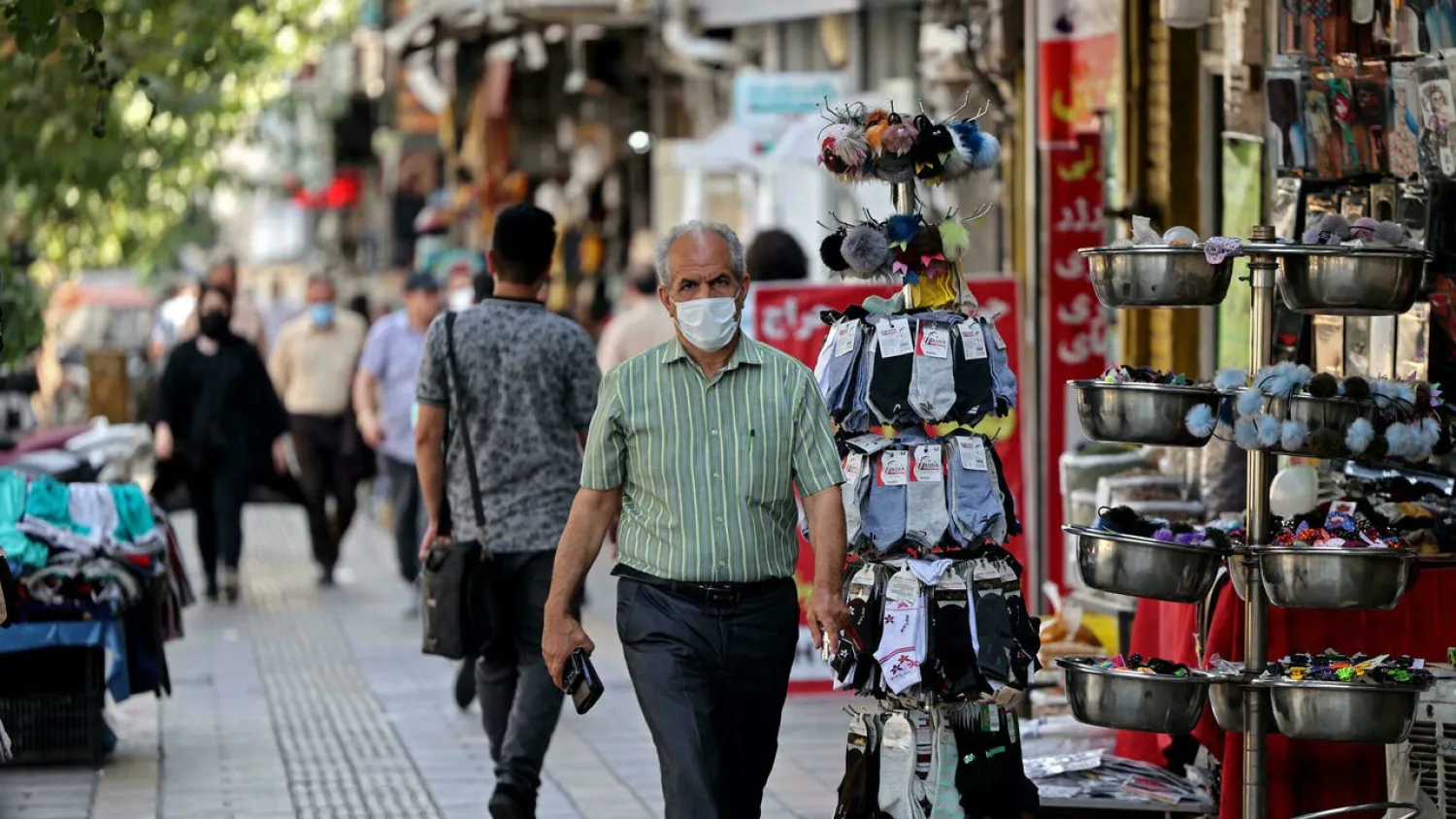
Iranians are enduring sweeping power blackouts, which authorities blame on high temperatures and a drought which have driven up demand and curtailed hydroelectric power generation. (AFP)
TT

Iran’s Rouhani Apologizes for Power Cuts, Blames Heat

Iranians are enduring sweeping power blackouts, which authorities blame on high temperatures and a drought which have driven up demand and curtailed hydroelectric power generation. (AFP)

Iranian President Hassan Rouhani apologized Wednesday for sweeping blackouts, blaming a searing drought he said had sharply driven up demand and virtually halted hydroelectric power generation.

Since last week, Tehran and Iran’s other major cities have experienced frequent power outages that authorities say may continue until late July.

Unconfirmed videos circulating on social media appear to show frustrated Iranians protesting the outages in several cities including Shiraz and Kazeroun in the south, and Amol and Kordkuy in the north, as well as Tehran.

Tehran resident Azam, a hairdresser, said she holds the government responsible for failing to “provide the basics” like electricity.

“It’s not like we’re asking for much,” she told AFP, complaining that the authorities “just ask the people to be patient and endure”.

“All our business requires electricity, and this (outage) has disrupted our life,” said private company employee Hamid.

The energy ministry has published schedules for rolling blackouts but many citizens and businesses have lost power unexpectedly in recent days.

“We regret the problems the people have had in the past few days,” Rouhani said in televised remarks at a cabinet meeting mostly dedicated to the power cuts, which have sparked a chorus of complaints.

“On the one hand, our output has dropped due to the condition of hydroelectric power plants, and on the other consumption has gone up,” Rouhani said.

He attributed the surge in demand to “industrial growth and extreme heat” as well as energy-intensive cryptocurrency mining operations.

In May, the government temporarily banned crypto mining for four months, but Iranian news agencies still report frequent police raids on “illegal farms” that authorities say use large amounts of subsidized electricity.

‘Unprecedented drought’
On Tuesday, Rouhani said Iran was facing an “unprecedented drought” with average rainfall down 52 percent compared to the previous year, bringing hydroelectric power generation to “almost” zero.

He called on the energy ministry to prevent any cuts outside of the scheduled blackouts of at least two hours a day.

Rouhani also blamed Washington’s punishing sanctions on Iran for choking investment in energy infrastructure.

“The result is having no capital, and then big projects cannot be done,” he told the cabinet. “Who would want to invest when the country’s risk goes up?”

Sanctions have left Iran facing its “most serious macroeconomic crisis” since its 1979 revolution, Thierry Coville of the Institute for International and Strategic Relations in Paris told AFP last month.

The crisis has also sharply reduced infrastructure investment by the government, said Coville, who added “it is no coincidence that we are starting to see power cuts in Iran.”

After the cabinet meeting, Energy Minister Reza Ardakanian said he “sincerely” apologized to Iranians. Until late August all government departments would remain closed for an extra day a week, on Thursdays, to save energy, he added.

Ardakanian had offered a similar apology in May, when Iran introduced planned, rolling blackouts after Tehran and other cities were hit by unannounced power cuts.

Tehran’s police chief said the blackouts were placing a huge burden on his officers as traffic lights failed across the capital.

The cuts also raised concerns about the ongoing Covid-19 pandemic in Iran, as Tehran’s anti-coronavirus committee chief warned against health centers losing power while the capital struggles to contain a new wave of the virus.

Some 85,000 people have died after contracting the virus, with more than 3.3 million cases recorded in Iran, making it the region’s hardest-hit country.

Power cuts are not uncommon during Iran’s hot summers, when the rising temperatures lead to a spike in the use of air-conditioning.

But Rouhani said this year’s power shortage was the worst in 11 years, brought about by the searing drought.

Iran’s meteorological office forecast the extreme heat would continue until Friday, with highs of 41 degrees Celsius (106 degrees Fahrenheit) in Tehran and 51 degrees (124 degrees) in Ahvaz in the southwest.



Somaliland Denies It Will Host Palestinians, Israeli Base

This picture taken on November 7, 2024 shows a general view of the city of Hargeisa, capital and largest city of the self-proclaimed Republic of Somaliland. (AFP)
TT

Somaliland Denies It Will Host Palestinians, Israeli Base

This picture taken on November 7, 2024 shows a general view of the city of Hargeisa, capital and largest city of the self-proclaimed Republic of Somaliland. (AFP)

The breakaway region of Somaliland on Thursday denied allegations by the Somali president that it would take resettled Palestinians or host an Israeli military base in exchange for Israel recognizing its independence.

Israel last week became the first country to recognize Somaliland as an "independent and sovereign state", triggering protests across Somalia.

On Wednesday, Somali President Hassan Sheikh Mohamud, citing intelligence reports, told Al Jazeera that Somaliland had accepted three conditions from Israel: the resettlement of Palestinians, the establishment of a military base on the Gulf of Aden, and joining the Abraham Accords to normalize ties with Israel.

Somaliland's foreign ministry denied the first two conditions.

"The Government of the Republic of Somaliland firmly rejects false claims made by the President of Somalia alleging the resettlement of Palestinians or the establishment of military bases in Somaliland," it said in a statement on X.

It said the deal was "purely diplomatic".

"These baseless allegations are intended to mislead the international community and undermine Somaliland's diplomatic progress," it added.

But analysts say an alliance with Somaliland is especially useful to Israel for its strategic position on the Bab el-Mandeb Strait, close to the Iran-backed Houthi in Yemen, who have struck Israel repeatedly since the start of the Gaza war.

Somaliland unilaterally declared independence in 1991 and has enjoyed far more peace than the rest of conflict-hit Somalia, establishing its own elections, currency and army.

Its location alongside one of the world's busiest shipping lanes has made it a key partner for foreign countries.


Flash Floods Triggered by Heavy Rains in Afghanistan Kill at Least 17 People

Smog is seen over Kabul, Afghanistan, 31 December 2025. (EPA)
TT

Flash Floods Triggered by Heavy Rains in Afghanistan Kill at Least 17 People

Smog is seen over Kabul, Afghanistan, 31 December 2025. (EPA)

The season’s first heavy rains and snowfall ended a prolonged dry spell but triggered flash floods in several areas of Afghanistan, killing at least 17 people and injuring 11 others, a spokesman for Afghanistan’s national disaster management authority said Thursday.

The dead included five members of a family in a property where the roof collapsed on Thursday in Kabkan, a district in the Herat province, according to Mohammad Yousaf Saeedi, spokesman for the Herat governor. Two of the victims were children.

Most of the casualties have occurred since Monday in districts hit by flooding, and the severe weather also disrupted daily life across central, northern, southern, and western regions, according to Mohammad Yousaf Hammad, a spokesman for Afghanistan's National Disaster Management Authority.

Hammad said the floods also damaged infrastructure in the affected districts, killed livestock, and affected 1,800 families, worsening conditions in already vulnerable urban and rural communities.

Hammad said the agency has sent assessment teams to the worst-affected areas, with surveys ongoing to determine further needs.

Afghanistan, like neighboring Pakistan and India, is highly vulnerable to extreme weather events, particularly flash floods following seasonal rains.

Decades of conflict, poor infrastructure, deforestation, and the intensifying effects of climate change have amplified the impact of such disasters, especially in remote areas where many homes are made of mud and offer limited protection against sudden deluges.

The United Nations and other aid agencies this week warned that Afghanistan is expected to remain one of the world’s largest humanitarian crises in 2026. The UN and its humanitarian partners launched a $1.7 billion appeal on Tuesday to assist nearly 18 million people in urgent need in the country.


Thousands Stage Pro-Gaza Rally in Istanbul

Demonstrators gather on the Galata Bridge holding Palestinian and Turkish flags during a pro-Palestinian rally in Istanbul, Türkiye, Thursday, Jan. 1, 2026. (AP Photo/Khalil Hamra)
TT

Thousands Stage Pro-Gaza Rally in Istanbul

Demonstrators gather on the Galata Bridge holding Palestinian and Turkish flags during a pro-Palestinian rally in Istanbul, Türkiye, Thursday, Jan. 1, 2026. (AP Photo/Khalil Hamra)

Thousands joined a New Year's Day rally for Gaza in Istanbul Thursday, waving Palestinian and Turkish flags and calling for an end to the violence in the tiny war-torn territory.

Demonstrators gathered in freezing temperatures under cloudless blue skies to march to the city's Galata Bridge for a rally under the slogan: "We won't remain silent, we won't forget Palestine," an AFP reporter at the scene said.

More than 400 civil society organizations were present at the rally, one of whose organizers was Bilal Erdogan, the youngest son of Turkish President Recep Tayyip Erdogan.

Police sources and Anadolou state news agency said some 500,000 people had joined the march at which there were speeches and a performance by Lebanese-born singer Maher Zain of his song "Free Palestine".

"We are praying that 2026 will bring goodness for our entire nation and for the oppressed Palestinians," said Erdogan, who chairs the board of the Ilim Yayma Foundation, an educational charity that was one of the organizers of the march.

Türkiye has been one of the most vocal critics of the war in Gaza and helped broker a recent ceasefire that halted the deadly war waged by Israel in response to Hamas' unprecedented attack on October 7, 2023.

But the fragile October 10 ceasefire has not stopped the violence with more than more than 400 Palestinians killed since it took hold.