
Sudan Downs Ethiopian Drone that Crossed its Airspace

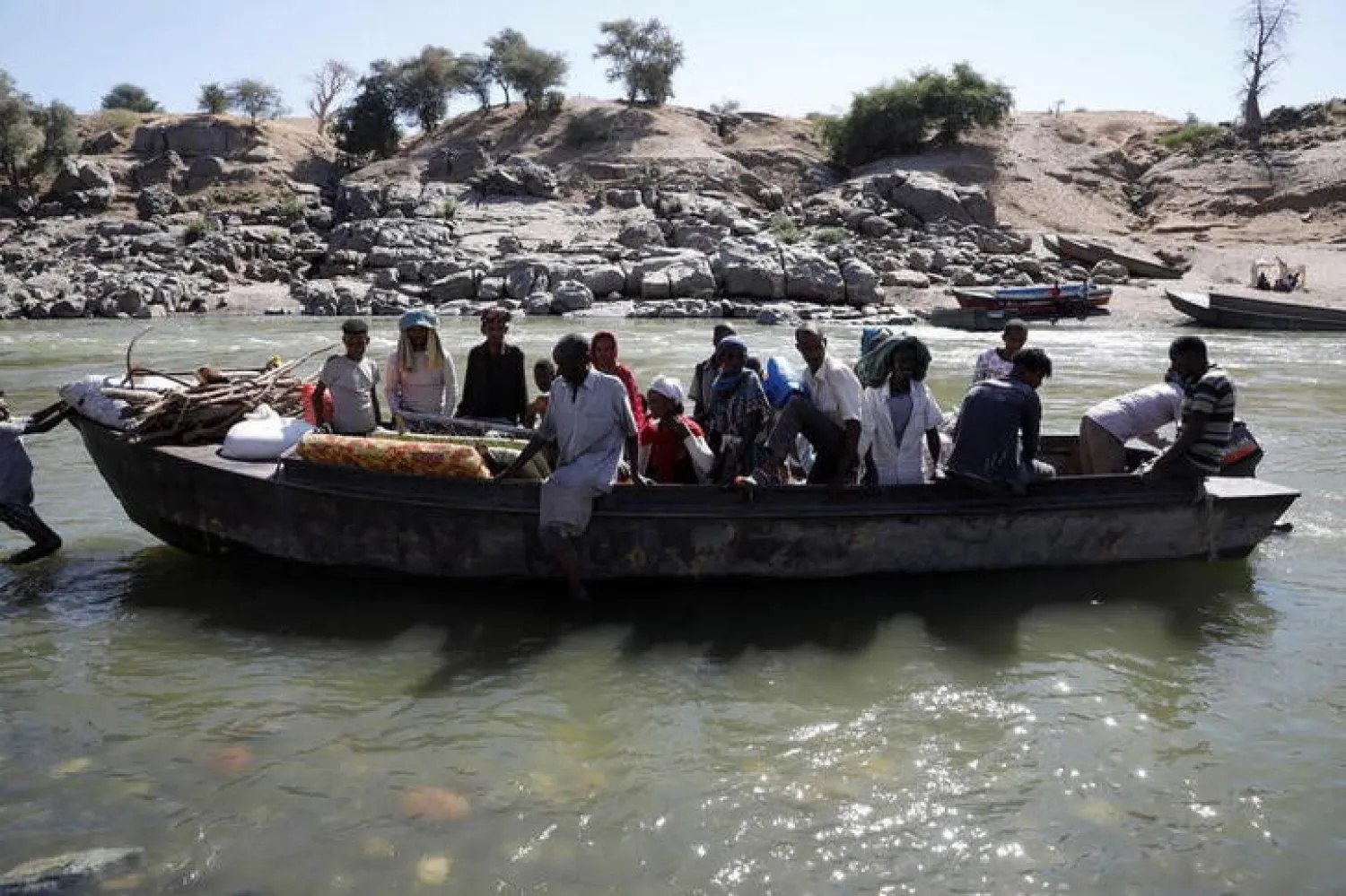
Ethiopians fleeing from the Tigray region arrive by boat to Sudan after crossing a river between the two countries (File Photo: Reuters)
TT

Sudan Downs Ethiopian Drone that Crossed its Airspace

Ethiopians fleeing from the Tigray region arrive by boat to Sudan after crossing a river between the two countries (File Photo: Reuters)

The Sudanese army downed an Ethiopian reconnaissance unmanned aerial vehicle (UAV) over the territory near the border at al-Fashqa, according to Sudanese sources.

Other sources confirmed that the army was able to control the Ethiopian drone that crossed its airspace. Authorities in both countries did not comment on the incident.

Several social media accounts posted pictures of Sudanese officers and soldiers near the drone, which they claim is Ethiopian.

Relations have been soured by disputes over al-Fashqa, an area of fertile land settled by Ethiopian farmers that Sudan says is on its side of a border demarcated at the start of the 20th century, which Ethiopia rejects.

The Sudanese army did not provide any official details about the nature of its operations in al-Fashqa. However, the head of the Sovereign Council, Abdel Fattah al-Burhan, announced last week that 84 soldiers had been killed during the operations to recover and defend the region.

The Ethiopian militias, supported by the federal army, took control of al-Fashaqa, stretching over 600 square kilometers of highly fertile agricultural land.

Ethiopia recognizes Sudanese sovereignty over the agricultural area but has not taken practical steps to demarcate the border, allowing Ethiopian farmers to cultivate the area and provide protection.

Earlier this week, Burhan addressed soldiers in the Darfur region, saying the armed forces are fully prepared to protect its borders, adding that they will remain in Fashaqa to respond to any aggression targeting Sudanese territory.

According to the 1902 internationally recognized border demarcation agreement, Fashqa is within the Sudanese borders.

After the attempted assassination of former Egyptian President Hosni Mubarak, accused of masterminding the regime of ousted Sudanese President Omar al-Bashir, the militias backed by Addis Ababa invaded and took control of Fashqa.

A joint border committee was formed between the two countries, during which Ethiopia recognized Sudan’s sovereignty over the lands. However, it procrastinated identifying the border markers until it announced it did not accept the borders of 1902.

Sudan rejects Ethiopia’s claims and is backed by international charters.


Yemen Leader Says Will Not Expand Confrontation after Airport Attack

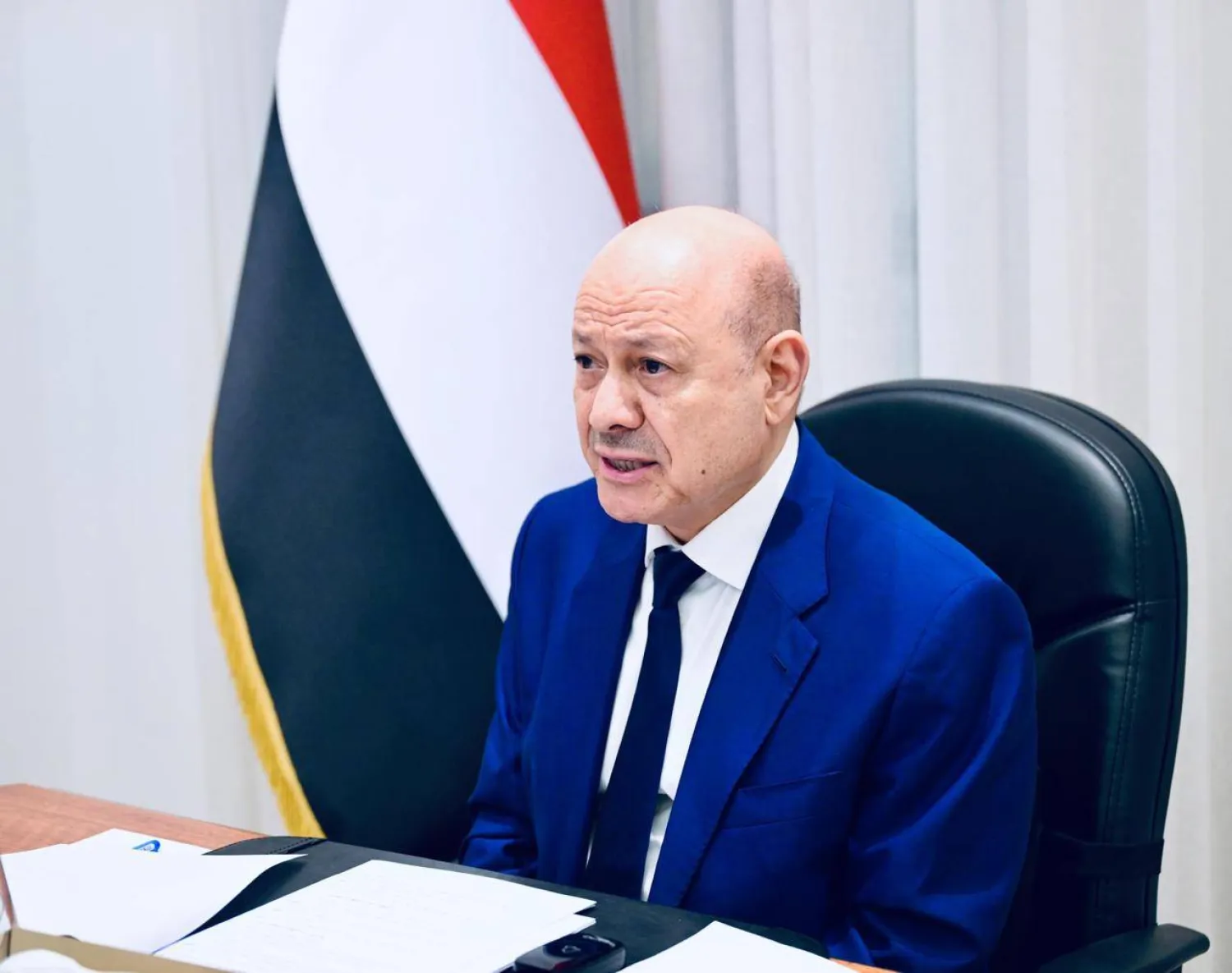
Dr. Rashad Al-Alimi, Chairman of Yemen's Presidential Leadership Council, during the meeting (Saba)
TT

Yemen Leader Says Will Not Expand Confrontation after Airport Attack

Dr. Rashad Al-Alimi, Chairman of Yemen's Presidential Leadership Council, during the meeting (Saba)

The leader of Yemen's internationally recognised governing council said on Monday that he would not expand his confrontation with the Houthis after his forces hit Sanaa airport to prevent an Iranian plane carrying Houthi delegation from landing.

"I have also ordered that the scope of the confrontation not be expanded in a manner that would achieve Iran's objective of dragging Yemen and its people into wars," said Rashad al-Alimi, who heads the eight-member Presidential Leadership Council.

Al-Alimi also said he had called an emergency meeting of the PLC following the flare-up.


EU, Partners Launch $1 billion Scheme to Help Gaza Recover from War

Displaced Palestinians shelter in tents near the rubble of buildings destroyed during the Israeli offensive, in Gaza City, July 6, 2026. REUTERS/Dawoud Abu Alkas
TT

EU, Partners Launch $1 billion Scheme to Help Gaza Recover from War

Displaced Palestinians shelter in tents near the rubble of buildings destroyed during the Israeli offensive, in Gaza City, July 6, 2026. REUTERS/Dawoud Abu Alkas

The European Commission and more than a dozen countries launched an initiative on Monday to deliver €883.6 million ($1 billion) in aid projects to help Gaza recover from war. The small coastal enclave remains in ruins more than 2-1/2 years after the conflict was triggered by the October 2023 attack on Israel by Palestinian militant group Hamas. A fragile ceasefire has been in place since last October, and the United Nations has estimated the cost of rebuilding work in Gaza at around $70 billion.

The "Team Gaza Initiative", launched at a meeting of aid donors in Brussels, will support projects such as restoring water and sanitation, removing debris and re-establishing health systems, the Commission said in a statement, Reuters reported.

Spain, Denmark, Britain, Germany, Norway, Finland, Italy, the Netherlands, France, Japan, Switzerland, Sweden and Belgium, the World Bank and the European Investment Bank are taking part in the initiative, along with the Commission itself, the statement said. Australia and Canada are also expected to join.

"Our objective is clear: to help build hope, resilience and a better future for the Palestinian people," said Dubravka Suica, the European Commissioner for the Mediterranean.

The European Commission did not provide a breakdown of how much each partner would contribute to the new initiative.

Israel's devastating aerial and ground bombardment of Gaza displaced nearly the entire population of 2 million people, most of whom now live in tents or damaged buildings in a greatly reduced coastal strip of territory governed by Hamas.

Israeli troops control nearly 70% of Gaza, patrolling what Prime Minister Benjamin Netanyahu describes as a buffer zone to deter Hamas attacks. Netanyahu says Israel will not withdraw from the territory.


Hezbollah Insists on Linking Lebanon to Iran-US Negotiations

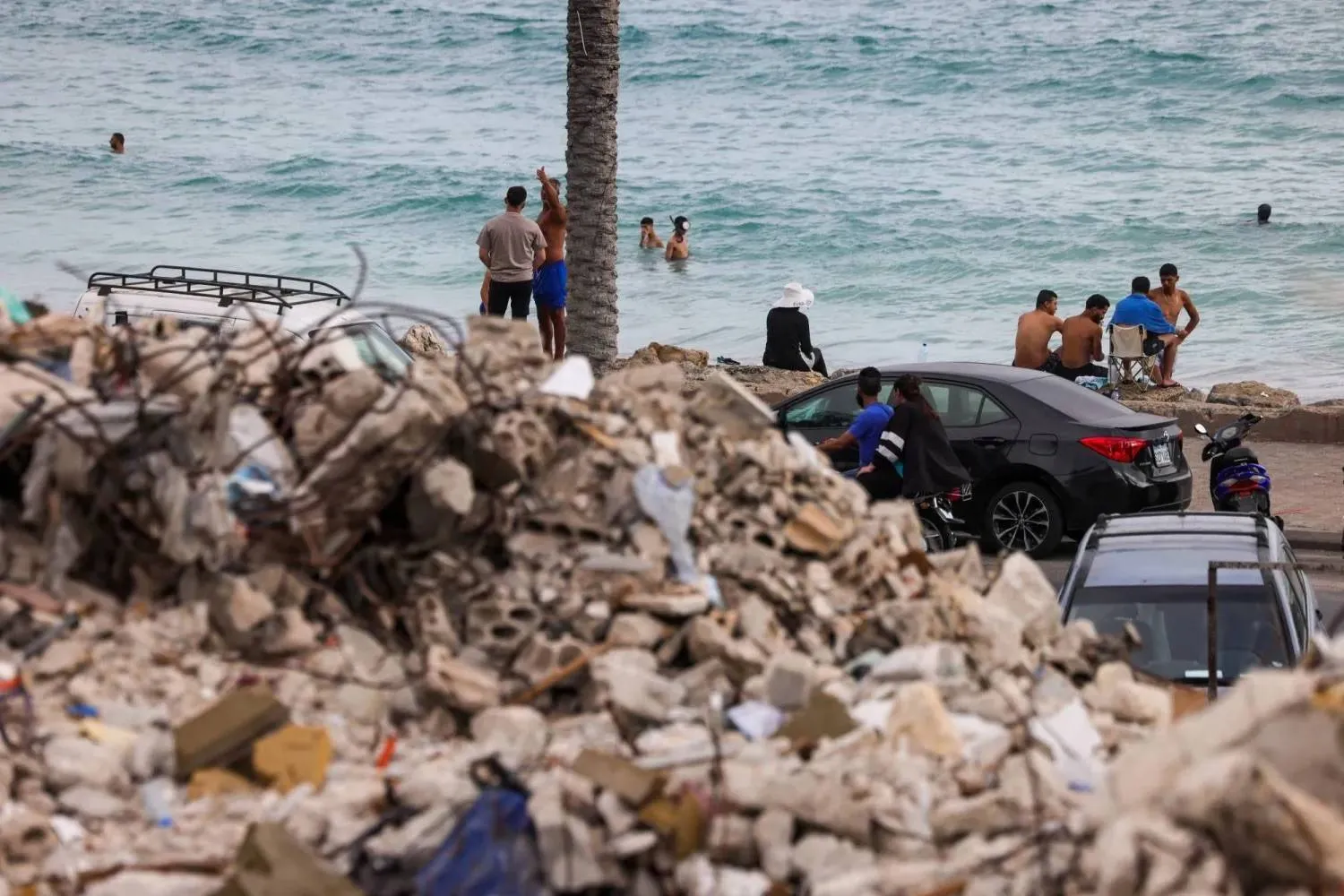
People stroll along the seafront in the southern Lebanese city of Tyre after the ceasefire agreement was reached (Reuters). 
TT

Hezbollah Insists on Linking Lebanon to Iran-US Negotiations

People stroll along the seafront in the southern Lebanese city of Tyre after the ceasefire agreement was reached (Reuters). 

As Lebanon places its hopes on direct negotiations with Israel, Hezbollah continues to insist that the Lebanese file be tied to Iran-US talks, with party officials declaring Sunday that Lebanon would be the first item in any final agreement.

Days before a sixth round of Lebanese-Israeli negotiations expected in Rome, Hezbollah MP Hussein Hajj Hassan said Iranian officials had assured Parliament Speaker Nabih Berri and Hezbollah Secretary-General Sheikh Naim Qassem that Lebanon would top the agenda of any potential final agreement with Washington.

“The first item will be a permanent ceasefire, an end to the war and an Israeli withdrawal,” Hajj Hassan told a memorial ceremony, calling this a clear and sufficient Iranian commitment.

He also denounced the Framework Agreement between Lebanon and Israel as “full of sins, flaws and loopholes.” It linked redeployment to pilot zones whose number and size remained unclear, he argued, while making disarmament dependent on Israeli satisfaction with the outcome.

Hajj Hassan renewed Hezbollah’s refusal to surrender its weapons. “Disarmament is unattainable,” he told Lebanese officials. “You will not be able to achieve it, and we will not hand over our weapons.”

Fellow Hezbollah MP Ibrahim Mousawi likewise reaffirmed support for the “resistance and its leadership,” maintaining that its popular base would remain steadfast despite mounting pressure.

Mousawi claimed Lebanon was the first item in the memorandum of understanding signed by Iran and the United States in Islamabad. He also criticized Lebanon’s negotiating track, arguing that sovereignty was achieved through defending and sacrificing for the country, not through slogans.

President Joseph Aoun, however, has insisted on keeping the Lebanese and Iranian tracks separate.

“Under no circumstances will I allow anyone to negotiate on Lebanon’s behalf,” Aoun said recently, adding that Lebanon had secured Israeli recognition that it had no territorial ambitions in the country.

“The state’s train has left the station, and the decision to establish a state monopoly on weapons will be implemented,” he added.

Meanwhile, Israeli violations continued across southern Lebanon early Sunday. Israeli forces demolished homes in Majdal Zoun, fired toward houses in Mansouri and carried out explosions in Bint Jbeil. Artillery struck Kfar Tibnit, while machine-gun fire was reported from Qantara. An Israeli aircraft also dropped a stun grenade near Mansouri, and artillery fire sparked blazes around Hamra Farm, between Zawtar al-Sharqiya, Arnoun and Yohmor al-Shaqif.

Lt. Col. Ella Waweya, the Israeli military’s Arabic-language spokesperson, maintained that Israel would not allow Hezbollah to rebuild. She wrote on X that the 551st Brigade, under the 91st Division, had completed a two-month deployment in southern Lebanon, during which Israeli troops killed more than 80 Hezbollah members and destroyed over 200 sites, including underground routes, launchers, weapons depots and observation posts.

The developments came as a US military delegation visited Beirut to discuss implementing an Israeli withdrawal from the first pilot zone.

Lebanon, Israel and the United States signed the Framework Agreement in Washington on June 26. It provides for a phased Israeli withdrawal alongside Lebanese Army deployment. Implementation, however, remains stalled by Israel’s demand that further withdrawals be tied to Hezbollah’s disarmament, which the group rejects while continuing to rely on Iran’s role in any future settlement.