


Saudi Communications Minister: Investing in Technology, Science Our Way towards Zero Emissions

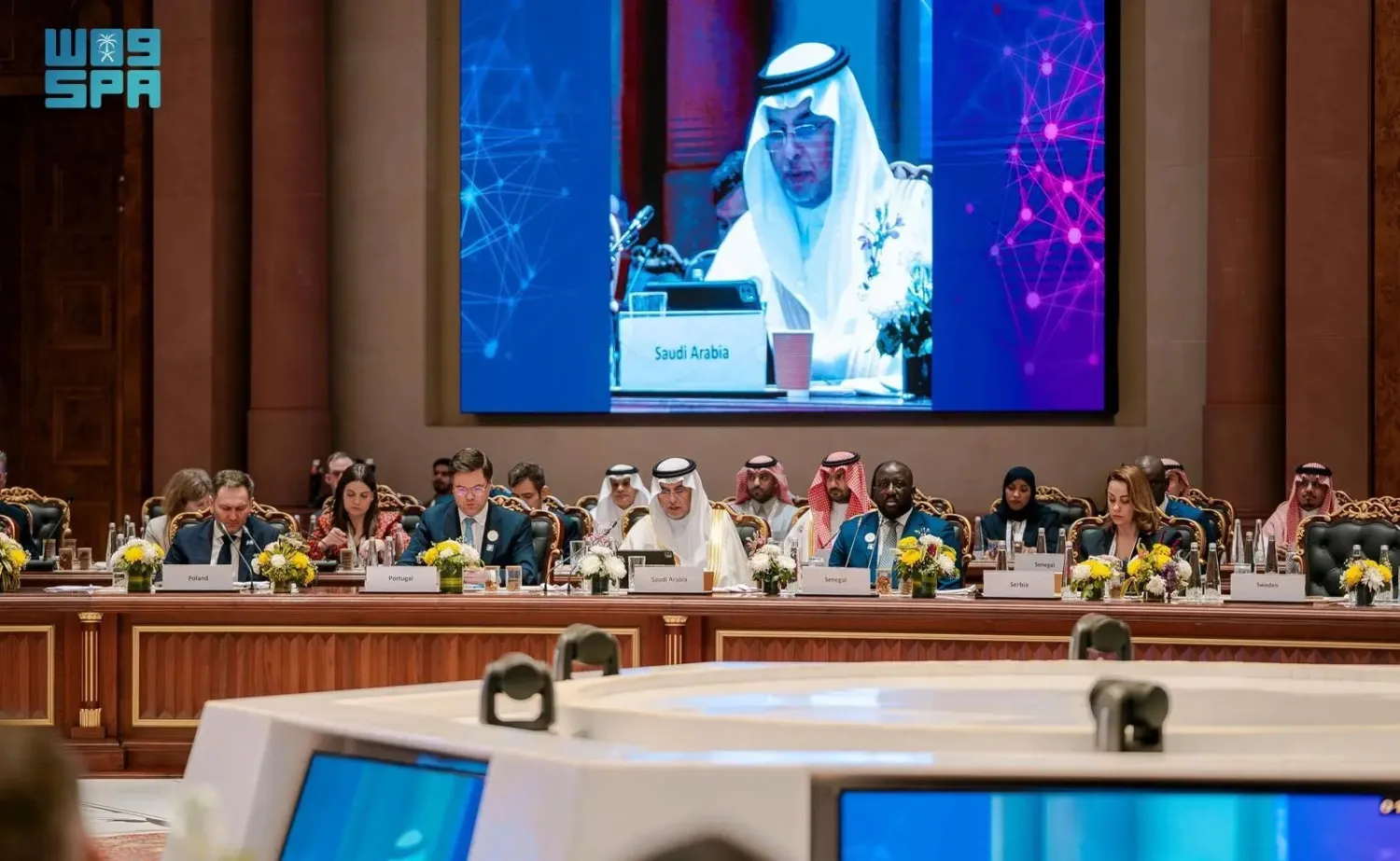
Saudi Minister of Communications and Information Technology Eng. Abdullah bin Amer Al-Swaha speaks at the forum. (SPA)
TT

Saudi Communications Minister: Investing in Technology, Science Our Way towards Zero Emissions

Saudi Minister of Communications and Information Technology Eng. Abdullah bin Amer Al-Swaha speaks at the forum. (SPA)

Saudi Minister of Communications and Information Technology and Chairman of the Board of Directors of Saudi Space Commission, Eng. Abdullah bin Amer Al-Swaha stressed that the Kingdom, as one of the G20 Member States and a major source of energy in the world, is taking the lead in building a center for climate technologies in the Middle East and North Africa.

Al-Swaha made his remarks on Saturday during his participation in a panel discussion, "How will the green economy change the world in the future", as part the Saudi Green Initiative forum.

He said that the world must rally around supporting science and technology if it wanted to address climate change.

“If the world continues to follow the current policies and technologies, our zero-emissions efficiency will be 30-40% lower, and the only way to address the zero-emissions gap is to increase investment in new, widespread technologies,” he urged.

Moreover, Al-Swaha highlighted how drones can plant trees ten times faster than traditional methods and at a lower cost 20% of the cost of manual farming.

He also underscored the most important lessons learned in the early stages of using technology in the climate field, using artificial intelligence and drones to support and accelerate reforestation, and the extent of the success of such technologies in all regions of the world.

The minister underlined the ways of success of afforestation projects and how trees can best be used to combat climate change, citing the importance of international cooperation that can ensure a rapid, comprehensive expansion of the cultivation of trees that are also planted specifically in low afforestation areas of the world in order to combat desertification.


Foundation Stone Laid for World’s Largest Government Data Center in Riyadh

Officials are seen at Thursday's ceremony. (SPA)
TT

Foundation Stone Laid for World’s Largest Government Data Center in Riyadh

Officials are seen at Thursday's ceremony. (SPA)

The foundation stone was laid in Riyadh Thursday for the Saudi Data and Artificial Intelligence Authority (SDAIA) “Hexagon” Data Center, the world’s largest government data center by megawatt capacity.

Classified as Tier IV and holding the highest data center rating by the global Uptime Institute, the facility will have a total capacity of 480 megawatts and will be built on an area exceeding 30 million square feet in the Saudi capital.

Designed to the highest international standards, the center will provide maximum availability, security, and operational readiness for government data centers. It will meet the growing needs of government entities and support the increasing reliance on electronic services.

The project will contribute to strengthening the national economy and reinforce the Kingdom’s position as a key player in the future of the global digital economy.

A ceremony was held on the occasion, attended by senior officials from various government entities. They were received at the venue by President of SDAIA Dr. Abdullah bin Sharaf Alghamdi and SDAIA officials.

Director of the National Information Center at SDAIA Dr. Issam bin Abdullah Alwagait outlined the project’s details, technical and engineering specifications, and the operational architecture ensuring the highest levels of readiness and availability.

He also reviewed the international accreditations obtained for the center’s solutions and engineering design in line with recognized global standards.

In a press statement, SDAIA President Dr. Abdullah bin Sharaf Alghamdi said the landmark national project comes as part of the continued support of Prince Mohammed bin Salman bin Abdulaziz Al Saud, Crown Prince, Prime Minister and Chairman of SDAIA’s Board of Directors.

This support enables the authority, as the Kingdom’s competent body for data, including big data, and artificial intelligence and the national reference for their regulation, development, and use, to contribute to advancing the Kingdom toward leadership among data- and AI-driven economies, he noted.

The Kingdom will continue to strengthen its presence in advanced technologies with the ongoing support of the Crown Prince, he stressed.

SDAIA will pursue pioneering projects that reflect its ambitious path toward building an integrated digital ecosystem, strengthening national enablers in data and artificial intelligence, and developing world-class technical infrastructure that boosts the competitiveness of the national economy and attracts investment. This aligns with Saudi Vision 2030’s objectives of building a sustainable knowledge-based economy and achieving global leadership in advanced technologies.


Neuralink Plans ‘High-Volume’ Brain Implant Production by 2026, Musk Says

Elon Musk steps off Air Force One upon arrival at Morristown Municipal Airport in Morristown, New Jersey, US, March 22, 2025. (AFP)
TT

Neuralink Plans ‘High-Volume’ Brain Implant Production by 2026, Musk Says

Elon Musk steps off Air Force One upon arrival at Morristown Municipal Airport in Morristown, New Jersey, US, March 22, 2025. (AFP)

Elon Musk's brain implant company Neuralink will start "high-volume production" of brain-computer interface devices and move to an entirely automated surgical procedure in 2026, Musk said in a post on the social media platform X on ‌Wednesday.

Neuralink did ‌not immediately respond ‌to ⁠a Reuters ‌request for comment.

The implant is designed to help people with conditions such as a spinal cord injury. The first patient has used it to play video ⁠games, browse the internet, post on ‌social media, and ‍move a cursor ‍on a laptop.

The company began ‍human trials of its brain implant in 2024 after addressing safety concerns raised by the US Food and Drug Administration, which had initially rejected its application in ⁠2022.

Neuralink said in September that 12 people worldwide with severe paralysis have received its brain implants and were using them to control digital and physical tools through thought. It also secured $650 million in a June funding round.


Report: France Aims to Ban Under-15s from Social Media from September 2026

French President Emmanuel Macron holds a press conference during a European Union leaders' summit, in Brussels, Belgium December 19, 2025. (Reuters)
TT

Report: France Aims to Ban Under-15s from Social Media from September 2026

French President Emmanuel Macron holds a press conference during a European Union leaders' summit, in Brussels, Belgium December 19, 2025. (Reuters)

France plans to ban children under 15 from social media sites and to prohibit mobile phones in high schools from September 2026, local media reported on Wednesday, moves that underscore rising public angst over the impact of online harms on minors.

President Emmanuel Macron has often pointed to social media as one of the factors to blame for violence among young people and has signaled he wants France to follow Australia, whose world-first ‌ban for under-16s ‌on social media platforms including Facebook, Snapchat, TikTok ‌and ⁠YouTube came into force ‌in December.

Le Monde newspaper said Macron could announce the measures in his New Year's Eve national address, due to be broadcast at 1900 GMT. His government will submit draft legislation for legal checks in early January, Le Monde and France Info reported.

The Elysee and the prime minister's office did not immediately respond to a request for comment on the reports.

Mobile phones have been banned ⁠in French primary and middle schools since 2018 and the reported new changes would extend that ban ‌to high schools. Pupils aged 11 to ‍15 attend middle schools in the French ‍educational system.

France also passed a law in 2023 requiring social platforms to ‍obtain parental consent for under-15s to create accounts, though technical challenges have impeded its enforcement.

Macron said in June he would push for regulation at the level of the European Union to ban access to social media for all under-15s after a fatal stabbing at a school in eastern France shocked the nation.

The European Parliament in ⁠November urged the EU to set minimum ages for children to access social media to combat a rise in mental health problems among adolescents from excessive exposure, although it is member states which impose age limits. Various other countries have also taken steps to regulate children's access to social media.

Macron heads into the New Year with his domestic legacy in tatters after his gamble on parliamentary elections in 2024 led to a hung parliament, triggering France's worst political crisis in decades that has seen a succession of weak governments.

However, cracking down further on minors' access to social media could prove popular, according to opinion ‌polls. A Harris Interactive survey in 2024 showed 73% of those canvassed supporting a ban on social media access for under-15s.