


Iraqi President Calls for Comprehensive Dialogue between Baghdad, Erbil

Iraqi President Barham Salih. (Reuters file photo)
TT

Iraqi President Calls for Comprehensive Dialogue between Baghdad, Erbil

Iraqi President Barham Salih. (Reuters file photo)

Iraqi President Barham Salih stressed on Thursday the need to launch "serious and immediate" dialogue between the federal government in Baghdad and the Kurdistan Region government in wake of the Supreme Court's ruling on the region's oil policy.

A surprise ruling by the court on Tuesday cast doubt on the legal foundations of the independent oil policy of Iraq's Kurdish-run region and threatened to drive a political wedge between the two governments.

The Supreme Court struck down the legal justifications for the semi-autonomous region's oil policy, effectively calling into question the future of the region's oil contracts, exports and revenues.

The ruling comes during a politically sensitive time, as efforts have stalled in Iraq to form a government.

In a statement on Thursday, Salih said the dialogue should search for "realistic mechanisms" that take into account the Supreme Court's ruling and that also secure the constitutional rights of the Kurdistan Region and all Iraqis.

"Revenues should be dedicated to serving citizens, away from corruption and mismanagement," he stressed.

He called on parliament to "immediately address the delayed oil and gas draft law" and ratify it.

Salih remarked that the years of delays in ratifying the law has created problems and crises, "leading us to the critical juncture we are facing today."

Tuesday's decision cast into doubt the future of the region's main revenue source.

The region averaged $750 million per month in oil exports via Turkey in 2021, according to Iraq Oil Report, a media outlet that covers Iraq and its oil sector. The region also relies on budget transfers from Baghdad to pay for salaries and debts to traders.

The Kurdish region said the ruling itself was "unjust, unconstitutional" and "unacceptable" in a statement. The region has historically relied on the absence of a federal oil and gas law to justify its independent oil policy.

Iraq's constitution says regions and provinces can have a modicum of independence over oil but that the specifics should be spelled out in a separate law. Such a law has never been passed.



EU Condemns Israel's West Bank Control Measures

The Israeli settlement of Har Homa, seen from the West Bank city of Bethlehem, Tuesday, Dec. 17, 2024. (AP)
TT

EU Condemns Israel's West Bank Control Measures

The Israeli settlement of Har Homa, seen from the West Bank city of Bethlehem, Tuesday, Dec. 17, 2024. (AP)

The European Union on Monday condemned new Israeli measures to tighten control of the West Bank and pave the way for more settlements in the occupied Palestinian territory, AFP reported.

"The European Union condemns recent decisions by Israel's security cabinet to expand Israeli control in the West Bank. This move is another step in the wrong direction," EU spokesman Anouar El Anouni told journalists.


Atrocities in Sudan's El-Fasher Were 'Preventable Human Rights Catastrophe'

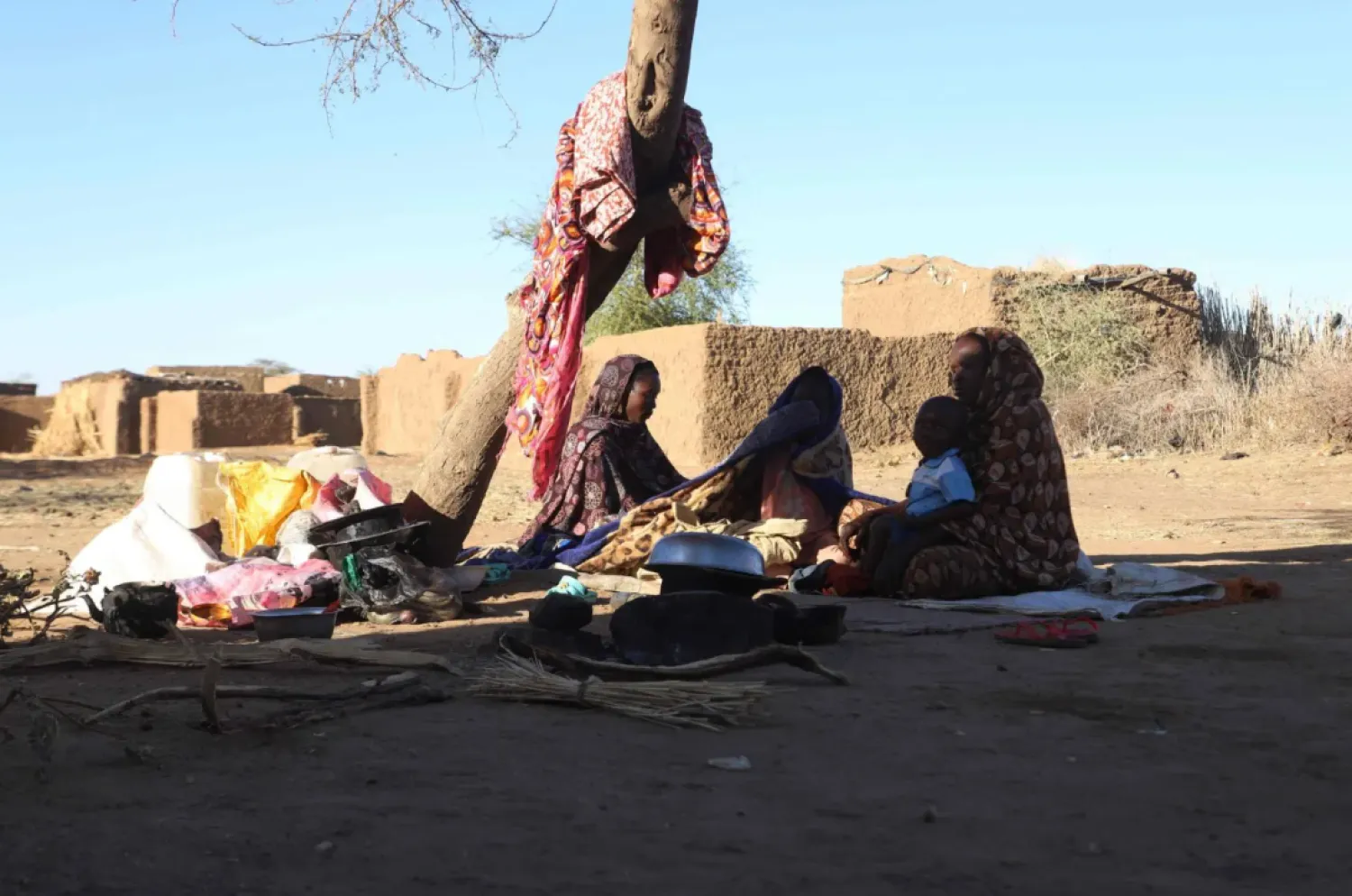
Sudanese displaced people who left El Fasher after its fall, sit in the shade in Tawila at the Rwanda camp reception point on December 17, 2025. (Photo by AFP)
TT

Atrocities in Sudan's El-Fasher Were 'Preventable Human Rights Catastrophe'

Sudanese displaced people who left El Fasher after its fall, sit in the shade in Tawila at the Rwanda camp reception point on December 17, 2025. (Photo by AFP)

The atrocities unleashed on El-Fasher in Sudan's Darfur region last October were a "preventable human rights catastrophe", the United Nations said Monday, warning they now risked being repeated in the neighbouring Kordofan region.


"My office sounded the alarm about the risk of mass atrocities in the besieged city of El-Fasher for more than a year ... but our warnings were ignored," UN rights chief Volker Turk told the Human Rights Council in Geneva.


He added that he was now "extremely concerned that these violations and abuses may be repeated in the Kordofan region".


Arab League Condemns Israel's Decisions to Alter Legal, Administrative Status of West Bank

A general view shows the opening session of the meeting of Arab foreign ministers at the Arab League Headquarters (Reuters)
TT

Arab League Condemns Israel's Decisions to Alter Legal, Administrative Status of West Bank

A general view shows the opening session of the meeting of Arab foreign ministers at the Arab League Headquarters (Reuters)

The General Secretariat of the Arab League strongly condemned decisions by Israeli occupation authorities to impose fundamental changes on the legal and administrative status of the occupied Palestinian territories, particularly in the West Bank, describing them as a dangerous escalation and a flagrant violation of international law, international legitimacy resolutions, and signed agreements, SPA reported.

In a statement, the Arab League said the measures include facilitating the confiscation of private Palestinian property and transferring planning and licensing authorities in the city of Hebron and the area surrounding the Ibrahimi Mosque to occupation authorities.

It warned of the serious repercussions of these actions on the rights of the Palestinian people and on Islamic and Christian holy sites.

The statement reaffirmed the Arab League’s firm support for the legitimate rights of the Palestinian people, foremost among them the establishment of their independent state on the June 4, 1967 borders, with East Jerusalem as its capital.