Assange Vows to Fight UK Approval of Extradition to US

Posters, badges and leaflets picturing WikiLeaks founder Julian Assange are displayed on a table in front of the Home Office building, in London, on May 17, 2022, during a demonstration to protest against the extradition of Assange. (AFP)
TT

Assange Vows to Fight UK Approval of Extradition to US

Posters, badges and leaflets picturing WikiLeaks founder Julian Assange are displayed on a table in front of the Home Office building, in London, on May 17, 2022, during a demonstration to protest against the extradition of Assange. (AFP)

Supporters of Julian Assange on Friday vowed to fight his extradition to the United States after Britain approved a US request for the WikiLeaks founder to face trial over the publication of secret military files.

"We're not at the end of the road here. We're going to fight this. We're going to use every appeal avenue," Stella Assange, who married the Australian publisher earlier this year, told reporters.

His lawyer, Jen Robinson, urged US President Joe Biden to drop the charges and called on the Australian government to press for her client's release.

"We will appeal this all the way through the British courts and if necessary to the European Court of Human Rights," she added.

The Assange case has become a cause celebre for media freedom and his supporters accuse Washington of trying to muzzle reporting of legitimate security concerns.

He is wanted to face trial for violating the US Espionage Act by publishing military and diplomatic files in 2010 and could face up to 175 years in jail if found guilty, although the exact sentence is difficult to estimate.

The UK interior ministry earlier announced that Home Secretary Priti Patel had approved the extradition order but that he had 14 days to appeal.

'Dark day'

That sets up yet another court hearing in the long-running legal saga, which began in 2010 after WikiLeaks published more than 500,000 classified US documents about the wars in Iraq and Afghanistan.

His supporters have held frequent rallies to protest the planned deportation, accusing Washington of a politically motivated campaign as Assange, 50, had exposed US war crimes and a cover-up.

WikiLeaks said the decision was a "dark day for press freedom and for British democracy" and alleged that Assange had been on a CIA hit-list.

"Julian did nothing wrong. He has committed no crime and is not a criminal. He is a journalist and a publisher, and he is being punished for doing his job," the group said in a statement.

Extradition was a work of "revenge" and an attempt to "try to disappear him into the darkest recesses of their prison system for the rest of his life to deter others from holding governments to account".

Amnesty International said the government's approval of the extradition "sends a chilling message" to journalists and exposed Assange to torture and ill-treatment if he were kept in solitary confinement.

The human rights monitor's secretary-general Agnes Callamard said diplomatic assurances that he would be well treated were not to be trusted, she added.

No grounds

The Home Office, however, said there were no grounds for Patel to block the extradition order, which was made on April 20.

"In this case, the UK courts have not found that it would be oppressive, unjust or an abuse of process to extradite Mr. Assange," a spokesperson said.

"Nor have they found that extradition would be incompatible with his human rights, including his right to a fair trial and to freedom of expression, and that whilst in the US he will be treated appropriately, including in relation to his health."

Legal experts said Assange's decision to appeal sets up potentially months of legal hearings.

He would first need permission to appeal from the High Court. If that was granted, the hearing might not be until early next year.

"He could also make an application to the European Court of Human Rights," said Kate Goold, an extradition lawyer at London firm Bindmans.

'Lengthy process'

"Once you get to the European Court of Human Rights, it's a very, very slow process," added another specialist Rebecca Niblock, from lawyers Kingsley Napley.

"Extradition is a very lengthy process and it is very unlikely that this will be the end of it."

Assange has been held on remand at a top-security jail in southeast London since 2019 for jumping bail in a previous case accusing him of sexual assault in Sweden.

That case was dropped but he was not released from prison after serving time for breaching bail on the grounds he was a flight risk in the US extradition case.

His supporters have tried to secure his release and block his extradition on the grounds that he was a suicide risk if held in punishing isolation in US custody.

Assange, who got married behind bars in March, spent seven years at Ecuador's embassy in London to avoid being removed to Sweden.

He was arrested when the government changed in Quito and his diplomatic protection was removed.



UK PM's Communications Director Quits

British Prime Minister Keir Starmer delivers a speech at Horntye Park Sports Complex in St Leonards, Britain, February 05, 2026. Peter Nicholls/Pool via REUTERS
TT

UK PM's Communications Director Quits

British Prime Minister Keir Starmer delivers a speech at Horntye Park Sports Complex in St Leonards, Britain, February 05, 2026. Peter Nicholls/Pool via REUTERS

British Prime Minister Keir Starmer's director of communications Tim Allan resigned on Monday, a day after Starmer's top aide Morgan McSweeney quit over his role in backing Peter Mandelson over his known links to Jeffrey Epstein.

The loss of two senior aides ⁠in quick succession comes as Starmer tries to draw a line under the crisis in his government resulting from his appointment of Mandelson as ambassador to the ⁠US.

"I have decided to stand down to allow a new No10 team to be built. I wish the PM and his team every success," Allan said in a statement on Monday.

Allan served as an adviser to Tony Blair from ⁠1992 to 1998 and went on to found and lead one of the country’s foremost public affairs consultancies in 2001. In September 2025, he was appointed executive director of communications at Downing Street.


Road Accident in Nigeria Kills at Least 30 People

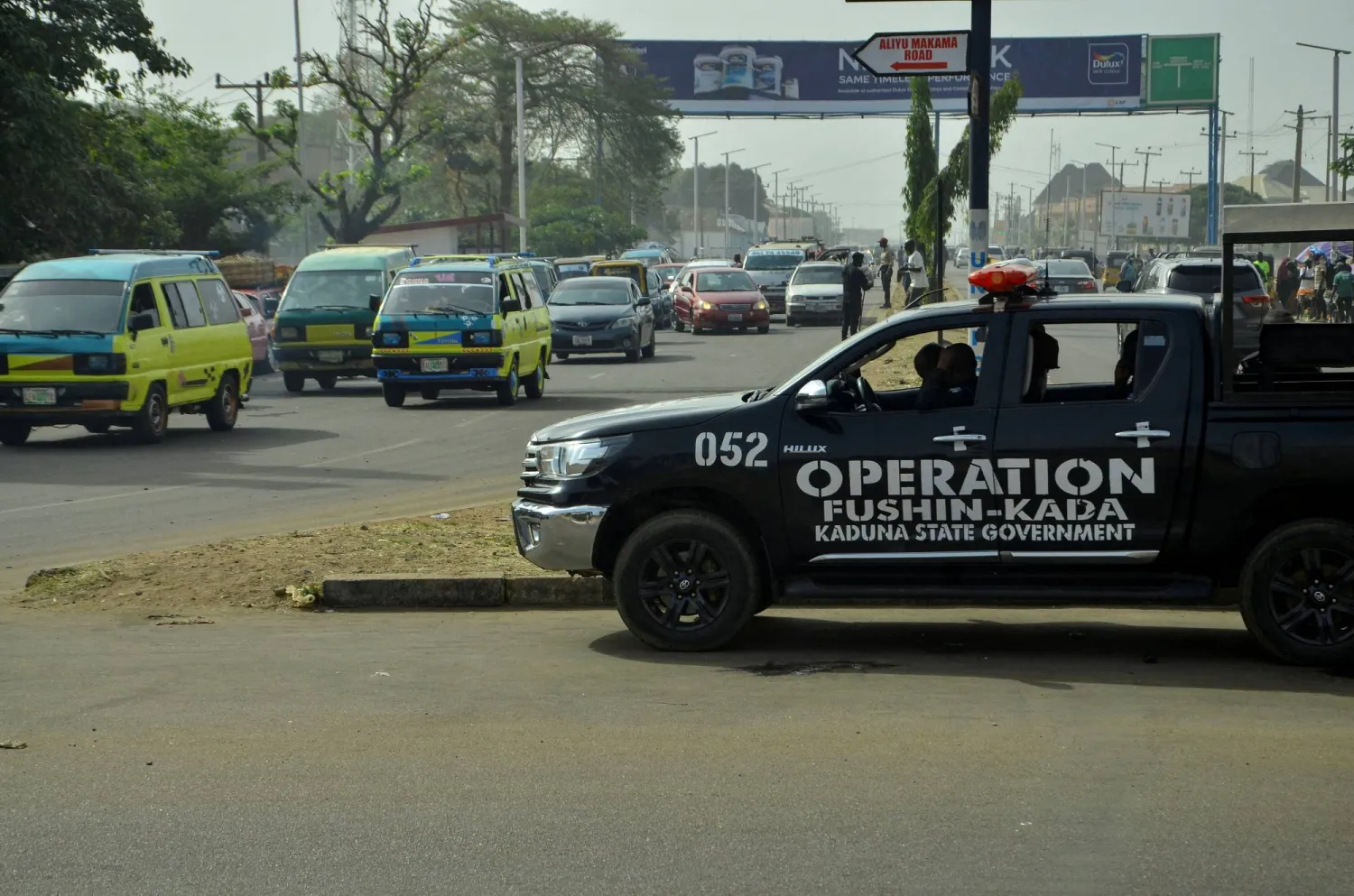
FILE PHOTO: A police vehicle of Operation Fushin Kada (Anger of Crocodile) is parked on Yakowa Road, as schools across northern Nigeria reopen nearly two months after closing due to security concerns, following the mass abductions of school children, in Kaduna, Nigeria, January 12, 2026. REUTERS/Nuhu Gwamna/File Photo
TT

Road Accident in Nigeria Kills at Least 30 People

FILE PHOTO: A police vehicle of Operation Fushin Kada (Anger of Crocodile) is parked on Yakowa Road, as schools across northern Nigeria reopen nearly two months after closing due to security concerns, following the mass abductions of school children, in Kaduna, Nigeria, January 12, 2026. REUTERS/Nuhu Gwamna/File Photo

At least 30 people have been killed and an unspecified number of people injured in a road accident in northwest Nigeria, authorities said.

The accident occurred Sunday in Kwanar Barde in the Gezawa area of Kano state and was caused by “reckless driving” by the driver of a truck-trailer, Gov. Abba Yusuf said in a statement. He did not specify what other vehicles were involved.

Yusuf described the accident as “heartbreaking and a great loss” to the affected families and the state. He did not provide more details of the accident, said The Associated Press.

Africa’s most populous country recorded 5,421 deaths in 9,570 road accidents in 2024, according to data by the country’s Federal Road Safety Corps.

Experts say a combination of factors including a network of bad roads, lax enforcement of traffic laws and indiscipline by some drivers produce the grim statistics.

In December, boxing heavyweight champion Anthony Joshua was in a deadly car crash that injured him and killed Sina Ghami and Latif “Latz” Ayodele, two of his friends, in southwest Nigeria.

Adeniyi Mobolaji Kayode, Joshua’s driver, was charged with dangerous and reckless driving and his trial is scheduled to begin later this month.

Africa has the highest road fatality rate in the world despite having only about 3% of the world’s vehicles, mainly due to weak enforcement of road laws, poor infrastructure and widespread use of unsafe transport. 


US Vice President Vance Heads to Armenia, Azerbaijan to Push Peace, Trade

US Vice President JD Vance speaks during the Critical Minerals Ministerial at the State Department in Washington, DC, US, February 4, 2026. (Reuters)
TT

US Vice President Vance Heads to Armenia, Azerbaijan to Push Peace, Trade

US Vice President JD Vance speaks during the Critical Minerals Ministerial at the State Department in Washington, DC, US, February 4, 2026. (Reuters)

US Vice President JD Vance will visit Armenia and Azerbaijan this week to push a Washington-brokered peace agreement that could transform energy and trade routes in the strategic South Caucasus region.

His two-day trip to Armenia, which begins later on Monday, comes just six months after the Armenian and Azerbaijani leaders signed an agreement at the White House seen as the first step towards peace after nearly 40 years of war.

Vance, the first US vice president to visit Armenia, is seeking to advance the Trump Route for International Peace and Prosperity (TRIPP), a proposed 43-kilometre (27-mile) corridor that would run across southern Armenia and give Azerbaijan a direct route to its exclave ‌of Nakhchivan ‌and in turn to Türkiye, Baku's close ally.

"Vance's visit should ‌serve ⁠to reaffirm the ‌US's commitment to seeing the Trump Route through," said Joshua Kucera, a senior South Caucasus analyst at Crisis Group.

"In a region like the Caucasus, even a small amount of attention from the US can make a significant impact."

The Armenian government said on Monday that Vance would hold talks with Prime Minister Nikol Pashinyan and that both men would then make statements, without elaborating.

Vance will then visit Azerbaijan on Wednesday and Thursday, the White House has said.

Under the agreement signed last year, ⁠a private US firm, the TRIPP Development Company, has been granted exclusive rights to develop the proposed corridor, with Yerevan ‌retaining full sovereignty over its borders, customs, taxation and security.

The ‍route would better connect Asia to Europe ‍while - crucially for Washington - bypassing Russia and Iran at a time when Western countries are ‍keen on diversifying energy and trade routes away from Russia due to its war in Ukraine.

Russia has traditionally viewed the South Caucasus as part of its sphere of influence but has seen its clout there diminish as it is distracted by the war in Ukraine.

Securing US access to supplies of critical minerals is also likely to be a key focus of Vance's visit.

TRIPP could prove a key transit corridor for the vast mineral wealth of ⁠Central Asia - including uranium, copper, gold and rare earths - to Western markets.

CLOSED BORDERS, BITTER RIVALS

In Soviet times the South Caucasus was criss-crossed by railways and oil pipelines until a series of wars beginning in the 1980s disrupted energy routes and shuttered the border between Armenia and Türkiye, Azerbaijan's key regional ally.

Armenia and Azerbaijan were locked in bitter conflict for nearly four decades, primarily over the mountainous region of Nagorno-Karabakh, an internationally recognized part of Azerbaijan that broke away from Baku's control as the Soviet Union fell apart in 1991.

Azerbaijan and Armenia fought two wars over Karabakh before Baku finally took it back in 2023. Karabakh's entire ethnic Armenian population of around 100,000 people fled to Armenia. The two neighbors have made progress in recent months on normalizing relations, including restarting ‌some energy shipments.

But major hurdles remain to full and lasting peace, including a demand by Azerbaijan that Armenia change its constitution to remove what Baku says contains implicit claims on Azerbaijani territory.