Human Rights Network Documents 18,000 Houthi Abuses in Yemen’s Dhamar

A home destroyed by the Houthis in Yemen's Dhamar. (Social media)
TT

Human Rights Network Documents 18,000 Houthi Abuses in Yemen’s Dhamar

A home destroyed by the Houthis in Yemen's Dhamar. (Social media)

A Yemeni human rights report revealed on Tuesday that the Iran-backed Houthi militias have committed over 18,000 violations against civilians in the Dhamar governorate during seven years.

The Yemeni Network for Rights and Freedoms said that from December 1, 2014 to October 30, 2021, it documented 18,413 grave Houthi violations ranging from killings, physical assaults, kidnappings, raids, looting of public and private funds and other crimes.

Dhamar is located 100 kilometers south of the Houthi-held capital Sanaa.

The Network stated that during the past seven years, the Houthis committed 474 extrajudicial killings and injured 218 people in the governorate.

It documented 19 assassinations, 1,183 kidnappings, 72 enforced disappearances, 614 arbitrary arrests of travelers, 315 threats and exclusion from public office, nine cases of rape and forced prostitution, 274 cases of physical and psychological torture and 105 physical assaults of civilians.

It accused the militias of carrying out 48 bombings that affected houses, shops and places of worship, in addition to carrying out 1,459 raids and looting and burning of homes, 69 cases of confiscation and looting of private and public property, and 80 cases of appropriation of private lands and sale of state property.

In addition, the report documented 237 Houthi attacks on places of worship and educational and health facilities, and 24 cases of looting of party headquarters and charities.

“The Houthi militias forced more than 2,143 families to flee and they recruited 5,481 child soldiers in Dhamar, mainly orphans,” the Network report revealed, adding that the mentioned violations do not represent all the crimes that were committed by the Houthis in Dhamar.


Iraqi Armed Factions Face Allegations of Seizing Commercial Contracts

Iraqi security forces stand guard as protesters holding a “Jihad Brigades” banner gather in Basra, Iraq, April 7, 2026. (Reuters)
TT

Iraqi Armed Factions Face Allegations of Seizing Commercial Contracts

Iraqi security forces stand guard as protesters holding a “Jihad Brigades” banner gather in Basra, Iraq, April 7, 2026. (Reuters)

Tensions between the Iraqi government and armed factions have deepened, with mounting accusations over the groups’ economic influence, property acquisitions and investment projects. This coincided with security and military operations aimed at curbing the activities of the groups that, according to government assessments, are not fully under state control.

The escalation followed questions raised by Kataib Hezbollah about oil sales to a regional company and whether members of the Coordination Framework approved of selling oil at discounted prices while sharing in the profits.

In response, pro-government media outlets published information about what they described as Kataib Hezbollah’s “investment network,” alleging that it operates with the help of traders and businessmen, involves property acquisitions and has developed into an investment venture.

The disclosures coincided with a coordinated social media campaign that began referring to Iran-allied “resistance” groups in Iraq as “contractors.”

The details of the property-related allegations and the identities of those benefiting from the alleged activities could not be independently verified.

Observers said the timing of the disclosures suggested that the dispute had expanded to economic interests, after previously focusing primarily on efforts to bring all weapons under state control. Negotiations on that issue have yet to produce tangible progress.

In an effort to curb corruption in military manufacturing contracts, particularly amid questions about their links to financial benefits, intermediaries and ties with armed factions, Prime Minister Ali al-Zaidi ordered this week the cancellation of contracts with intermediary companies and directed that military manufacturing contracts be concluded directly with manufacturers.

The move followed reports linking companies involved in military manufacturing contracts to Kataib Hezbollah.

Tighter monitoring of armed factions

Meanwhile, security and military agencies have begun expanding their monitoring of armed groups affiliated with factions within the Popular Mobilization Forces (PMF), signaling an effort to impose stricter government oversight on movements that previously enjoyed considerable freedom within their areas of operation.

In one incident, a security force detained a group of members of an armed faction who were carrying 35 rockets while traveling toward the Babil province, according to information circulating about the incident.

The group’s movement raised questions about the shipment’s final destination, particularly because the province includes Jurf al-Sakhar, a major Kataib Hezbollah stronghold where armed factions wield extensive security and military influence.

A security source contacted by Asharq Al-Awsat declined to comment on the details of the incident.

However, the source did not deny that “such activities, regardless of the status of those carrying them out, including affiliation with the PMF, are now subject to monitoring and pursuit by the relevant authorities.”

Implementation test

The seizure of the rockets has brought the issue of placing weapons under state control back to the forefront as one of the government’s most significant challenges.

Political researcher Falah al-Mishal said bringing weapons under state control or securing their surrender was a priority in the government’s program.

He told Asharq Al-Awsat that during a visit to Washington and a meeting with US President Donald Trump, al-Zaidi had made commitments regarding a deadline for surrendering weapons, initially set for the end of last September, before the government requested an extension until next June.

“This project, which the United States made a benchmark for the success of al-Zaidi’s government and a reason for supporting it, has encountered setbacks,” he remarked.

“To observers, it appears that the issue of disarming the factions has remained confined to media statements, with nothing achieved on the ground.”

He added that recent reports had described the destruction of weapons depots belonging to the PMF around Baghdad, alongside reports and leaks about weapons and experts from Iran’s Revolutionary Guard Corps entering the ranks of armed factions.

Al-Mishal said these developments had prompted the United States to warn against any easing of government pressure to eliminate weapons outside state control.

Ghalib al-Daami, a media professor at Mustansiriyah University, said Washington approaches Iraq based on strategic interests rather than political relationships or personal considerations.

He warned that failure to surrender weapons within the agreed deadline could prompt the United States to take economic and political measures against Iraq.

Al-Daami told Asharq Al-Awsat that broad sanctions or economic restrictions could worsen domestic conditions, warning that the continued presence of weapons outside state control increased the likelihood of clashes between rival groups.

He said Iraq could face two possible outcomes: either growing chaos, or the government’s success in asserting its authority by placing weapons exclusively under the control of state institutions.


US State Department 'Expels' Lebanon’s Consul in Detroit

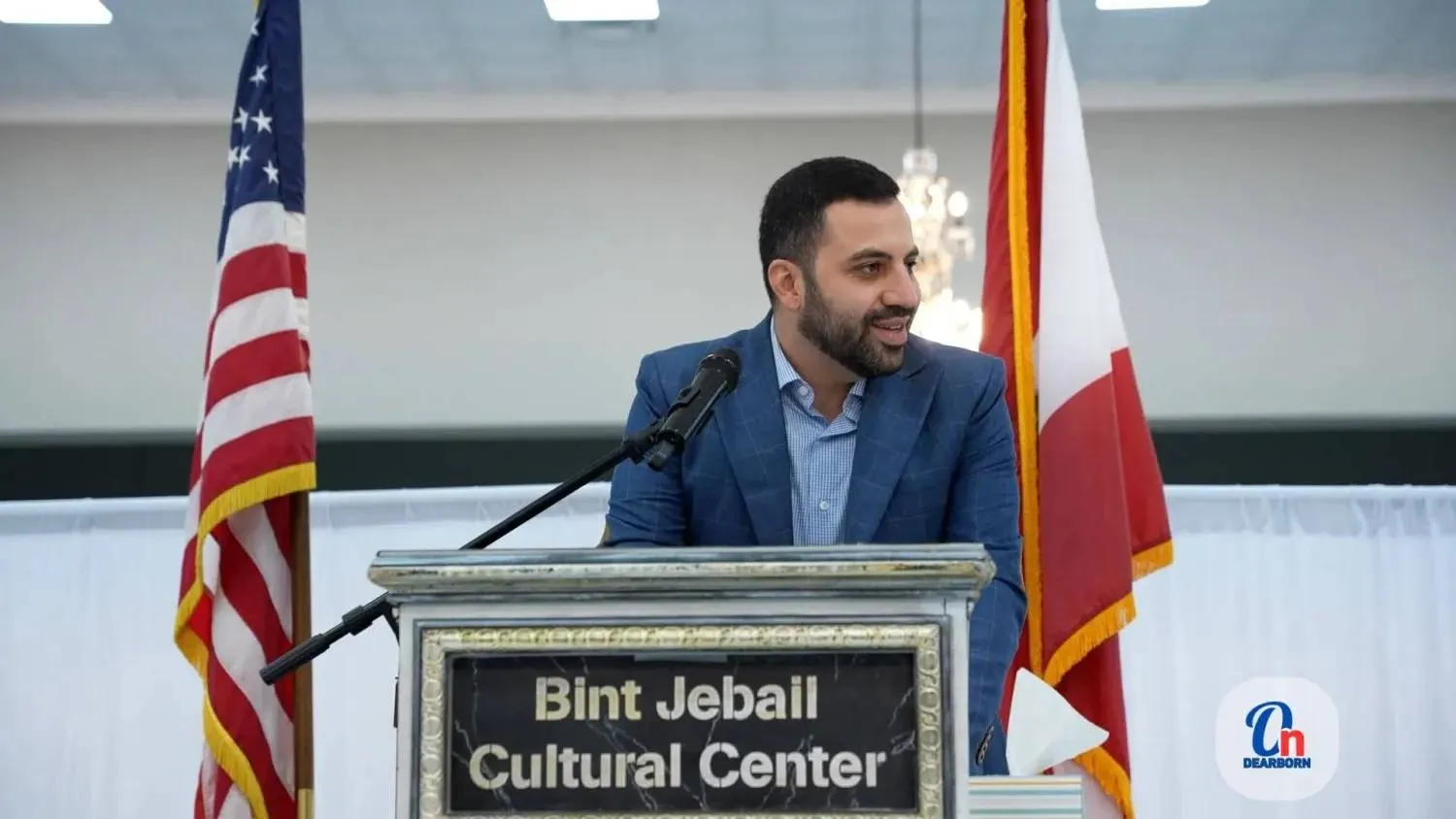
Lebanon’s consul in Detroit Ibrahim Charara. (Facebook)
TT

US State Department 'Expels' Lebanon’s Consul in Detroit

Lebanon’s consul in Detroit Ibrahim Charara. (Facebook)

Lebanese Foreign Ministry sources told Asharq Al-Awsat that the Lebanese Embassy in Washington had been formally notified by the US State Department that Lebanon’s consul in Detroit, Ibrahim Charara, had been declared persona non grata and must leave the United States within 48 hours.

The decision reportedly followed controversy sparked by US media reports that resurfaced old social media posts attributed to Charara about the 1983 bombing of the US Marine barracks in Beirut, which he had described as “heroic resistance.”

Political Views

In a report published on November 2, the US news website The Washington Free Beacon said Charara had written in a 2021 social media post marking the anniversary of the Marine barracks bombing that “heroic resistance” had ended the “American military occupation of Beirut with a single strike.”

The website also cited another post attributed to Charara that read: “From the Marine barracks in Beirut to the Al-Tanf base ... we will reject the occupier and defeat him,” an apparent reference to the US military presence in Syria.

The report also highlighted other positions attributed to Charara, including his praise for the escape of six Palestinian prisoners from Israel’s Gilboa Prison in 2021. It also pointed to his X account’s cover image, which shows an Israeli flag burning, and a quotation by Palestinian writer and political figure Ghassan Kanafani in his profile bio.

The controversy resurfaced on the eve of the midterm elections, with the Free Beacon highlighting Charara’s attendance at an Arab American political action committee event in Dearborn, attended by Senate candidate Abdulrahman Alsayed (who later won the seat) and other Democratic hopefuls.

The report was published a day before the November 3 vote, fueling speculation about an attempt to influence Michigan voters, though no link between the event and the US decision has been established.

Article 23 of the Vienna Convention on Consular Relations allows a host country to declare a consular officer persona non grata, requiring the sending state to recall the officer or end their duties. If the sending state does not comply within a reasonable time, the host country may stop recognizing the officer’s consular status. This measure does not itself constitute a criminal conviction.

The decision is expected to require Beirut to make arrangements for the consulate’s management and ensure the continued delivery of services to the Lebanese community, while containing the diplomatic fallout. The move against the consul does not in itself mean a rupture in relations or the closure of the mission, but the scope of the fallout will depend on Washington’s explanations and Beirut’s response.


Egypt Reopens Embassy in Libya’s Tripoli After 12-Year Closure

Egypt's Foreign Minister Badr Abdelatty speaks during the reopening ceremony of Egyptian embassy in Libyan capital Tripoli on November 7, 2026. (AFP)
TT

Egypt Reopens Embassy in Libya’s Tripoli After 12-Year Closure

Egypt's Foreign Minister Badr Abdelatty speaks during the reopening ceremony of Egyptian embassy in Libyan capital Tripoli on November 7, 2026. (AFP)

Egypt ‌reopened its embassy in Libya's capital Tripoli on Saturday after a 12-year absence, marking a rapprochement with the country's western-based administration, the foreign affairs ministry in Cairo said in a statement.

Egypt closed its ⁠Tripoli embassy in 2014, when many foreign missions there closed amid an escalating conflict that saw rival governments set themselves up in the capital and in the east of the ⁠North African country.

Egypt's ‌foreign affairs minister ‌Badr Abdelatty was quoted in the statement ‌as saying at the reopening ceremony ‌that the historical significance of the embassy building "aligns with the deep-rooted human and cultural ties that characterize Egyptian-Libyan relations".

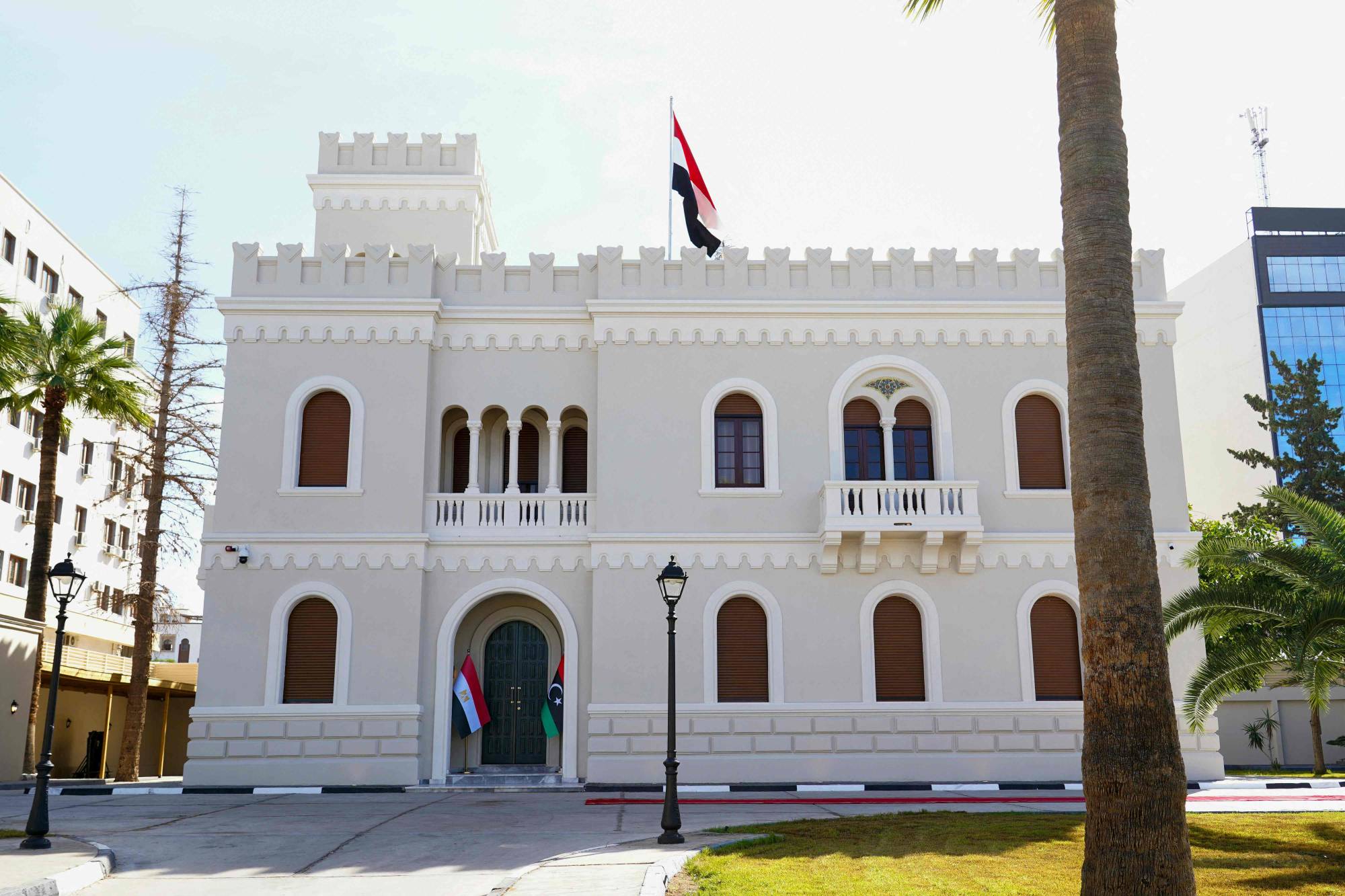
This picture shows the Egyptian embassy building in Tripoli on November 7, 2026. (AFP)

Oil producer Libya ‌has been plunged into chaos since the fall of Moammar al-Gaddafi ⁠in ⁠a NATO-backed uprising in 2011.

In Benghazi in eastern Libya there is the Libyan National Army under military commander Khalifa Haftar and the House of Representatives, and a government led by Osama Hammad. In the west there is the Government of National Unity headed by Abdulhamid Dbeibah and the High Council of State in Tripoli.

The embassy's reopening comes weeks after Libya's eastern-based parliament ratified a long-disputed maritime agreement with Türkiye, angering Cairo which said it infringed upon its maritime zone.