Crown Prince Unveils Company that Will Develop Downtowns in Saudi Arabia

Crown Mohammed bin Salman announced the launch of Saudi Downtown Company (SDC) that will build and develop downtown areas and mixed-use destinations in 12 cities throughout Saudi Arabia. (SPA)
TT

Crown Prince Unveils Company that Will Develop Downtowns in Saudi Arabia

Crown Mohammed bin Salman announced the launch of Saudi Downtown Company (SDC) that will build and develop downtown areas and mixed-use destinations in 12 cities throughout Saudi Arabia. (SPA)

Prince Mohammed bin Salman, Crown Prince, and Chairman of the Public Investment Fund (PIF), announced the launch of Saudi Downtown Company (SDC) that will build and develop downtown areas and mixed-use destinations in 12 cities throughout Saudi Arabia.

The company will aim to improve the infrastructure and build strategic partnerships with the private sector and investors, by creating new business and investment opportunities in key economic sectors, including retail, tourism, entertainment, and housing.

The 12 cities include: Al-Madinah, Al-Khobar, Al-Ahsa, Buraidah, Najran, Jizan, Hail, Al-Baha, Arar, Taif, Dumat Al-Jandal, and Tabuk.

SDC will develop over 10 million square meters of land across all projects, creating modern destinations drawn from Saudi Arabia’s diverse local culture and traditional architectural motifs, while using cutting-edge technology in every project.

By launching SDC, PIF aims to increase trade and investment opportunities in various cities across Saudi Arabia to enhance their attractiveness and create a positive impact in their local economies.

The projects will contribute to creating new opportunities for the private sector and new job opportunities for citizens, as well as localizing knowledge and expertise to help entrepreneurs and companies start and expand their businesses.

The launch of SDC reflects Crown Prince Mohammed’s vision to launch development projects in various regions of Saudi Arabia, highlighting the active role that domestic cities play in supporting the national economy.

The company’s strategy aligns with PIF’s efforts to unlock and enable the capabilities of promising sectors locally that can help drive the diversification of the economy and contribute to non-oil GDP growth, in line with the objectives of Vision 2030.


Saudi Defense Minister Discusses Cooperation with Japanese, Australian Counterparts, Who Condemn Houthi Attacks

Saudi Minister of Defense Prince Khalid bin Salman bin Abdulaziz
TT

Saudi Defense Minister Discusses Cooperation with Japanese, Australian Counterparts, Who Condemn Houthi Attacks

Saudi Minister of Defense Prince Khalid bin Salman bin Abdulaziz

Saudi Minister of Defense Prince Khalid bin Salman bin Abdulaziz held separate phone talks with Japanese Minister of Defense Shinjiro Koizumi, and Australian Deputy Prime Minister and Minister for Defense Richard Marles, the Saudi Press agency reported Monday.

During his call with the Japanese minister, discussions focused on military and defense cooperation between the two friendly countries, and ways to strengthen it.

The call also emphasized the importance of supporting efforts to achieve security and stability in the region and included condemnation of the terrorist attacks the Houthi militia is carrying out against Saudi Arabia.

In his call with his Australian counterpart, the Saudi minister discussed strengthening defense cooperation and coordination, reaffirmed their commitment to addressing regional challenges to promote security and stability. The Australian minister condemned Houthi attacks on Saudi Arabia.


Saudi Arabia Calls for Effective Collective Response to Protect Vital Shipping Routes

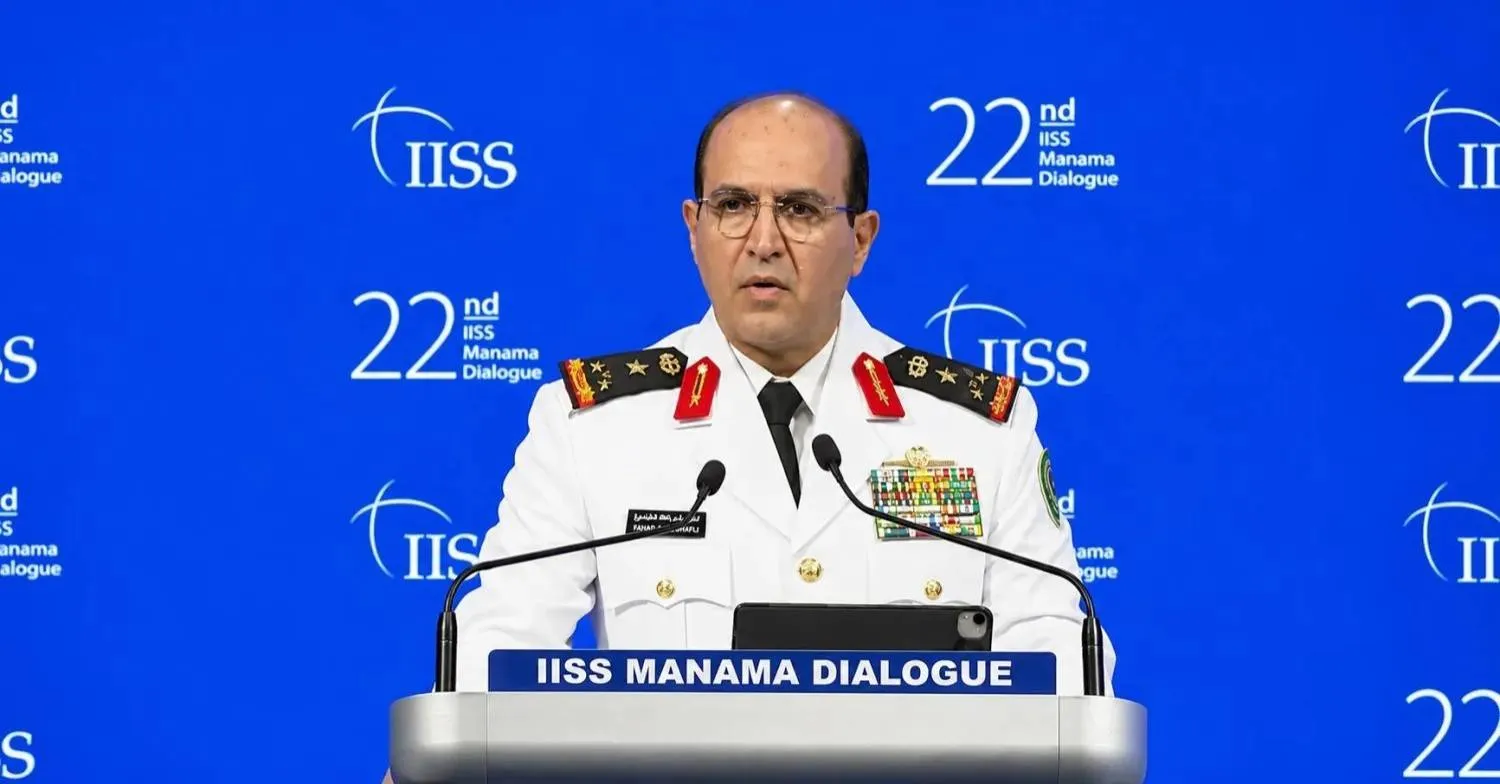
Saudi Deputy Chief of the General Staff Lieutenant General Fahd Al-Ghufaili during his participation in the 22nd Regional Security Summit in Manama (Asharq Al-Awsat)
TT

Saudi Arabia Calls for Effective Collective Response to Protect Vital Shipping Routes

Saudi Deputy Chief of the General Staff Lieutenant General Fahd Al-Ghufaili during his participation in the 22nd Regional Security Summit in Manama (Asharq Al-Awsat)

Saudi Deputy Chief of the General Staff Lieutenant General Fahd Al-Ghufaili emphasized on Sunday the importance of strengthening international cooperation to protect vital maritime corridors.

He stressed the need to ensure freedom of navigation and the safety of international trade, noting that maritime security is a shared responsibility requiring concerted international efforts.

Al-Ghufaili headed the Saudi Ministry of Defense delegation at the opening of the 22nd Regional Security Summit (IISS Manama Dialogue 2026). The summit brought together high-level international delegations comprising ministers, security officials, and military commanders.

Addressing the forum, Al-Ghufaili explained that seas and waterways are vital arteries for the global economy, energy security, and supply chains. He warned that any disruption in the Arabian Gulf, Strait of Hormuz, Red Sea, Bab al-Mandab Strait, or Gulf of Aden would affect international trade, energy markets, and food security.

Al-Ghufaili noted that Houthi attacks on commercial vessels and oil tankers since 2023, alongside disruptions to maritime traffic through the Strait of Hormuz, underscore the seriousness of maritime threats.

He stressed the need for an effective collective response to protect vital shipping routes and strengthen regional and international security and stability.

He stated that Saudi Arabia launched an international initiative on July 30, resulting in the establishment of the Multinational Maritime Defense Coalition.

The coalition has been joined by 14 countries, while others have expressed their willingness to join upon completing their relevant national procedures.

Al-Ghufaili emphasized that protecting vessels, maritime facilities, ports, and shipping lanes requires cooperation, coordination, and information sharing. He also highlighted the importance of joint capacity building and preventive measures to avert crises before they occur.

He stressed that force cannot replace the rule of law and that disputes must not threaten freedom of navigation or the safety of international trade.

He explained that Saudi Arabia's vision for maritime security is based on respecting the sovereignty and legitimate rights of states and ensuring freedom of navigation and passage in accordance with international law.

It also calls for preventing the use of maritime corridors as instruments of pressure or escalation and categorically rejects attacks on commercial vessels and civilian facilities. The vision further emphasizes strengthening regional and international cooperation to address maritime threats in all their forms.

Al-Ghufaili stated that maritime security cannot be achieved through military capabilities alone. It also requires trust, transparency, common rules, and mechanisms to prevent escalation. He called for establishing a sustainable regional maritime security framework based on prevention, early warning, information sharing, and operational coordination. Such a framework would support collective action to address risks before they develop into crises.

He stressed that seas must remain bridges of communication and prosperity rather than arenas of conflict. International straits must remain safe passages for navigation rather than instruments of political or military pressure, while international law must remain the reference framework for resolving disputes between states.

Al-Ghufaili reaffirmed that maritime security, freedom of navigation, and the stability of international straits are shared international responsibilities. He emphasized the need for partnership, adherence to international law, and prioritizing dialogue and wisdom over escalation and confrontation.

These principles serve the security of regional countries and safeguard the interests of the international community.


Saudi Arabia Strongly Condemns Targeting of Qatar Gas Transport Company's LNG Carrier Al Mayeda

Saudi Arabia Strongly Condemns Targeting of Qatar Gas Transport Company's LNG Carrier Al Mayeda
TT

Saudi Arabia Strongly Condemns Targeting of Qatar Gas Transport Company's LNG Carrier Al Mayeda

Saudi Arabia Strongly Condemns Targeting of Qatar Gas Transport Company's LNG Carrier Al Mayeda

The Saudi Ministry of Foreign Affairs expressed the Kingdom’s strongest condemnation and denunciation of the targeting of "Al Mayeda" liquefied natural gas (LNG) carrier, owned by Qatar Gas Transport Company, in the waters of the Arabian Gulf, reiterating its rejection of all violations that threaten the security and safety of maritime navigation and global energy supplies, SPA reported.

“The Kingdom of Saudi Arabia affirms its solidarity with the State of Qatar in all the measures it takes to protect its maritime vessels and ensure the safety of its international trade. It stresses the importance of the international community taking urgent measures to ensure maritime security and the safety of international trade, and to enforce international law in this regard,” the foreign ministry said.