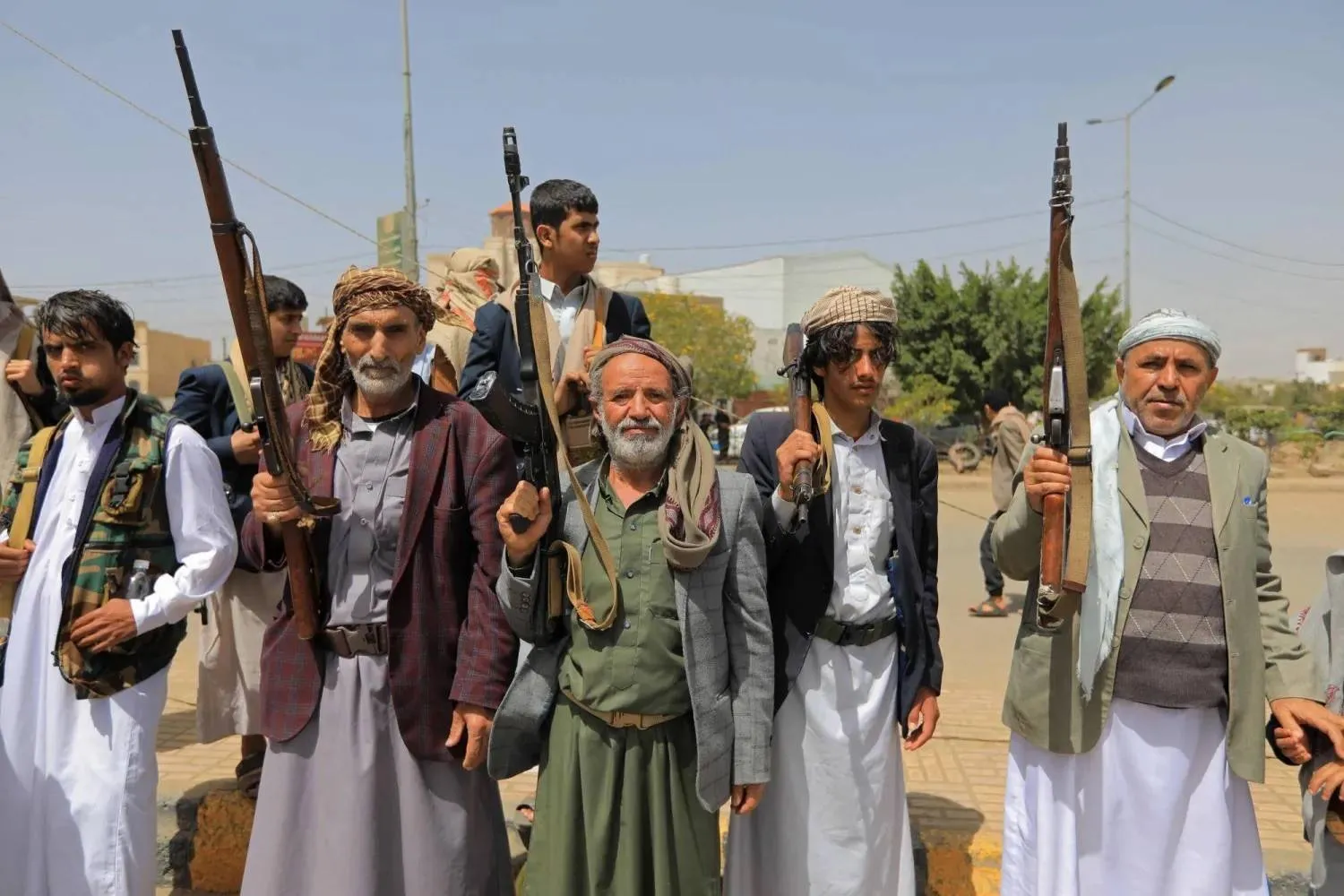
Yemen’s Houthi group has threatened “gradual escalation” after claiming a fourth attack on Israel, about a week after entering the war alongside Iran as part of the Tehran-led “axis of resistance.”
The move comes as Yemen’s internationally recognized government steps up rhetoric, saying a decisive battle to retake the state from Houthi control is nearing. Israel, for its part, said it is consulting Washington on how to respond to the Houthi attacks, despite their limited impact compared with sustained fire from Iran and Hezbollah.
In a televised statement late Thursday, Houthi military spokesman Yahya Saree said the group launched “a salvo of ballistic missiles” at “vital Israeli targets in the occupied Jaffa area.” He claimed the operation was carried out in coordination with Iran and Hezbollah and had “successfully achieved its objectives.”
The Houthis said their intervention in what they described as a “major and exceptional battle” would be incremental, adding they would adjust their actions depending on “the enemy’s escalation or de-escalation.”
The latest strike marks the fourth since the group announced direct involvement in the regional confrontation, underscoring growing coordination among Iran-backed actors, including Hezbollah and armed Iraqi factions.
Limited effect
The Houthis had claimed a third attack a day earlier. The Israeli military said it intercepted a missile launched from Yemen “without casualties or damage,” adding early detection allowed it to neutralize the threat.
Analysts say such attacks are unlikely to do more than stretch Israel’s air defenses, already under pressure from multiple fronts, including Iran and Hezbollah.
In his first appearance since announcing the escalation, Houthi leader Abdul Malik al-Houthi said the group had shifted from political and media backing of Iran to “direct operational engagement.”
He framed the attacks as part of “joint operations of the axis of resistance,” describing the confrontation as “a duty that transcends geographical borders.” He also defended joining the war, saying neutrality “is not an option,” despite growing concern inside Yemen over the economic and security risks.
Al-Houthi urged supporters to maintain weekly pro-Iran rallies and step up mobilization, including sending school students to summer camps—long used by the group for recruitment.
Government signals offensive
Tareq Saleh, a member of Yemen’s Presidential Leadership Council, said “the battle to end the Houthi coup is approaching,” adding national forces would act “as one team.”
State media reported his remarks during a visit to forces on Yemen’s west coast, where he praised troops as “a safety valve for the republic,” signaling confidence in their ability to regain the initiative.
Saleh also pointed to the regional dimension, saying Iranian actions against Gulf states and Jordan show Tehran’s project is “destructive” and “has never truly been directed at Israel.”
Rejecting Houthi claims, he said the group “pretends to confront Israel” while using that narrative to justify violence against Yemenis, noting the conflict with the Houthis dates back to 2004, well before current regional tensions.