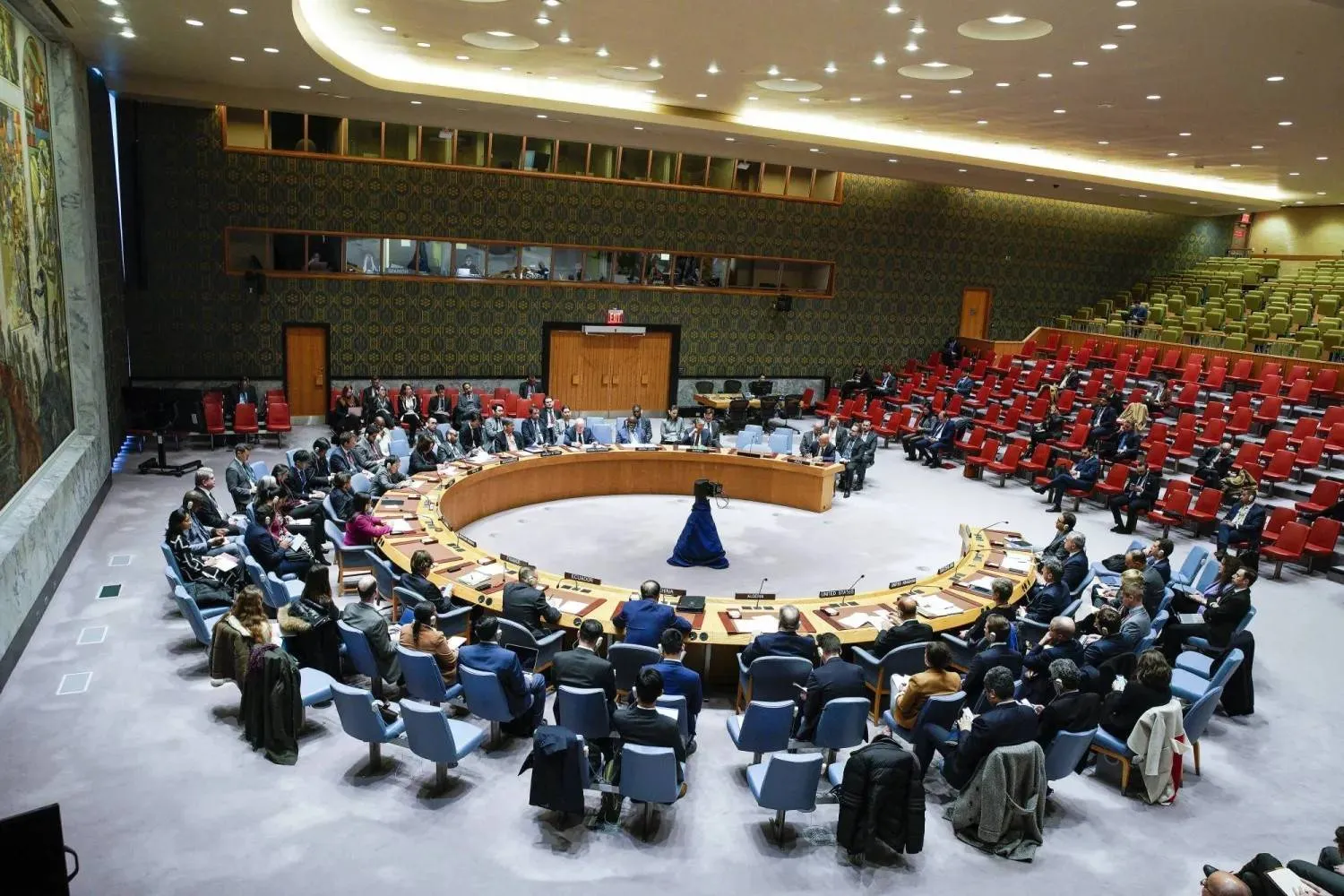
UN Special Representative of the Secretary-General for Libya (UNSMIL), Hanna Tetteh, told Security Council members on Wednesday that a deal she brokered to break the political deadlock in the North African country enjoys broad support. However, she warned that rejection by either of Libya’s two legislative bodies could derail elections scheduled to take place within the next two years.
‘Viable Pathway’
In a briefing to the UN Security Council in New York on Wednesday, Tetteh said that following four months of deliberations, on 30 August, the parties to the Smaller Convening signed an Agreement in Tripoli marking a break in the prolonged political and institutional deadlock.
The agreement established a viable pathway for legislative and presidential elections under a single unified executive authority within a period of 24 months.
Also, it provides for the reconstitution of the board of the High National Elections Commission (HNEC) and for resolving long-standing contentious issues in the constitutional and legal framework that could negatively impact efforts to conduct peaceful credible and inclusive elections.
According to the UN representative, the Agreement was welcomed by the Government of National Unity, the Libyan National Army, the House of Representatives, and Vice President of the Presidential Council Mousa Al-Koni, among others.
However, she said, the High Council of State rejected the Agreement on 5 October along with the laws and decisions communicated by the Speaker of the House of Representatives, citing approaches that would bypass the constitutional, legal and consensual frameworks governing the political process or undermine the prerogatives assigned to the two institutions.
“Their rejection continues to reflect the limited willingness of some of its members to engage constructively in this process, which has been a feature of the ongoing engagement with this chamber,” Tetteh warned.
In this regard, the UN representative revealed that several HCS members have indicated their willingness to engage in the Agreement and have requested additional time to consult amongst themselves on moving the process forward.
“I will further consult the parties to the Smaller Convening in our meeting later this month, including by examining the option of proceeding to a national mechanism of broad representation as provided for in Article 5 of the Agreement and in consultation with this Council,” she said.
Impact of Political Fragmentation
Tetteh said that institutional and political fragmentation have continued to impact negatively on the economic and security situation in the country.
While global oil prices should have generated a significant windfall for public revenues to benefit all, many Libyans are instead seeing their purchasing power eroded by rising food prices, a weaker dinar and inflation right now above 14%, while access to essential public services remain unreliable.
Also, food prices alone further rose by 3.8% in August, with the pressure particularly acute in the West and South, where food costs increased sharply over the summer.
Tetteh noted that between January and September 2026, fuel imports totalled 8.15 million metric tons, at a cost of $8.9 billion, of which between 30 and 50% of these imports are estimated to be lost to smuggling, worth between $2.4 and $4.4 billion.
She said the recent disruptions to oil infrastructure demonstrate the wider economic cost of political and security fragmentation to impact strategic national assets.
Petroleum Facility Guards from Zintan blocked the Hamada-Zawiya pipeline from 15 to 20 September, followed by the Sharara-Zawiya pipeline from 21 to 26 September reportedly due to disputes over appointments from within that region.
“The disruptions resulted in around one million barrels of lost production, worth approximately $100 million, and risked affecting salary payments and electricity generation,” she said.
At the security level, Tetteh said the overall situation remains fragile.
She welcomed positive steps toward enhanced military cooperation between Eastern and Western military and security institutions, adding the Mission continues to encourage confidence-building measures at the technical level between both sides.
Tetteh also referred to the follow-up meeting of the Eastern and Western maritime, air force and air defense commanders in Sirte on 9 September to discuss practical cooperation towards reunifying these sectors.
Elsewhere, the UN representative expressed concern over the execution over the last two months, in Benghazi of 58 individuals convicted of prior crimes related to terrorism offenses, including alleged membership in proscribed terrorist groups or involvement in the killing of military and civilian personnel.
She also condemned the ongoing wave of misinformation, disinformation, hate speech and incitement targeting refugees, migrants, including those with an irregular status, humanitarian actors and UN agencies and personnel in Libya, including colleagues who are Libyan nationals.
Tetteh asked the Security Council’s continued support to the UNSMIL-facilitated political roadmap and to ensure Libyan leaders promptly meet their obligations to fulfil their people’s ultimate aspirations for peace, stability, inclusive and democratic governance that they so deserve.
“The path to a stable, unified, and prosperous Libya remains long, but our destination remains within reach,” she said.