Barzani Underlines Importance of Holding Elections in Kurdistan

President of the Kurdistan Region in Iraq, Nechirvan Barzani pays his respects to Britain's Queen Elizabeth II, following her death, during her lying in state at Westminster Hall, in Westminster Palace, in London, Sunday, Sept. 18, 2022. (AP)
TT

Barzani Underlines Importance of Holding Elections in Kurdistan

President of the Kurdistan Region in Iraq, Nechirvan Barzani pays his respects to Britain's Queen Elizabeth II, following her death, during her lying in state at Westminster Hall, in Westminster Palace, in London, Sunday, Sept. 18, 2022. (AP)

President of the Kurdistan Region Nechirvan Barzani underscored the need to hold parliamentary elections later this year.

Taking part in the Munich Security Conference, he said that when he returns home, he will kick off a series of meetings with political parties in the buildup to the polls.

He stressed his commitment to holding the elections, adding that it was his responsibility as president to set a date for them.

Failure to hold them puts the entire political process and legitimacy of the Kurdistan Region under scrutiny, he remarked.

All political parties are expected to take this issue seriously, he urged.

Meanwhile, Iraq’s al-Sabah newspaper dropped a bombshell on Saturday after releasing the results of a survey that showed that the majority of residents of Kurdistan supported the dissolution of the constitutional framework of the Region and returning to the fold of the Baghdad-based federal government.

The poll, titled “Will the Kurdistan Region Be Dissolved,” was held by an Erbil-based company.

The respondents also expressed their “disappointment from the Kurdish political authority and willingness to return to Baghdad.”

The survey sparked outrage among political and government circles, even the opposition, while the people appeared indifferent to it, revealed journalistic information received by Asharq Al-Awsat.

The Kurdish government dismissed the survey, saying it was not based on scientific grounds.

In a statement, it stressed that the survey results were “far removed from the truth.”

It cited a July 2017 referendum in which the majority of the people voted in favor of Kurdistan’s independence.

At the time, the Baghdad government responded to the results with a military offensive and siege against Kurdistan, noted the statement.

Moreover, it added that the people of Iraq attest to the development of Kurdistan over the years, so how can the residents of the Region want to go back to a place [Baghdad] where their prospects will be destroyed?

The Kurdistan Region was formed by the blood of thousands of martyrs and the resistance and courage of the Peshmerga. No newspaper article can dissolve the Region, emphasized the statement.

A Baghdad government spokesman denied that the survey reflected the position of the cabinet or any official party.

An investigation has since been ordered into the survey.


Hamas Armed Wing Says Disarmament Calls Are Unacceptable

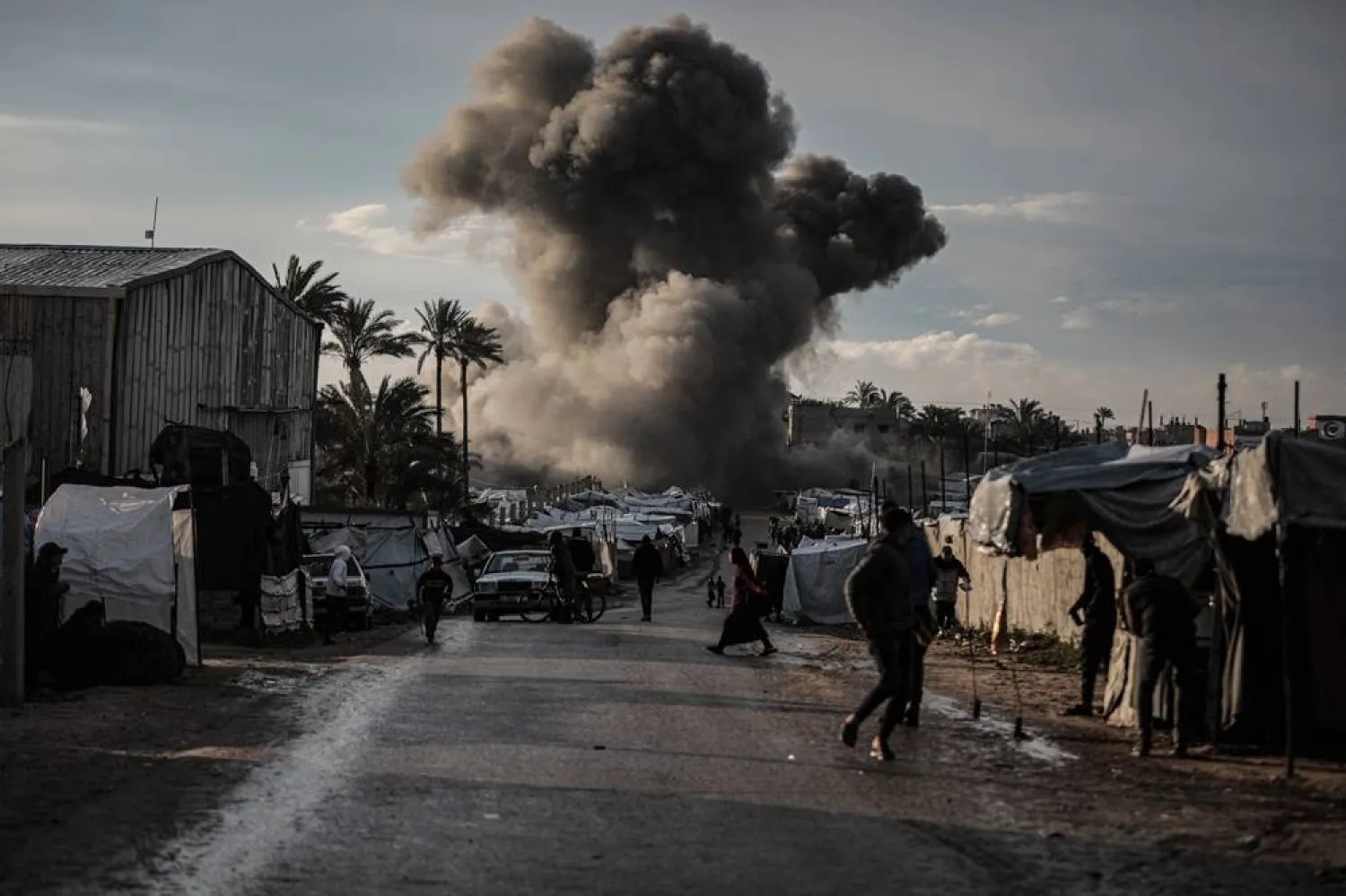
25 March 2026, Palestinian Territories, Deir al-Balah: Smoke and flames rise after an Israeli military strike on a target in Deir al-Balah in the central Gaza Strip. (dpa)
TT

Hamas Armed Wing Says Disarmament Calls Are Unacceptable

25 March 2026, Palestinian Territories, Deir al-Balah: Smoke and flames rise after an Israeli military strike on a target in Deir al-Balah in the central Gaza Strip. (dpa)

Hamas' armed wing said on Sunday discussing the group's disarmament before Israel fully implements the first phase of the US-brokered Gaza ceasefire was an attempt to continue what it called a genocide against the Palestinian people. 

In a televised statement, Hamas' armed wing spokesperson Abu Ubaida said raising the issue of weapons “in a crude manner” would not be accepted. 

The issue of Hamas relinquishing its weapons is a major obstacle in talks to implement US ‌President Donald Trump’s proposed "Board ‌of Peace" plan for Gaza, ‌aimed ⁠at cementing a ceasefire ⁠that halted two years of full-scale fighting last October. 

Hamas has told mediators it will not discuss disarmament without guarantees that Israel will completely quit Gaza, three sources told Reuters last week. 

"What the enemy is trying to push through today against the Palestinian resistance, via our ⁠brotherly mediators, is extremely dangerous," he said. 

He said ‌the disarmament demands were "nothing ‌but an overt attempt to continue the genocide against our ‌people, something we will not accept under any circumstances." 

It ‌was not immediately clear whether the comments amounted to a formal rejection of the US-backed disarmament plan, and Hamas political officials did not immediately respond to requests for comment. 

The Hamas-Israel ‌war in Gaza erupted after Hamas-led fighters carried out cross-border attacks on southern Israel, prompting ⁠a devastating ⁠Israeli offensive that displaced much of Gaza's population and left the enclave largely in ruins. 

Since the ceasefire took effect, Hamas and Israel have repeatedly accused each other of violating its terms. 

Abu Ubaida urged mediators to pressure Israel to fulfil its commitments under the first phase of the Trump plan before any discussion of the second phase can take place. 

"The enemy is the one who undermines the agreement," he said. 

There was no immediate comment from Israel on his remarks. 


Zelenskyy in Syria to Discuss Security Cooperation with Sharaa

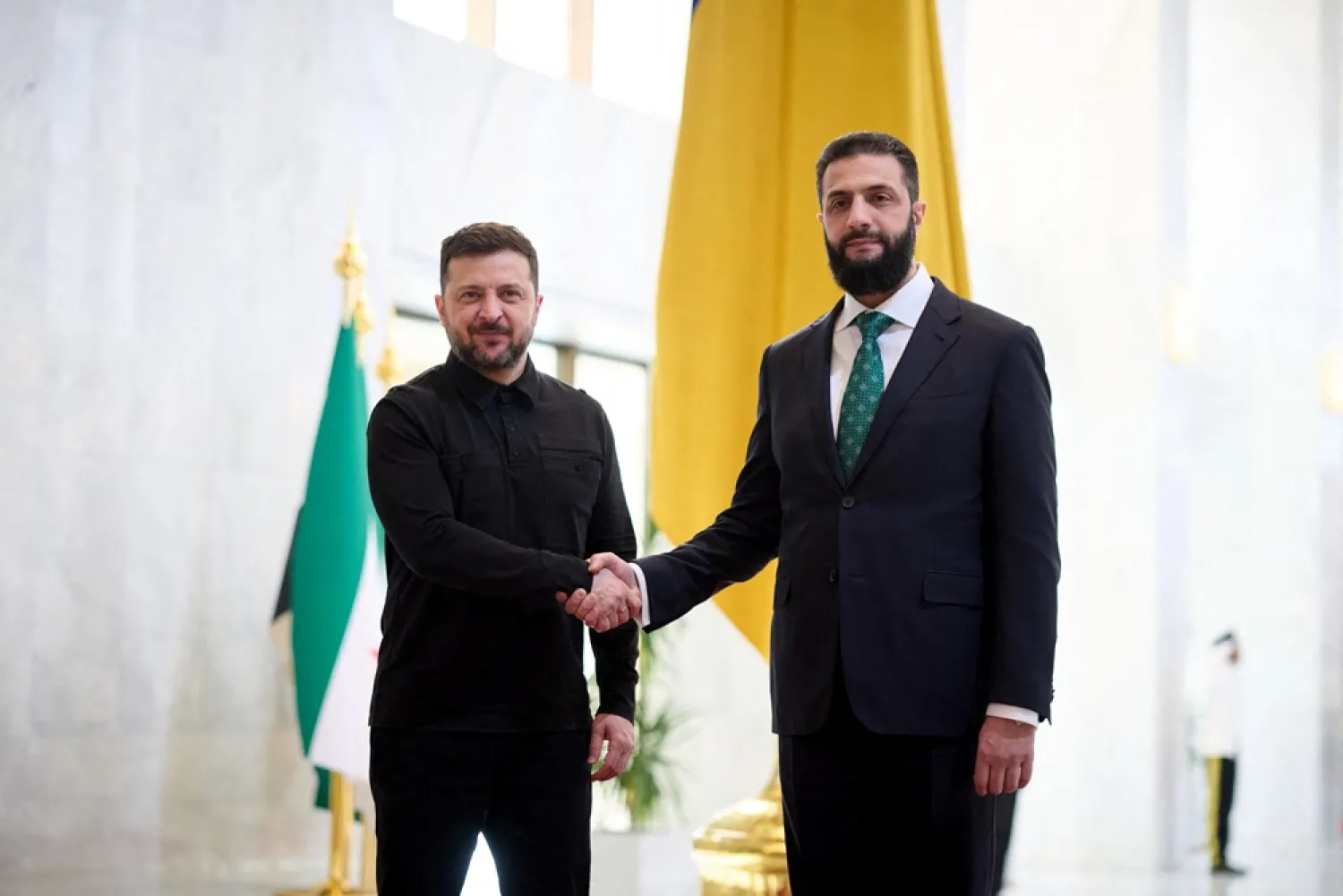
This handout photograph taken and released by the Ukrainian Presidential Press Service on April 5, 2026 shows Ukraine's President Volodymyr Zelenskyy (L) and Syrian President Ahmed al-Sharaa shaking hands during their meeting in Damascus. (Handout / Ukrainian Presidential Press Service / AFP)
TT

Zelenskyy in Syria to Discuss Security Cooperation with Sharaa

This handout photograph taken and released by the Ukrainian Presidential Press Service on April 5, 2026 shows Ukraine's President Volodymyr Zelenskyy (L) and Syrian President Ahmed al-Sharaa shaking hands during their meeting in Damascus. (Handout / Ukrainian Presidential Press Service / AFP)

Ukrainian President Volodymyr Zelenskyy pledged to work for enhanced security in talks on Sunday with his Syrian counterpart Ahmed al-Sharaa, as Kyiv seeks to promote its military expertise across the region following the outbreak of the Iran war. 

Zelenskyy, continuing his tour of Middle East countries, also said Ukraine wants to contribute to food security in the region. 

In recent weeks, Zelenskyy has visited several countries across the Middle East, offering Ukrainian expertise in countering drone and missile attacks, developed during its four-year war with ‌Russia. 

"We agreed ‌to work together to provide more security ‌and opportunities ⁠for development for ⁠our societies," Zelenskyy wrote on Telegram. "There is a great interest in exchanging military and security experience." 

Zelenskyy told the Syrian leader that Ukraine, as a major grain producer, was a reliable supplier of food and said the two leaders "discussed joint opportunities to strengthen food security across the region." 

In Türkiye on Saturday, Zelenskyy said he had ⁠agreed on "new steps" in security cooperation with Turkish ‌President Recep Tayyip Erdogan, and discussed opportunities ‌in joint gas infrastructure projects and gas field development. 

"Today in Damascus we ‌continue our active Ukrainian diplomacy aimed at real security and ‌economic cooperation," Zelenskyy said on X after his arrival. 

It was the Ukrainian leader's first trip to Syria since diplomatic relations were re-established at the end of last year following the fall of Syria's long-time strongman ‌Bashar al-Assad. 

Zelenskyy’s talks with Sharaa were linked to defense in light of the US-Israeli war in ⁠Iran, said ⁠one Syrian source, a government adviser. Syria is not known to have any air defenses capable of dealing with Iranian drones or missiles. 

Syria is home to two major Russian military bases, used by its navy and air force. Sharaa said on Tuesday at an event in Chatham House in London that work was under way to transform these into "centers to train the Syrian army." 


Israel Renews Lebanon Strikes, Forces Syria Border Crossing Closed

Smoke rises from the site of an Israeli strike in Beirut's southern suburbs, on April 5, 2026. (AFP)
TT

Israel Renews Lebanon Strikes, Forces Syria Border Crossing Closed

Smoke rises from the site of an Israeli strike in Beirut's southern suburbs, on April 5, 2026. (AFP)

Israeli strikes on south Beirut and its suburbs killed at least four people on Sunday, a day after Israel threatened to hit Lebanon's main border crossing with Syria, forcing it to close. 

The Israeli military also carried out deadly attacks on Lebanon's south, one of which killed seven people including a family of six. 

Israel has launched airstrikes across Lebanon as well as a ground invasion in the south since March 2, when armed group Hezbollah entered the war in the Middle East on the side of its backer Iran. 

Hezbollah on Sunday claimed to have fired a cruise missile at an Israeli warship off the coast, but the Israeli military told AFP it was "not aware" of such an incident. 

One of Israel's strikes in Beirut on Sunday killed at least four people and wounded 39 in the Jnah neighborhood, the Lebanese health ministry said. 

It landed about 100 meters away from the Rafik Hariri University Hospital, the largest public medical facility in Lebanon, a medical source told AFP. 

Another attack struck a building elsewhere in the area that the Israeli military had warned it would target. 

After the first attack, 53-year-old Jnah resident Nancy Hassan thought she was safe at home. 

"Shortly after, the planes were flying overhead, and we heard a huge bang, then stones rained down on us," she told AFP. 

Hassan lost her daughter in an Israeli strike on the same area during the 2024 war between Hezbollah and Israel. 

"My daughter was killed, she was 23 years old. Today, her friends were killed. Every time, they bomb us in the neighborhood without warning," she added. 

Zakaria Tawbeh, deputy head of the Rafik Hariri hospital, said they received "four killed, three Sudanese and a 15-year-old girl, and 31 wounded". 

"Lots of glass was broken, and some of our patients had panic attacks." 

Israel also launched several strikes on the nearby southern suburbs, an area now largely evacuated but where Hezbollah holds sway. 

In a statement, the military warned it had "begun striking Hezbollah infrastructure sites". 

- Vital crossing - 

On Saturday, Israel had said it would target the Masnaa border crossing between Lebanon and Syria, the main gateway between the two countries. 

"Due to Hezbollah's use of the Masnaa crossing for military purposes and smuggling of combat equipment, the (Israeli army) intends to carry out strikes on the crossing in the near future," said the military's Arabic-language spokesman Avichay Adraee, urging people to leave the area. 

The border post was quickly evacuated on the Lebanese side. 

In Syria, borders and customs public relations director Mazen Aloush insisted the crossing was exclusively used by civilians, and said it would temporarily due to the threats. 

Masnaa is a vital trade route for both countries and a key gateway to the rest of the region for Lebanese people. 

Military expert Hassan Jouni told AFP that Israel's threat to strike the crossing "is not based on sound security considerations, but rather aims to pressure the Lebanese government... to disarm Hezbollah". 

At another border crossing further north known as Qaa, an AFP correspondent on Sunday saw a long line of cars and vans waiting to enter Syria as people sought an alternative route. 

- Family killed - 

Israeli attacks on Lebanon since the start of the war have killed more than 1,400 people, including 126 children, and displaced over a million, according to Lebanese authorities. 

In the southern Lebanese town of Kfar Hatta, far from the border with Israel, an Israeli strike killed seven people including a four-year-old girl, the health ministry said Sunday. 

The Lebanese army mourned an off-duty soldier killed in the attack. 

The Israeli army had issued an evacuation warning for the town on Saturday evening. 

A source from Lebanon's civil defense told AFP that a family of six who had been displaced from a town further south were waiting for a relative to pick them up in a vehicle when they were killed. The relative also perished in the strike. 

An AFP photographer saw at least eight homes destroyed by attacks in Kfar Hatta. 

As Israeli troops push into border areas in southern Lebanon, destroying villages, Lebanese President Joseph Aoun reiterated his call for talks with Israel, saying he wanted to spare his country's south from destruction on the scale seen in the Palestinian territory of Gaza. 

"Why don't we negotiate... until we can at least save the homes that have not yet been destroyed?" he said in a televised address.