Iraqi President Says Country Now Peaceful, Life Is Returning

Iraqi President Abdul Latif Rashid poses for a photograph during an interview with The Associated Press in Saddam Hussein's former palace in the old Green Zone in Baghdad, Iraq, Sunday, Feb. 26, 2023. (AP)
TT

Iraqi President Says Country Now Peaceful, Life Is Returning

Iraqi President Abdul Latif Rashid poses for a photograph during an interview with The Associated Press in Saddam Hussein's former palace in the old Green Zone in Baghdad, Iraq, Sunday, Feb. 26, 2023. (AP)

Nearly 20 years after the overthrow of Saddam Hussein by US-led forces, Iraqi President Abdul Latif Rashid wants the world to know his country now is at peace, democratic and intent on rebuilding economic life while maintaining a government that serves the whole country and the region.

Rashid told The Associated Press on Sunday that after overcoming the hardships of the past two decades, Iraq is ready to focus on improving everyday life for its people. Those hardships included years of resistance to foreign troops, sectarian violence, and attacks by ISIS group extremists who once controlled large areas, including Iraq's second-largest city, Mosul.

"Peace and security is all over the country, and I would be very glad if you will report that and emphasize on that, instead of giving a picture of Iraq ... still (as) a war zone, which a lot of media still do," Rashid said.

While Iraq's major fighting has ended, there have been some recent outbreaks of violence — including on the day of Rashid's election, which came after a yearlong stalemate following the October 2021 election. Ahead of the vote, at least nine rockets targeted Iraq’s Parliament inside Baghdad's fortified Green Zone.

After Rashid's election, he nominated Prime Minister Mohammed Shia al-Sudani, who formed a government with the backing of a coalition of Iran-backed parties and with promises of improving security and public services.

Despite its oil wealth, Iraq's infrastructure remains weak. Private generators fill in for the hours of daily state electricity cuts. Long-promised public transportation projects, including a Baghdad metro, have not come to fruition.

Rashid said this is due to damage as "a result of conflicts and as a result of terror, as a result of a number of years living at war."

Government critics say the sputtering electricity supply is also a result of endemic corruption, rooted in the country’s sectarian power-sharing system that allows political elites to use patronage networks to consolidate power.

Rashid, who spoke at his presidential quarters in Saddam's former palace, also asserted that most Iraqis believe the 2003 invasion of Saddam-ruled Iraq by the United States and its allies was necessary.

He said he believes most Iraqis, "including all sections of the society, the Kurds, the Sunni, the Christian, the Shiites, they were all against" Saddam and appreciate that the US and its allies came to "save" Iraq.

"Obviously certain things did not work out as we hoped. Nobody expected ISIS and nobody expected car bombs," he said. "It should have been controlled right from the beginning. It should have been studied and planned out right from the beginning. I think the myth was that once Saddam is removed, Iraq becomes heaven."

The reality proved more difficult, he said, but it hasn't weakened Iraq's commitment to democracy.

"Even if you have conflicts and if we have arguments, it’s much better to have a freedom and democracy rather than a dictatorship," he said.

However, mass anti-government demonstrations that kicked off in late 2019 were often put down by force. Hundreds of protesters were killed by security forces and state-backed armed groups.

Rashid acknowledged there are still conflicts, but urged Iraqis, particularly the younger generation, to be patient and have faith in the future. "We don’t have much choice but to live together ... and let our democratic election take place to represent our values," said Rashid, a veteran Kurdish politician and former water minister after Saddam's ouster.

Rashid assumed the presidency in October. Under Iraq's unofficial power-sharing arrangement, the country's president is always a Kurd, the prime minister a Shiite and the parliament speaker a Sunni.

Rashid's job entails helping to maintain a delicate balance among Iraq's various centers of political power and even-keel relations with both the US and Iran, the government's two key — and often opposing — international backers.

The balancing act is reflected in a monument near Baghdad airport. It extolls Iran’s Revolutionary Guard commander Qassem Soleimani, who was targeted and killed in a 2020 US airstrike.

Improving relations with neighbors including Saudi Arabia, Kuwait, Jordan, Syria, Türkiye and Iran is a source of strength for Iraq, Rashid said.

He noted with pride that Iraq hosted a Middle East meeting of senior Arab lawmakers on Saturday and expressed the country's willingness to continue serving as a mediator in now-stalled talks between Saudi Arabia and Iran.

Rashid also promised to take a hard line on corruption.

In October, reports emerged that over $2.5 billion in Iraqi government revenue was embezzled by a network of businesses and officials from the country’s tax authority. And in recent months, amid allegations of widespread money laundering used to smuggle dollars to US-sanctioned Iran and Syria, the US has taken measures to tighten Iraq's dollar supply, putting pressure on the currency.

"I admit, we did have and we still have some problems with corruption, but the government is very serious (about fighting it)," Rashid said, adding that the government and the central bank are taking measures to regulate transfers out of the country to deter money laundering.

Economically, he said, Iraq is focusing on rebuilding industry and agriculture damaged by years of conflict, and developing its natural gas reserves so as not to be dependent on buying gas from neighboring countries — notably Iran.

Despite the currency's devaluation and inflation in recent months, Iraq's prospects are good, he said, buoyed by strong oil production and high global oil prices.

"Iraq economically is in a sound position and probably is one of the countries in the world which (does not have) a deficit in our budget," he said.

Libya Says UK to Analyze Black Box from Crash That Killed General

Military personnel carry portraits of the Libyan chief of staff, General Mohamed al-Haddad (2-R), and his four advisers, who were killed in a plane crash in Türkiye, during an official repatriation ceremony at the Ministry of Defense headquarters in Tripoli, Libya, 27 December 2025. (EPA)
TT

Libya Says UK to Analyze Black Box from Crash That Killed General

Military personnel carry portraits of the Libyan chief of staff, General Mohamed al-Haddad (2-R), and his four advisers, who were killed in a plane crash in Türkiye, during an official repatriation ceremony at the Ministry of Defense headquarters in Tripoli, Libya, 27 December 2025. (EPA)

Libya said on Thursday that Britain had agreed to analyze the black box from a plane crash in Türkiye on December 23 that killed a Libyan military delegation, including the head of its army.

General Mohammed al-Haddad and four aides died after a visit to Ankara, with Turkish officials saying an electrical failure caused their Falcon 50 jet to crash shortly after takeoff.

Three crew members, two of them French, were also killed.

The aircraft's black box flight recorder was found on farmland near the crash site.

"We coordinated directly with Britain for the analysis" of the black box, Mohamed al-Chahoubi, transport minister in the Government of National Unity (GNU), said at a press conference in Tripoli.

Haddad was very popular in Libya despite deep divisions between west and east.

Haddad was chief of staff for the Tripoli-based GNU.

Chahoubi told AFP a request for the analysis was "made to Germany, which demanded France's assistance" to examine the aircraft's flight recorders.

"However, the Chicago Convention stipulates that the country analyzing the black box must be neutral," he said.

"Since France is a manufacturer of the aircraft and the crew was French, it is not qualified to participate. The United Kingdom, on the other hand, was accepted by Libya and Turkey."

After meeting the British ambassador to Tripoli on Tuesday, Foreign Minister Taher al-Baour said a joint request had been submitted by Libya and Türkiye to Britain "to obtain technical and legal support for the analysis of the black box".

Chahoubi told Thursday's press briefing that Britain "announced its agreement, in coordination with the Libyan Ministry of Transport and the Turkish authorities".

He said it was not yet possible to say how long it would take to retrieve the flight data, as this depended on the state of the black box.

"The findings will be made public once they are known," Chahoubi said, warning against "false information" and urging the public not to pay attention to rumors.


STC Says Handing over Positions to National Shield Forces in Yemen's Hadhramaut, Mahra

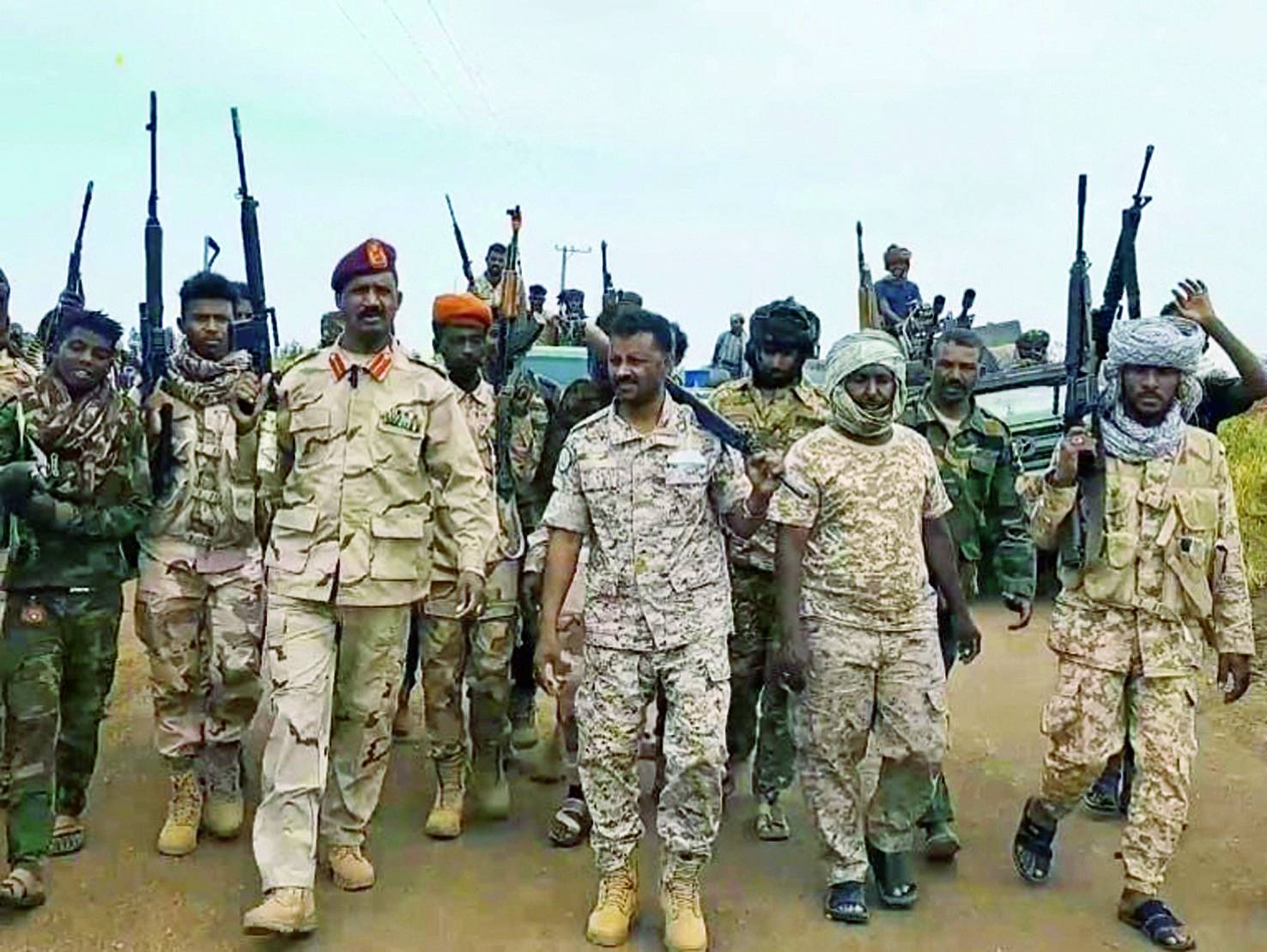
National Shield forces in Hadhramaut. (National Shield forces)
TT

STC Says Handing over Positions to National Shield Forces in Yemen's Hadhramaut, Mahra

National Shield forces in Hadhramaut. (National Shield forces)

Southern Transitional Council (STC) forces in Yemen began on Thursday handing over military positions to the government’s National Shield forces in the Hadhramaut and al-Mahra provinces in eastern Yemen.

Local sources in Hadhramaut confirmed to Asharq Al-Awsat that the handover kicked off after meetings were held between the two sides.

Speaking on condition of anonymity, the sources said the National Shield commanders met with STC leaderships to discuss future arrangements. The sourced did not elaborate, but they confirmed that Emirati armored vehicles, which had entered Balhaf port in Shabwah were seen departing on a UAE vessel, in line with a Yemeni government request.

The National Shield is overseen by Presidential Leadership Council (PLC) Chairman Dr. Rashad al-Alimi.

A Yemeni official described Thursday’s developments as “positive” step towards uniting ranks and legitimacy against a common enemy – the Houthi groups.

The official, also speaking on condition of anonymity, underscored to Asharq Al-Awsat the importance of “partnership between components of the legitimacy and of dialogue to resolve any future differences.”

Meanwhile, on the ground, Yemeni military sources revealed that some STC forces had refused to quit their positions, prompting the forces to dispatch an official to Hadhramaut’s Seiyun city to negotiate the situation.


One Dead as Israeli Forces Open Fire on West Bank Stone-Throwers

Israeli troops during a military operation in the Palestinian village of Qabatiya, near the West Bank city of Jenin, 27 December 2025. (EPA)
TT

One Dead as Israeli Forces Open Fire on West Bank Stone-Throwers

Israeli troops during a military operation in the Palestinian village of Qabatiya, near the West Bank city of Jenin, 27 December 2025. (EPA)

The Israeli military said its forces killed a Palestinian in the occupied West Bank in the early hours on Thursday as they opened fire on people who were throwing stones at soldiers.

Two other people were hit on a main ‌road near the ‌village of Luban ‌al-Sharqiya ⁠in Nablus, ‌the military statement added. It described the people as militants and said the stone-throwing was part of an ambush.

Palestinian authorities in the West Bank said ⁠a 26-year-old man they named as ‌Khattab Al Sarhan was ‍killed and ‍another person wounded.

Israeli forces had ‍closed the main entrance to the village of Luban al-Sharqiya, in Nablus, and blocked several secondary roads on Wednesday, the Palestinian Authority's official news agency WAFA reported.

More ⁠than a thousand Palestinians were killed in the West Bank between October 2023 and October 2025, mostly in operations by security forces and some by settler violence, the UN has said.

Over the same period, 57 Israelis were killed ‌in Palestinian attacks.