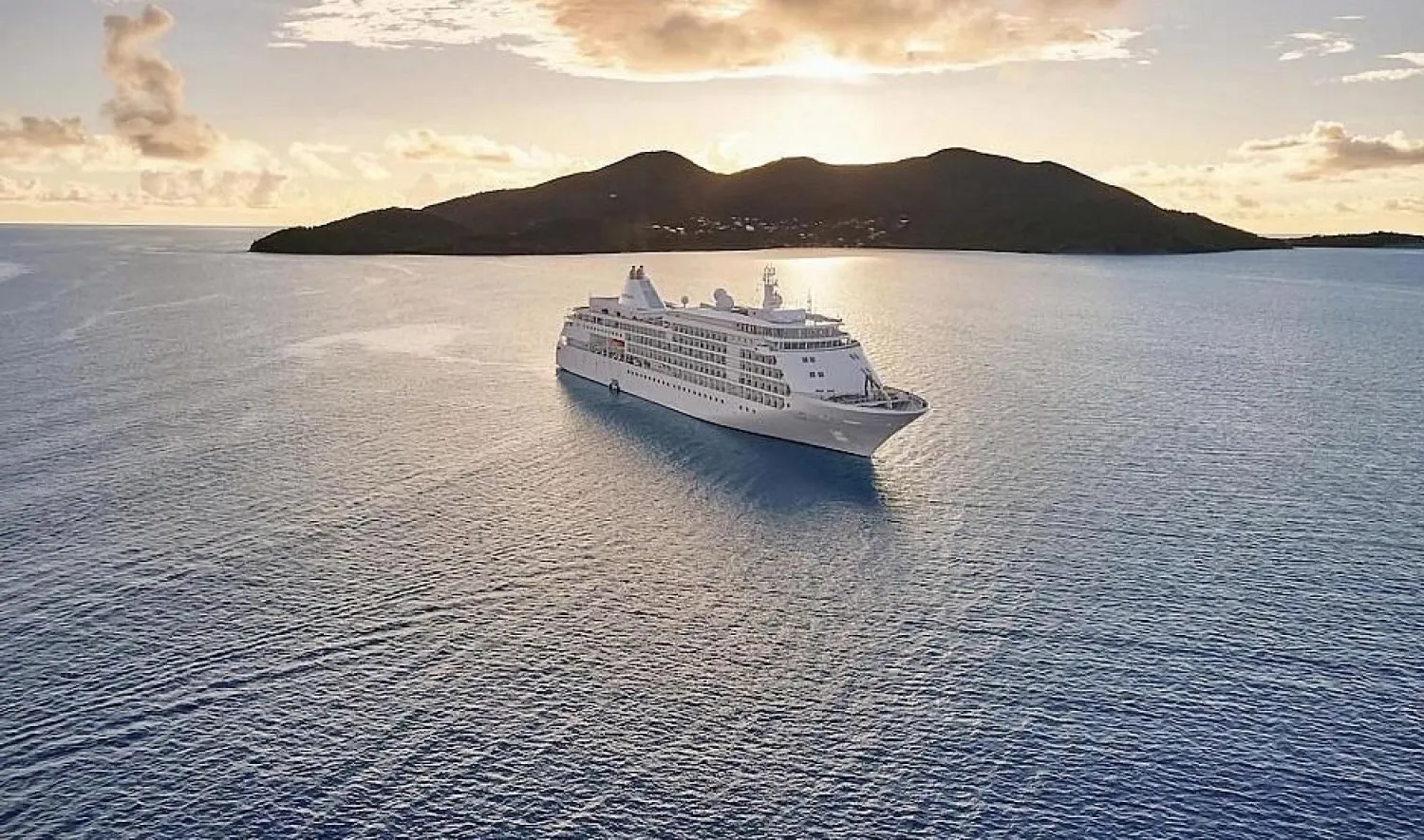
Cruise Saudi to Participate in 30th Arabian Travel Market Exhibition in Dubai

Cruise Saudi will join the most prominent decision makers and regional experts in discussing the future of the travel and tourism industry in the region. SPA
TT

Cruise Saudi to Participate in 30th Arabian Travel Market Exhibition in Dubai

Cruise Saudi will join the most prominent decision makers and regional experts in discussing the future of the travel and tourism industry in the region. SPA

The Cruise Saudi company, a 100% Public Investment Fund-owned business in the Kingdom, is preparing to participate in the four-day Arabian Travel Market exhibition ATM 2023 that will be held Monday at the Dubai World Trade Center.

It will join the most prominent decision makers and regional experts in discussing the future of the travel and tourism industry in the region and exploring ways of professional cooperation.

CEO of Cruise Saudi Lars Clasen said the Arabian Travel Market is a leading international event in the field of travel and tourism, pointing out that through its participation, Cruise Saudi aims to give a boost to the tourism sector in the Kingdom by attracting 1.3 million cruise visitors by 2035, in line with Saudi Vision 2030, which has, among its goals, the tourism sector increasing to 10% its contribution to the gross domestic product.

Clasen mentioned the rapid growth of Cruise Saudi and how it supports the Kingdom's position as a prominent new tourist destination due to its strategic geographical location in the region, which may be reached by about 250 million people living in Europe, Asia and Africa in three hours of air travel to the Red Sea or the Arabian Gulf.

He pointed out that Cruise Saudi leads the development of the Saudi cruise industry in an integrated fashion and with high-level international quality.

"Since its launch in 2021, Cruise Saudi has succeeded in completing two successful seasons of cruises; its third season is still going on, he said, adding that the company is keen to introduce cruise ship passengers to various tourist destinations on the coasts of the Kingdom that have not yet been discovered by international tourists".

He also said that Cruise Saudi plans to expand with government support and partners, which enabled the company to develop a marina and passenger terminal within three ports boasting infrastructure that enables it to receive international cruise ships, namely: Jeddah Islamic Port and Yanbu Commercial Port on the Red Sea, and King Abdulaziz Port in Dammam on the Arabian Gulf.

Clasen said that the company has been seeking to boost the tourism industry in the Kingdom by attracting more tourist cruise companies to add Saudi ports among the main ports on their routes, and worked to develop more ports and cooperate with partners to provide a package of varied coastal tours that suit different groups as well as fun beach adventures.


Red Sea Film Foundation Marks Record TIFF Presence with 8 Supported Films

The Red Sea Film Foundation logo
TT

Red Sea Film Foundation Marks Record TIFF Presence with 8 Supported Films

The Red Sea Film Foundation logo

A record eight Red Sea Film Foundation-supported films are featured at the 51st Toronto International Film Festival, running 10–20 September — the highest number of Red Sea-supported titles to participate at TIFF to date.

Seven have been selected for the Centerpiece program, while Angh, directed by Theja Rio and supported by the Red Sea Fund, has been selected for Platform.

The Foundation will also take part in the inaugural edition of TIFF: The Market, the Festival’s first official content market, while Holly Daniel, Director of the Red Sea Souk, joins The Summit — extending the Foundation’s presence in Toronto across both the Festival and its international industry program.

The eight films, championed through the Red Sea Fund and Red Sea Souk, are "A Girl Unknown", "Angh", "Ben’Imana", "Conversation with the Sea", "Four Seasons in Java", "Soumsoum, the Night of the Stars", "The Violinist", and "We Are All Strangers".

Running September 10–16, at the Metro Toronto Convention Center, TIFF’s first official market is a seven-day international marketplace bringing together the global film, series and innovation industries, connecting creators, producers, buyers, sales agents, financiers, distributors, platforms and other industry leaders to develop partnerships and advance projects.

“This record presence at TIFF is an important milestone for the foundation and, above all, a reflection of the extraordinary filmmakers and projects we have had the privilege to support,” said CEO of the Red Sea Film Foundation Faisal Baltyuor.

“Seeing eight films from across our ecosystem reach audiences in Toronto — and joining the inaugural TIFF: The Market — demonstrates the value of sustained pathways that carry filmmakers from development and financing through to international exhibition.”


Little Mercury May be Shrinking Faster Than Scientists Expected

This composite image provided by NASA/Johns Hopkins University Applied Physics Laboratory/Carnegie Institution of Washington on Oct. 22, 2013, shows Mercury as it appeared to the Messenger spacecraft following a flyby of the planet. (NASA/Johns Hopkins University Applied Physics Laboratory/Carnegie Institution of Washington via AP)
TT

Little Mercury May be Shrinking Faster Than Scientists Expected

This composite image provided by NASA/Johns Hopkins University Applied Physics Laboratory/Carnegie Institution of Washington on Oct. 22, 2013, shows Mercury as it appeared to the Messenger spacecraft following a flyby of the planet. (NASA/Johns Hopkins University Applied Physics Laboratory/Carnegie Institution of Washington via AP)

A new study shows that little, wrinkly Mercury may be shrinking faster than expected, the cosmos’ version of a grape shriveling into a raisin under the sun.

Scientists from the German Aerospace Center’s Institute of Space Research reported Thursday that Mercury’s shrinkage may be 30% greater than previously believed — a loss in diameter of as much as 14 miles (23 kilometers). That’s significant for a planet barely 3,000 miles (4,900 kilometers) across.

Mercury’s rough surface, continually reshaped by debris hurled from impact craters, may have hidden the true extent of the loss, according to the researchers whose findings appear in the journal Geophysical Research Letters.

The news comes one week after a pair of European and Japanese spacecraft shed its cruising platform and advanced toward Mercury, The Associated Press reported. Known as BepiColombo, the linked craft are expected to enter orbit around Mercury in November before splitting up for a fuller survey.

BepiColombo’s laser instrument should confirm how much Mercury is withering as a result of internal cooling, said Gaku Nishiyama, the study’s lead author who is taking part in the space mission.

The shrinkage could be even more than his team is estimating based on measurements from NASA’s Messenger spacecraft in the 2010s. Only one other spacecraft has ever visited Mercury, NASA’s Mariner 10 in the 1970s.

Our solar system’s smallest and innermost planet has been shrinking ever since its formation 4.5 billion years ago. Its hot iron core — oversized for such a small world — cools and contracts along with the mantle and crust, tightening the surface like a girdle to fit its new slimmer self.

Nishiyama and his team compared maps showing faults and other geologic signs of contraction at Mercury with newer maps highlighting surface roughness. They discovered that the roughest patches exhibited fewer shrinkage wrinkles. The missing wrinkles could be buried under impact debris, they said.

After accounting for these obscured regions, the researchers provided a fresh take on Mercury’s shrinkage that could shed light on other contracting worlds, said Nishiyama, who is affiliated with Hokkaido University in Japan.

“We are quite excited,” Nishiyama said in an email, adding that it feels like “we are approaching the reality of Mercury’s evolution.”


Indonesia Rescues Six Orangutans from Fires in a Week

This handout picture taken on September 8, 2026 and released on September 10, 2026 by Indonesia's Ministry of Forestry and Yayasan Inisiasi Alam Rehabilitasi Indonesia (YIARI) shows a young orangutan during a rescue operation for the primates caught up in wildfires in Pemangkat village in West Kalimantan province. (Photo by Muffidz Ma'sum / Yayasan Inisiasi Alam Rehabilitasi Indonesia (YIARI) / AFP)
TT

Indonesia Rescues Six Orangutans from Fires in a Week

This handout picture taken on September 8, 2026 and released on September 10, 2026 by Indonesia's Ministry of Forestry and Yayasan Inisiasi Alam Rehabilitasi Indonesia (YIARI) shows a young orangutan during a rescue operation for the primates caught up in wildfires in Pemangkat village in West Kalimantan province. (Photo by Muffidz Ma'sum / Yayasan Inisiasi Alam Rehabilitasi Indonesia (YIARI) / AFP)

Six orangutans including two nursing infants have been rescued from fires raging on Borneo island in the past week, Indonesian authorities and rescuers said Thursday, bringing the total to 15 in a month.

The apes were saved from plantations in deep rural West Kalimantan province, on the Indonesian part of the island, where they got stuck after fires cut off access to their forest home, according to the forestry ministry and the YIARI wildlife rehabilitation foundation.

A large fire was burning just 200 meters (656 feet) from where the group of critically endangered primates were found, the ministry and YIARI said in a joint statement.

"This situation left the orangutans without a safe route back to their habitat; they could only move from one plantation to another," AFP quoted the statement as saying.

"In addition to facing the threat of flames and smoke, the orangutans' movement among plantations also has the potential to increase interactions and conflict with (human) communities."

Four orangutans were rescued on Friday, with the help of residents and plantation workers, followed by another mother-infant pair on Tuesday.

Rescuers had to anaesthetize the animals to minimize stress and the risk of injury. All six were taken to YIARI's rehabilitation center in the town of Ketapang.

Orangutans are endemic to Borneo and Sumatra islands -- two of the places hardest hit by wildfires that have destroyed vast swathes of land and spewed putrid haze that has spread as far as Malaysia and Singapore.

The Indonesian government said more than 202,000 hectares of land burnt countrywide between January and July. Figures for August have yet to be released.

The Nusantara Atlas project has put the number at closer to 300,000 hectares, and on Thursday gave an estimate of 895,657 hectares, which includes August.

Last week the European Union's Copernicus Atmosphere Monitoring Service said the haze emitted by the fires was the worst for any month of August in 24 years.

Indonesia's dry season typically runs from July to October, made worse this year by a strong episode of the El Nino weather phenomenon.

Wildfires emit dangerous levels of PM2.5 particles so small they can enter deep into the lungs and even the bloodstream, with potentially dire consequences for health.

According to Greenpeace estimates using government data, some 35 million people in Indonesia are exposed to toxic haze.

Some 43,000 firefighters were deployed to combat the blazes, national disaster mitigation agency spokesman Berton Panjaitan told reporters in Jakarta on Thursday.

He said a Japanese navy ship had arrived in West Kalimantan with three helicopters to aid water bombing efforts.