


North Korea Plans Satellite Launch as Seoul, US Hold Drills

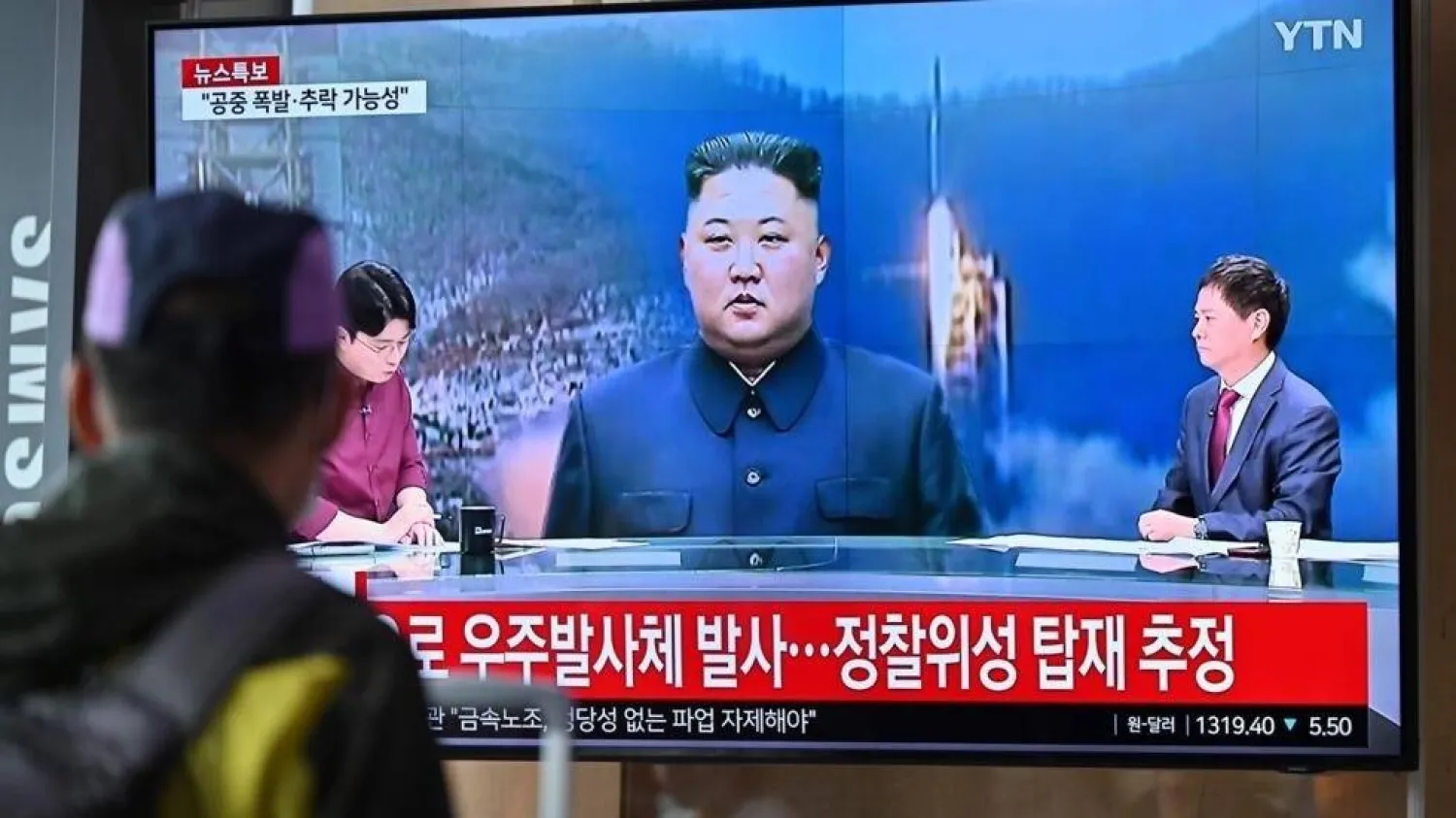
A man watches a television screen showing a news broadcast with file footage of North Korea's leader Kim Jong Un, at the Seoul Railway Station in Seoul in May 2023. Jung Yeon-je / AFP
TT

North Korea Plans Satellite Launch as Seoul, US Hold Drills

A man watches a television screen showing a news broadcast with file footage of North Korea's leader Kim Jong Un, at the Seoul Railway Station in Seoul in May 2023. Jung Yeon-je / AFP

North Korea is planning to launch another satellite just three months after its first attempt to put a military eye in the sky failed, prompting condemnation from Tokyo and Seoul on Tuesday and demands to call it off.

The launch is set to take place between August 24 and 31, Pyongyang told Japan's coast guard Tuesday, prompting Tokyo to mobilize ships and its PAC-3 missile defense system in case it were to land in their territory.

Seoul said the launch would be "an illegal act" as it violates UN sanctions prohibiting the North from tests using ballistic technology, AFP reported.

"North Korea's so-called 'satellite launch' is a clear violation of UN Security Council resolutions... No matter what excuses North Korea tries to make, it cannot justify this illegal act," South Korea's Unification Ministry said in a statement.

There is significant technological overlap between the development of intercontinental ballistic missiles and space launch capabilities, experts say.
Prime Minister Fumio Kishida urged Pyongyang to call off the launch, saying his country was working with South Korea and the United States to gather more information.

Tokyo is taking "all possible measures to prepare for any unforeseen eventuality", Kishida said.

Japan's Coast Guard said Pyongyang had informed them of three designated danger areas: the Yellow Sea, East China Sea and waters east of the Philippines' Luzon island.

In May, Pyongyang launched what it described as its first military reconnaissance satellite, the "Malligyong-1", but the rocket carrying it, the "Chollima-1" -- named after a mythical horse that often features in official propaganda -- plunged into the sea minutes after takeoff.

Soon after, Kim Jong Un's regime vowed to successfully launch its spy satellite "in the near future", saying it was a necessary counterbalance to the growing US military presence in the region.

Pyongyang's new launch plan follows Seoul and Washington kicking off their major annual joint military drills on Monday.

Known as Ulchi Freedom Shield, the exercises, which are aimed at countering growing threats from the nuclear-armed North, will run through August 31.

Pyongyang views all such drills as rehearsals for an invasion and has repeatedly warned it would take "overwhelming" action in response.

Suspected North Korean hackers have already targeted the exercises, with email attacks on South Korean contractors working at the allies' combined exercise war simulation center.

On Tuesday, North Korea's state news agency condemned "the aggressive character" of the US-South Korea drills.

In a commentary, KCNA warned that if the drills involve a "nuclear provocation", the possibility "of a thermonuclear war on the Korean peninsula will become more realistic".

Launch soon
The announcement also came shortly after leaders from Washington, Seoul and Tokyo met at Camp David in the US, with North Korea's growing nuclear threats a key item on the agenda.

South Korea's spy agency told lawmakers last week that Pyongyang could launch a reconnaissance satellite ahead of the 75th anniversary of the regime's founding on September 9, member of parliament Yoo Sang-bum told reporters after the briefing.

"Pyongyang appears to be timing its next satellite launch with the ongoing joint Ulchi Freedom Shield exercise, having improved and supplemented technical aspects of the launch over the past three months," Choi Gi-il, professor of national security at Sangji University, told AFP.

"Given the nature of the North Korean regime, three months seems sufficient enough to find flaws from its failed May launch and apply fixes -- though we have to see whether it can pull it off this time," he added.

North Korea's Kim has made the development of a military spy satellite a top priority.

The crash of the satellite in May sparked a complex, 36-day South Korean salvage operation involving a fleet of naval rescue ships, mine sweepers and deep-sea divers.

The retrieved parts of the rocket and the satellite were analyzed by experts in South Korea and the United States, with Seoul's defense ministry subsequently saying the satellite had no military utility.



US Fires on Iran Tankers as Talks Hang in Balance

US and Iran flags are seen in this illustration taken June 18, 2025. REUTERS/Dado Ruvic/Illustration/File Photo
TT

US Fires on Iran Tankers as Talks Hang in Balance

US and Iran flags are seen in this illustration taken June 18, 2025. REUTERS/Dado Ruvic/Illustration/File Photo

A US warplane disabled two Iranian tankers to enforce a port blockade on Friday, after Washington's top diplomat said he was awaiting Tehran's response to the latest proposed deal to end the Gulf conflict.

US Central Command said an F/A-18 Super Hornet had used precision munitions on the two ships to prevent them from continuing to Iran, as Iranian media reported "sporadic clashes" with US vessels in the Strait of Hormuz, AFP reported.

The latest incidents came after an overnight exchange of fire that triggered fears of a breakdown in the Gulf ceasefire, and after US Secretary of State Marco Rubio told reporters in Rome that Washington hoped to receive Tehran's answer to the US proposal later on Friday.

Rubio said Iran must not control the Strait of Hormuz, where the flare-ups took place, but added: "We're expecting a response from them today at some point... I hope it's a serious offer, I really do."

Washington has sent Iran, via Pakistani mediators, a proposal to extend the truce in the Gulf to allow talks on a final settlement of the conflict launched 10 weeks ago with US-Israeli strikes on Tehran.

Iran's foreign ministry spokesman Esmaeil Baqaei said Friday that the proposal was still "under review, and once a final decision is reached, it will certainly be announced", according to the ISNA news agency.


Iran Says Redirects US-sanctioned Oil Tanker to Its Shores

FILE PHOTO: An aerial view of the Iranian shores and the island of Qeshm in the strait of Hormuz, December 10, 2023. REUTERS/Stringer/File Photo
TT

Iran Says Redirects US-sanctioned Oil Tanker to Its Shores

FILE PHOTO: An aerial view of the Iranian shores and the island of Qeshm in the strait of Hormuz, December 10, 2023. REUTERS/Stringer/File Photo

Iran said on Friday it redirected a US-sanctioned oil tanker carrying Iranian oil back to its shores, though it was unclear from its statement why it would have returned it, reported AFP.

"The Islamic Republic of Iran's navy, through a specially planned operation in the Sea of Oman, seized the offending tanker Ocean Koi," the army said in a statement carried by state television, adding that the oil belonged to Iran.

It said the ship was redirected to Iran's southern shores after it sought "to damage and disrupt Iran's oil exports," without elaborating.


Meloni Meets Rubio as Iran War Strains Italy-US Ties

US Secretary of State Marco Rubio leaves the San Damaso courtyard after meeting Pope Leo XIV at the Vatican, May 7, 2026. REUTERS/Yara Nardi
TT

Meloni Meets Rubio as Iran War Strains Italy-US Ties

US Secretary of State Marco Rubio leaves the San Damaso courtyard after meeting Pope Leo XIV at the Vatican, May 7, 2026. REUTERS/Yara Nardi

Italian Prime Minister Giorgia Meloni met US Secretary of State Marco Rubio on Friday at a moment of unusual strain between her government and President Donald Trump's administration, driven largely by the war with Iran.

Rubio is in Italy for a two-day trip aimed at easing ties with Pope Leo after unprecedented attacks on the pontiff by Trump, while also addressing Washington's frustration over Italy's refusal to support the US-Israeli war on Iran.

Meloni had been one of Trump's firmest supporters in Europe, cultivating close ties with him and presenting herself as a natural ‌bridge between Washington ‌and other EU states that had no natural political ‌affinity ⁠with the Republican ⁠US leader.

But that alignment has come under increasing strain in recent months, as the Iran war has forced her to balance loyalty to the United States against Italian public animosity to the war and the growing economic cost of the conflict.

Before heading to the prime minister's office, Rubio met Italy's Foreign Minister Antonio Tajani, who said the talks had been positive.

"I am convinced ⁠that Europe needs America, Italy needs America, but the United ‌States also needs Europe and Italy," Tajani ‌told reporters.

Meloni and Rubio were expected to discuss the situation in the Gulf, as ‌well as Russia's war on Ukraine, US tariffs on European goods and ‌the outlook for Cuba, which Washington is seeking to isolate both diplomatically and economically.

TRUMP'S ATTACKS ON POPE

The Italians will also be keen for a readout on Rubio's meetings at the Vatican. Trump's recent attacks on Pope Leo crossed a sensitive ‌line in overwhelmingly Catholic Italy and prompted Meloni to call them "unacceptable."

Her criticism in turn drew a sharp rebuke ⁠from Trump, who said ⁠she lacked courage and had let Washington down. He subsequently threatened to withdraw US troops from Italy.

Meloni said on Monday she would not support such a move, but acknowledged that the decision "doesn't depend on me".

Italy last month refused to allow US aircraft to use the Sigonella air base in Sicily for combat operations linked to the Iran conflict. Italian officials have said Washington had not sought prior authorization from Rome for the use of the site.

Defense Minister Guido Crosetto, a close Meloni ally, later warned that the Iran war was putting US global leadership at risk and said he feared the "madness" of nuclear escalation.

Pollsters say Meloni's ties to Trump could prove a potential liability with voters ahead of national elections due next year.