

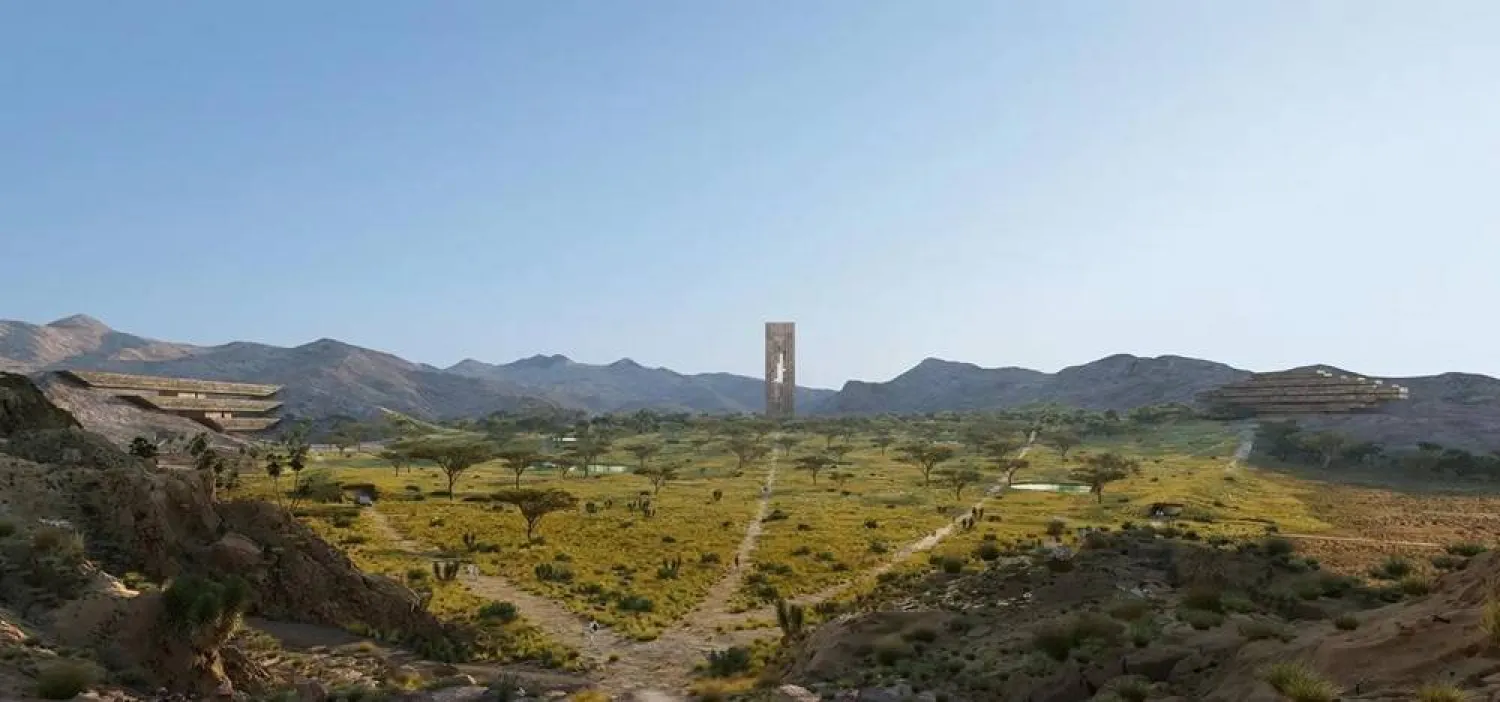

NEOM Announces Zardun, its New Luxury Ecotourism Destination

Zardun is NEOM's newest coastal destination, designed to blend modern luxury with natural beauty and complement a number of other coastal destinations being developed in other projects across NEOM region. (SPA)
TT

NEOM Announces Zardun, its New Luxury Ecotourism Destination

Zardun is NEOM's newest coastal destination, designed to blend modern luxury with natural beauty and complement a number of other coastal destinations being developed in other projects across NEOM region. (SPA)

NEOM's Board of Directors announced on Wednesday the launch of "Zardun", an exclusive resort and natural reserve that will contribute to the restoration and revitalization of the surrounding environment, supporting NEOM's efforts to develop luxury ecotourism in Saudi Arabia.

Zardun is NEOM's newest coastal destination, designed to blend modern luxury with natural beauty and complement a number of other coastal destinations being developed in other projects across NEOM region.

Overlooking the turquoise waters of the Gulf of Aqaba, Zardun Nature Resort will feature four distinctive, ultra-luxurious buildings that will blend harmoniously with the surrounding landscape. Zardun is a one-of-a-kind destination that blends luxury with nature and aims to offer visitors the ultimate ecotourism experience.

The new mountain-to-beach destination will span four square kilometers and has been carefully designed as a reserve that preserves the diversity of its rich habitat of local flora and fauna. Visitors will be able to experience its beauty through the state-of-the-art Experience Center, which includes an observation deck with a 360-degree panoramic view that allows visitors to observe the details of wildlife and enjoy the natural landscape of the surrounding environment.

Zardun will feature three luxury boutique hotels with 100 rooms and suites, designed with a futuristic vision that promotes sustainability to preserve this environment that is being developed for the first time. Each hotel will take a different approach to delivering distinctive experiences for guests, with stunning views of the valley floor and beachfront.

Zardun will offer hiking, mountain biking, rock climbing, and other sports and recreational activities, including stargazing, meditation, and yoga. In addition, visitors will be encouraged to join educational and field programs on nature protection, conservation, and resettlement.

Zardun's sustainability strategy includes pioneering conservation methods, including the development of a series of oases to support diverse natural habitats. The area's existing water sources will help revitalize the natural habitat of local flora and fauna. Along its coastline, Zardun will also support a vibrant marine ecosystem, including the preservation of coral reefs and other marine species in the Gulf of Aqaba, exemplifying NEOM's ongoing commitment to nature conservation.

Zardun joins the latest projects recently announced by NEOM, including Leyja, Epicon, Siranna, Utamo, Norlana and Aquellum, which are sustainable tourism destinations on the Gulf of Aqaba, all of which exemplify NEOM's commitment to sustainable progress.



Environment Ministry Launches Saudi Citrus Season with Production Exceeding 158,000 Tons

The citrus production season in the Kingdom begins in July and continues through March each year. (SPA)
TT

Environment Ministry Launches Saudi Citrus Season with Production Exceeding 158,000 Tons

The citrus production season in the Kingdom begins in July and continues through March each year. (SPA)

The Saudi Ministry of Environment, Water and Agriculture launched on Wednesday the Kingdom’s citrus season in local markets as part of its efforts to support and develop the agricultural sector and enhance food security in the country, in line with the Saudi Vision 2030.

The is part of the ministry’s ongoing efforts to support national agricultural products, raise awareness of citrus varieties and their nutritional benefits and production areas, and highlight their year-round diversity across production seasons.

These efforts help in improving marketing efficiency, boost competitiveness, and achieve rewarding economic returns.

Citrus fruits are among the most widely cultivated crops in the Kingdom. They are grown in several regions that produce a variety of citrus types, most notably lemons, oranges, mandarins, grapefruit, citron, and kumquats.

The ministry said lemon production leads Saudi citrus output, with total production exceeding 123,000 tons and more than 1.5 million fruit-bearing trees. Orange production follows, with total output reaching 35,700 tons and more than 397,000 fruit-bearing trees.

The citrus production season in the Kingdom begins in July and continues through March each year, it added.

The ministry said the Saudi citrus season has been launched with a number of major retail markets across the Kingdom showcasing local products through innovative packaging and display methods. This boosts the quality and reliability of local products and increases consumer demand during production seasons.


SLB Awarded 5-Year Contract to Stimulate Unconventional Gas in Saudi Arabia

SLB has been awarded a five-year contract by Saudi Aramco to provide stimulation services for its unconventional gas fields. (Asharq Al-Awsat)
TT

SLB Awarded 5-Year Contract to Stimulate Unconventional Gas in Saudi Arabia

SLB has been awarded a five-year contract by Saudi Aramco to provide stimulation services for its unconventional gas fields. (Asharq Al-Awsat)

Global technology company, SLB, has been awarded a five-year contract by Saudi Aramco to provide stimulation services for its unconventional gas fields, the company said in a statement on Tuesday.

The move is part of a broader multi-billion contract, supporting one of the largest unconventional gas development programs globally, it said.

The contract encompasses advanced stimulation, well intervention, frac automation, and digital solutions, which are important to unlocking the potential of Saudi Arabia’s unconventional gas resources - a cornerstone of the Kingdom’s strategy to diversify its energy portfolio and support the global energy transition.

“This agreement is an important step forward in Aramco’s efforts to diversify its energy portfolio in line with Vision 2030 and energy transition goals,” said Steve Gassen, SLB executive vice president.

“With world-class technology, deep local expertise, and a proven track record in safety and service quality, SLB is well positioned to deliver tailored solutions that could help redefine operational performance in the development of Saudi Arabia’s unconventional resources,” he added.

These solutions provide the tools to work toward new performance benchmarks in unconventional gas development.

SLB is a global technology company that drives energy innovation for a balanced planet.

With a global footprint in more than 100 countries and employees representing almost twice as many nationalities, it works on innovating oil and gas, delivering digital at scale, decarbonizing industries, and developing and scaling new energy systems that accelerate the energy transition.


US Says China Chip Policies Unfair but Will Delay Tariffs to 2027

 People walk past a Christmas tree at the Taikoo Li shopping center in Beijing on December 24, 2025. (AFP)
People walk past a Christmas tree at the Taikoo Li shopping center in Beijing on December 24, 2025. (AFP)
TT

US Says China Chip Policies Unfair but Will Delay Tariffs to 2027

 People walk past a Christmas tree at the Taikoo Li shopping center in Beijing on December 24, 2025. (AFP)
People walk past a Christmas tree at the Taikoo Li shopping center in Beijing on December 24, 2025. (AFP)

US trade officials determined that China should be punished for employing unfair tactics to dominate the semiconductor industry, but will wait 18 months to impose tariffs, American authorities said Tuesday.

A US Trade Representative (USTR) investigation concluded China's targeting of semiconductors "for dominance is unreasonable and burdens or restricts US commerce and thus is actionable," the agency said in a public notice.

The current tariff level of zero will be increased "in 18 months on June 23, 2027 to a rate to be announced not fewer than 30 days prior to that date," USTR said.

Beijing said Wednesday it "firmly opposes" the move and accused Washington of abusing tariffs to "unreasonably suppress Chinese industries".

This "disrupts the stability of the global supply chain, hinders the development of all countries' semiconductor industries and harms others while hurting itself", foreign ministry spokesman Lin Jian.

"We urge the United States to quickly correct its erroneous practices," Lin said at a regular press briefing.
USTR officials launched the probe in December 2024 in the final weeks of Joe Biden's presidency, extending the initiative when US President Donald Trump took office in January.

Trump has been a prolific purveyor of tariffs, unveiling sector-specific levies on steel, autos and other items as well as broader measures to achieve a variety of policy objectives.

The White House has jousted with Beijing but reached a broad truce with China after a major escalation in the spring.

The USTR's "Section 301" probe concluded that China had employed "increasingly aggressive and sweeping non-market policies" to dominate semiconductors that have included "massive and persistent" state support of private actors and "wage-suppressing labor practices."

The USTR did not respond to an AFP query on the reason for the 18-month timeframe on tariffs.