Russia's Top Diplomat Accuses US, South Korea and Japan of Preparing for War with North Korea

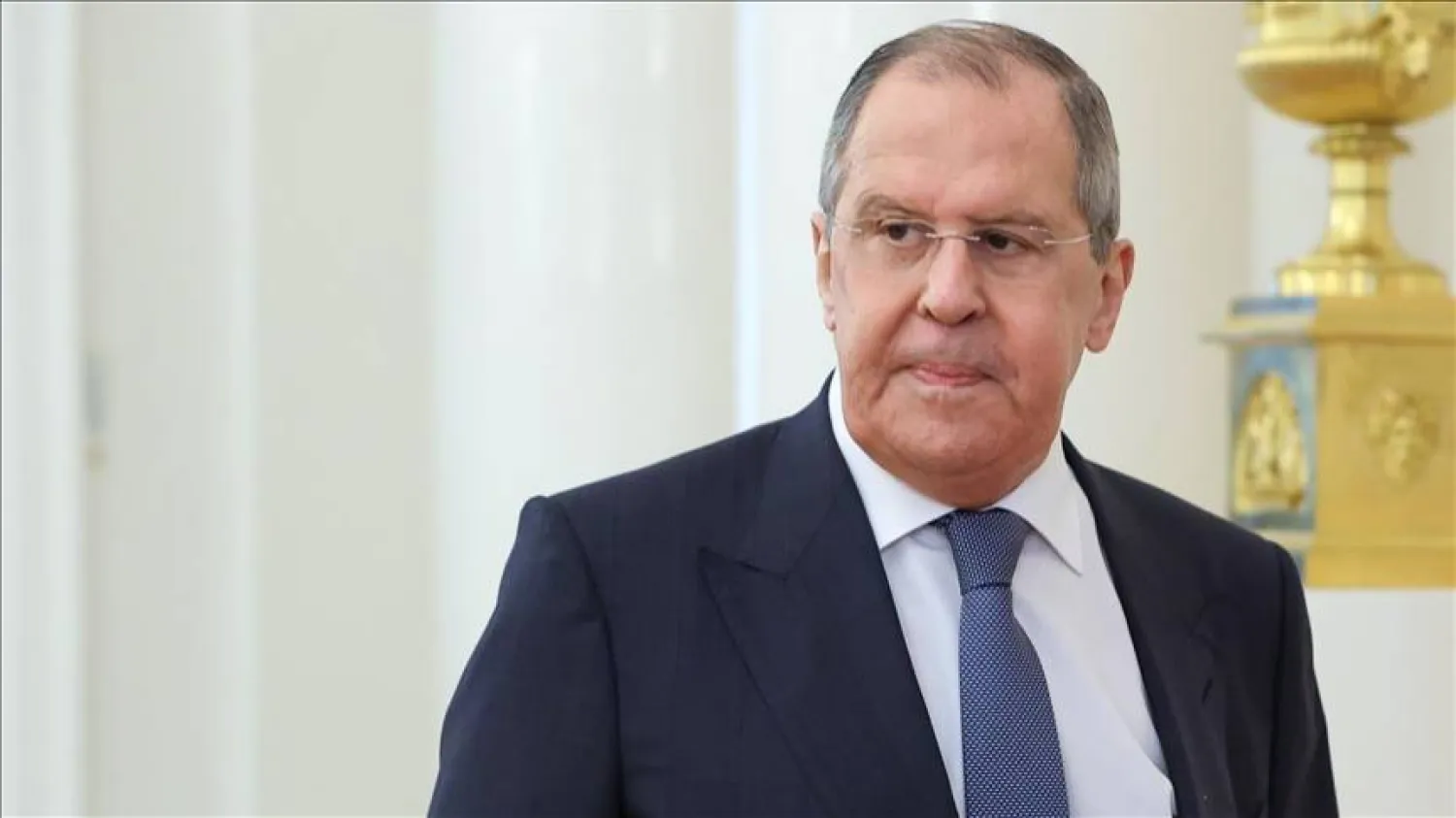
Sergey Lavrov (AA)
Sergey Lavrov (AA)
TT

Russia's Top Diplomat Accuses US, South Korea and Japan of Preparing for War with North Korea

Sergey Lavrov (AA)
Sergey Lavrov (AA)

Russia’s top diplomat accused the United States, South Korea and Japan on Wednesday of preparing for war with North Korea.
Foreign Minister Sergey Lavrov told a UN news conference that this new military bloc brought together by the United States is building up military activity and conducting large-scale exercises. The United States, South Korea and Japan have described their combined military drills as defensive in nature and necessary to cope with growing North Korean nuclear threats, The Associated Press said.
All of a sudden South Korea’s rhetoric “became even more hostile towards Pyongyang,” Lavrov said. “In Japan as well, we hear aggressive rhetoric” and it is seriously talking about setting up NATO infrastructure with US assistance.
Lavrov said the objective of the military bloc is clearly stated: “They’re preparing for war with the DPRK,” the initials of North Korea’s official name, the Democratic People’s Republic of Korea.
The Russian minister said the United States and its Asian allies have also been talking about developing their cooperation. “It’s quite wishy-washy the way they phrased it, but they said something like nuclear-related cooperation,” he said.
Last week, the three countries conducted combined naval exercises involving an American aircraft carrier in their latest show of strength against nuclear-armed North Korea.
North Korean leader Kim Jong Un has been on a provocative run of weapons testing and threats that raised regional tensions to their highest point in years. Senior diplomats from the three allies were to meet in Seoul to discuss the worsening standoff with Pyongyang.
On the other hand, Lavrov said Russia’s relationship with North Korea is “proceeding nicely, it's developing quite actively.”
“We see that the DPRK is trying to be independent, not to dance anybody’s tune,” he said.
Kim is one of the few world leaders openly supporting Russian President Vladimir Putin’s war on Ukraine. Kim has been actively boosting the visibility of his ties with Russia in an attempt to break out of diplomatic isolation and strengthen his footing, as he navigates a deepening nuclear standoff with Washington, Seoul and Tokyo.
When asked about Lavrov’s comments, South Korean Foreign Ministry spokesperson Lim Soosuk said they reflected North Korea's "constantly false and misleading claims as it tries to shift the blame to the outside world while developing nuclear weapons and missiles under its own schedule.”
He accused North Korea of further raising tensions with its weapons demonstrations this month, including missile tests and artillery test-firings near a disputed sea boundary with the South.
“Our government has consistently expressed a willingness to engage in dialogue with North Korea without any preconditions,” Lim said during a briefing.
The alignment between Moscow and Pyongyang has raised international concern about alleged arms cooperation. North Korea has been accused of providing Russia with arms supplies to help prolong its warfighting in Ukraine, possibly in exchange for economic assistance and military technology.
Both countries have denied accusations by Washington and Seoul that North Korea has been shipping artillery shells, missiles and other military equipment to Russia in recent months.
Putin confirmed his willingness to visit the North Korean capital, Pyongyang, at a convenient time during his meeting with Kim in Russia’s Far East in September. Lavrov said the timing will be decided by the Kremlin.
Lavrov compared Kim’s recent announcement that North Korea would not pursue a peaceful unification with the South to Israeli Prime Minister Benjamin Netanyahu’s statement saying there will be no Palestinian state after the ongoing Israel-Hamas war.
“It’s terrible when, instead of unity, we have trends which divide us,” the Russian minister said. “And yet, this is a systematic process across many regions, and the main contributor to that trend are those who believe to be the masters of the universe.”
Without naming the United States and former Western colonial powers, he said countries that told others how to live for half a millennium and believe they are “masters of the universe” ignore that the overwhelming majority of ex-colonies are now independent and want to buttress their cultural and religious identity.
These ex colonial states are “leaving the West behind,” pointing to the BRICS economic bloc of developing economies that includes Brazil, Russia, India, China and South Africa. countries. The BRICS members have invited Iran, Saudi Arabia, the United Arab Emirates, Egypt and Ethiopia to join.
Lavrov said “the ex-colonial powers have to face up to the reality in today’s world.”
“You shouldn’t just think that you’re so strong just because you have the dollar,” he said.



Russian Strikes Kill 8 in Ukraine, Damage Maternity Clinic

A woman walks in front of a house destroyed in a Russian strike on a residential neighbourhood in Kyiv, Ukraine, Thursday, Sept. 24, 2026. (AP Photo/Evgeniy Maloletka)
TT

Russian Strikes Kill 8 in Ukraine, Damage Maternity Clinic

A woman walks in front of a house destroyed in a Russian strike on a residential neighbourhood in Kyiv, Ukraine, Thursday, Sept. 24, 2026. (AP Photo/Evgeniy Maloletka)

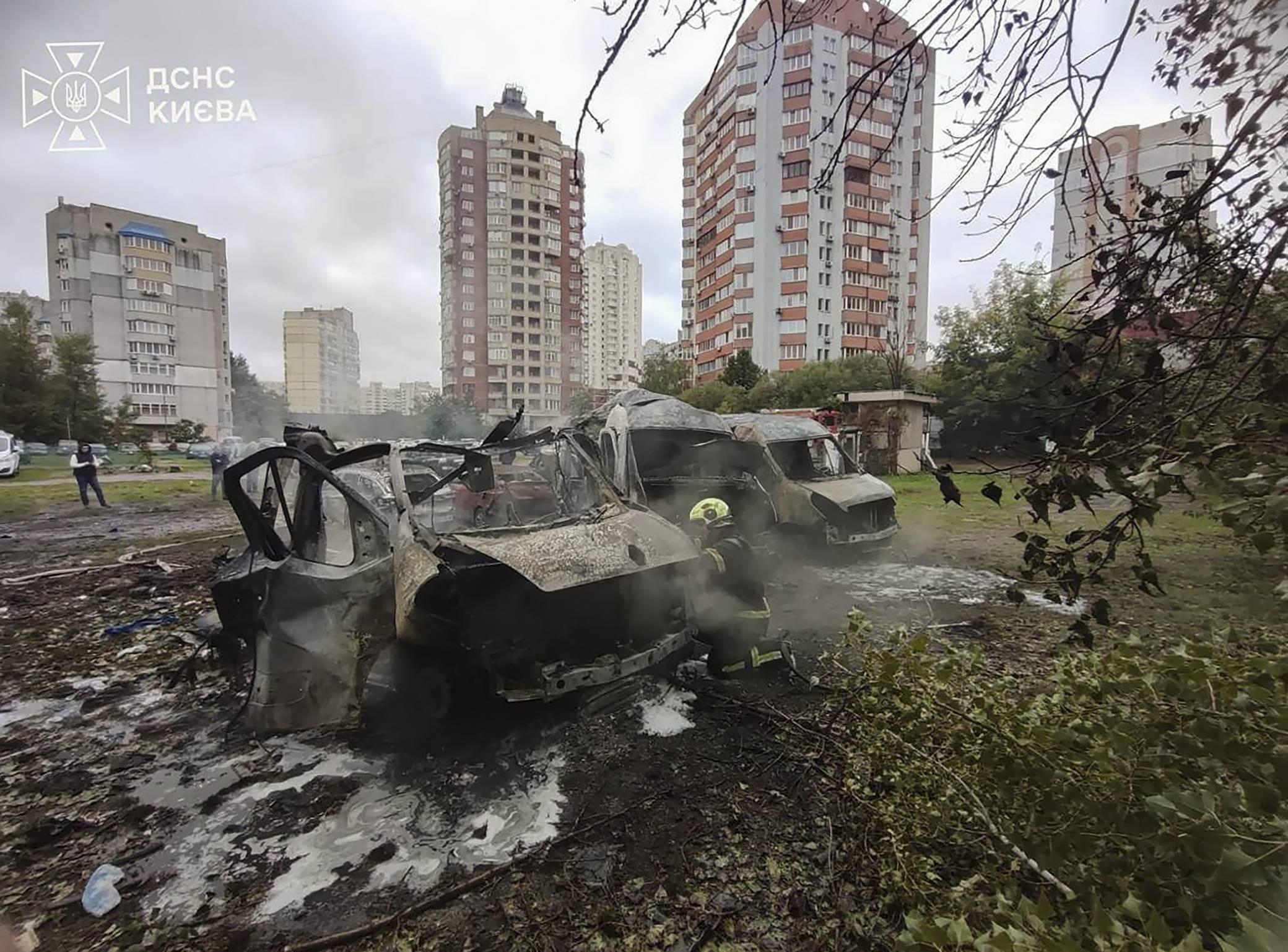
Russian drone and missile strikes on Ukraine's capital Kyiv and its northeast killed eight people on Thursday in attacks that included a maternity hospital and a farm, officials said.

Moscow has stepped up its air war in recent months, deploying more of its faster and harder-to-stop drones while Ukraine is short of interceptors to down ballistic missiles.

Two people died in the latest assault on Kyiv, according to President Volodymyr Zelenskiy, who was in New York for the UN General Assembly.

"As people were sleeping, flashes from explosions ⁠lit up the sky," ⁠Zelenskiy said on Telegram.

"Once again, the main targets of their strike were Kyiv and civilian infrastructure, residential buildings, a maternity hospital, energy infrastructure, and logistics."

Police said nine homes, a post office, warehouses and dozens of cars were also damaged in Kyiv.

A separate Russian attack on a vegetable storage facility at a farm in a village of the northeastern Kharkiv region killed six people and injured a further ⁠12, prosecutors said.

The overnight barrage around Ukraine included an unspecified number of hypersonic and ballistic missiles, 282 drones and other weapons, Ukraine's air force said.

In Kyiv, eight people were injured as well as the two fatalities, one of whom was in the parking lot of the maternity hospital, Reuters quoted city mayor Vitali Klitschko as saying.

Part of the hospital's facade, windows and doors were damaged, officials said, adding that no patients or medics were injured.

A handout photo made available by the State Emergency Service (SES) shows Ukrainian rescuers working at the site of an overnight Russian attack on a residential area in Kyiv, Ukraine, 24 September 2026, amid the Russian invasion. EPA/STATE EMERGENCY SERVICE / HANDOUT

Authorities in the northwestern region of Rivne said infrastructure was damaged in overnight strikes that continued into Thursday morning, without providing further details. Volyn region bordering Poland also came under attack.

Insufficient pressure on Moscow ⁠was allowing ⁠it to launch repeated strikes, said Zelenskiy.

"Right now, the United States has the opportunity to respond strongly," he said. "We need ballistic interceptors to protect lives."

Russia's defense ministry said its forces hit Ukrainian defense facilities, logistics and telecoms centers, as well as vessels used by the military.

In the Black Sea port of Odesa, military administration head Serhiy Lysak said overnight Russian strikes damaged a medical facility and shattered windows in nearby houses and a school.

Moldova's President Maia Sandu said four Russian drones crossed into its airspace and at least one exploded, while Romania said a drone also crashed in its territory.

NATO alliance member Poland said it deployed aviation twice on Thursday due to Russian attacks on Ukraine.


Quake Rattles Southeastern Türkiye

Image of earthquake monitoring (Reuters)
TT

Quake Rattles Southeastern Türkiye

Image of earthquake monitoring (Reuters)

An earthquake of 5.4 magnitude rattled cities in southeastern Türkiye on Thursday but there were no immediate reports of damage or injuries, the disaster agency said.

The quake, which occurred at 10:40 am (0740 GMT) was centered just north of the city of Sanliurfa, Türkiye's AFAD disaster agency said, adding "there are currently no reports of adverse effects".

Hasan Silda, governor of Sanliurfa province, said the quake had been felt "intensely", AFP reported.

"According to initial reports, there are no casualties or injuries. There is no destruction. There may be some partial damage to buildings," he told NTV private television.

Türkiye is crisscrossed by several geological fault lines that have previously caused catastrophes in the country.

A massive quake in February 2023 killed at least 53,000 people in southeastern Türkiye and around 7,000 others in Syria, that also caused damage and more than 300 deaths in Sanliurfa.


For Pope Leo, the Risk of an AI Apocalypse is a Major Concern

Pope Leo XIV leads the weekly Angelus prayer from a window at the Vatican, August 9, 2026. Vatican Media/Mario Tomassetti/­Handout via REUTERS
TT

For Pope Leo, the Risk of an AI Apocalypse is a Major Concern

Pope Leo XIV leads the weekly Angelus prayer from a window at the Vatican, August 9, 2026. Vatican Media/Mario Tomassetti/­Handout via REUTERS

The Vatican warned about the risk of an apocalypse spurred by artificial intelligence years before major American firms sounded the alarm at the United Nations Security Council on Wednesday - a concern that Pope Leo is placing at the heart of his papacy.

Leo, who in May called on world leaders for global rules to oversee the industry, is expected to warn about AI again on Friday in a speech at the Paris headquarters of the UN's culture and education body, UNESCO.

"This is not happening on day zero for the Holy See," Rev. Paolo Benanti, a leading Vatican advisor on AI issues, told Reuters, referring to recent calls for a slowdown that has been endorsed by the CEOs of AI firms Anthropic, OpenAI and xAI, among others.

"The transformative power of AI ... ‌could produce a magnitude ‌of societal changes that are very hard to predict," said Benanti, an Italian academic ‌who ⁠recently took part ⁠in the AI summit hosted by Britain's King Charles.

The priest said he could not reveal details about the contents of the summit's confidential discussions.

CARDINAL: THE FUTURE OF HUMANITY IS AT STAKE

Leo, the first US-born pope, has raised the possible dangers of AI development frequently throughout his 16-month-old papacy and first discussed the issue publicly on his third day in office.

In his May appeal, released as his first major document, Leo warned that AI systems spread misinformation, prioritize conflict and could lead the world down a path of unending war.

Cardinal Pietro Parolin, the Vatican's top diplomat, reiterated Leo's call for international regulation of ⁠the industry at an event in Rome last week, warning that countries cannot "go it alone" ‌on the technology.

"The future of humanity is really at stake here," ‌Parolin said. The world, he said, needs "everyone's involvement in establishing some common rules that can genuinely govern this phenomenon."

Anthropic co-founder Chris Olah ‌spoke at the Vatican's launch event for the pope's May document, known as an encyclical.

Asked if the Vatican is ‌in ongoing dialogue with any AI firms, Benanti stressed the decentralized nature of the global church and said some discussions are being led by local bishops.

On September 16, the US bishops' conference said it had created a new AI taskforce after several of its leaders met with executives that day.

"The dialogue focused on ways to keep any system of artificial intelligence at the service of ‌humanity and the urgent need to address the real and present dangers such technology presents," a statement said.

LEO WARNS ABOUT AUTONOMOUS WEAPONS

The Vatican began warning about the ⁠risks of AI in 2019, hosting ⁠two conferences that year on the possible dangers of the technology. The late Pope Francis warned attendees at one of the events that misinformation spread by AI could spark a world war.

The Vatican also teamed with Microsoft, IBM , the UN's Food and Agriculture Organization and the Italian government in 2020 to issue a call for AI development that "does not have as its sole goal greater profit or the gradual replacement of people in the workplace."

Leo has urged oversight especially for the development of weapons systems, such as those being used in the Russia-Ukraine war. He said in his encyclical that such weapons have advanced "practically beyond any human reach to govern them."

The Vatican's advocacy on the global stage against autonomous weaponry goes back decades, Benanti said, likening AI-powered drones to landmines that are indiscriminate with their targets.

The priest compared the Vatican's warnings about the risks of AI to how popes have long called for nuclear disarmament.

"If nuclear weapons can destroy humanity ... the manipulation of generative AI content in social spaces can destroy the capabilities of people to stay together as a society," he said.

"Nuclear weapons have to be stocked inside facilities and you can count and control them. AI is not this visible."