Over 800 Officials in US, Europe Sign Letter Protesting War on Gaza

US Secretary of State Antony Blinken. (AFP)
TT

Over 800 Officials in US, Europe Sign Letter Protesting War on Gaza

US Secretary of State Antony Blinken. (AFP)

More than 800 officials in the United States, the United Kingdom, and the European Union released a public letter of dissent on Friday against their government’s support of Israel in its war in Gaza.

This came as number of Palestinian-Americans refused to attend a roundtable meeting with US Secretary of State Antony Blinken on Thursday in protest against the Biden administration's ongoing support for Israel's offensive in the strip.

The signers say they have raised concerns through internal channels but have been ignored.

“Our governments’ current policies weaken their moral standing and undermine their ability to stand up for freedom, justice, and human rights globally,” the letter says. It adds that “there is a plausible risk that our governments’ policies are contributing to grave violations of international humanitarian law, war crimes, and even ethnic cleansing or genocide.”

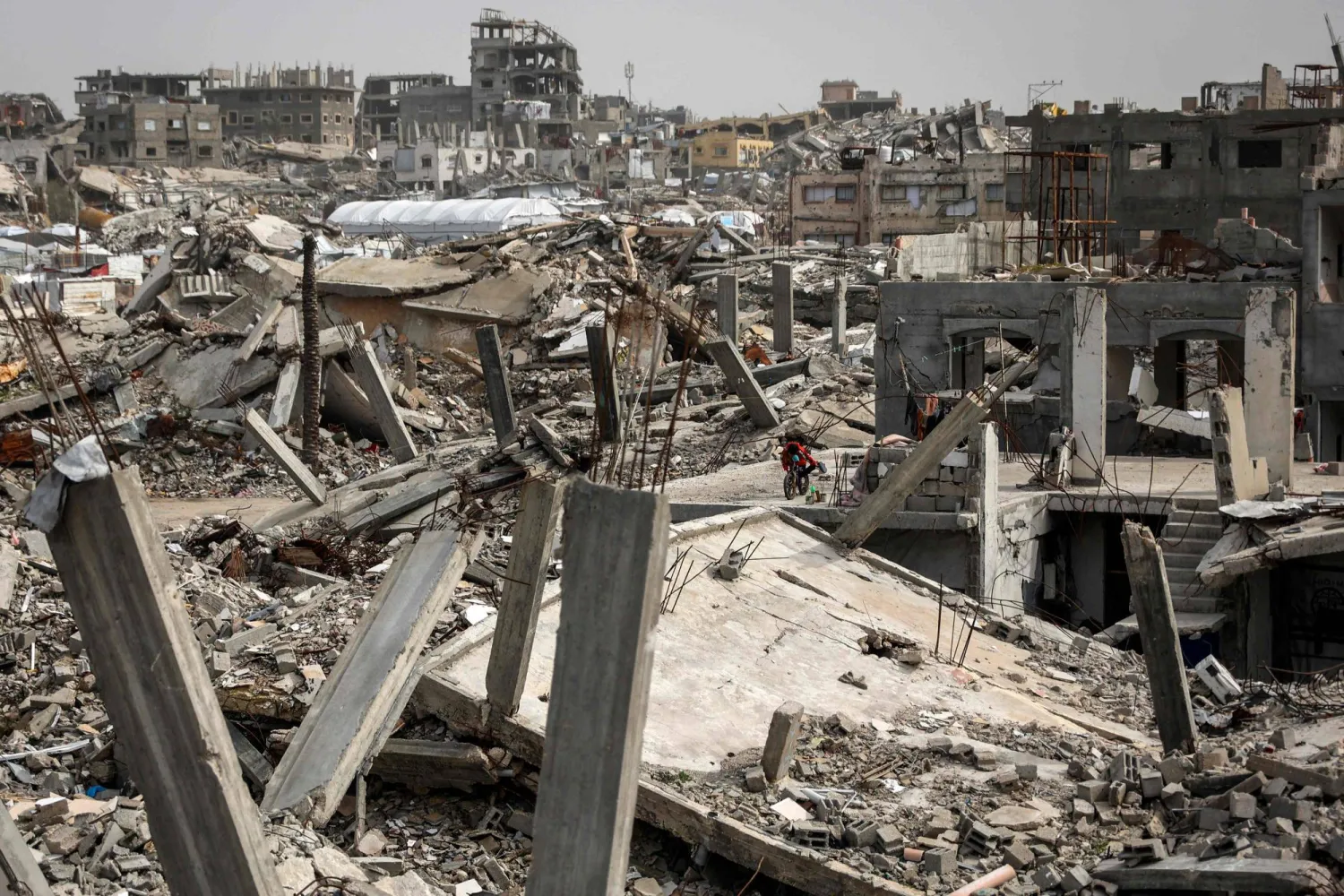
The Israeli military launched a bombing and ground campaign in Gaza after the Hamas Oct. 7 attack.

The document does not include the names of signers because they fear reprisal, said one organizer, an official who has worked in the State Department for more than two decades.

About 80 of the signers are from American agencies, with the biggest group being from the State Department, one organizer said. The governing authority most represented among the signers is the collective European Union institutions, followed by the Netherlands and the United States.

National-level officials from eight other member nations of the North Atlantic Treaty Organization, as well as Sweden and Switzerland, have approved the letter, said another person familiar with the letter. Most of those supporters work in the foreign ministries of those nations.

Support for atrocities

“The political decision-making of Western governments and institutions” over the war “has created unprecedented tensions with the expertise and duty that apolitical civil servants bring to bear,” said Josh Paul, who worked in the State Department bureau that oversees arms transfers but who resigned in October over the Biden administration’s support of Israel’s military campaign. Mr. Paul said he knew the organizers of the letter.

“One-sided support for Israel’s atrocities in Gaza, and a blindness to Palestinian humanity, is both a moral failure and, for the harm it does to Western interests around the globe, a policy failure,” he said.

US officials released a few similar letters and dissenting messages last fall. In November, more than 500 employees of about 40 US government agencies sent a letter to President Biden criticizing his policies on the war.

More than 1,000 employees of the United States Agency for International Development released an open letter along the same lines. And dozens of State Department officials have sent at least three internal dissent cables to Secretary of State Antony J. Blinken.

European objections

In the European Union, which maintains a joint diplomatic corps known as the European External Action Service, as well as agencies dealing with humanitarian aid and development, hundreds of officials have signed at least two separate letters of dissent to the bloc’s leadership.

Only a handful of E.U. nations — prominently Ireland, Spain, and Belgium — have consistently called on their partners and the union to push for a cease-fire and focus on Gazans’ suffering.

Berber van der Woude, a former Dutch diplomat, said she wanted to speak out on behalf of the active civil servants who had signed the letter anonymously because they feared retribution for dissenting.

“Being a civil servant doesn’t absolve you from your responsibility to keep on thinking,” she said. “When the system produces perverse decisions or actions, we have a responsibility to stop it. It’s not as simple as ‘shut up and do what you’re told’; we’re also paid to think.”

A letter to Blinken

Several members of the Palestinian-American community refused to meet with Blinken in Washington on Thursday to discuss the situation in Gaza.

“We do not know what more Secretary Blinken or President Biden need to hear or see to compel them to end their complicity in this genocide,” several of those who rejected the invitation said in a press statement distributed by the non-profit Institute for Middle East Understanding (IMEU). “They show us every day whose lives they value and whose lives they consider disposable. We will not be attending this discussion which can only amount to a box-ticking exercise. Our families, our community and all Palestinians deserve better.”

“There is one thing that we, our community and countless others around the US and the world, including American unions representing nearly 8 million workers and at least 47 US cities, have been asking of this administration: to demand a permanent ceasefire to save Palestinians lives,” they wrote. “A meeting of this nature at this moment in time is insulting and performative.”

One of the invitees to the roundtable, Dr. Tariq Haddad, said in a letter to Blinken that he initially intended to go to the meeting.

However, “after a lot of soul-searching I have decided that I cannot in good conscience meet with you today knowing this administration’s policies have been responsible for the death of over 80 of my family members including dozens of children,” Haddad wrote in the letter.

“How does one meet for what I was told would be 3 minutes, with a person you hold responsible for not just the killing of your child, but rather the murder of over 80 of your family members?” he asked in his letter.

“My family are subsisting on animal feed, Secretary Blinken, because of your policies,” he said.



Israeli Settler Kills 16-Year-Old Palestinian in West Bank, Mayor Says

Friends and family gather around the body of Ammar Yasser Sabbah, 16, ahead of his funeral at a morgue in Bethlehem on December 16, 2025, after he was killed by Israeli forces in the town of Tuqu’, east of Bethlehem during a military raid the day before. (AFP)
TT

Israeli Settler Kills 16-Year-Old Palestinian in West Bank, Mayor Says

Friends and family gather around the body of Ammar Yasser Sabbah, 16, ahead of his funeral at a morgue in Bethlehem on December 16, 2025, after he was killed by Israeli forces in the town of Tuqu’, east of Bethlehem during a military raid the day before. (AFP)

An Israeli settler shot dead a 16-year-old Palestinian in Tuqu' on Tuesday after the funeral of another teenager, the town's mayor said.

Violence has escalated in the West Bank since the beginning of the war in Gaza in October 2023. Attacks by Israeli settlers against Palestinians in the West Bank have increased sharply, with the UN reporting the highest number of attacks on record in October.

The Israeli military did not immediately respond to a request for comment on Muheeb Jibril's death on Tuesday.

"Today, after the funeral of 16-year-old Ammar Sabah, who was killed yesterday by the Israeli army in the town center, a number of youths were gathered by the main street when a settler shot 16-year-old Muheeb Jibril in the head," Tuqu' Mayor Mohammed al-Badan told Reuters by telephone.

Israeli forces killed Sabah on Monday during a military raid on the town, the Palestinian health ministry said. The military said the incident was under review. It said rocks were thrown at soldiers who used riot dispersal means and later responded with fire.

The West Bank is home to 2.7 million Palestinians who have limited self-rule under Israeli military occupation. Hundreds of thousands of Israelis have settled there.

Most world powers deem Israel's settlements, on land it captured in a 1967 war, illegal, and numerous UN Security Council resolutions have called on Israel to halt all settlement activity.

Israel denies the illegality of the settlements, citing biblical and historical connections to the land.


Family of Bondi Hero in Syria Says His Home Country Is Proud of Him

 Uncle and cousin of Ahmed al-Ahmed, both named Mohammed al-Ahmed, look at the footage of Ahmed al-Ahmed, the bystander who disarmed a gunman during a shooting at a Hanukkah event at Sydney's Bondi Beach, in the town of Nayrab in the northwestern province of Idlib, Syria, December 16, 2025. (Reuters)
Uncle and cousin of Ahmed al-Ahmed, both named Mohammed al-Ahmed, look at the footage of Ahmed al-Ahmed, the bystander who disarmed a gunman during a shooting at a Hanukkah event at Sydney's Bondi Beach, in the town of Nayrab in the northwestern province of Idlib, Syria, December 16, 2025. (Reuters)
TT

Family of Bondi Hero in Syria Says His Home Country Is Proud of Him

 Uncle and cousin of Ahmed al-Ahmed, both named Mohammed al-Ahmed, look at the footage of Ahmed al-Ahmed, the bystander who disarmed a gunman during a shooting at a Hanukkah event at Sydney's Bondi Beach, in the town of Nayrab in the northwestern province of Idlib, Syria, December 16, 2025. (Reuters)
Uncle and cousin of Ahmed al-Ahmed, both named Mohammed al-Ahmed, look at the footage of Ahmed al-Ahmed, the bystander who disarmed a gunman during a shooting at a Hanukkah event at Sydney's Bondi Beach, in the town of Nayrab in the northwestern province of Idlib, Syria, December 16, 2025. (Reuters)

As Australia's worst mass shooting in nearly 30 years unfolded, a Sydney shop owner was captured on camera charging at one of the gunmen and disarming him. Halfway around the world in Syria, a group of men watching the footage recognized a familiar face.

Ahmed al-Ahmed, 43, left his hometown in Syria's northwest province of Idlib nearly 20 years ago to seek work in Australia. On Sunday, he was wounded after wrestling a rifle away from a man attacking a Jewish holiday event at Sydney's Bondi Beach, in which 15 people were killed.

SYRIA IS 'PROUD OF HIM'

His uncle, Mohammed al-Ahmed, recognized him from footage circulating online.

"We learned through social media. I called his father and he told me that it was Ahmed. Ahmed is a hero, we're proud of him. Syria in general is proud of him," the uncle told Reuters.

The family hails from the town of Nayrab, which was bombed heavily during Syria's nearly 14-year war, which ended when longtime leader Bashar al-Assad was ousted in an opposition offensive launched from Idlib last year.

Ahmed said his nephew left Syria in 2006 after completing a degree at Aleppo University. He hasn't been back since.

"Since he was young, he was gallant and a hero," his uncle said, describing him as a happy and passionate person.

"He acted impulsively without thinking who the people were that were being killed - without knowing their religion, if they were Muslim or Christian or Jewish. That's what made him jump up and carry out this heroic act."

'PEACEMAKERS, NOT WARMONGERERS'

Ahmed, who now holds Australian citizenship and has two daughters, remains in a Sydney hospital with gunshot wounds. He has been hailed as a hero around the world, including by US President Donald Trump.

A GoFundMe campaign set up for him has raised more than A$2.2 million ($1.5 million).

Back at home, the Ahmed family home remains in ruins. Piles of smashed cinderblocks ring the concrete carcass of the two-storey house, whose walls are punctured by shelling.

"This is Ahmed's father's home. It got destroyed during the war. Bombing, bombing from planes, missiles - every type of weapon," Ahmed's cousin, who is also named Mohammad al-Ahmed, told Reuters.

He said his cousin "was the reason that many innocent people who did nothing wrong were saved."

"He will prove to the world that Muslims are peacemakers, not warmongers," said Ahmed.


Barrack Presses Netanyahu to Accept a Turkish Role in Gaza

Photo of the meeting between the US Special Envoy to Syria, Tom Barrack, and Israeli Prime Minister Benjamin Netanyahu on Monday (Israeli Government). 
TT

Barrack Presses Netanyahu to Accept a Turkish Role in Gaza

Photo of the meeting between the US Special Envoy to Syria, Tom Barrack, and Israeli Prime Minister Benjamin Netanyahu on Monday (Israeli Government). 

Hebrew-language media reported that Israeli Prime Minister Benjamin Netanyahu met on Monday in Jerusalem with US envoy Tom Barrack, amid what were described as unusually blunt private messages from the administration of President Donald Trump ahead of a planned US–Israel summit later this month in Florida.

According to the reports, the talks focused on three files: Gaza, Syria and Netanyahu’s expected meeting with Trump.

On Gaza, Israeli daily Yedioth Ahronoth said Barrack sought to allay Netanyahu’s concerns about a Turkish role in any international force deployed to the enclave during a prospective second phase of a fragile ceasefire that began in October. Barrack, the paper reported, argued that Türkiye has the greatest leverage over Hamas and is best placed to persuade the group to disarm.

The newspaper said Barrack reminded Netanyahu that Ankara had endorsed the Trump administration’s ceasefire framework for Gaza and had pledged, on Hamas’s behalf, to provisions related to weapons handover. He reportedly said that Turkish participation would also encourage other hesitant countries to join an international force.

According to Yedioth Ahronoth, Barrack warned that excluding Türkiye would cause those states to step back, adding that Trump would not allow the initiative to fail. Netanyahu’s public statements questioning whether Hamas would ever relinquish its weapons — and his assertion that only Israel could enforce that outcome — were described by Barrack as “unacceptable” and as jeopardizing the plan.

Israel’s Channel 12 also reported that the White House delivered a “private and sharp” message to Netanyahu, asserting that the killing of a senior Hamas military figure, Raed Saad, constituted a breach of the ceasefire brokered with Trump’s mediation.

The channel cited growing tension between the Trump administration and Netanyahu’s government over moving to the deal’s second phase and over Israel’s broader regional policies.

Two US officials were quoted as saying that Secretary of State Marco Rubio, White House envoy Steve Witkoff, and Jared Kushner, the president’s son-in-law, were “deeply frustrated” with Netanyahu’s conduct.

One senior US official was quoted as telling Israeli media that the message to Netanyahu was explicit: if he chose to damage his own credibility, that was his decision, “but we will not allow you to damage President Trump’s reputation after he mediated the Gaza agreement.”

US officials were also cited as expressing rising concern over settler violence against Palestinians in the West Bank and what they termed Israeli “provocations” that undermine Washington’s efforts to expand the Abraham Accords. The United States, one official said, was not asking Israel to compromise its security, but to avoid steps perceived in the Arab world as inflammatory.

On Syria, Israeli assessments quoted in the press said Barrack outlined US “red lines,” stressing Trump’s desire to see stability there and warning that frequent Israeli operations could risk destabilizing the country. Reports added that Washington favors reaching a security understanding and wants to avoid actions it views as undermining the Syrian leadership.

Regarding Lebanon, Trump was said to support continued pressure on Hezbollah through limited operations, while opposing a broader escalation.

Despite recent criticism by Netanyahu of Barrack — including remarks questioning his impartiality — the envoy’s visit went ahead. Columnist Nahum Barnea wrote in Yedioth Ahronoth that US officials increasingly believe Netanyahu is not serious about advancing Trump’s peace plan and is intent on prolonging the war, language he said has sparked intense anger inside the White House.

Israeli analysts suggested Netanyahu is unlikely to reject all US requests outright, instead seeking partial accommodation to ensure a successful meeting with Trump on December 29. Yet, in a show of independence, Israeli forces reportedly carried out an airstrike in Syria shortly before Barrack arrived.

Netanyahu also announced a trilateral summit with Greece and Cyprus, a move widely interpreted in Israel as a political signal directed at Türkiye.

At the close of the meeting, Barrack was quoted as saying the talks were a “constructive dialogue aimed at achieving regional peace and stability.”