The UN Security Council was set to convene an emergency meeting Tuesday over an Israeli strike that killed dozens in a displaced persons camp in Rafah, as three European countries were slated to formally recognize a Palestinian state.
AFP journalists on the ground early Tuesday reported fresh Israeli strikes overnight in the southern Gaza border city, where an Israeli attack targeting two senior Hamas members on Sunday night sparked a fire that ripped through a displacement center, killing 45, according to Gaza health officials.
The attack prompted a wave of international condemnation, with Palestinians and many Arab countries calling it a "massacre". Israel said it was looking into the "tragic accident".
"There is no safe place in Gaza. This horror must stop," UN Secretary-General Antonio Guterres posted on social media.
UN humanitarian chief Martin Griffiths pointed to the widespread warnings of civilian deaths that circulated ahead of Israel's incursion into Rafah, saying in a statement: "We've seen the consequences in last night's utterly unacceptable attack."
"To call it 'a mistake' is a message that means nothing for those killed, those grieving, and those trying to save lives," he added.
Diplomats said the UN Security Council would convene Tuesday for an emergency session called by Algeria to discuss the attack.
The EU's foreign policy chief said he was "horrified by news" of the strike, while French President Emmanuel Macron said he was "outraged", and a US National Security Council spokesperson said Israel "must take every precaution possible to protect civilians".
The Israeli military said it was launching a probe.
- 'Don't know where to go' -
Displaced Gazan Khalil al-Bahtini was preparing to leave the impacted area, telling AFP Monday that "last night, the tent opposite to ours was targeted".
"We have loaded all our belongings, but we don't know where to go."
Israeli Prime Minister Benjamin Netanyahu told parliament the deaths occurred "despite our best efforts" to protect civilians.
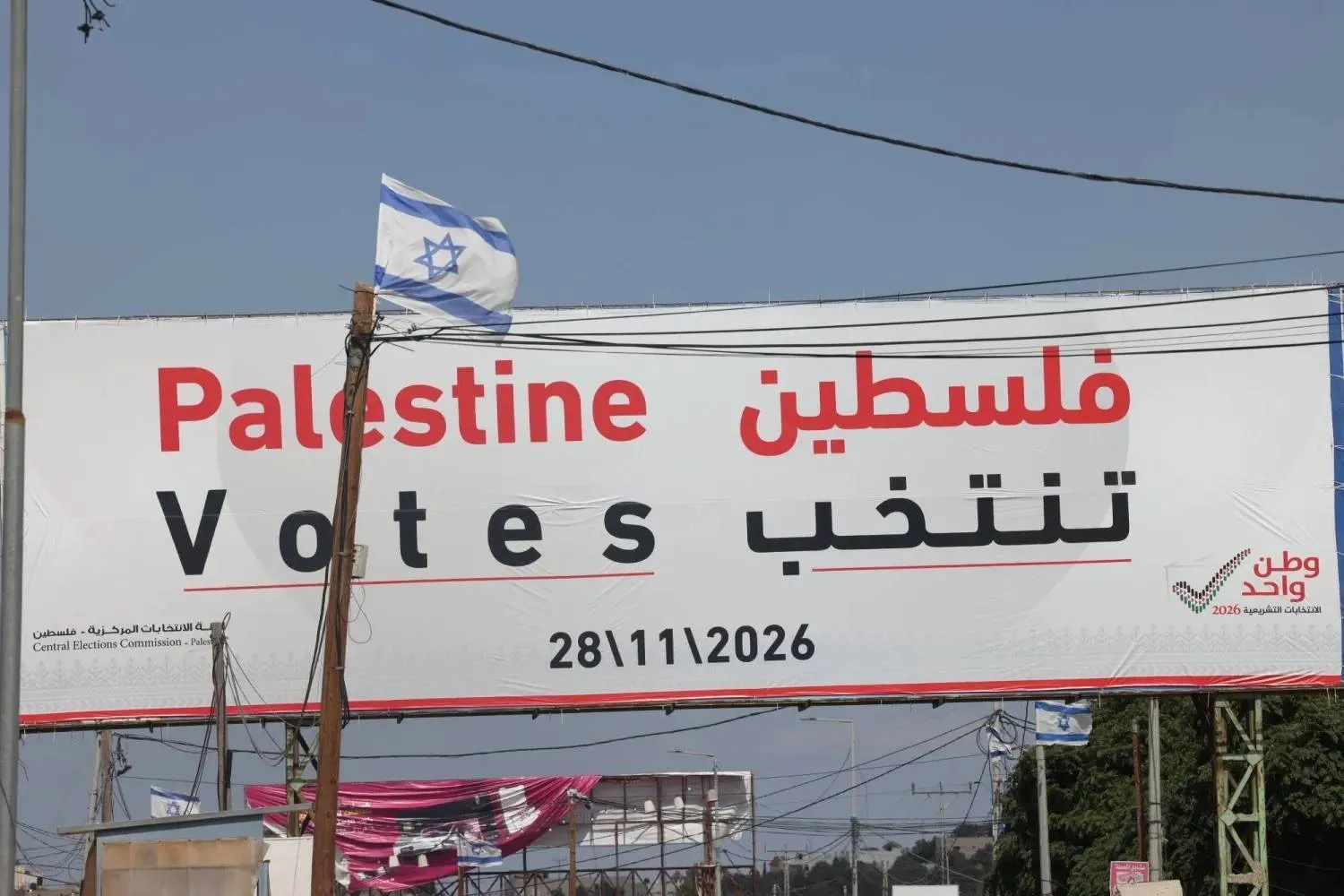
The outcry over the strike came as Spain, Ireland and Norway were set to formally recognize a Palestinian state on Tuesday in a decision slammed by Israel as a "reward" for Hamas.
"Recognizing the state of Palestine is about justice for the Palestinian people," Spanish Foreign Minister Jose Manuel Albares said Monday in Brussels.
It was also "the best guarantee of security for Israel and absolutely essential for reaching peace in the region", he said alongside his Irish and Norwegian counterparts.
On Monday, Israeli Foreign Minister Israel Katz said he had told Spain's consulate in Jerusalem to stop offering consular services to West Bank Palestinians from June 1 as a "preliminary punitive" measure.
- 'Charred bodies' -
Israel launched the deadly strike on Rafah late Sunday, hours after Hamas fired a barrage of rockets at the Tel Aviv area, most of which were intercepted.
Israel's army said its aircraft "struck a Hamas compound" in the city and killed Yassin Rabia and Khaled Nagar, senior officials for the militant group in the occupied West Bank.
Gaza's civil defense agency said the strike ignited a fire that tore through a displacement center in northwestern Rafah near a facility of the UN agency for Palestinian refugees, UNRWA.
"We saw charred bodies and dismembered limbs... We also saw cases of amputations, wounded children, women and the elderly," said civil defense agency official Mohammad al-Mughayyir.
One survivor, a woman who declined to be named, said: "We heard a loud sound and there was fire all around us. The children were screaming."
Adding to already heightened tensions since Israel launched its Rafah ground operation, the Israeli and Egyptian militaries reported a "shooting incident" on Monday that killed one Egyptian guard in the border area between Egypt and the southern Gaza Strip.
Both forces said they were investigating.
- 'Dangerous violation' -
Footage from the Palestinian Red Crescent Society showed chaotic nighttime scenes of paramedics racing to the attack site and evacuating the wounded.
Mughayyir said the rescue efforts were hampered by war damage and the impact of Israel's siege, which has led to severe shortages of fuel and "water to extinguish fires".
The Israeli attack sparked strong protests from Egypt and Qatar, both of which have played key roles as mediators in efforts to negotiate a ceasefire and hostage-prisoner exchange.
Egypt deplored what it called the "targeting of defenseless civilians", saying it was part of "a systematic policy aimed at widening the scope of death and destruction in the Gaza Strip to make it uninhabitable".
Qatar condemned a "dangerous violation of international law" and voiced "concern that the bombing will complicate ongoing mediation efforts" towards a truce.
The top world court, the International Court of Justice, on Friday ordered Israel to halt any offensive in Rafah and elsewhere that could bring about "the physical destruction" of the Palestinians.
The war in Gaza started after Hamas's October 7 attack on southern Israel, which resulted in the deaths of more than 1,170 people, mostly civilians, according to an AFP tally based on Israeli official figures.
Militants also took 252 hostages, 121 of whom remain in Gaza, including 37 the army says are dead.
Israel's retaliatory offensive has killed at least 36,050 people in Gaza, mostly civilians, according to the Hamas-run territory's health ministry.
Philippe Lazzarini, head of UNRWA, which has been central to aid operations in the besieged territory during the war, said on social media platform X that "with every day passing, providing assistance & protection becomes nearly impossible".
"The images from last night are testament to how Rafah has turned into hell on Earth," he said.