


US: Iran’s Launch of Satellite is Cover for Ballistic Activities

This image taken from video released by Noghtezan shows an Iranian satellite launch Saturday, Sept. 14, 2024, in Iran (AP)
TT

US: Iran’s Launch of Satellite is Cover for Ballistic Activities

This image taken from video released by Noghtezan shows an Iranian satellite launch Saturday, Sept. 14, 2024, in Iran (AP)

The US State Department on Sunday accused Iran of seeking to expand its ballistic missile program after it launched a satellite into space Saturday with a rocket built by the country's paramilitary Revolutionary Guard, the latest for a program the West fears helps Tehran advance its ballistic missile program.

The Chamran-1 satellite, which was launched into space by the Qaem-100 satellite carrier, was put into a 550-kilometre orbit and its first signals had been received, the media said.

It added that the solid-fuel, three-stage rocket was designed and built by the Aerospace Force of the Revolutionary Guards.

The primary mission of the satellite, which weighs 60 kg, “is to test hardware and software systems for demonstrating orbital maneuvering technology in height and phase,” according to Reuters.

The US military say the long-range ballistic technology used to put satellites into orbit could also allow Tehran to launch long-range weapons, possibly including nuclear warheads.

Iran described the launch as a success, which would be the second such launch to put a satellite into orbit with the rocket. There was no immediate independent confirmation of the launch’s success.

Independent scientists later confirmed the launch, and that the satellite had reached orbit.

Footage later released by Iranian media showed the rocket blast off from a mobile launcher. An Associated Press analysis of the video and other imagery later released suggested the launch happened at the Guard’s launch pad on the outskirts of the city of Shahroud, some 350 km east of the capital, Tehran.

The launch comes amid heightened tensions gripping the wider Middle East over the ongoing Israel-Hamas war in the Gaza Strip, during which Tehran launched an unprecedented direct missile-and-drone attack on Israel.

Meanwhile, Iran continues to enrich uranium to nearly weapons-grade levels, raising concerns among nonproliferation experts about Tehran's program.

Gen. Hossein Salami, the head of the Guard, praised the launch in a statement and said scientists successfully overcame “the atmosphere of extensive and oppressive international sanctions.”

The Sabereen news, a channel linked to the Quds Force, wrote that by developing Qaem-100 satellite carrier, the IRGC has officially acquired missiles with a range of 5,500 to 12,500 km.

Later, the US State Department said it has “long made clear our concern that Iran's space launch vehicle programs provide a pathway to expand its longer-range missile systems.”

“We continue to use a variety of nonproliferation tools, in coordination with our allies and partners, to counter the further advancement of Iran's ballistic missile program and its ability to proliferate missiles and related technology,” it added.

The United States had previously said Iran's satellite launches defy UN Security Council Resolution 2231 and called on Tehran to undertake no activity involving ballistic missiles capable of delivering nuclear weapons. UN sanctions related to Iran's ballistic missile program expired last October.

The US intelligence community's worldwide threat assessment this year said Iran's development of satellite launch vehicles “would shorten the timeline” for Iran to develop an intercontinental ballistic missile because it uses similar technology.

Intercontinental ballistic missiles can be used to deliver nuclear weapons. Iran is now producing uranium close to weapons-grade levels after the collapse of its nuclear deal with world powers. Tehran has enough enriched uranium for “several” nuclear weapons, if it chooses to produce them, the head of the International Atomic Energy Agency repeatedly has warned.


Australia PM to Invite Israeli President to Visit

 15 August 2025, Australia, Sydney: Australian Prime Minister Anthony Albanese speaks at the Martin Place cenotaph during a ceremony marking the 80th anniversary of Victory in the Pacific, which commemorates Japan's acceptance of the Allied demand for unconditional surrender and the end of World War II for Australia. (dpa)
15 August 2025, Australia, Sydney: Australian Prime Minister Anthony Albanese speaks at the Martin Place cenotaph during a ceremony marking the 80th anniversary of Victory in the Pacific, which commemorates Japan's acceptance of the Allied demand for unconditional surrender and the end of World War II for Australia. (dpa)
TT

Australia PM to Invite Israeli President to Visit

 15 August 2025, Australia, Sydney: Australian Prime Minister Anthony Albanese speaks at the Martin Place cenotaph during a ceremony marking the 80th anniversary of Victory in the Pacific, which commemorates Japan's acceptance of the Allied demand for unconditional surrender and the end of World War II for Australia. (dpa)
15 August 2025, Australia, Sydney: Australian Prime Minister Anthony Albanese speaks at the Martin Place cenotaph during a ceremony marking the 80th anniversary of Victory in the Pacific, which commemorates Japan's acceptance of the Allied demand for unconditional surrender and the end of World War II for Australia. (dpa)

Australian Prime Minister Anthony Albanese on Tuesday said his government would invite Israel's president to visit, after a mass shooting in Sydney targeting the Jewish community.

"Prime Minister Albanese advised President (Isaac) Herzog that, upon the recommendation of the Australian government, the Governor-General of Australia will issue an invitation in accordance with protocol to President Herzog to visit Australia as soon as possible," said a post on the leader's X account.

Fifteen people were killed and dozens injured in a mass shooting at a Jewish Hanukkah celebration at Bondi on December 14.


Trump Says It Would Be 'Smart' for Venezuela's Maduro to Leave Power

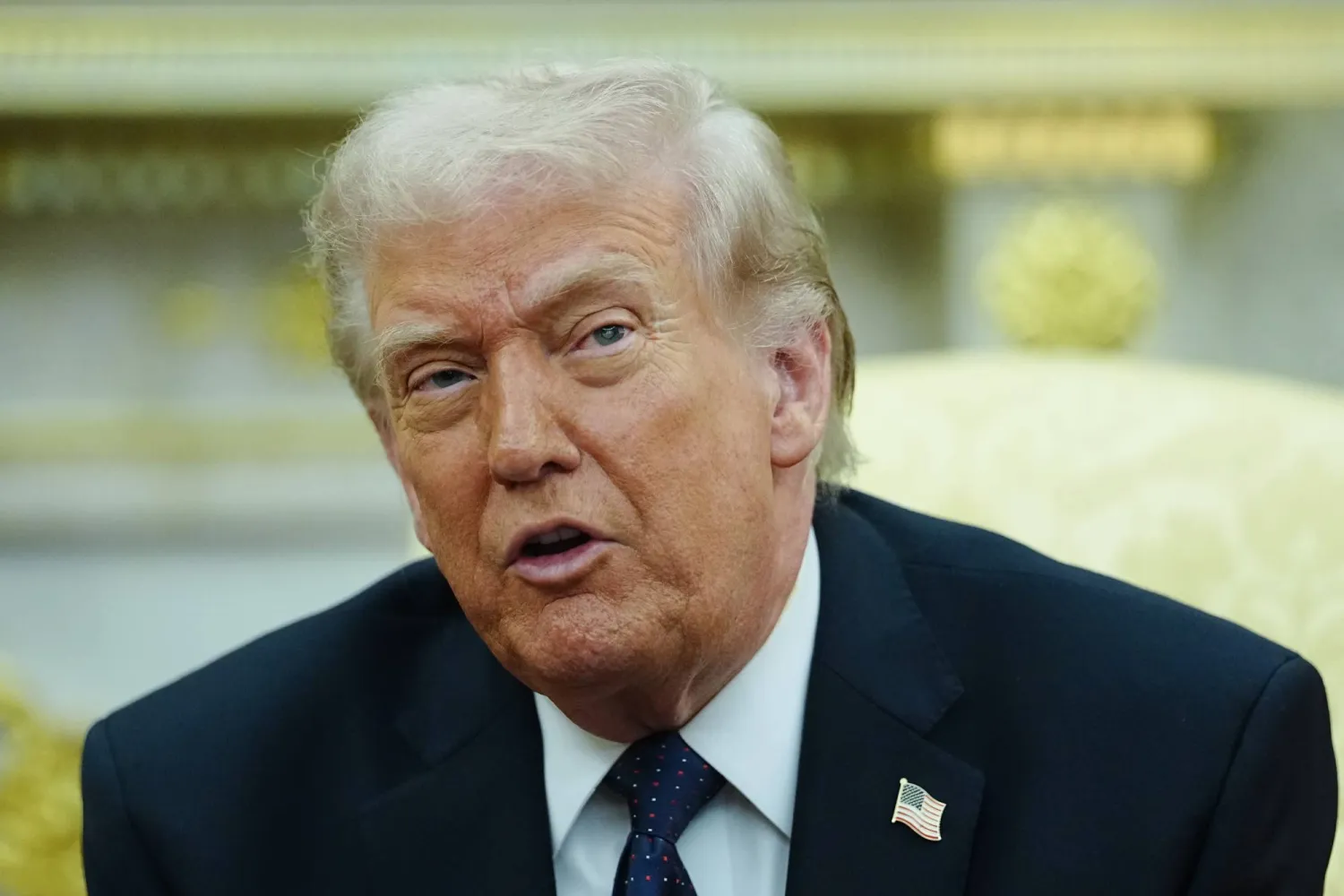
US President Donald Trump attends a press conference, as he makes an announcement about the Navy's "Golden Fleet" at Mar-a-lago in Palm Beach, Florida, US, December 22, 2025. REUTERS/Jessica Koscielniak
TT

Trump Says It Would Be 'Smart' for Venezuela's Maduro to Leave Power

US President Donald Trump attends a press conference, as he makes an announcement about the Navy's "Golden Fleet" at Mar-a-lago in Palm Beach, Florida, US, December 22, 2025. REUTERS/Jessica Koscielniak

US President Donald Trump said on Monday it would be smart for Venezuelan President Nicolas Maduro to leave power, and the United States could keep or sell the oil it had seized off the coast of Venezuela in recent weeks.

Trump's pressure campaign on Maduro has included a ramped-up military presence in the region and more than two dozen military strikes on vessels allegedly trafficking drugs in the Pacific Ocean and Caribbean Sea near the South American nation. At least 100 people have been killed in ‌the attacks, reported Reuters.

Asked ‌if the goal was to force ‌Maduro ⁠from power, Trump ‌told reporters: "Well, I think it probably would... That's up to him what he wants to do. I think it'd be smart for him to do that. But again, we're gonna find out."

"If he wants to do something, if he plays tough, it'll be the last time he's ever able to play tough," he said.

During the press conference, Trump ⁠also took aim at Colombian President Gustavo Petro, who he has also feuded with throughout ‌the year.

"He's no friend to the ‍United States. He's very bad. ‍Very bad guy. He's gotta watch his ass because he makes ‍cocaine and they send it into the US," Trump said when asked about Petro's criticisms towards the Trump administration's handling of the tensions with Venezuela.

In addition to the strikes, Trump has previously announced a "blockade" of all oil tankers under sanctions entering and leaving Venezuela. The US Coast Guard started pursuing an oil tanker in international waters near Venezuela ⁠on Sunday, in what would be the second such operation this weekend and the third in less than two weeks if successful.

"Maybe we will sell it, maybe we will keep it," Trump said when asked what would happen with the seized oil, adding it might also be used to replenish the United States' strategic reserves. Without directly referring to Trump's statements, Maduro said every leader should attend to the internal affairs of their own country.

"If I speak to him again, I will tell him: each country should mind its own internal affairs," Maduro ‌said, referring to an initial phone call between the two leaders last month.


Suspected Militants Ambush Police Vehicle in Northwest Pakistan, Killing 5 Officers

File photo: Police officers stand guard to secure a procession during the mourning month of Muharram in Karachi, Pakistan, 03 July 2025. EPA/SHAHZAIB AKBER
TT

Suspected Militants Ambush Police Vehicle in Northwest Pakistan, Killing 5 Officers

File photo: Police officers stand guard to secure a procession during the mourning month of Muharram in Karachi, Pakistan, 03 July 2025. EPA/SHAHZAIB AKBER

Suspected militants opened fire on a police vehicle in northwest Pakistan on Tuesday, killing five officers before fleeing, officials said, part of a surge in violence in the region bordering Afghanistan.

The attack took place in the Karak district of Khyber Pakhtunkhwa province while police were on routine patrol near an oil and gas field, said local police chief Noor Wali told The Associated Press. He said the assailants, after killing the officers, poured gasoline on the vehicle and torched it.

A large police contingent cordoned off the area and launched a search operation to track the attackers, according to The Associated Press.

Pakistan's Interior Minister Mohsin Naqvi and Khyber Pakhtunkhwa Chief Minister Suhail Afridi condemned the attack. In separate statements, they said the assailants would be brought to justice and expressed condolences to the families of the killed police officers.

No group immediately claimed responsibility, but suspicion is likely to fall on the Pakistani Taliban, or TTP, which is separate from but aligned with Afghanistan’s Taliban government and has been blamed by authorities for previous attacks.

Pakistan has seen a steady rise in militant violence, which has strained relations with Afghanistan. Islamabad accuses the TTP of operating freely inside Afghanistan since the Taliban takeover in 2021, a charge Kabul denies.

Tensions escalated in October after Afghanistan accused Pakistan of an Oct. 9 drone strike in Kabul, followed by cross-border clashes that killed dozens, before a Qatar-brokered cease-fire on Oct. 19. Talks in Istanbul last week ended without agreement.
