


AI Risks Repeating Social Media Era’s Mistakes, Says Microsoft President

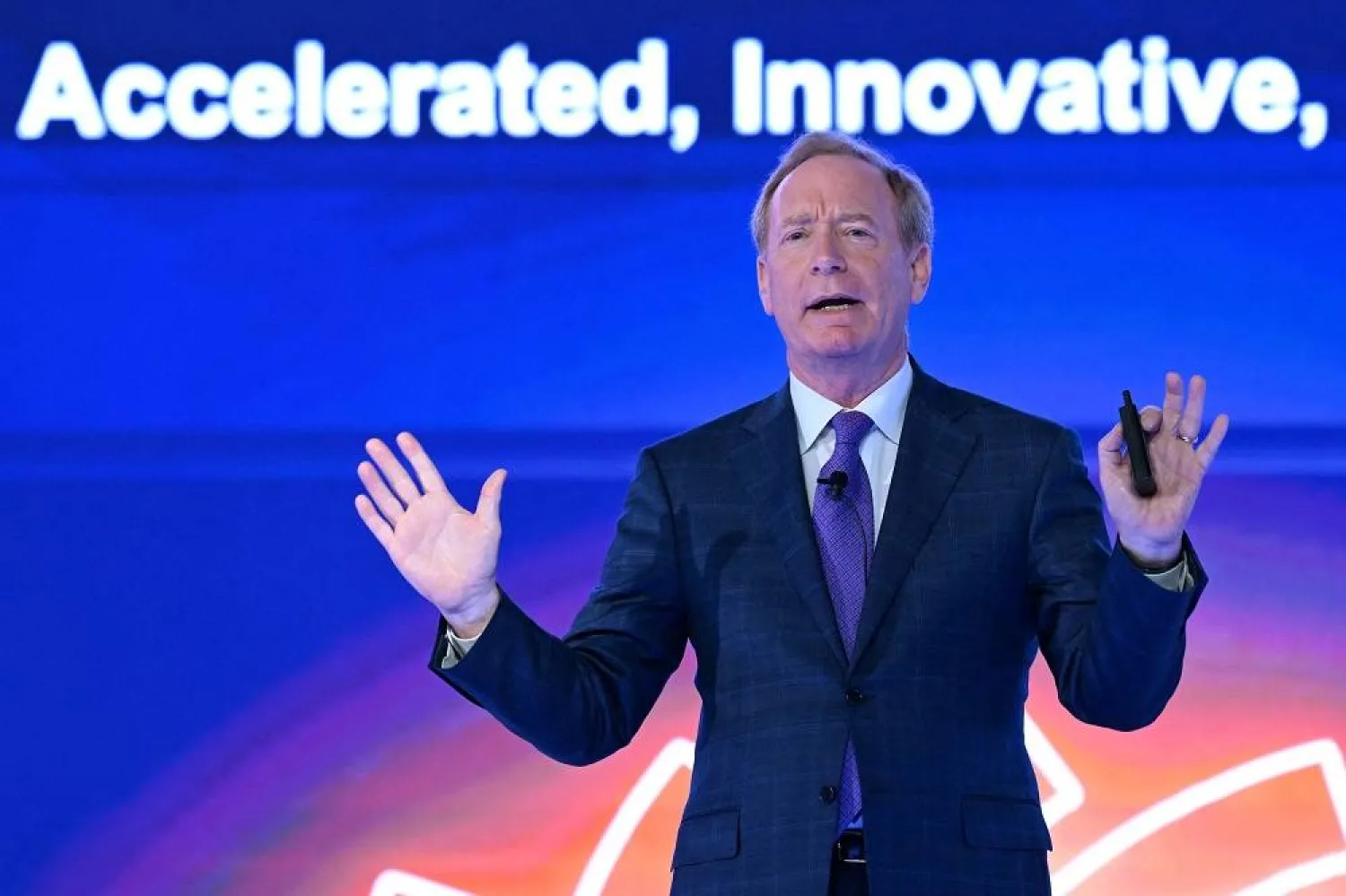
 Brad Smith, President and Vice Chairman of Microsoft, addresses the gathering on the first day of the three-day B20 Summit in New Delhi on August 25, 2023. (AFP)
Brad Smith, President and Vice Chairman of Microsoft, addresses the gathering on the first day of the three-day B20 Summit in New Delhi on August 25, 2023. (AFP)
TT

AI Risks Repeating Social Media Era’s Mistakes, Says Microsoft President

 Brad Smith, President and Vice Chairman of Microsoft, addresses the gathering on the first day of the three-day B20 Summit in New Delhi on August 25, 2023. (AFP)
Brad Smith, President and Vice Chairman of Microsoft, addresses the gathering on the first day of the three-day B20 Summit in New Delhi on August 25, 2023. (AFP)

Breakneck development of artificial intelligence risked repeating mistakes made by the tech industry at the start of the social media era, Microsoft president Brad Smith told a business forum on Friday.

Rapid advancements in AI have stoked global alarm over the technology's potential for disinformation, misuse and upheaval of the labor market.

But Smith suggested these misgivings were not reflected by the developers of the potentially revolutionary technology, whose optimism reminded him of the early years of social media platforms.

Back then, the tech industry "became a little too euphoric about all the good things that social media would bring to the world -- and there have been many -- without thinking about the risks as well," he said.

"We need to be clear-eyed, we need to be excited about the opportunities, but thoughtful, perhaps even concerned, about the downside. And we need to construct the guardrails from the outset," he added.

The rise of AI has raised both excitement and concerns about its potential to improve or replace tasks done by humans.

AI tools have shown in recent months the ability to generate essays, create realistic images, mimic voices of famous singers and even pass medical exams, among a slew of uses.

But there are also worries that chatbots could flood the internet with disinformation, that biased algorithms will churn out racist material or that AI-powered automation could lay waste to entire industries.

A United Nations report this week said AI was more likely to augment jobs than to destroy them, adding nonetheless that the tech would alter work intensity and the autonomy of workers.

It also said the effects of technology would vary greatly between professions and regions, with clerical workers facing the most exposure to changes and women more likely than men to see their jobs affected.

Smith said it was clear the public "want to be confident that this new technology will remain under human control".

Mastercard chief executive Michael Miebach said companies needed to build trust over use of the tech and take action to address issues such as AI bias.

But he also said he believed that the risks around AI were "not terribly new" and should not impede further development of the technology.

"Naturally regulation will be behind," he said. "But that shouldn't slow us down."

Both men were speaking in New Delhi alongside other world industry leaders at a meeting that is serving as a prelude to next month's G20 summit in the Indian capital.



OpenAI's Altman Says World 'Urgently' Needs AI Regulation

OpenAI’s CEO Sam Altman speaks at the AI Summit in New Delhi, India, Thursday, Feb. 19, 2026. (AP Photo)
TT

OpenAI's Altman Says World 'Urgently' Needs AI Regulation

OpenAI’s CEO Sam Altman speaks at the AI Summit in New Delhi, India, Thursday, Feb. 19, 2026. (AP Photo)

Sam Altman, head of ChatGPT maker OpenAI, told a global artificial intelligence conference on Thursday that the world "urgently" needs to regulate the fast-evolving technology.

An organization could be set up to coordinate these efforts, similar to the International Atomic Energy Agency (IAEA), AFP quoted him as saying.

Altman is one of the hosts of top tech CEOs in New Delhi for the AI Impact Summit, the fourth annual global meeting on how to handle advanced computing power.

Frenzied demand for generative AI has turbocharged profits for many companies while fueling anxiety about the risks to individuals and the planet.

"Democratization of AI is the best way to ensure humanity flourishes," Altman said, adding that "centralization of this technology in one company or country could lead to ruin".

"This is not to suggest that we won't need any regulation or safeguards," he said. "We obviously do, urgently, like we have for other powerful technologies."

Many researchers and campaigners say stronger action is needed to combat emerging issues, ranging from job disruption to sexualized deepfakes and AI-enabled online scams.

"We expect the world may need something like the IAEA for international coordination of AI," with the ability to "rapidly respond to changing circumstances", Altman said.

"The next few years will test global society as this technology continues to improve at a rapid pace. We can choose to either empower people or concentrate power," he added.

"Technology always disrupts jobs; we always find new and better things to do."

Generative AI chatbot ChatGPT has 100 million weekly users in India, more than a third of whom are students, he said.

Earlier on Thursday, OpenAI announced with Indian IT giant Tata Consultancy Services (TCS) a plan to build data center infrastructure in the South Asian country.


Saudi Arabia Showcases Responsible Use of AI at AI Impact Summit in India

Saudi Arabia took part in a high-level session on harnessing artificial intelligence on the sidelines of the AI Impact Summit 2026 hosted by India.
TT

Saudi Arabia Showcases Responsible Use of AI at AI Impact Summit in India

Saudi Arabia took part in a high-level session on harnessing artificial intelligence on the sidelines of the AI Impact Summit 2026 hosted by India.

Saudi Arabia, represented by the Saudi Data and Artificial Intelligence Authority (SDAIA), took part in a high-level session on harnessing artificial intelligence for people, planet, and progress on the sidelines of the AI Impact Summit 2026 hosted by India, the Saudi Press agency reported on Wednesday.

The event drew participation from more than 70 countries and 25 international organizations, as well as senior decision-makers and technology experts.

The Saudi delegation, led by SDAIA President Dr. Abdullah Alghamdi, included Saudi Ambassador to India Haitham Al-Maliki and officials from relevant government entities.

The session aimed to launch a global network of specialized AI scientific institutions, accelerate discovery through advanced technologies, strengthen international cooperation among states and research bodies, and support the deployment of artificial intelligence to address global challenges and advance the United Nations Sustainable Development Goals (SDGs) 2030.

Deputy Chief Strategy Officer at SDAIA Dr. Abdulrahman Habib emphasized the need to unify international efforts to promote the responsible and ethical use of artificial intelligence, ensuring a sustainable, positive impact on societies and economies worldwide and supporting the 2030 SDGs.

He also reviewed Saudi Arabia’s data and AI initiatives, highlighting efforts to develop regulatory frameworks and national policies that balance innovation with the governance of emerging technologies, as well as applied models that have enhanced quality of life, improved government service efficiency, and advanced environmental sustainability.

SDAIA's participation in the summit underscores Saudi Arabia’s role in shaping the global future of AI and in strengthening its presence in international forums focused on advanced technologies, in line with the objectives of Saudi Vision 2030, which prioritizes digital transformation and innovation.


Google Says to Build New Subsea Cables from India in AI Push

A logo of Google is on display at Bharat Mandapam, one of the venues for AI Impact Summit, in New Delhi, India, February 17, 2026. REUTERS/Bhawika Chhabra
TT

Google Says to Build New Subsea Cables from India in AI Push

A logo of Google is on display at Bharat Mandapam, one of the venues for AI Impact Summit, in New Delhi, India, February 17, 2026. REUTERS/Bhawika Chhabra

Google announced Wednesday it would build new subsea cables from India and other locations as part of its existing $15 billion investment in the South Asian nation, which is hosting a major artificial intelligence summit this week.

The US tech giant said it would build "three subsea paths connecting India to Singapore, South Africa, and Australia; and four strategic fiber-optic routes that bolster network resilience and capacity between the United States, India, and multiple locations across the Southern Hemisphere".