Saudi Informatics Team Competes at International Olympiad in Hungaryhttps://english.aawsat.com/varieties/4521781-saudi-informatics-team-competes-international-olympiad-hungary
Saudi Informatics Team Competes at International Olympiad in Hungary
The Saudi talents are participating for the fifth time in the activities of the IOI. SPA
The Saudi informatics team, comprising Adeeb Al-Shehri, Hameed Al-Hudhali, Eissa Al-Moussa, and Djouri Al-Juhani, is competing in the 35th edition of the International Olympiad in Informatics (IOI 2023) held in Hungary with the participation of 360 male and female students from 90 countries.
The Saudi talents are participating for the fifth time in the activities of the IOI, the world’s most prestigious computer science competition for under-20 secondary-school students.
The IOI provides students with an opportunity to enhance their information science skills through problem analysis, algorithm design, data structures, programming, and testing.
Each participant is tasked with handling three assignments that involve problems to be solved within a five-hour timeframe.
How to Choose a Cat Who Will Actually Be Your Friend
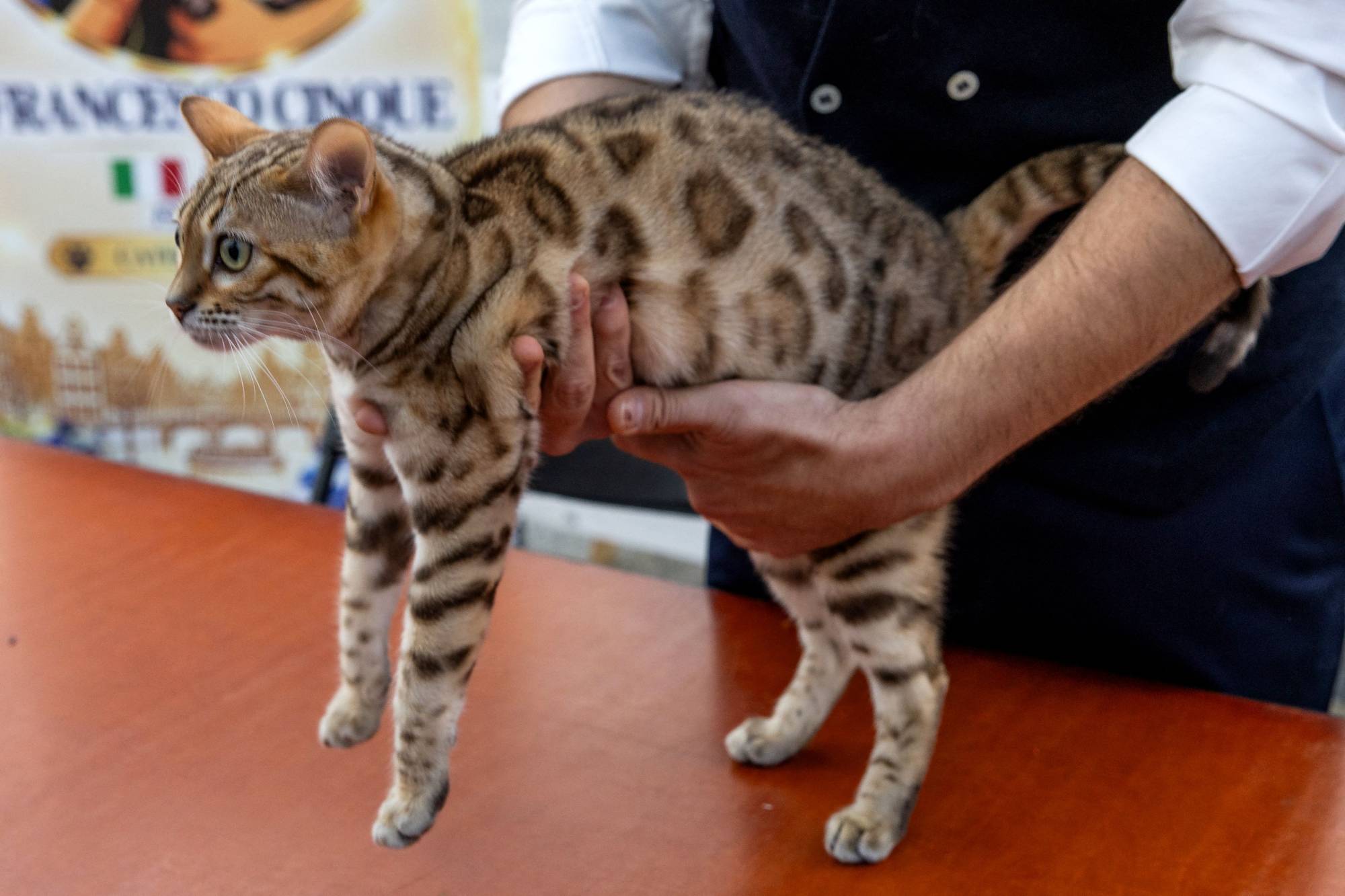
A cat breeder attends with their animals during the FIFe World Cat Show in Vijfhuizen, the Netherlands, 24 October 2026. EPA/DINGENA MOL
Cats have a reputation for being mysterious and aloof, but some are more so than others.
Just like dogs, cats’ personalities differ depending on their breed, naturally making some of them far friendlier, elusive or even more “dog-like” than others, according to report published by the Daily Mail.
While some breeds might see you as their housemate or best friend, for others humans as nothing more than their personal wait staff.
Of course, every cat is different, and opting for particular breed doesn’t necessarily guarantee a specific set of personality traits but it’s always worth learning more before you commit.
Some are better suited than others to family life or co-existing with other pets, while certain types prefer a more solitary and independent life.
Oxford-educated chemist and founder of Tribal Pet Foods Fatima Maktari said: “When choosing a cat, it’s important to understand the natural instincts and characteristics of different breeds and ultimately choose a cat that suits your lifestyle and your home – for instance, the cat will need to feel comfortable with a dog if you have one, and vice versa.”
From the couch potato to cat in need of constant stimulation, here are the most elusive cat breeds according to the experts, as well as those to pick if you’re looking for a friendly companion.
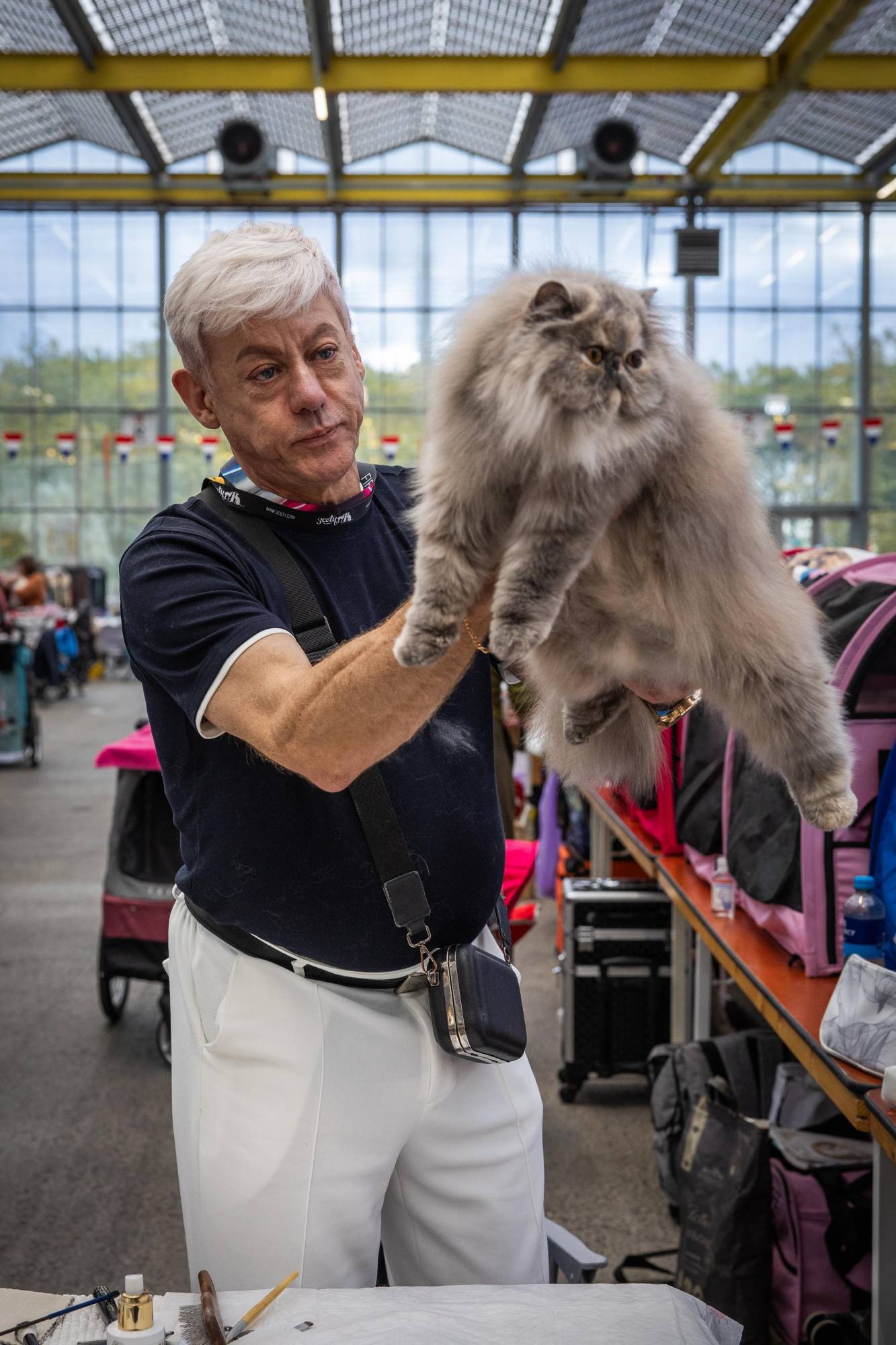
A cat is being judged during the FIFe World Cat Show, to select the best cats for each participating breed, in Vijfhuizen, The Netherlands, on October 24, 2026. (Photo by Dingena Mol / ANP / AFP)
Sokoke
“A Sokoke can be tricky to pin down because they love exploring – you might even think from time to them that they’ve left home,” said Milbourne.
He added: “If you’re set on this rare breed, you can tap into their natural hunting instincts through feeding activities, such as puzzle feeders or hiding small portions of their food around the home. This encourages them to explore and keeps their minds stimulated.”
Bengal
Like miniature leopards, Bengal cats are not built for an indoors lifestyle.
Dr. Brynden said: “They are wild-derived, fiercely independent, very vocal and can be remarkably challenging to handle. Without endless mental stimulation, puzzle toys and vertical territory, they will create their own entertainment – usually by tearing up your home.”
Unlike some of the other cat breeds on this list, the Bengal cat is not a beginner-friendly breed.
According to Brynden: “They are high-octane cats that require an experienced owner.”
British Blue
According to Milbourne: “This breed is one of the most registered pedigree cat breeds in the UK, yet they can be quite elusive.”
He said a British Shorthair will love to find the tightest and darkest of spaces and nestle up. “They will happily sleep undisturbed for hours on end. Owners will wonder where they are and find them in the oddest of spaces, such as behind a wardrobe or inside the laundry basket,” he said.
“If you aren’t clued up on your cat’s secret hiding spaces, you may frantically be searching for them!”
But despite their Houdini-like instincts, these cats are people-centered and are generally quite low-maintenance.
Brynden said: “If you want an affectionate, low-fuss pet around the house, British Shorthairs are practically like small dogs in feline form.”
British shorthairs are a great fit for families or first-time owners, just beware that this couch potato breed is prone to obesity.
A cat breeder attends with their animals during the FIFe World Cat Show in Vijfhuizen, the Netherlands, 24 October 2026. EPA/DINGENA MOL
Chartreux
The breed is famous for having a nearly silent meow but that doesn’t make them low-maintenance.
“Chartreux cats have a strong need to hunt and may bring unwanted guests to your door,” said Milbourne.
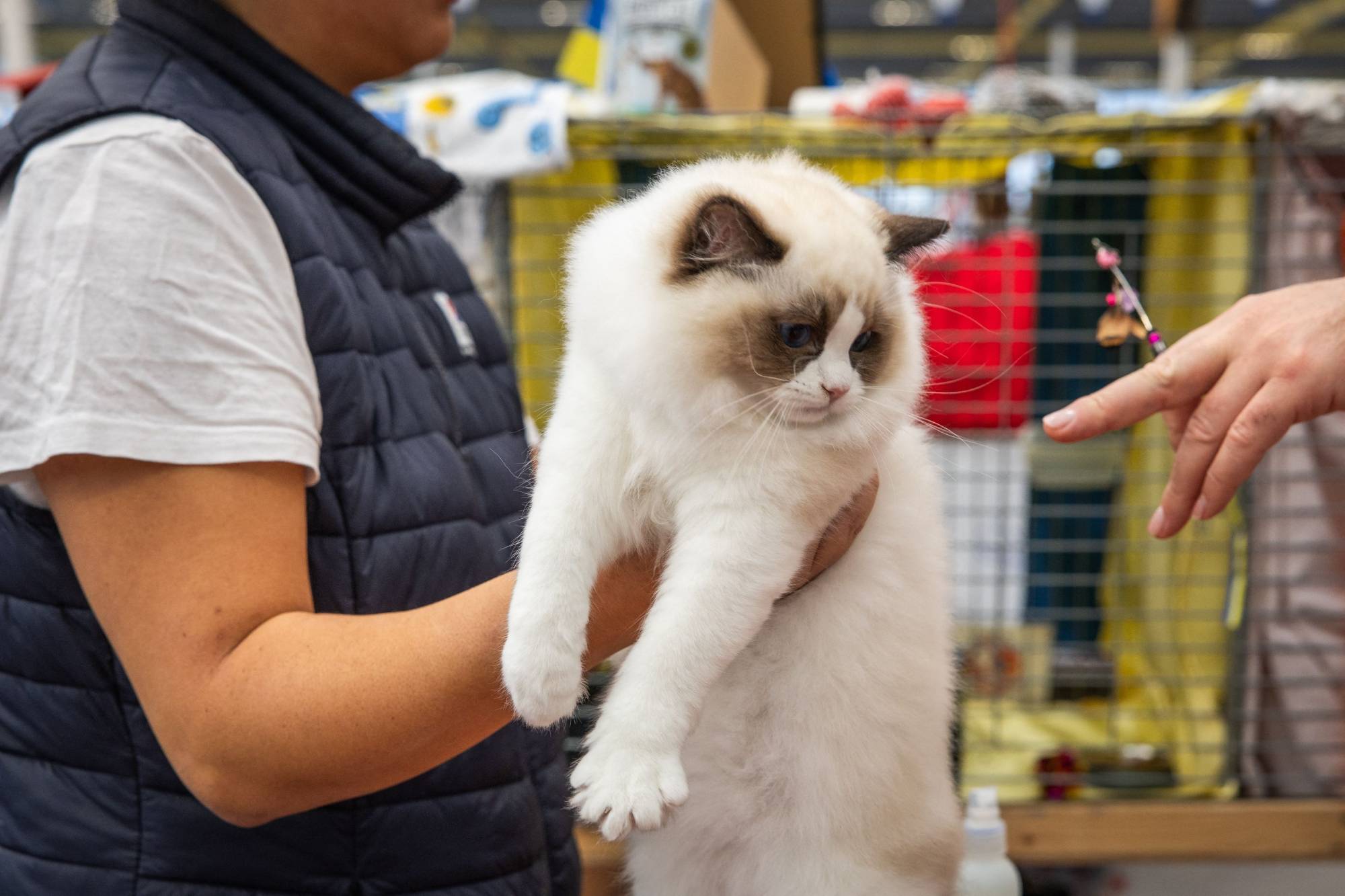
Ragdolls
Ragdolls are fairly dog-like in their demeanor; they’re exceptionally sociable and love to play with people and other animals.
Brynden said: “They’re famously placid, docile and will famously flop into your arms like a rag doll (as the name suggests).
She added: “Big cats come with big responsibilities. Don’t underestimate that coat, without daily, dedicated grooming, their long fur will mat very quickly, which is both painful for the cat and difficult to treat.”
Maktari said: “They definitely have a dog-like devotion when it comes to their owners.”
A cat breeder holds a cat during the FIFe World Cat Show, to select the best cats for each participating breed, in Vijfhuizen, The Netherlands, on October 24, 2026. (Photo by Dingena Mol / ANP / AFP)
Maine Coons
Maine Coons are huge gentle giants. In fact, a male Maine Coon can weigh up to 11 kilos; that’s about three times heavier than a small dog.
Maine Coons are the ideal breed if you’re looking for a furry companion (or shadow) given their dog-like demeanor and socialness.
According to Brynden: “Maine Coons are big, goofy extroverts who want to be involved in whatever you’re doing.”
Norwegian Forest Cat
The Norwegian Forest cat is friendly and gentle without being too needy and demanding. They’re not lap cats, but according to Brynden “their calm temperament makes them a good choice for families with children and other pets.”
She also said: “Hardy, intelligent and muscular, the Norwegian Forest Cat is one of the more active breeds of the Felines. These cats love to climb and hunt, so outdoor space is recommended.”
The Dachshund Is the Muse in an Exhibition Showcasing the Sausage Dog’s History in Arthttps://english.aawsat.com/varieties/5335877-dachshund-muse-exhibition-showcasing-sausage-dog%E2%80%99s-history-art
A dog sits during the exhibition "The Dachshund: An Icon off the Leash," dedicated to dachshunds in art, at Kunsthalle Bremen in Bremen, Germany, Thursday, Oct. 29, 2026. (AP)
TT
TT
The Dachshund Is the Muse in an Exhibition Showcasing the Sausage Dog’s History in Art
A dog sits during the exhibition "The Dachshund: An Icon off the Leash," dedicated to dachshunds in art, at Kunsthalle Bremen in Bremen, Germany, Thursday, Oct. 29, 2026. (AP)
The humble dachshund is taking center stage in a new exhibition in Germany that explores the history of the sausage dog in art — and visitors are welcome to bring their four-legged friends along.
“The Dachshund: An Icon off the Leash" opens at the Kunsthalle Bremen on Saturday, showcasing artwork by dachshund owners and fans including Pablo Picasso, David Hockney and Andy Warhol. In addition to painting, drawing, photography and video, visitors can admire delights such as a wealth of stuffed toy dogs and many other dachshund-themed objects.
Museum director Christoph Grunenberg believes it's the world's first exhibition dedicated to the dachshund in art, rather than dogs in general.
“There are many artists who owned dachshunds, who were inspired by the dachshund, loved the dachshund,” Grunenberg said. “It was like a muse and there is an incredible wealth of representation of the dachshund in very different styles by significant artists.”
“We wanted to take the dachshund as an object, as an inspiration to artists, and trace it through history in all its different forms and important works of art by Picasso, Warhol and Hockney and also ephemera,” he added.
The dog has a long association with Germany. Kaiser Wilhelm II had dachshunds, or Dackel in German; and Britain's Queen Victoria was a fan of the dogs, some brought from Germany. But the show casts its net wider, with exhibits brought in from Edinburgh, Los Angeles and Pittsburgh among others.
German artist Thorsten Brinkmann honored the compact dogs’ reputation as a “handbag dog” with a bronze sculpture that features a handbag on dachshund legs. He also provided the colorful “Toxie Love” installation in the exhibition’s first room, which sets a playful tone for the show.
The dachshund, he said, has “a very curious, very special form, very long — kind of too long, actually, with the short legs — and it looks already surrealistic to me.” He was helped by objects loaned by the Dachshund Museum in Regensburg, in southern Germany.
For several hours on Thursdays and Saturdays, the museum will let dachshunds and other small dogs into three of its eight rooms for a look and a sniff.
Among the conditions: they must have a maximum shoulder height of 30 centimeters (about 1 foot) and an online time-slot ticket. A “Dachshund Lounge” will be offered as a waiting area.
“We want to take the dog seriously as a personality and the dog can walk around, can interact, will be able to watch videos, look outside the window, smell — and of course that’s what the dog really is interested in,” Grunenberg said.
Finnish photographer Elina Brotherus' dachshund, Marcello, already checked out the wares ahead of the opening of the exhibition, which features Brotherus' pictures of the 13-year-old dog.
Marcello has been her model since 2013, Brotherus said. “I did not manage to have children, so then we got him and he’s my baby.”
“There’s something so, like, cute and philosophical and special about these dogs,” she said.
Kelsey Crossman, a business developer who lives in Bremen and originally hails from Florida, was invited to a preview of the show at a dachshund meetup group and explored it with her dachshund, Leonidas, or Leo for short.
She said the dogs' appeal is in “their attitudes — they’re small, but they’re very strong and a little stubborn, probably like myself.” And, of course, they're light enough to be easily transported.
Crossman enjoyed the dachshund collectibles in Brinkmann's installation — “a really cool collection of little dachshunds that you might see at grandma’s house, or collectors' things, and a ton of stuffed animals.”
But, she added: “Leo is not allowed near them because he will certainly grab one from the exhibit.”
Nations Commit to Get Nature Goals Back on Trackhttps://english.aawsat.com/varieties/5335845-nations-commit-get-nature-goals-back-track
Executive Secretary of the United Nations Convention on Biological Diversity Astrid Schomaker (C-R), Armenia's Minister of Environment and COP17 President Hambardzum Matevosyan (C-L), Deputy Executive Secretary of the United Nations Convention on Biological Diversity Jihyun Lee (3rd L), and other members of the secretariat react during the closing session of the 17th meeting of the Conference of the Parties (COP17) in Yerevan on October 31, 2026. (AFP)
TT
TT
Nations Commit to Get Nature Goals Back on Track
Executive Secretary of the United Nations Convention on Biological Diversity Astrid Schomaker (C-R), Armenia's Minister of Environment and COP17 President Hambardzum Matevosyan (C-L), Deputy Executive Secretary of the United Nations Convention on Biological Diversity Jihyun Lee (3rd L), and other members of the secretariat react during the closing session of the 17th meeting of the Conference of the Parties (COP17) in Yerevan on October 31, 2026. (AFP)
Nearly 200 nations struck hard-fought agreements Friday at a UN biodiversity summit, but the outcome was accompanied by disappointment over missed opportunities to address humanity's destructive toll on nature.
Delegates cheered as crucial texts were approved in overtime but the celebrations were tempered by acrimonious debates and regret over limited progress on some of the most contentious issues.
The COP17 summit in Armenia sought to revive a landmark commitment to halt and reverse the destruction of nature by 2030 after global efforts to meet that goal fell short.
Over two bruising weeks in Yerevan, nations were urged to correct course to keep the pact alive and protect the plants, animals and ecosystems that sustain life on Earth.
The United Nations had warned that progress was insufficient to meet the goals of the 2030 target including protecting 30 percent of Earth's land and oceans, tackling pollution and invasive species, and boosting money for conservation.
"And that's it. Perfect," said COP17 president Hambardzum Matevosyan in Armenia as he brought down the gavel on two major texts, the final versions of which were still not available early Saturday.
But the outcome was "not commensurate" with the crisis engulfing the natural world, said French Ecological Transition Minister Monique Barbut on Saturday.
"The progress we failed to achieve here is a series of missed opportunities to speed up our response to the loss of biodiversity," Barbut said in a lengthy statement sent to AFP, stressing that "nature will not wait for the pace of our negotiations."
- 'Step forward' -
The final plenary stretched through Friday night and well into the next morning, with negotiations turning sour as the hours dragged on.
Even as some delegates left to catch flights, others stayed behind to argue technical points.
Veteran COP observer Juliette Landry from the IDDRI think tank told AFP "there was a lot of push and pull in every direction" throughout the summit and "in that context, it's hard to get things accepted".
UN biodiversity chief Astrid Schomaker said the summit had achieved some "quite remarkable things at a moment when multilateralism is supposedly not functioning."
"Some of these more difficult subjects, we could not expect to have strong negotiated commitments. That was never the plan," she told reporters after the summit's close.
In a draft agreement of one closely watched text, nations were urged to "accelerate" their efforts and warned that "increased action" was needed to tackle the forces driving biodiversity loss.
This "represents a positive outcome... and though there are weaknesses, particularly on harmful subsidies, it does represent a step forward," Guido Broekhoven from WWF International told AFP.
Tackling subsidies and other incentives that encourage activities harmful to nature -- such as fossil fuels, intensive agriculture and overfishing -- was one of the most politically fraught agenda items at the summit.
"Even though the agreed decision text expresses it in weak terms, COP17 saw important political momentum to address harmful financial incentives, including subsidies," An Lambrechts from Greenpeace International told AFP.
A rare fight over science cast a pall over the summit, with a number of countries accused of undermining efforts to approve key reports in scenes that shocked even seasoned negotiators.
"We regret the increasing instances in which scientific evidence and its uptake has been challenged or constrained" by politics, said Swiss negotiator Gabriela Blatter in a statement on behalf of dozens of countries.
"Our delegations fully respect every state's right to safeguard national interest but science is not negotiable".
- Finance feud -
A separate row revolved around finding new cash sources to fund conservation efforts -- another hot-button issue with public budgets under strain amid an energy crisis and conflicts in Ukraine and the Middle East.
The European Union led a charge for wealthy emerging economies such as China to contribute to global conservation efforts, a contentious issue at COP17.
In a sign of possible compromise, another draft text that circulated Friday invited countries outside the developed-country donors to voluntarily join the group.
Outstanding questions over the design of the Cali Fund -- a UN mechanism that hoped to attract billions of dollars in corporate contributions but is close to empty -- were left unresolved.
"By punting essential decisions to two years from now, parties have all but ensured the fund remains empty until then," said Pakhi Das from the nonprofit organization Plant-for-the-Planet.
The COP17 summit decided early Saturday that Ecuador would host the next biodiversity talks in 2028 after the South American nation defeated rival candidate Panama in a secret vote.
لم تشترك بعد
انشئ حساباً خاصاً بك لتحصل على أخبار مخصصة لك ولتتمتع بخاصية حفظ المقالات وتتلقى نشراتنا البريدية المتنوعة