Saudi Film Commission Joins AFCI to Reinforce Saudi Arabia's Position in the Global Film Industry

Saudi Film Commission Joins AFCI to Reinforce Saudi Arabia's Position in the Global Film Industry
TT

Saudi Film Commission Joins AFCI to Reinforce Saudi Arabia's Position in the Global Film Industry

Saudi Film Commission Joins AFCI to Reinforce Saudi Arabia's Position in the Global Film Industry

The Film Commission announced in a press release that it has become a member of the Association of Film Commissioners International (AFCI), a global non-profit organization with over 360 film commissions from more than 40 countries across six continents.
According to the release, the commission's membership in AFCI contributes to boosting the national economy, developing the Saudi film industry and enhancing its local and global presence, SPA reported.
It also aligns with the ongoing efforts to place Saudi cinema on the map of global film markets, empower Saudi talents and production companies and promote the exchange of experience and knowledge with counterparts worldwide.
Established in 1975, AFCI enables film commissions and industry partners to bring successful productions to life through knowledge-sharing, skill development, and connection. It hosts world-class events and networking opportunities at major global film markets to facilitate co-productions worldwide.


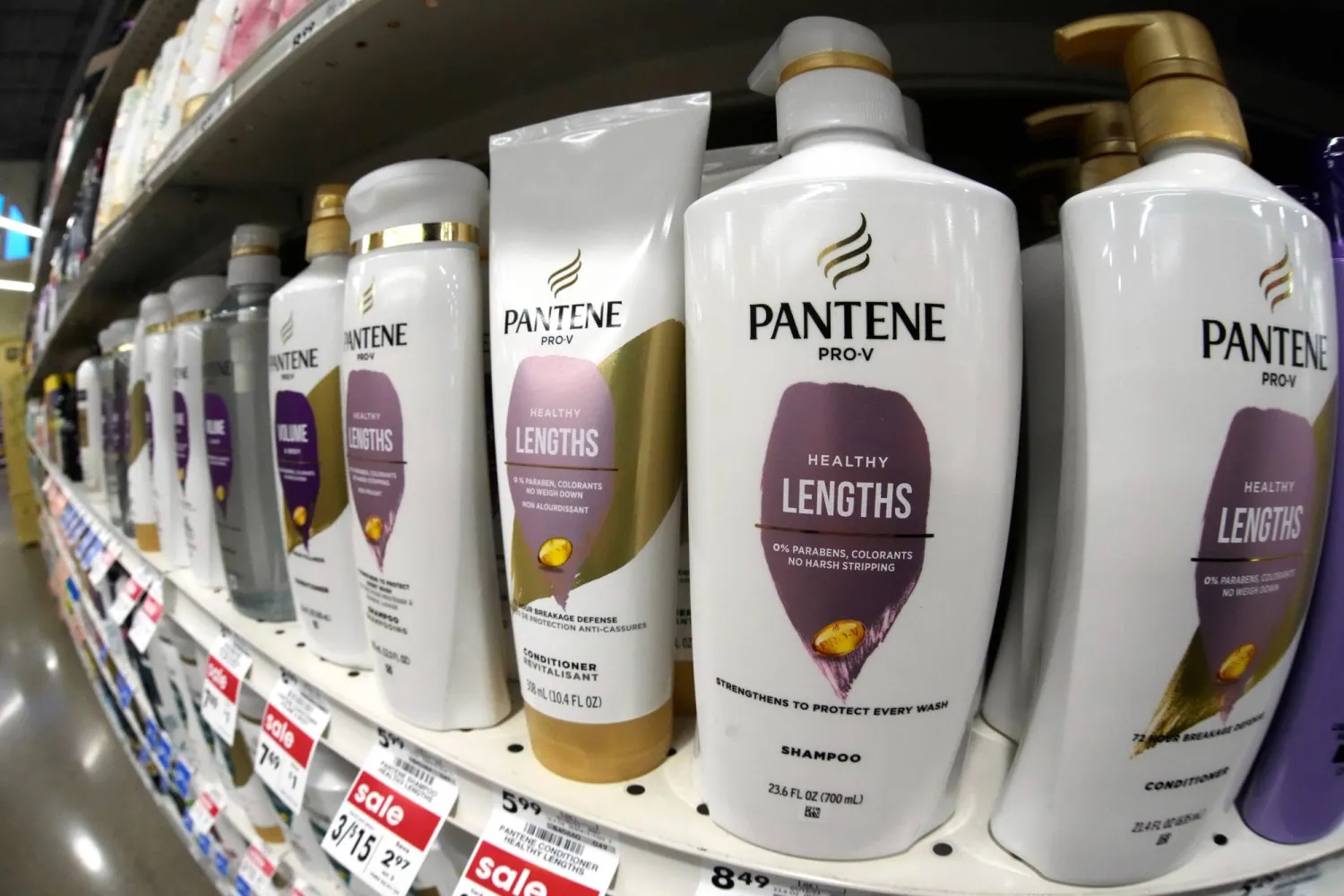
Are Expensive Shampoos Worth it? Here's what the Experts Have to Say

FILE - Shampoo sits on a shelf at a store in Pittsburgh, Jan. 26, 2023. (AP Photo/Gene J. Puskar, File)
TT

Are Expensive Shampoos Worth it? Here's what the Experts Have to Say

FILE - Shampoo sits on a shelf at a store in Pittsburgh, Jan. 26, 2023. (AP Photo/Gene J. Puskar, File)

Ornate packaging paired with enticing advertisements that claim expensive shampoos are elixirs to all hair woes can leave one wondering: Are the higher prices really worth it? Should I abandon my $8 drugstore mainstay for a $42 premium brand?

Experts say affordable shampoos and conditioners found in grocery stores and pharmacies can do the job as well as the pricey versions with tempting messaging and testimonials on social media. They advise consumers to evaluate the ingredients in products, their own scalp and hair concerns, and their entire hair care routine — and to check with a doctor when in doubt.

Premium brands can work well, and some have active ingredients that cost more, according to dermatologists. Other factors influencing the price include the size of the company and whether it has invested in organic ingredients, sustainable agriculture and recycled materials.

Dr. Crystal Aguh, dermatologist and director of the Ethnic Skin Program at Johns Hopkins School of Medicine, said she generally categorizes people into two hair types: damage-prone and damage-resistant.

Damage-prone includes people with very curly hair, people who chemically treat their hair and those who use hot tools to style it. She said damage-resistant attributes include oily hair and straight hair, The Associated Press reported.

People with damage-prone hair should avoid shampoos that have sodium lauryl sulfate as the main ingredient, Aguh said. It removes a lot of sebum, a natural oil that coats and protects hair. Without sebum, hair could feel very dry and break easily.

For curly or dyed hair, Aguh recommends washing less frequently to avoid removing too much sebum. She said people with tightly curled or coily hair should only wash their hair once a week. People with wavy hair that is dyed might find it best to wash every two to three days.

Damage-resistant hair that is oily and straight can be washed every day.

Expensive shampoos and conditioners can work well, but there are affordable products that perform just as well, Aguh said. She tells patients that “it’s not the products, it’s the process” that affects hair health the most, including how often hair is washed, dyed or treated with heat.

“Instead of spending hundreds of dollars thinking, 'If I just find the right shampoo, right conditioner, all of my troubles will go away,' you also have to just look at what your process looks like ... because that will often do the trick,” she said.

She said it is fine to mix high-end and mass market products and that people shouldn’t feel compelled to buy an entire line of expensive products.

Aguh said some common brands are more affordable because they are made by large corporations that can achieve economies of scale. Sometimes expensive brands have a smaller team and lack the workforce and resources to reach those same cost advantages.

When treating dandruff, for example, Aguh often recommends over-the-counter shampoos instead of prescription formulas. But she added people should see a doctor for lingering dandruff problems.

Shampoo is skincare for the scalp Dr. Joe Tung, a dermatologist at the University of Pittsburgh Medical Center, said people should think of shampoo as skincare for the scalp, not just a cosmetic product.

“Hair itself is biologically inactive once it grows out, but underneath the surface of the skin on the scalp is a full ecosystem with stem cells, immune cells, oil glands, nerve endings," he said. “When that ecosystem is balanced, the scalp feels comfortable and hair grows optimally; when it is disrupted, people can experience itching, flaking, excess oil, or hair loss.”

Tung said people should consider what their scalp needs when choosing shampoo, and a conditioner should be chosen based on hair texture and damage level. He said dandruff and itchiness benefit from shampoos that address inflammation and microbial imbalance, whereas dry or chemically treated hair could benefit from a gentle cleanser with a rich conditioner.

Tung said expensive shampoos and conditioners are sometimes worth the price, but a product's effectiveness is determined by active ingredients and not branding. "An antifungal ingredient works because of its molecular activity, not because it comes in a luxury bottle or from a prestigious brand," he said.

Expensive shampoos typically rely on more refined conditioning agents and soothing ingredients that may make frequent hair washing more comfortable, Tung said. But some luxury products contain fragrances or botanical extracts that can irritate sensitive skin, he said. Simpler formulas are often better tolerated by people with sensitive skin.

Hair products with a sustainability focus MOKO Organic Beauty Studio in Philadelphia stocks organic shampoos and conditioners that cost from $24 to $45. Owner Monique Mason said it is the salon's mission to provide products that are good for scalps and the planet.

Ingredients are the biggest of many factors influencing price, Mason said. Organic products typically avoid inexpensive sulfates, synthetic fragrances and parabens that are widely used in the personal care industry, she said. Mason said she also researches how the brands she sells manufacture their products to ensure their sustainability claims can be verified.

“I get to know them, whether they’re family-owned, how they farm, how they source their ingredients," she said.



Player Saves Stricken Seagull Hit by Ball During Match in Türkiye

Seagulls fly along the Hudson River while snow falls on February 22, 2026 in Jersey City, New Jersey. (Getty Images/AFP)
TT

Player Saves Stricken Seagull Hit by Ball During Match in Türkiye

Seagulls fly along the Hudson River while snow falls on February 22, 2026 in Jersey City, New Jersey. (Getty Images/AFP)

A footballer's ‌quick thinking brought a seagull back to life after the bird was struck by the ball during a match in Türkiye, Anadolu Agency reported.

The incident occurred in the first half of the Istanbul First Amateur League playoff final between Mevlanakapi Guzelhisar and ‌Istanbul Yurdum ‌Spor in Zeytinburnu.

Istanbul Yurdum ‌Spor ⁠goalkeeper Muhammet Uyanik ⁠cleared the ball up the pitch and it struck a seagull, sending it plummeting to the turf.

Team captain Gani Catan rushed over and seeing that the ⁠bird was unresponsive, he ‌began cardiopulmonary ‌resuscitation (CPR) and chest compressions in an attempt ‌to revive it.

The seagull responded ‌and showed movement before Catan cradled it and rushed to the touchline to hand it over to medical ‌staff.

"Our captain Gani Catan brought the seagull back to ⁠life ⁠thanks to the cardiopulmonary resuscitation (CPR) he performed on the field," the club said on Instagram.

Although Istanbul Yurdum Spor lost the game, Catan had no regrets.

"We missed out on the championship, but helping save a life is a good thing," he said. "This was more important than the championship."


Northeast US Digs Out from Brutal Snowstorm That Disrupted Flights and Canceled School 

A snow plow crosses Second Avenue and heads down 19th Street to clear it after a snowstorm, Monday, Feb. 23, 2026, in New York. (AP)
TT

Northeast US Digs Out from Brutal Snowstorm That Disrupted Flights and Canceled School 

A snow plow crosses Second Avenue and heads down 19th Street to clear it after a snowstorm, Monday, Feb. 23, 2026, in New York. (AP)

Neighbors, government workers and a powerful railroad snow-clearing machine nicknamed “Darth Vader” scrambled to dig out much of the northeastern United States from a brutal and — in some areas — record-breaking storm that blanketed the region with snow and resulted in thousands of flight cancellations.

But as the snow moved northward and tapered off in other areas Tuesday, forecasters warned that another storm could be right around the corner.

Monday’s storm that meteorologists are calling the strongest in a decade dumped more than 2 feet (61 centimeters) of snow in parts of the Northeast. More than 3 feet (91 centimeters) fell in Rhode Island — surpassing snow totals from the historic Blizzard of 1978 that struck the Northeast, the National Weather Service said.

By Tuesday morning, roads were beginning to reopen, mass transportation was coming back online in some cities and power had returned for some of the hundreds of thousands who had lost electricity in Massachusetts, New Jersey, Delaware and Rhode Island.

Amtrak canceled some trains between Boston and New York and between New York and Philadelphia on Tuesday morning.

Some schools reopening while others stick with online learning In New York City, which canceled classed Monday, Mayor Zohran Mamdani announced that schools would reopen for in person learning on Tuesday, raising questions about how feasible that is with snow still piled along sidewalks.

Staten Island Borough President Vito Fossella said school should remain closed, while Michael Mulgrew, president of the United Federation of Teachers, described the situation as “a big mess.”

“There's going to be low attendance of students. You're going to have low attendance of staff because people don't know if they can travel, if they can get to schools,” he said.

Spokespersons for Mamdani didn’t respond to an email seeking comment but his schools chief, Chancellor Kamar Samuels, said in a post on X, that they were “confident in our decision to reopen.”

Philadelphia switched to online learning Monday and Tuesday. Districts on Long Island and elsewhere in the New York suburbs said they would cancel school again Tuesday.

Another storm is on the way

The weather service said it's tracking another storm that could bring more snow to the region later this week. A combination of rain and snow is expected Wednesday, with up to a couple of inches of possible snow.

While the new storm is not expected to be as strong, even a few extra inches of snow on top of hard-hit areas could make cleanup more difficult, said Frank Pereira, meteorologist for the weather service in College Park, Maryland.

“Any additional snow at this point is probably not going to be welcome,” he said.

Bomb cyclone cancels thousands of flights

The weather service referred to Monday’s storm as a “classic bomb cyclone/nor’easter off the Northeast coast.” A bomb cyclone happens when a storm’s pressure falls by a certain amount within a 24-hour period, occurring mainly in the fall and winter when frigid Arctic air can reach the south and clash with warmer temperatures.

More than 2,000 flights in and out of the United States were canceled Tuesday, according to the flight tracking website FlightAware. Most of the cancellations involved airports in New York, New Jersey and Boston.

Rhode Island’s T.F. Green International Airport paused its airport operations Monday as it dealt with nearly 38 inches (97 centimeters) of snow, according to the Weather Service, breaking a record of 28.6 inches (72.6 centimeters) set in 1978. The pause continued through Tuesday morning as the airport assessed conditions.

Central Park in New York City recorded 19 inches (48 centimeters) of snow. Warwick, Rhode Island, exceeded 3 feet (91 centimeters), topping the nation so far. The highest wind gust of 84 mph (135 kph) was recorded in Montauk Point, New York.

New York, Philadelphia and other cities, as well as several states, declared emergencies.

The Boston Globe management called off printing its daily newspaper for the first time in its more than 150-year history because snow and winds kept staff from safely getting to its printing plant, the newspaper said in an article on its website.

Christa Prince and two others were out in Brooklyn on Monday afternoon with shovels and an electric snowblower.

“We’re just making a path for this car,” Prince said. “It’s not our car but you know, we’re just doing our neighbor a kind deed.”