


China's LandSpace Launches Improved Methane-powered Rocket

The Zhuque-2E Y2 carrier rocket, a methane-powered rocket developed by LandSpace Technology, takes off from the Jiuquan Satellite Launch Center to launch six satellites into orbit, in China, in this screenshot from a handout video released May 17, 2025. LandSpace/Handout via REUTERS
TT

China's LandSpace Launches Improved Methane-powered Rocket

The Zhuque-2E Y2 carrier rocket, a methane-powered rocket developed by LandSpace Technology, takes off from the Jiuquan Satellite Launch Center to launch six satellites into orbit, in China, in this screenshot from a handout video released May 17, 2025. LandSpace/Handout via REUTERS

A new methane-powered rocket developed by China's LandSpace Technology launched six satellites into orbit on Saturday, doubling down on a cheap, cleaner fuel that the private startup hopes will help it develop reusable rockets.

The Zhuque-2E Y2 carrier rocket blasted off at 12:12 p.m. (0412 GMT) from the Jiuquan Satellite Launch Center in northwest China, marking the fifth flight for the Zhuque-2 series, according to a company statement.

Beijing-based LandSpace became the world's first company to launch a methane-liquid oxygen rocket in July 2023, ahead of US rivals including Elon Musk's SpaceX and Jeff Bezos' Blue Origin.

Interest has grown in recent years in launching carrier vehicles fuelled by methane, which is deemed less polluting, safer and cheaper than more commonly used hydrocarbon fuels and a suitable propellant in a reusable rocket.

LandSpace has increased the rocket's payload, reflecting increasing demand in China's expanding commercial space industry amid growing competition to form a constellation of satellites as an alternative to Musk's Starlink.

Its first successful methane-powered launch did not carry any real satellites, but the second launch in December 2023 successfully sent into orbit three satellites. Saturday's launch put six satellites into orbit, Reuters reported.

Reusable rockets, pioneered by SpaceX, have demonstrated that they can lower costs for launch vehicles and space transportation. LandSpace founder and CEO Zhang Changwu has said the company had started developing reusable rockets and expected to conduct a test launch in the second half of 2025.

The latest model in its Zhuque-2 series includes technical improvements that will help the company's goal of launching a reusable rocket.

Saturday's launch marked the first time LandSpace has deployed a propulsion method that involves chilling both liquid oxygen and methane below their boiling points, boosting thrust.

Chinese commercial space firms have rushed into the sector since 2014, when the government allowed private investment in the industry. LandSpace was one of the earliest and best-funded entrants.

Founded in 2015, LandSpace has secured funding from investors including venture capital firm HongShan, known at that time as Sequoia Capital China, the investment arm of Chinese property developer Country Garden and the state-backed China SME Development Fund.

LandSpace raised 900 million yuan ($120 million) in December from a state-owned fund focussed on advanced manufacturing, while in 2020 it raised 1.2 billion yuan ($170 million), Chinese corporate databases showed.


Sicily’s Gibellina Is Concrete-Covered ‘Second Pompeii’

Artist Alberto Burri poured tons of cement over the ruins of Gibellina to create the Grande Cretto, or Big Crevice. (Giovanni Mereghetti/UCG/Universal Images Group/Getty Images)
TT

Sicily’s Gibellina Is Concrete-Covered ‘Second Pompeii’

Artist Alberto Burri poured tons of cement over the ruins of Gibellina to create the Grande Cretto, or Big Crevice. (Giovanni Mereghetti/UCG/Universal Images Group/Getty Images)

The Sicilian village of Gibellina was destroyed by an earthquake in 1968, but its ruins were to be reborn as a spectacular piece of land art.

20th-century artist Alberto Burri poured concrete over 926,000 square feet of hillside, freezing the streets and pathways for eternity, transforming this disaster site into a modern Pompeii, reported CNN.

This year, Gibellina is Italy’s first ever Capital of Contemporary Art and locals hope 2026 will strengthen the legacy of this “magical place.”

Visible for miles around, and originally a shocking white when it was completed in 2015, this is the “Cretto di Burri,” or the “Grande Cretto” (the great cleft, or crevice).

While other villages destroyed by the earthquake still stand in ruins, Gibellina is a town turned to stone.

It is, in essence, a modern version of Pompeii — a town trapped in time. But where the ancient Roman city was smothered by volcanic ash in 79, Gibellina has been covered as a way of preserving its memory for the ages.

The Cretto has also become a tourist attraction for inland Sicily. So has the new Gibellina, which was rebuilt half an hour away as a startlingly modernist town and then filled with art donated by some of the world’s best known contemporary artists.

Beginning at lunchtime on January 14, 1968, a series of tremors shook the valley, culminating in the final, and strongest, at 3.01 a.m. on January 15. It measured 6.4 on the Richter Scale — two levels from “total destruction” on the Mercalli Scale, which measures damage on the ground.

The quake hit 21 towns across three provinces of Sicily, but the worst affected were Gibellina, which was flattened in seconds, and its neighbors, Salaparuta and Poggioreale.

“If that had been the first tremor, there would have been many more dead, said Gibellina’s mayor, Salvatore Sutera, who was eight years old at the time. “Most people left during the day. Those who stayed at home were older people who didn’t believe there was danger.”

Across the Belice Valley, 296 people lost their lives. Over 1,000 were injured and nearly 100,000 were made homeless.

In 1968, the situation was far worse. Francesca Corrao, whose father was to be instrumental in transforming Gibellina, said authorities didn’t want to rebuild what was seen as a poor town. “They weren’t interested.”

Eventually, most of the affected villages were rebuilt close to their original locations.


15 Arabian Oryx Births Recorded at Saudi Arabia’s Imam Turki Royal in 2026

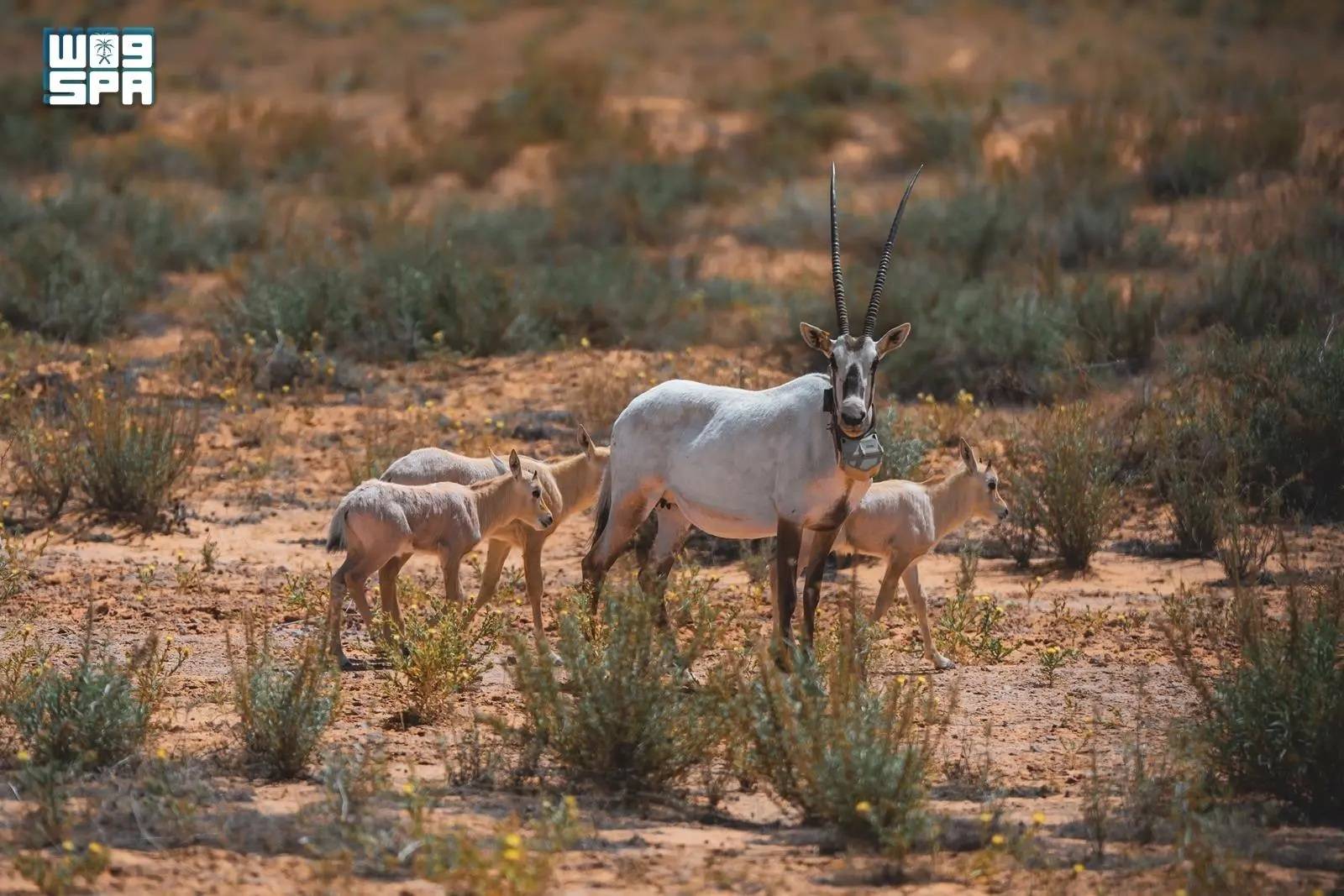
The new births reflect continued improvement in vegetation cover and biodiversity within the reserve. (SPA)
TT

15 Arabian Oryx Births Recorded at Saudi Arabia’s Imam Turki Royal in 2026

The new births reflect continued improvement in vegetation cover and biodiversity within the reserve. (SPA)

Saudi Arabia’s Imam Turki bin Abdullah Royal Reserve recorded the birth of 15 Arabian oryx calves during the first quarter of 2026, reflecting the success of wildlife conservation programs and efforts to restore ecological balance, reported the Saudi Press Agency on Sunday.

The programs are part of the reserve’s efforts to protect endangered species and reintroduce them into their natural habitats.

The Arabian oryx is distinguished by its long, straight horns and feeds on desert grasses and plants. It is one of the most prominent desert wildlife species adapted to harsh environmental conditions.

The Arabian oryx is distinguished by its long, straight horns and feeds on desert grasses and plants. (SPA)

The Arabian oryx possesses physiological traits that boost its survival in desert ecosystems, whereby it becomes active at cooler periods of the day to reduce water loss, making it one of the most resilient species in desert environments.

The new births reflect continued improvement in vegetation cover and biodiversity within the reserve. They highlight the effectiveness of environmental programs aimed at preserving wildlife and increasing their populations to support ecosystem sustainability and strengthen the region's natural balance.


Bear Mauls Man to Death in Bulgaria

A bear smells a brick of ice on a hot afternoon at the Veermata Jijabai Bhosale Udyan and Zoo in Mumbai on May 10, 2026. (Photo by Punit PARANJPE / AFP)
TT

Bear Mauls Man to Death in Bulgaria

A bear smells a brick of ice on a hot afternoon at the Veermata Jijabai Bhosale Udyan and Zoo in Mumbai on May 10, 2026. (Photo by Punit PARANJPE / AFP)

A bear mauled to death a man at Vitosha, a mountainous region just outside Bulgarian capital Sofia, police told AFP on Sunday.

"The findings of the medical examiner and a wildlife expert show that marks found on the body are those of a female bear accompanied by her cub," a Sofia police spokesperson said.

Police did not disclose the age of the victim, but Bulgarian media reported him as being in his 30s.

His body was located Saturday afternoon near a road connecting two chalets in the northwestern part of the mountainous area around half an hour by road out of Sofia rising to 2,295 meters (7,500 feet) and located about 30 minutes from Sofia.

Vitosha is a popular hiking destination for residents of the Sofia, being home to a range of wild animals, including deer, roe deer, wild boars and wolves.

The area is believed to be home to around a dozen bears.

The last recorded case of a person killed by a bear in Bulgaria dates back to 2010, in the Rhodope Mountains in the country's south.
