China Launches 'Punishment' War Games around Taiwan

A screen showing Chinese maneuvers around Taiwan on a street in Beijing (EPA)
TT

China Launches 'Punishment' War Games around Taiwan

A screen showing Chinese maneuvers around Taiwan on a street in Beijing (EPA)

China launched "punishment" drills around Taiwan on Thursday in what it said was a response to "separatist acts", sending up heavily armed warplanes and staging mock attacks as state media denounced newly inaugurated President Lai Ching-te.

The exercises in the Taiwan Strait and around groups of Taiwan-controlled islands beside the Chinese coast come just three days after Lai took office, Reuters reported.

China, which views democratically governed Taiwan as its own territory and denounces Lai as a "separatist", decried his inauguration speech on Monday, in which he urged Beijing to stop its threats and said the two sides of the strait were "not subordinate to each other".

On Tuesday, Chinese Foreign Minister Wang Yi called Lai "disgraceful".

Lai has repeatedly offered talks with China but has been rebuffed. He says only Taiwan's people can decide their future, and rejects Beijing's sovereignty claims.

The Eastern Theatre Command of the Chinese People's Liberation Army (PLA) said it had started joint military drills, involving the army, navy, air force and rocket force, in areas around Taiwan at 7:45 a.m. (2345 GMT).

The drills are being held in the Taiwan Strait, the north, south and east of Taiwan, as well as areas around the Taiwan-controlled islands of Kinmen, Matsu, Wuqiu and Dongyin, the command said in a statement, the first time China's exercises have included areas round these islands.

China launched military drills around Taiwan on May 23, sending up heavily armed warplanes and staging mock attacks.

State media said China sent out dozens of fighter jets carrying live missiles, and conducted mock strikes, along with warships, of high-value military targets.

Taiwan's defense ministry said 15 Chinese navy ships, 16 coast guard and 33 aircraft were involved, but no live fire drills were held in any areas close to Taiwan.

The drills, dubbed "Joint Sword - 2024A", are set to run for two days. However, unlike a similar "Joint Sword" exercise in April last year, these drills are tagged "A", opening the door to potential follow-ups.

Taiwan's defense ministry said it had sent forces to areas around the island, with its air defenses and land-based missile forces tracking targets. It said it was confident it could protect its territory.

"The launch of military exercises on this occasion not only does not contribute to the peace and stability of the Taiwan Strait, it also highlights (China's) militaristic mentality," the ministry said.

The U.S. State and Defense departments put out identical statements strongly urging Beijing to act with restraint and saying it should not use Taiwan's political transition as a "pretext or excuse for provocative or coercive measures."

"(China's) actions risk escalation and erode longstanding norms that have maintained regional peace and stability for decades," they said.

Analysts, regional diplomats and senior Taiwan officials noted that so far the operations around Taiwan are smaller than the those China staged to protest at the August 2022 visit to Taipei of then-U.S. House Speaker Nancy Pelosi.

Then China staged live-fire drills as part of exercises that ran for days and were denounced by the U.S. as "extreme, disproportionate and escalatory."


US Wants to 'Divide Europe', EU's Kallas Tells FT

European Union foreign policy chief Kaja Kallas arrives for a meeting of EU foreign ministers and representatives of the Gulf Cooperation Council at the European Council building in Brussels, Belgium, Thursday, March 5, 2026. (AP Photo/Virginia Mayo)
TT

US Wants to 'Divide Europe', EU's Kallas Tells FT

European Union foreign policy chief Kaja Kallas arrives for a meeting of EU foreign ministers and representatives of the Gulf Cooperation Council at the European Council building in Brussels, Belgium, Thursday, March 5, 2026. (AP Photo/Virginia Mayo)

European Union foreign policy chief Kaja Kallas said the US wants to "divide Europe" and doesn't "like the European Union" in an interview published by the Financial Times on Friday, after more than a year of turmoil in transatlantic relations.

"What I think is actually important for everybody to understand is that the US has been very clear that they ‌want to divide ‌Europe. They don't like the ‌European ⁠Union," Kallas told the ⁠FT.

US President Donald Trump has repeatedly targeted the European Union in his second term, imposing tariffs on member countries and others and talking about annexing Greenland - a move that could effectively end the NATO alliance.

This week, Trump's administration ⁠launched trade investigations into the EU and ‌other countries, including ‌China, India, Japan, South Korea and Mexico, over what ‌it said were unfair trade practices. Under the ‌investigation, the countries could face new tariffs by this summer, after the US Supreme Court tore down much of Trump's tariff program last month.

Kallas said ‌the United States' approach to the EU echoed tactics used by the bloc's ⁠adversaries, ⁠according to the FT.

EU countries should not be looking to deal with Trump bilaterally, she said, and instead should deal with him together, "because we are equal powers when we are together," the FT reported.

On defense, however, Kallas said the bloc needed "to buy from America because we don't have the assets or the possibilities or the capabilities that we need," adding that Europe needed to invest in its own defense industry.


Israelis Demand Netanyahu Clarify War’s Exit Strategy

Israelis take shelter in a subway station as sirens warn of incoming Iranian missiles over Tel Aviv on March 7 (AP)
TT

Israelis Demand Netanyahu Clarify War’s Exit Strategy

Israelis take shelter in a subway station as sirens warn of incoming Iranian missiles over Tel Aviv on March 7 (AP)

Growing public unease in Israel over the war with Iran has prompted mounting calls for Prime Minister Benjamin Netanyahu to clarify the conflict’s objectives and trajectory.

The demands follow conflicting statements about when the war might end, coupled with Netanyahu’s continued refusal to answer questions from the press. Instead, the prime minister has released daily video statements as the conflict entered its 13th day. Government ministers have also reportedly been instructed not to speak with journalists.

Media outlets sharply criticized the government on Thursday, arguing that the public is being left in the dark about the war’s goals or its possible duration.

Some commentators say both Netanyahu and US President Donald Trump entered the conflict without a clear exit strategy. Trump has suggested that the war’s objectives have largely been achieved, while Netanyahu has said the fighting will continue “as long as necessary,” without specifying a timeline.

Tensions ran high overnight Wednesday after rumors spread of a major coordinated missile attack by Iran and Hezbollah. Israeli journalists who investigated the reports found that the information appeared credible. However, attempts to publish the story were blocked by Israel’s military censor.

Reporters initially assumed the censorship was intended to protect intelligence sources. But within an hour, the same information appeared on the American network CNN, citing security sources in Tel Aviv, prompting anger among Israeli journalists.

As rumors circulated, fear among residents quickly escalated into panic, with some people rushing to shelters even though no air-raid sirens had sounded.

The incident triggered sharp criticism of the military censor in Israeli media. Journalists and analysts accused authorities of withholding critical information from the public.

Nitzan Shapira, a correspondent for Channel 12 whose report was blocked, said the decision deprived citizens of the opportunity to prepare calmly for incoming missiles.

“Instead of Israeli citizens receiving timely information that would allow them to move to shelters in an orderly way, the censor intervened and withheld the information until people heard it from foreign sources,” he said. “This is an absurd situation.”

A military commentator on the right-leaning Channel 14 went further, accusing the army of weakness. He argued that intelligence warnings about a potential wave of Hezbollah rocket fire should have prompted stronger military action, including strikes on Hezbollah strongholds in southern Beirut.

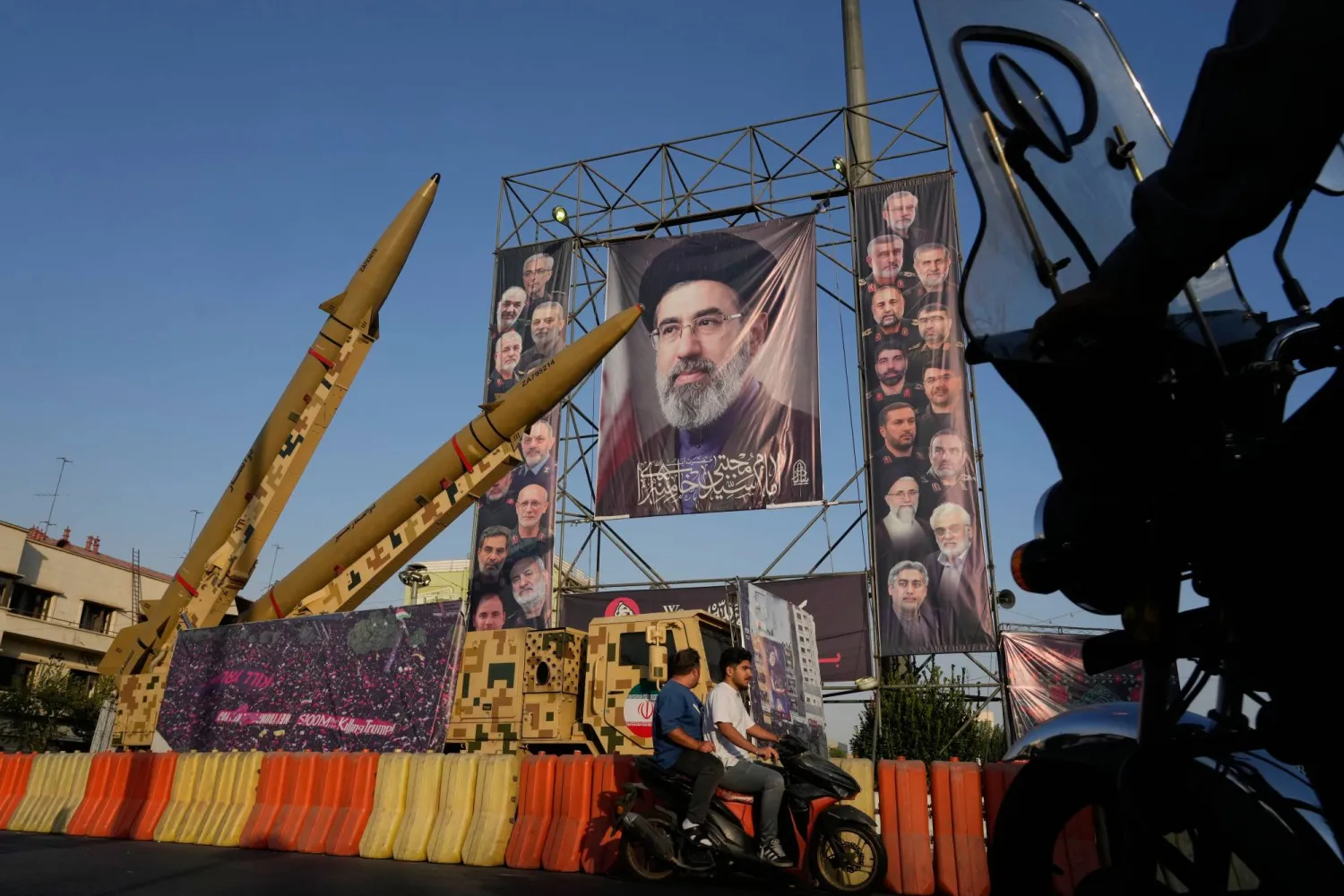
Meanwhile, Israeli social media circulated statements attributed to Iran’s Revolutionary Guard Corps claiming Tehran could launch large-scale attacks using Kheibar, Qader, and Khorramshahr missiles capable of striking wide-ranging areas for hours.

Israeli military officials said they had no evidence that simultaneous activity from Iran and Lebanon was part of a coordinated campaign. Still, the possibility of attacks on two fronts heightened public concern.

Local leaders in Israel’s northern Galilee region, returning from a meeting with Home Front Command, urged residents to remain close to shelters and maintain heightened readiness.

There has also been growing unease along Israel’s northern border. Since Hezbollah joined the conflict, it has carried out repeated rocket attacks. Although fewer in number than earlier barrages before the last ceasefire, some reportedly included precision missiles with ranges of up to 165 kilometers.

Yet, Israeli army spokesman Effie Defrin sought to calm the public, saying the military was aware of concerns about a possible escalation.

“There is no change in the protective guidelines issued by the Home Front Command,” Defrin said, urging Israelis to follow civil defense instructions.

In Israeli media, Defrin has become the main official voice addressing the public, while many journalists say they remain constrained by censorship.

Some now openly question whether such restrictions are appropriate for what they describe as a Western democracy in 2026.


Iran Guards Vow ‘Stronger’ Response Than in January if New Protests Erupt

A security personnel stands guard as Iranians take part in a protest marking the annual al-Quds Day (Jerusalem Day) on the last Friday of the holy month of Ramadan, amid the US-Israeli conflict with Iran, in Tehran, Iran, March 13, 2026. Majid Asgaripour/WANA (West Asia News Agency) via Reuters
TT

Iran Guards Vow ‘Stronger’ Response Than in January if New Protests Erupt

A security personnel stands guard as Iranians take part in a protest marking the annual al-Quds Day (Jerusalem Day) on the last Friday of the holy month of Ramadan, amid the US-Israeli conflict with Iran, in Tehran, Iran, March 13, 2026. Majid Asgaripour/WANA (West Asia News Agency) via Reuters

Iran's Revolutionary Guards, the ideological arm of the country's military, warned on Friday that any new protests against the authorities would be met with a stronger response than in January, when several thousand people were killed.

"The evil enemy, failing to achieve its field battle goals, is once again pursuing the instillation of fear and street riots," the Guards said in a statement broadcast on TV, promising "a stronger blow than on January 8" in the event of new unrest.

The warning comes two weeks into Iran's war with the United States and Israel in which Israeli Prime Minister Benjamin Netanyahu says one of the aims is to "create, for the Iranian people, the conditions to bring down" the Iranian government.

US President Donald Trump has also called for Iranians to rise up and overthrow their government.

In December, protests against the high cost of living in Iran turned into a broad protest movement against the authorities.

It reached its peak on January 8 with what Iranian authorities called "riots" blamed on "terrorists" working on behalf of Israel and the United States.

The official death toll from Iranian authorities stands at more than 3,000, with the government saying the vast majority were members of security forces or passers-by.

NGOs based abroad have accused the security forces of deliberately firing on demonstrators.

The Human Rights Activists News Agency, based in the United States, says more than 7,000 people were killed.