Vote-Ready UK Waits to Scoop Up Brexit Boost

Britain's last general election was all about leaving the EU but this time around Brexit is hardly getting a mention. Oli SCARFF / AFP
TT

Vote-Ready UK Waits to Scoop Up Brexit Boost

Britain's last general election was all about leaving the EU but this time around Brexit is hardly getting a mention. Oli SCARFF / AFP

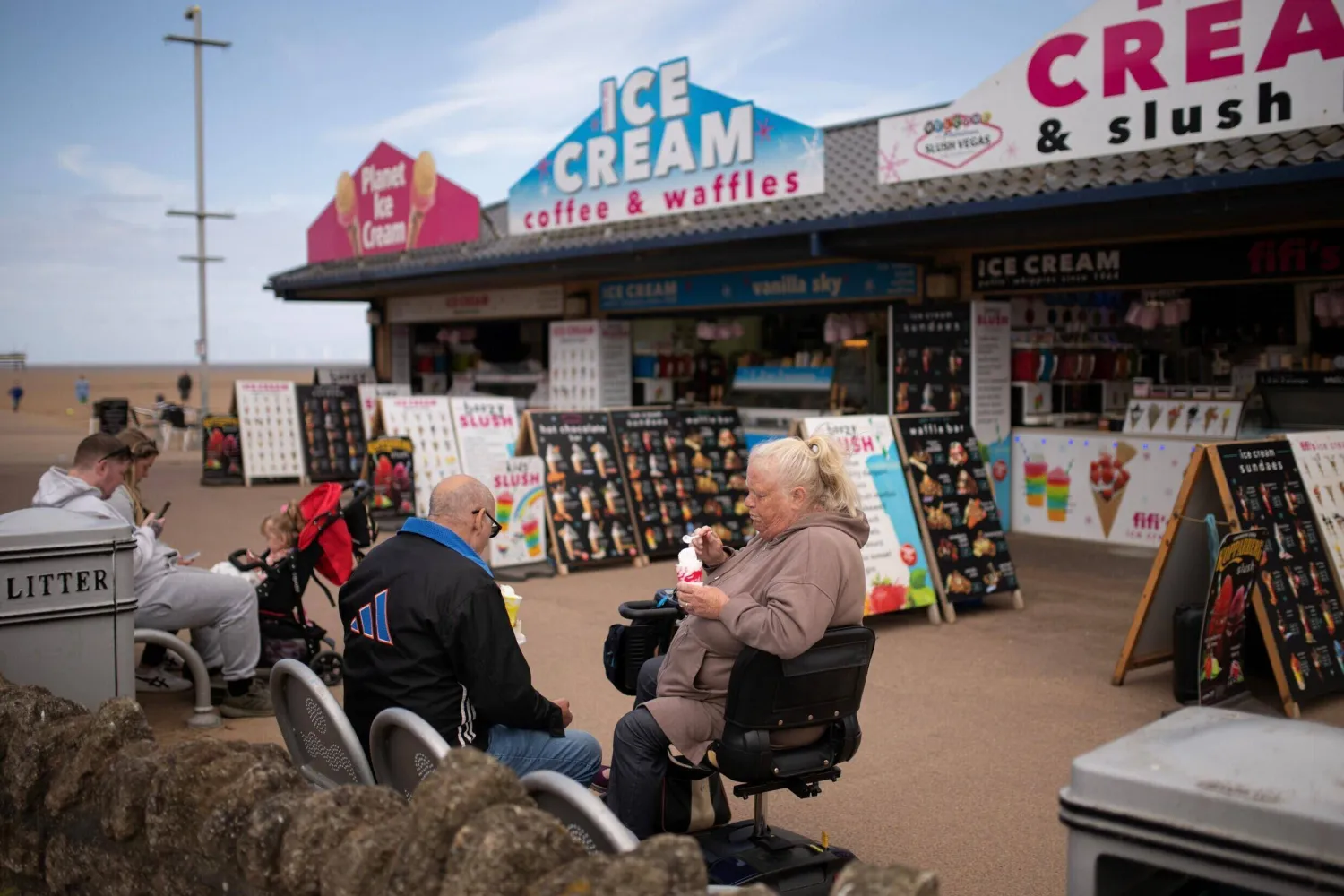
Eight years after Britain voted for Brexit, businesses still lament economic fallout caused by the country's departure from the European Union, with little prospect of change after this week's election.
"After Brexit, I had to close my second shop to cut my loss," ice-cream parlor owner Diego Alfonso told AFP during an election campaign where both main parties have largely avoided talking about the EU divorce.
Alfonso, 37, set up "Bertotti" with his wife Suzana in 2012, four years before Britain voted in favor of exiting the bloc.
Keir Starmer, whose Labor party is tipped to win the vote on Thursday, has ruled out returning Britain to the European single market, customs union, or bringing back free movement of EU nationals.
Alfonso noted that "you could get things from the European Union very easily" before Brexit.
"Now, everything has so much bureaucracy. You need to fill out so many forms," he added from his remaining store in Hammersmith, a west London suburb.
This has increased the cost of doing business, hitting companies at a time when inflation began to take off as economies emerged from Covid lockdowns and in the wake of Russia's invasion of Ukraine, which in particular forced up food and energy prices.
One scoop of Bertotti gelato, whose flavors range from lavender to honeycomb and dragon fruit, costs £3.90 ($4.90), up more than 40 percent since before the Brexit vote.
The price surge has hit demand, in a country where the weather is not associated with eating ice cream all year round.
'Is this worth it?'
"There's been a lot of times that we thought we weren't going to make it," said Alfonso, who turned the closed store into a workshop producing the ice cream thanks to ingredients and machinery from Europe.
"Some suppliers from the EU will sometimes not supply you, because it's a bit more work for them as well," he said, adding that the price of imported waffle cones has also soared in recent years.
Added to the picture, Britain's new post-Brexit border controls have caused delivery delays, extra costs and labor shortages.
The UK in a Changing Europe think-tank has said the annual cost of new UK customs declarations could total about £15 billion.
Other consequences of Brexit "red tape" include amended driving regulations and the loss of tens of thousands of young European seasonal workers who were allowed into Britain without work permits.
As a result, Bertotti's workforce has shrunk.
"It hasn't been easy, and there were times when we were like, is this worth it?," said Alfonso.
"We found new ways to make more money. We started supplying restaurants... going to festivals, getting our name out there.
"We're just breaking even but it's nothing compared to what it used to be. I don't want to quit because this is my passion, this is my business... my family," the owner added.
Cost to UK output
Bertotti is far from an isolated case. Rivet & Hide, a supplier of high-end men's clothing, says its turnover with the European Union has fallen by 50 percent since Brexit came into force.
Owner Danny Hodgson has raised prices to cover import taxes, in particular for leather items, as well as for export charges.
If the business community was largely opposed to Brexit, sectors which did support it such as fishing admit that leaving the EU has failed to deliver the economic benefits that were promised.
The Institute for Fiscal Studies think-tank and other economists estimate that the long-term cost of Brexit could be about four percent of UK gross domestic product.



Cuba Confirms 'Communications' with US, But Says No Negotiations Yet

US President Donald Trump (EPA)
TT

Cuba Confirms 'Communications' with US, But Says No Negotiations Yet

US President Donald Trump (EPA)

Cuba's government on Monday told AFP that it was in "communication" with US President Donald Trump's administration but not yet in formal talks on a deal to end Washington's pressure campaign on the island.

"Today we cannot talk about having dialogue with the United States, but it is true that there have been communications between the two governments," deputy foreign minister Carlos Fernandez de Cossio said in an interview.

Trump on Sunday claimed the United States was in talks with "the highest people" in communist Cuba and that he expected to "make a deal" with its leadership, without saying what a deal might look like.

De Cossio repeated that Cuba was "open to dialogue" with the United States amid calls from Cubans for the government to negotiate to avert a humanitarian crisis.

Trump has been ratcheting up pressure on Havana since the January 3 capture by US special forces of Venezuelan leader Nicolas Maduro, a top Cuba ally and financial backer.

Pressured by Washington, Venezuela's new administration has cut crude shipments to Cuba.

Trump said Monday that Cuba's other main supplier, Mexico, would also "cease sending them oil" after he threatened tariff hikes on any country that allowed Cuba to circumvent the de-facto blockade.

There was no immediate response from Mexico.

The United States' largest trade partner had incurred Trump's ire by sending oil to Cuba to make up for a sharp decline in Venezuela's output under Maduro.

As recently as December, Mexico was still sending crude to Cuba.

President Claudia Sheinbaum had been loathe to cut the lifeline to Cuba, warning of a "far-reaching humanitarian crisis directly affecting hospitals, food supplies, and other basic services for the Cuban people."

But she also admitted last week: "We don't want to put our country at risk in terms of tariffs."

A decree signed by Trump last week effectively forced her and other Cuban partners to choose.

- 'The highest people' -

The pressure tactics threaten to plunge Cuba into complete darkness, with its power plants already struggling to keep the lights on due to fuel shortages.

Jorge Grosso, a 23-year-old student who spent nearly 24 hours last week queueing at a petrol station to fill up his Lada, told AFP he backed talks "to see what conditions are imposed (by Trump) because in the end they're strangling us."

For months Cubans have been forced to cope with power outages lasting up to 20 hours a day in rural areas.

On Monday, Trump repeated his claim that Cuba, which is limping through its worst economic crisis in decades, is a "failed nation."

He added he believed "we are pretty close (to a deal), but we are dealing with the Cuban leaders right now."

His pressure on Sheinbaum comes as the United States and its southern neighbor begin talks on a review of a tripartite free-trade deal with Canada which is crucial to Mexico's economy.

Over the past year, Sheinbaum has been scrambling to stave off the kind of tariffs pain Trump has imposed on other allies.

In a move widely seen as an attempt to appease him, Mexico in January imposed stiff tariffs on imports from China.


To Counter China, Trump to Create Strategic Reserve for Rare Earth Elements

President Donald Trump announces the creation of a critical minerals reserve during an event in the Oval Office at the White House in Washington, DC, 02 February 2026. EPA/BONNIE CASH / POOL
TT

To Counter China, Trump to Create Strategic Reserve for Rare Earth Elements

President Donald Trump announces the creation of a critical minerals reserve during an event in the Oval Office at the White House in Washington, DC, 02 February 2026. EPA/BONNIE CASH / POOL

The Trump administration plans to deploy nearly $12 billion to create a strategic reserve of rare earth elements, a stockpile that could counter China's ability to use its dominance of these hard to process metals as leverage in trade talks.

President Donald Trump on Monday announced the start of “Project Vault,” which would initially be funded by a $10 billion loan from the US Export-Import Bank and nearly $1.67 billion in private capital. The minerals kept in the reserve would help to shield the manufacturers of autos, electronics and other goods from any supply chain disruptions.

During trade talks last year spurred by Trump's tariffs, the Chinese government restricted the exporting of rare earths that are needed for jet engines, radar systems, electric vehicles, laptops and phones.

“We don’t want to ever go through what we went through a year ago,” Trump said in an apparent reference to the showdown with China, adding that, ultimately, “it did work out.” The president said he expects the government to make a profit from the loan being used to start the reserve.

China represents about 70% of the world’s rare earths mining and 90% of global rare earths processing. That gave it a chokehold on the sector that has caused the US to nurture alternative sources of the elements, creating a stockpile similar to the national reserve for petroleum.

The strategic reserve is expected to be the highlight of a ministerial meeting on critical minerals that Secretary of State Marco Rubio will host at the State Department on Wednesday.

Vice President JD Vance plans to deliver a keynote address at the meeting, which officials from several dozen European, African and Asian nations plan to attend. The meeting is also expected to include the signing of several bilateral agreements to improve and coordinate supply chain logistics.

The State Department said in its statement announcing the meeting that the gathering “will create momentum for collaboration” among the participants to secure access to rare earths.

The government-backed loan funding the reserve would be for a period of 15 years. The US government has previously taken stakes in the rare earths miner MP Materials, as well as providing financial backing to the companies Vulcan Elements and USA Rare Earth.

Bloomberg News was the first to report the creation of the rare earths strategic reserve.

Trump announced the reserve with General Motors CEO Mary Barra and mining industry billionaire Robert Friedland in the Oval Office, along with other members of his administration and congressional leaders.


Venezuela, US Talk ‘Transition’ Post-Maduro

This handout picture released by the Venezuelan Presidency shows Venezuela's interim President Delcy Rodriguez (R) talking with the new head of the United States diplomatic mission for Venezuela Laura Dogu during meeting at the Miraflores Presidential Palace in Caracas on February 2, 2026. (Daniela Millan / Venezuelan Presidency / AFP)
TT

Venezuela, US Talk ‘Transition’ Post-Maduro

This handout picture released by the Venezuelan Presidency shows Venezuela's interim President Delcy Rodriguez (R) talking with the new head of the United States diplomatic mission for Venezuela Laura Dogu during meeting at the Miraflores Presidential Palace in Caracas on February 2, 2026. (Daniela Millan / Venezuelan Presidency / AFP)

Venezuela's interim president Delcy Rodriguez solidified her new government Monday, appointing several cabinet members and meeting with Washington's new top diplomat in Caracas to address the country's "transition" after the ouster of Nicolas Maduro.

Laura Dogu, Washington's charge d'affaires in Venezuela, said on X she spoke with Rodriguez about US plans for "stabilization, economic recovery, reconciliation and transition."

It was not immediately clear what Dogu meant by a "transition." Maduro had been in power since 2013 until US forces raided the country and captured him, but much of his government remains in place.

Venezuela's Foreign Minister Yvan Gil said after the meeting the diplomatic focus going forward would involve "addressing the differences and historical controversies between the United States and Venezuela."

"We reviewed the common agenda, especially on energy, trade, and politics," he added.

- Staffing up cabinet -

In addition to meeting with Dogu, Rodriguez made several key appointments to her presidential cabinet, including tapping former foreign minister Felix Plasencia to lead Venezuela's diplomatic mission in the United States.

"Very soon we'll have our diplomatic representative, Felix Plasencia, in Washington to accelerate diplomatic work, political work, and the work of developing our common agenda," Gil said.

Plasencia's appointment marks a pivotal change in diplomatic relations between Caracas and Washington, which were severed in 2019 after the United States refused to recognize Maduro's reelection and instead supported a parallel government led by then-opposition leader Juan Guaido.

Rodriguez also appointed Daniella Cabello -- the daughter of Venezuela's powerful interior minister, Diosdado Cabello -- as her cabinet's tourism minister.

The elder Cabello was widely considered to be Venezuela's second-most powerful figure after Maduro, and his backing for Rodriguez's government is seen as critical.

Cabello pledged the police's support for Rodriguez when she became country's leader after Maduro was ousted in a deadly US military operation last month and whisked away to New York to stand trial on drug charges.

The appointments come weeks after Rodriguez, formerly the vice president, cleared ranks among the country's top military brass, appointing 12 senior officers to regional commands.

Among those she dismissed was businessman Alex Saab, the minister of industry under Maduro and a close ally of the former president.

Venezuelan opposition leader Maria Corina Machado meanwhile told reporters during a video call Monday that she would be willing to meet with Rodriguez "if it's necessary" in order to establish a "transition timeline."

"If it's necessary to exchange ideas in a meeting to define a transition timeline, it will happen," she said according to a transcript.

However, she added that Rodriguez's interim government "is still the mafia. They may have another name, but they are the mafia."