


Turkish Parliament Approves 2-Year Military Deployment to Somalia

President Recep Tayyip Erdogan met on Saturday with his Somalian counterpart Hassan Sheikh Mohamud (Turkish presidency)
TT

Turkish Parliament Approves 2-Year Military Deployment to Somalia

President Recep Tayyip Erdogan met on Saturday with his Somalian counterpart Hassan Sheikh Mohamud (Turkish presidency)

The Turkish parliament approved a presidential motion to deploy elements of the Turkish Armed Forces to Somalia, including to its territorial waters.
The Turkish forces will be stationed in Somalia for two years under a defense and economic cooperation agreement signed between the two countries in February to assist with security efforts against terrorism and other threats.
The motion, which was sent to Parliament last week, said Türkiye has been providing training, assistance and advisory support in Somalia to ensure security and stability within the scope of bilateral agreements.
The Somali-Turkish agreements will see Ankara build the Somali defense and security forces and ensure they gain the capabilities to counter terrorism, piracy, and all types of smuggling and other threats.
According to the motion, the Defense and Economic Cooperation Framework Agreement signed between Türkiye and Somalia on February 8, 2024 aims to expand cooperation, especially in the fields of maritime security, military training, and economic collaboration and to enhance Somalia's capacity to fight against illegal and unregulated activities, and use the economic resources for the development of the Somali Navy.
Under the deal, Türkiye will protect Somalia’s 3,000-kilometer coastline, bordering Kenya and Ethiopia to the west and Djibouti to the northwest.
It is still unclear whether such protection will include the Gulf of Aden and Somaliland, which declared its independence in 1991 but is still recognized internationally as part of Somalia.
The motion noted that the Somali government has asked Türkiye’s assistance to enhance Somalia's capacity and capabilities to combat illegal and irregular activities in its territorial waters, such as all forms of terrorism, piracy, illegal fishing, toxic waste dumping and any external intrusion or threat to the country's coastline.
The Turkish naval forces have been actively supporting international efforts to combat piracy in the Gulf of Aden, Somali territorial waters and the Arabian Sea.
The presidential motion was sent to Parliament one day after the Turkish Energy and Natural Resources Ministry announced it will send an exploration vessel off the coast of Somalia next September to search for oil and gas as part of a hydrocarbon cooperation deal between two countries.
Turkish Energy Minister Alparslan Bayraktar said his country plans to search for oil and gas in three blocks off the Somali coast.
At the signing ceremony for the Hydrocarbon Exploration And Production Agreement held in Istanbul, along with Somalia's Minister of Petroleum and Mineral Resources, Abdirizak Omar Mohamed, Bayraktar said Ankara is sending the Oruc Reis ship to this region at the end of September, to start exploration activities.

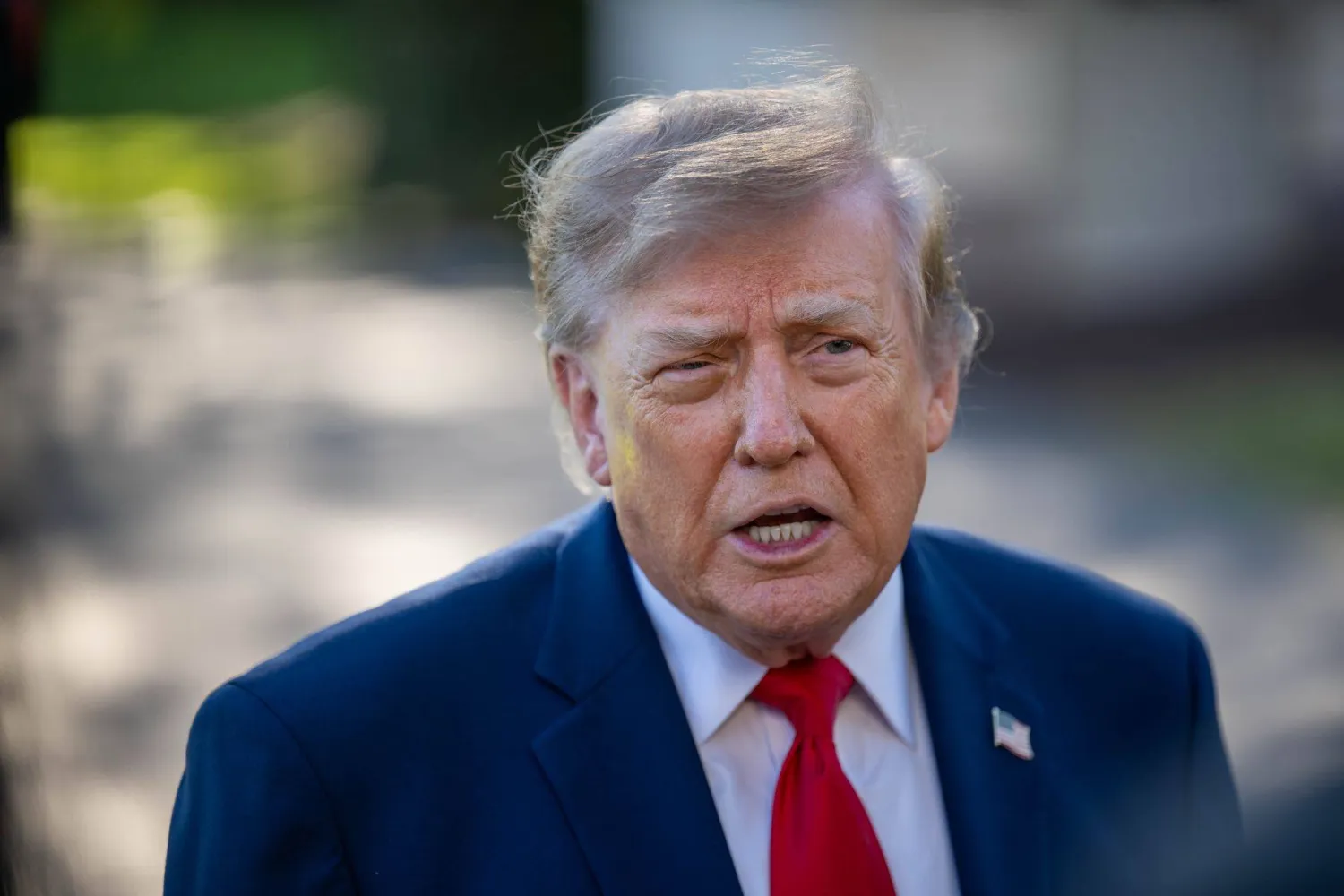


Trump Says Iran Will Be Hit ‘Very Hard’ if It Is Behind Co-Pilot Who Tried to Crash Flight to Israel

30 September 2026, Israel, Tel Aviv: A replacement Flydubai plane lands at Ben Gurion Airport. (dpa)
TT

Trump Says Iran Will Be Hit ‘Very Hard’ if It Is Behind Co-Pilot Who Tried to Crash Flight to Israel

30 September 2026, Israel, Tel Aviv: A replacement Flydubai plane lands at Ben Gurion Airport. (dpa)

US President Donald Trump said Thursday that if Tehran is linked to the co-pilot who tried to crash an Israel-bound flight, Iran would be struck “very hard” for the attempt on the lives of more than 180 people aboard the jet.

Trump issued the warning as investigators worked to determine why the co-pilot stabbed the flight's captain, causing the Flydubai plane to plummet before others on board stopped the attack and landed the airliner in Saudi Arabia.

The president was asked by reporters at the White House whether he had been briefed about any links between the pilot behind the attack and Tehran. He said, “We’re working on it right now.”

“I would say the answer, based on what I’m hearing, is yes, but we’re working on it right now,” Trump said. He did not elaborate about why he suspects Iran might be involved.

Asked if the US would retaliate against Tehran if it was behind the attack, Trump said, “Oh they’ll be hit, very hard, don’t worry.”

“You just ask them,” he added. “They know what happened. They’ll be hit very hard.”

His remarks came as diplomatic efforts to end the war appear to have stalled.

Iranian officials indicated Wednesday that they received an official US response to Tehran’s latest proposal to end the seven-month war, which Trump had publicly rejected just days earlier. The officials did not say what the response contained and whether it was a rejection.

Trump said in a Time magazine interview published Thursday that he will not accept proposals from Iran that “he wouldn’t have approved a year ago,” and left open the possibility of resuming bombing after the Nov. 3 election in the US.

Meanwhile, the American military has dispatched roughly 9,000 troops aboard a group of ships to the Middle East, a US official said Thursday. That could mean three carriers will be in the region as soon as late October, according to the official, who spoke to The Associated Press on condition of anonymity to discuss sensitive military operations.

Despite Trump’s public rebuff, mediators have continued working with Iran and the US to try to broker a deal to end the fighting and open the Strait of Hormuz, according to officials who were not authorized to comment publicly and spoke on condition of anonymity.

Passengers got into cockpit to take control of jet

Passengers on the plane, which was carrying 182 people, mostly Israelis, from the United Arab Emirates to Tel Aviv, have described how the bloodied Indian captain managed to open the cockpit door to let them in before they grappled with the co-pilot and stabilized a descent so sharp that the plane’s rudder was torn away.

“We felt helpless, suspended in midair, and I didn’t know who to turn to. But it was all instinct to survive,” Asaf Rajuan, who was among those who intervened, said in a statement shared by Israel’s presidency.

A regional official briefed on the investigation said the suspect was under arrest and confirmed that Saudi authorities were working with countries to try to determine a motive. He said the UAE, the United States and Oman also were involved. Saudi Arabia said the co-pilot had been handed over to the UAE.

“All possible scenarios, from terrorism to mental disorders, are being looked into. Nothing is ruled out for now,” said the official, speaking on condition of anonymity because they were not authorized to discuss an ongoing probe.

Israeli Prime Minister Benjamin Netanyahu, without giving details, claimed the attacker underwent extremist indoctrination. Asked who helped radicalize him, the prime minister told Fox News channel’s “Fox and Friends" he did not know.

When asked by AP how the prime minister knew the co-pilot underwent indoctrination, Netanyahu’s office said it would not comment.

Netanyahu told Fox that the suspect apparently got through a loophole in Israeli aviation rules that normally bar pilots from flying to Israel if they are from countries that do not have diplomatic relations with Israel.

The co-pilot has not been publicly identified.

Capt. Smit Machchhar, widely praised as one of the heroes of the flight, was recovering in the Emirati capital of Abu Dhabi, the Indian government said Thursday.

It was not clear what the co-pilot used as a weapon.

The UAE government said its own investigation team had begun looking into the attack and “whether it was linked to any terrorist purpose,” noting that Emirati authorities have jurisdiction because the plane is registered there and UAE law applies to crimes committed on board.

Asked if there is any indication of Iranian involvement, Netanyahu told Fox News it was “too early to say.”

Netanyahu earlier said he also spoke with the UAE’s president, Sheikh Mohamed bin Zayed Al Nahyan, who agreed that Israel would join the interrogation of the suspect.

On Wednesday, Trump told reporters at the White House that he and Netanyahu discussed the incident “at length” by phone. He said it seemed as though the co-pilot “was perhaps a terrorist or perhaps a whack job.”

Netanyahu had warned in recent days of heightened security threats, though he told CNN that Israel had received no specific warning. The country is a week away from the anniversary of the Hamas-led Oct. 7, 2023, attack on Israel, which has triggered the war in Gaza, and weeks away from an election.

The Israeli Foreign Ministry said most of the people aboard the flight were from Israel, along with others from India and the UAE. The US State Department said four passengers had American citizenship.


US Sanctions Target Iran’s Auto, Rail Sectors as Blockade Chokes Ship Lanes

A general view of the entrance to the US Department of the Treasury on day two of a partial government shutdown in Washington, DC, US, February 1, 2026. (Reuters)
TT

US Sanctions Target Iran’s Auto, Rail Sectors as Blockade Chokes Ship Lanes

A general view of the entrance to the US Department of the Treasury on day two of a partial government shutdown in Washington, DC, US, February 1, 2026. (Reuters)

The Trump administration imposed sanctions on Iran's rail and auto sectors and their foreign suppliers, the Treasury Department said on Thursday, widening its wartime economic campaign to isolate Tehran.

The sanctions are part of the department's "Operation Economic Outcast," announced August 24, which aims to ‌cut Tehran's funding for ‌the war, missile construction, cyberattacks and the ‌⁠Revolutionary Guard Corps ⁠or IRGC.

The move extends US economic pressure on Iran from sea to land, targeting sectors Tehran has leaned on since a naval blockade cut off its oil shipments through the Strait of Hormuz. But the expanding sanctions risk inflicting severe costs on ordinary Iranians, one analyst said.

The US blockade of Iranian ports has forced ⁠Tehran to rely more on autos and rail for ‌transporting petroleum, fertilizer, chemicals and other ‌goods. Thursday's sanctions target those alternatives, according to the Treasury Department.

The sanctions ‌designate Iran Khodro Company, or IKCO, and SAIPA Iranian Automobile ‌Manufacturing Company, or SAIPA. Treasury said the two companies represent more than 90% of Iran's domestic auto market.

Treasury also designated the state-owned Islamic Republic of Iran Railway Company, which provides passenger and freight services, the Raja Passenger ‌Trains Company and Sherkat-E Rah Ahan-E Khamle-O-Naghle, also known as the Railway Transportation Company, which it said ⁠is a ⁠top private freight line.

Treasury Secretary Scott Bessent said the action "directly targets Iran’s enablers and lays the groundwork for the United States and our partners to drain the regime’s revenue once and for all."

Thursday's sanctions also target foreign companies in Indonesia, the UAE and Türkiye that supply Iran's auto industry.

"The blockade squeezed Iran at sea, sanctions increasingly isolate it by air, and now Washington is constricting its economic arteries on land," said Brett Erickson, a sanctions expert and managing principal at Obsidian Risk Advisors.

"You cannot choke an economy like this without choking the livelihoods of the people who depend on it," he added.


US Announces $24.4 Bn Contract to Speed up Missile Production

An F/A-18 fighter jet lands on the USS Harry S. Truman aircraft carrier in the eastern Mediterranean Sea, May 4, 2018. (Reuters)
TT

US Announces $24.4 Bn Contract to Speed up Missile Production

An F/A-18 fighter jet lands on the USS Harry S. Truman aircraft carrier in the eastern Mediterranean Sea, May 4, 2018. (Reuters)

The Pentagon on Thursday announced the award of a $24.4 billion contract for Raytheon to accelerate production of SM-6 missiles as Washington works to replace the large amount of munitions expended during the Iran war.

The missiles are "critical anti-air and anti-surface warfare munition. This five-year agreement, with two additional option years, will drive faster production," the Pentagon said in a statement.

The deal "provides the defense industry with the long-term predictability needed to expand workforce capacity and secure critical supply chains," the statement added.

President Donald Trump has so far brushed aside questions about the major toll taken on US munition supplies by the war against Iran, which the United States and Israel launched on February 28.

But the Defense Department's inspector general said last month that "the munitions expenditure on Operation Epic Fury has resulted in strategic inventory shortfalls and revealed industrial base bottlenecks for munitions resupply," using the official name for the operation against Iran.

A September 15 report by the Congressional Budget Office cited the hit to missile defense supplies that "will leave the United States with a reduced inventory of interceptors for several years."

Tehran continues to exert control over the strategic Strait of Hormuz more than seven months after the initial US and Israeli attacks on Iran, while Washington is blockading Iran's ports.

Trump has told aides he expects to resume bombing Iran by late November, the Wall Street Journal reported, which would set the stage for further Iranian strikes and more expenditures of American munitions.
