


Israel Strikes Iran Military Targets

Part of the city skyline is pictured at dawn after several explosions were heard in Tehran on October 26, 2024.  (Photo by ATTA KENARE / AFP)
Part of the city skyline is pictured at dawn after several explosions were heard in Tehran on October 26, 2024. (Photo by ATTA KENARE / AFP)
TT

Israel Strikes Iran Military Targets

Part of the city skyline is pictured at dawn after several explosions were heard in Tehran on October 26, 2024.  (Photo by ATTA KENARE / AFP)
Part of the city skyline is pictured at dawn after several explosions were heard in Tehran on October 26, 2024. (Photo by ATTA KENARE / AFP)

Israel struck military sites in Iran early on Saturday, saying it was retaliating against Tehran's strikes on Israel this month.

Iranian media reported multiple explosions over several hours in the capital and at nearby military bases, starting shortly after 2 a.m.

Before dawn, Israel's public broadcaster said three waves of strikes had been completed and that the operation was over.

Iran said its air defense system successfully countered Israel's attacks on military targets in the provinces of Tehran, Khuzestan and Ilam with "limited damage" to some locations.

The Middle East has been on edge awaiting Israel's retaliation for a ballistic-missile barrage carried out by Iran on Oct. 1, in which around 200 missiles were fired at Israel and one person was killed in the West Bank.

Tensions between arch rivals Israel and Iran have escalated since Hamas, the Iran-backed Palestinian militant group based in Gaza, attacked Israel on Oct. 7, 2023. Hamas has been supported by Lebanon-based Hezbollah militants, also backed by Iran.

Fears that Iran and the US would be drawn into a regional war have risen with Israel's intensifying assault on Hezbollah since last month, including airstrikes on the Lebanese capital Beirut and a ground operation, as well as its year-old war in Gaza.
"In response to months of continuous attacks from the regime in Iran against the State of Israel – right now the Israel Defense Forces is conducting precise strikes on military targets in Iran," Israel's military said in a statement announcing the attack.

The military said later it had completed its "targeted" attacks in Iran, striking truck missile manufacturing facilities and surface-to-aerial equipment, adding its planes had safely returned home.

"If the regime in Iran were to make the mistake of beginning a new round of escalation, we will be obligated to respond," the military said.

Iranian authorities have repeatedly warned Israel against any attack.
"Iran reserves the right to respond to any aggression, and there is no doubt that Israel will face a proportional reaction for any action it takes," the semi-official Tasnim news agency said on Saturday, citing sources.

Videos carried by Iranian media showed air defenses continuously firing at apparently incoming projectiles in central Tehran, without saying which sites were coming under attack.

The semi-official Tasnim news agency said Iranian Revolutionary Guard Corps bases that were attacked were not damaged.

A spokesperson for Iran's Civil Aviation Organization said flights on all routes were cancelled until further notice, state news agency IRNA reported. Neighboring Iraq also suspended all flights until further notice, its state news agency said.

Israel said Prime Minister Benjamin Netanyahu, Defense Minister Yoav Gallant and other security officials had closely followed the operation at the military's command and control center in Tel Aviv.



Starmer, Trump discussed Russia-Ukraine, Iran after Geneva Talks, Downing Street Says 

US President Donald Trump and British Prime Minister Keir Starmer announce an agreement between the two countries as they hold a press conference at Chequers at the conclusion of a state visit on September 18, 2025 in Aylesbury, Britain. (Reuters)
TT

Starmer, Trump discussed Russia-Ukraine, Iran after Geneva Talks, Downing Street Says 

US President Donald Trump and British Prime Minister Keir Starmer announce an agreement between the two countries as they hold a press conference at Chequers at the conclusion of a state visit on September 18, 2025 in Aylesbury, Britain. (Reuters)

British ‌Prime Minister Keir Starmer spoke to US President Donald Trump on Tuesday night about US-mediated Russia-Ukraine peace talks in Geneva, as well as talks between the US and Iran on ‌their nuclear ‌dispute, a Downing Street ‌spokesperson ⁠said.

Starmer also discussed ⁠Gaza with Trump and stressed on the importance of securing further access for humanitarian aid, the spokesperson said.

Negotiators ⁠from Ukraine and ‌Russia ‌concluded the first of two days ‌of the US-mediated ‌peace talks in Geneva on Tuesday, with Trump pressing Kyiv to act fast ‌to reach a deal.

Separately, Iranian Foreign Minister ⁠Abbas ⁠Araqchi said Tehran and Washington reached an understanding on Tuesday on "guiding principles" aimed at resolving their longstanding nuclear dispute, but that did not mean a deal is imminent.


Japan PM Takaichi Reappointed Following Election

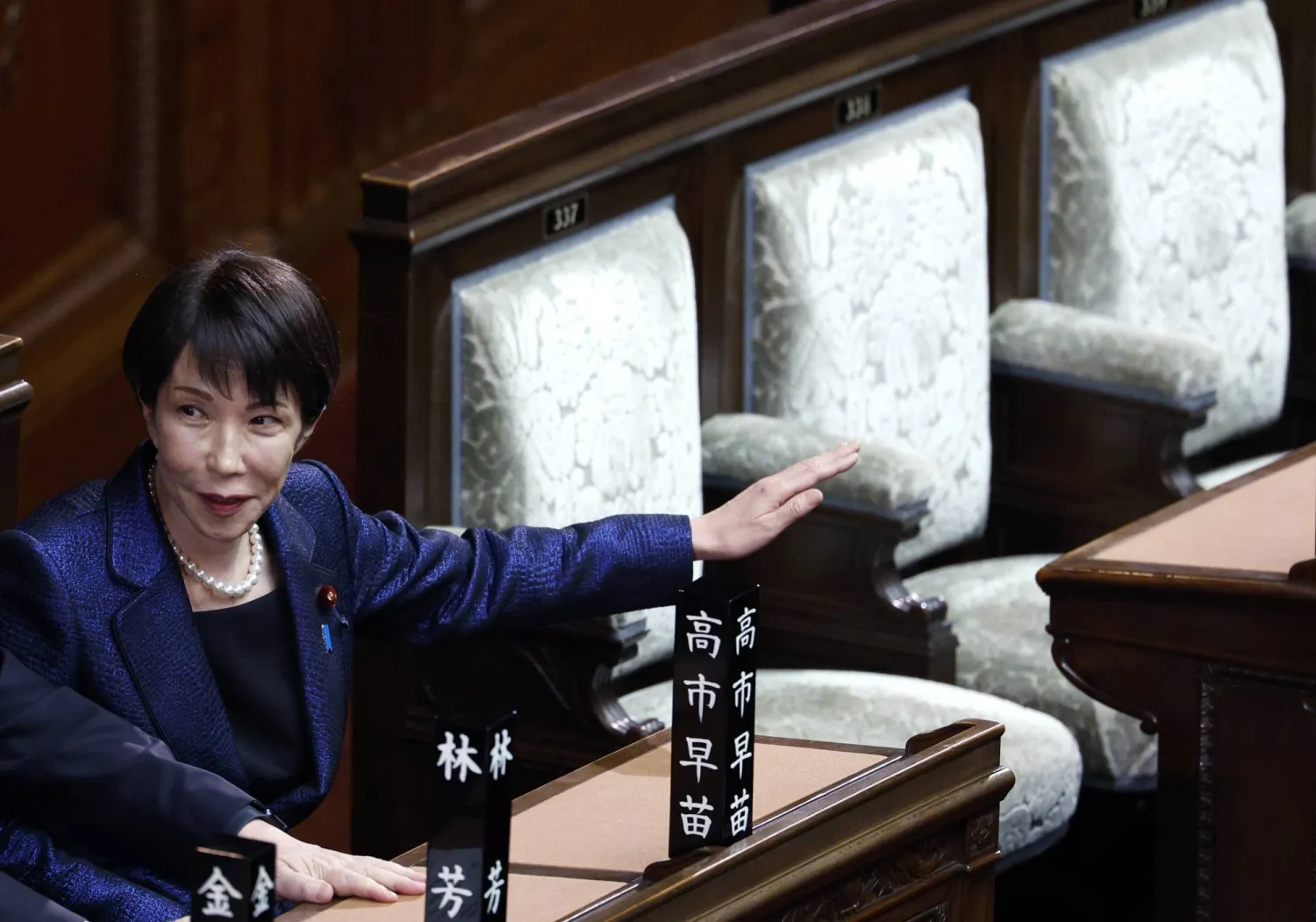
Sanae Takaichi gestures at the Lower House of the Parliament in Tokyo, Japan, 18 February 2026. EPA/FRANCK ROBICHON
TT

Japan PM Takaichi Reappointed Following Election

Sanae Takaichi gestures at the Lower House of the Parliament in Tokyo, Japan, 18 February 2026. EPA/FRANCK ROBICHON

Japan's lower house formally reappointed Sanae Takaichi as prime minister on Wednesday, 10 days after her historic landslide election victory.

Takaichi, 64, became Japan's first woman premier in October and won a two-thirds majority for her party in the snap lower house elections on February 8.

She has pledged to bolster Japan's defenses to protect its territory and waters, likely further straining relations with Beijing, and to boost the flagging economy.

Takaichi suggested in November that Japan could intervene militarily if Beijing sought to take Taiwan by force.

China, which regards the democratic island as part of its territory and has not ruled out force to annex it, was furious.

Beijing's top diplomat Wang Yi told the Munich Security Conference on Saturday that forces in Japan were seeking to "revive militarism".

In a policy speech expected for Friday, Takaichi will pledge to update Japan's "Free and Open Indo-Pacific" strategic framework, local media reported.

"Compared with when FOIP was first proposed, the international situation and security environment surrounding Japan have become significantly more severe," chief government spokesman Minoru Kihara said Monday.

In practice this will likely mean strengthening supply chains and promoting free trade through the Trans-Pacific Partnership (CPTPP) that Britain joined in 2024.

Takaichi's government also plans to pass legislation to establish a National Intelligence Agency and to begin concrete discussions towards an anti-espionage law, the reports said.

Takaichi has promised too to tighten rules surrounding immigration, even though Asia's number two economy is struggling with labor shortages and a falling population.

On Friday Takaichi will repeat her campaign pledge to suspend consumption tax on food for two years in order to ease inflationary pressures on households, local media said, according to AFP.

This promise has exacerbated market worries about Japan's colossal debt, with yields on long-dated government bonds hitting record highs last month.

Rahul Anand, the International Monetary Fund chief of mission in Japan, said Wednesday that debt interest payments would double between 2025 and 2031.

"Removing the consumption tax (on food) would weaken the tax revenue base, since the consumption tax is an important way to raise revenues without creating distortions in the economy," Anand said.

To ease such concerns, Takaichi will on Friday repeat her mantra of having a "responsible, proactive" fiscal policy and set a target on reducing government debt, the reports said.

She will also announce the creation of a cross-party "national council" to discuss taxation and how to fund ageing Japan's ballooning social security bill.

But Takaichi's first order of business will be obtaining approval for Japan's budget for the fiscal year beginning on April 1 after the process was delayed by the election.

The ruling coalition also wants to pass legislation that will outlaw destroying the Japanese flag, according to the media reports.

It wants too to accelerate debate on changing the constitution and on revising the imperial family's rules to ease a looming succession crisis.

Takaichi and many within her Liberal Democratic Party (LDP) oppose making it possible for a woman to become emperor, but rules could be changed to "adopt" new male members.


Türkiye: Ocalan Announces ‘Integration Phase’

Members of the Kurdish community take part in a protest calling for the release of convicted Kurdistan Worker's Party (PKK) leader Abdullah Ocalan in Diyarbakir on February 15, 2026. (Photo by Ilyas AKENGIN / AFP)
TT

Türkiye: Ocalan Announces ‘Integration Phase’

Members of the Kurdish community take part in a protest calling for the release of convicted Kurdistan Worker's Party (PKK) leader Abdullah Ocalan in Diyarbakir on February 15, 2026. (Photo by Ilyas AKENGIN / AFP)

The jailed leader of the Kurdistan Workers Party, Abdullah Ocalan, has said that the Ankara-PKK peace process has entered its “second phase,” as the Turkish parliament sets the stage to vote on a draft report proposing legal reforms tied to peace efforts.

A delegation from the pro-Kurdish Peoples' Equality and Democracy Party (DEM Party), including lawmakers Pervin Buldan, Mithat Sancar, and Ocalan’s lawyer Ozgur Faik, met with the jailed PKK leader on Monday on the secluded Imrali island.

Sancar said that the second phase will be focused on democratic integration into
Türkiye’s political system.

According to the lawmaker, the PKK leader considered the first phase the “negative dimension” concerned with ending the decades-old conflict between the armed group and Ankara.

“Now we are facing the positive phase,” Ocalan said, “the integration phase is the positive phase; it is the phase of construction.”

For the second phase to be implemented, Ocalan called on Turkish authorities to provide conditions that would allow him to put his “theoretical and practical capacity” to work.

The 60-page draft report on peace with the PKK was completed by a five-member writing team, which is chaired by Parliament Speaker Numan Kurtulmuş, and is scheduled for a vote on Wednesday.

The report is organized into seven sections.

In July last year, Ocalan said the group's armed struggle against Türkiye has ended and called for a full shift to democratic politics.