At least 20 people were killed Friday when a Bolivian military cargo plane carrying banknotes crashed while landing near the capital city La Paz, authorities said, prompting police to repel bystanders who were grabbing cash.
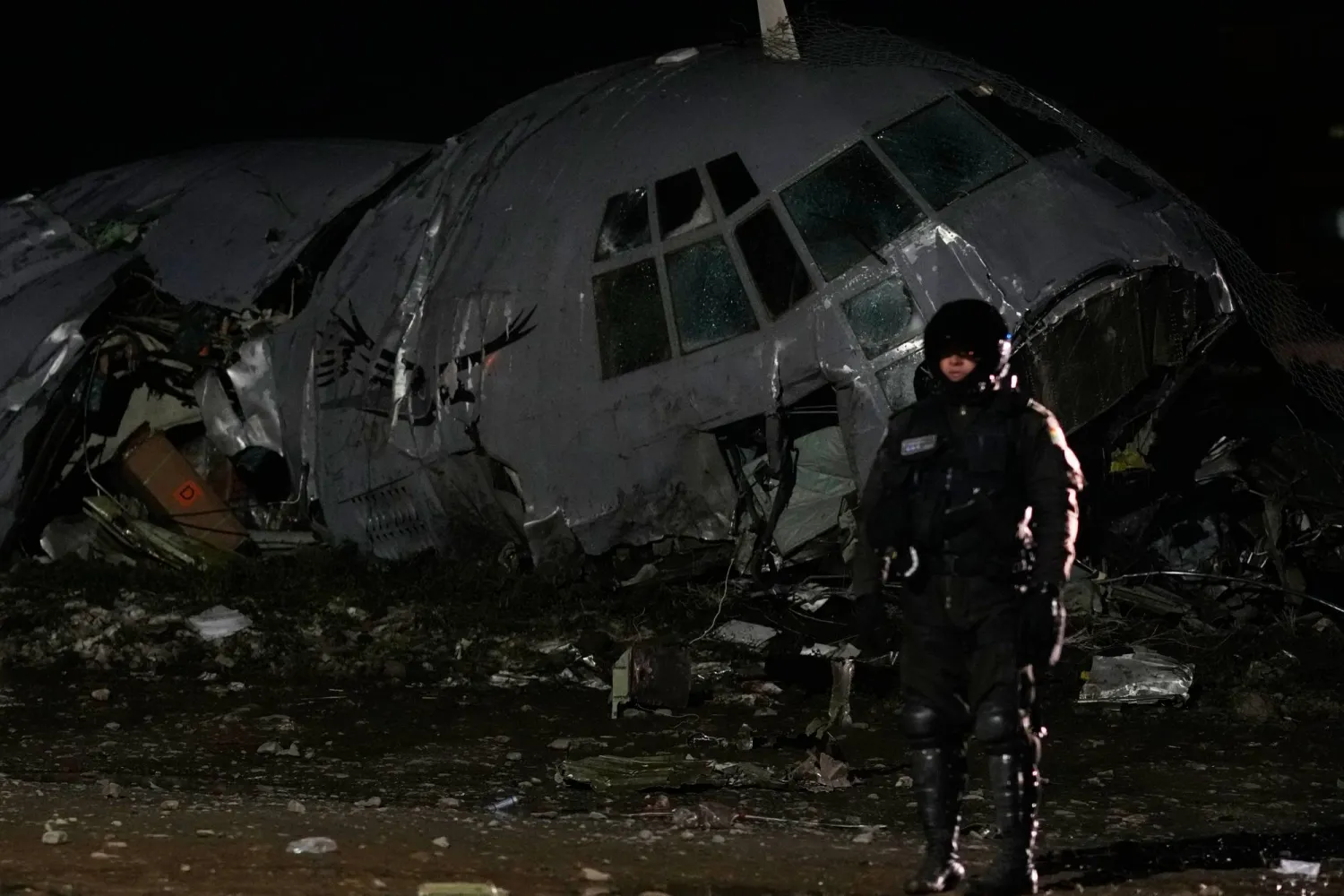
The aircraft, a C-130 Hercules transport plane, veered off the runway at El Alto International Airport and crashed into an avenue, destroying multiple cars and damaging trucks, local media footage showed.
Mangled parts of the aircraft were seen on the road where the plane came down, as bystanders rushed to try and grab the scattered cash and police tried to repel the crowds with tear gas.
Authorities later set the money alight in a bonfire at the scene of the crash.
It was not immediately known what caused the crash but witnesses said the weather at the time was treacherous.
"A heavy hailstorm" was falling and "there was lightning" when the plane went down, Cristina Choque, a 60-year-old vendor whose car was struck by the aircraft wreckage, told AFP.
"The tire is what fell on top of us... my daughter is injured, she has a head wound," she added.
The Ministry of Defense said it would launch an investigation into the crash.
"There are about 20, maybe a few more," Colonel Rene Tambo, head of the police homicide division in El Alto, told reporters late Friday.
Bolivia's health ministry reported at least 28 people were injured.
Fatalities were recorded both at the airport and on the busy avenue where the plane crashed and struck several vehicles.
The Bolivian Air Navigation and Airports authority NAABOL said in a statement that the C-130 departed from the eastern city of Santa Cruz and crashed while landing at the international airport, which suspended its operations.
The C-130 Hercules -- manufactured by Lockheed Martin -- was carrying Bolivian banknotes, which scattered upon impact.
Footage from local media showed police using tear gas to disperse people who approached the crash site to gather the money.
The defense ministry in a statement said that "the money transported in the crashed aircraft has no official serial number... therefore it has no legal or purchasing power."
It said that "its collection, possession, or use constitutes a crime."
Choque and her family remained inside the wrecked vehicle for fear of being looted by the crowd.
The La Paz Prosecutor's Office received reports of looting of businesses by criminals who took advantage of the chaos in the streets.
"Twelve people have been arrested" for questioning, prosecutor Luis Carlos Torres told reporters.
Operations at El Alto International Airport, the second most important in Bolivia, were suspended.
Hospitals in El Alto also launched a blood donation campaign to treat the injured.
La Paz, at an altitude of 3,650 meters (11,975 feet) and surrounded by Andean peaks, is the highest administrative capital in the world.