France Adds First Nuclear Reactor in 25 Years to Grid
A general view of the three reactors making up the Flamanville nuclear power plant with the third-generation European Pressurised Water nuclear reactor (EPR) in the background in Flamanville, France, April 25, 2024. REUTERS/Stephanie Lecocq/File Photo
France Adds First Nuclear Reactor in 25 Years to Grid
A general view of the three reactors making up the Flamanville nuclear power plant with the third-generation European Pressurised Water nuclear reactor (EPR) in the background in Flamanville, France, April 25, 2024. REUTERS/Stephanie Lecocq/File Photo
France connected the Flamanville 3 nuclear reactor to its grid on Saturday morning, state-run operator EDF said, in the first addition to the country's nuclear power network in 25 years.
The reactor, which began operating in September ahead of the grid connection, is going online 12 years later than originally planned and at a cost of around 13 billion euros - four times the original budget.
"EDF teams have achieved the first connection of the Flamanville EPR to the national grid at 11:48am (1048 GMT). The reactor is now generating electricity," EDF said in a statement, Reuters reported.
The Flamanville 3 European Pressurised Reactor is France's largest at 1.6 gigawatts (GW) and one of the world's biggest, along with China's 1.75 GW Taishan reactor, which is based on a similar design, and Finland's Olkiluoto.
It is the first to be connected to the grid since Civaux 2 in 1999 but is being brought into service at a time of sluggish consumption, with France exporting a record amount of electricity this year.
EDF is planning to build another six new reactors to fulfil a 2022 pledge made by President Emmanuel Macron as part of the country's energy transition plans, although questions remain around the funding and timeline of the new projects.
Ukraine, Russia Vow Escalation after Moscow Attack Kills 21 in Kyivhttps://english.aawsat.com/world/5291389-ukraine-russia-vow-escalation-after-moscow-attack-kills-21-kyiv
Ukraine's President Volodymyr Zelenskiy walks with Interior Minister Ihor Klymenko as he visits the site of an apartment building damaged during overnight Russian missile and drone strikes, amid Russia's attack on Ukraine, in Kyiv, Ukraine July 2, 2026. REUTERS/Valentyn Ogirenko
Ukraine, Russia Vow Escalation after Moscow Attack Kills 21 in Kyiv
Ukraine's President Volodymyr Zelenskiy walks with Interior Minister Ihor Klymenko as he visits the site of an apartment building damaged during overnight Russian missile and drone strikes, amid Russia's attack on Ukraine, in Kyiv, Ukraine July 2, 2026. REUTERS/Valentyn Ogirenko
Ukraine and Russia on Thursday vowed fresh assaults in their four-year war after Moscow launched a massive barrage on Kyiv, killing at least 21 people, tearing open apartment buildings and sending tens of thousands to shelters.
Ukrainian President Volodymyr Zelensky said his forces would "definitely" retaliate for the overnight pummeling of the capital as he inspected the site of an apartment block partially destroyed in the attack, AFP reported.
In Moscow, the Kremlin vowed to further ramp up the "pressure" on Kyiv, sticking to its no-compromise rhetoric as rescuers in Kyiv scoured the rubble for survivors.
The European Union's top diplomat proposed new sanctions on Moscow, while Zelensky asked the United States for licenses to manufacture Patriot air defense missiles.
Russia has routinely launched waves of missiles and drones at Ukrainian cities during its invasion, which has become Europe's deadliest conflict since World War II.
AFP journalists in central and eastern Kyiv heard more than a dozen explosions and saw residents -- some with children and pets -- rushing to shelter in metro stations.
In the morning, locals stood on the rubble of destroyed apartment blocks ripped apart by the barrage, as smoke poured over the Kyiv skyline.
At one spot, a mother cried as she embraced her son in front of the smoldering debris.
Blasts started echoing out late on Wednesday, lasting into the early hours of Thursday as Russian missiles and drones rained down on residential areas in the city center.
Mayor Vitali Klitschko described it as the "enemy's most massive attack on the capital", without elaborating.
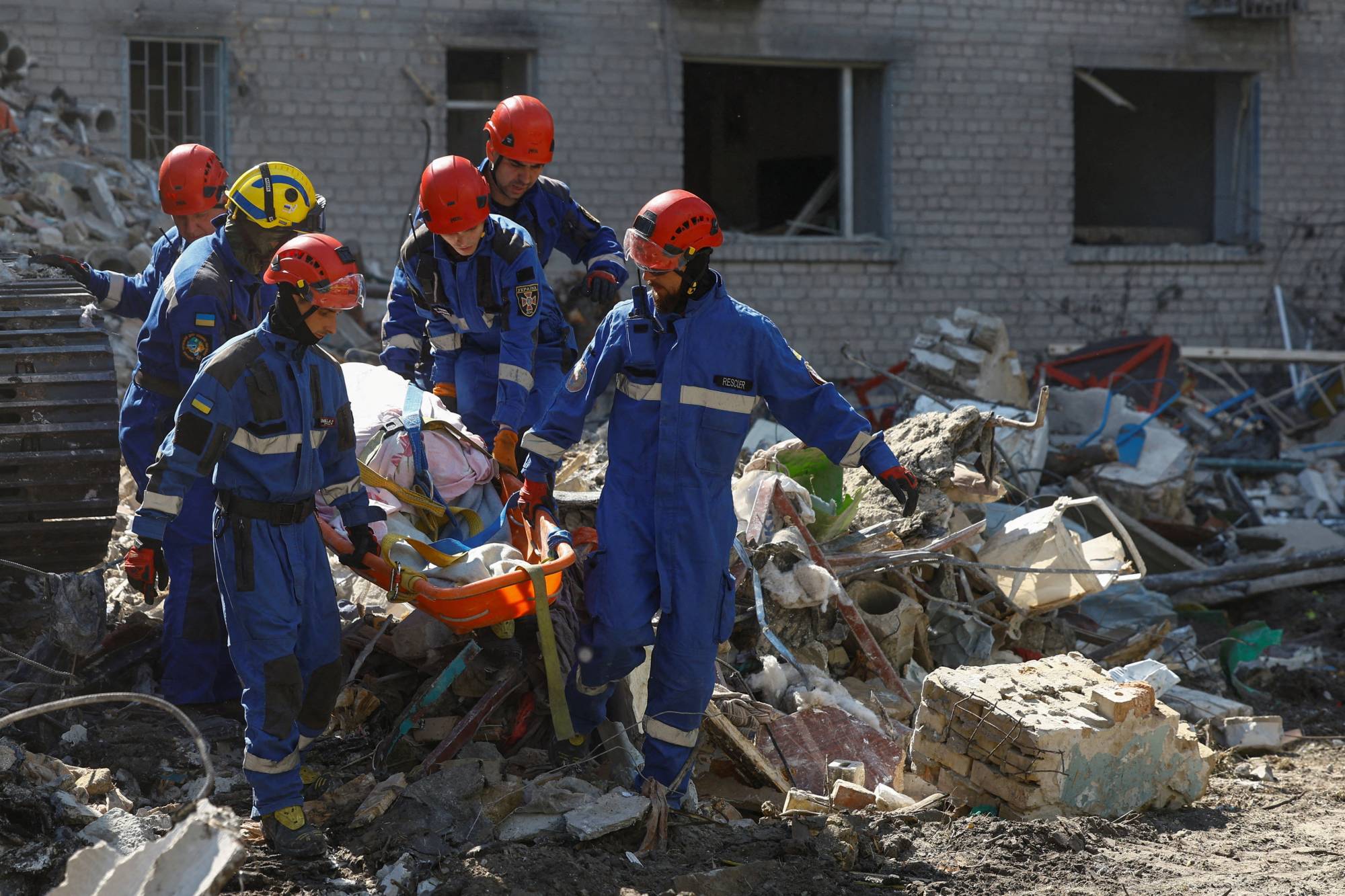
Rescuers carry the body of a killed person found under debris of an apartment building damaged during overnight Russian missile and drone strikes, amid Russia's attack on Ukraine, in Kyiv, Ukraine July 2, 2026. REUTERS/Valentyn Ogirenko
The state emergency services said at least 21 people were killed and 85 were wounded, including two children.
The Ukrainian branch of the Red Cross said that its key warehouse was "destroyed" in the attack with around $2 million worth of humanitarian aid lost.
Debris from the pummeling also damaged a building that was "hosting a number of diplomats", EU spokesperson Anitta Hipper told AFP, adding that "EU diplomats were affected" but "safe".
Kyiv urged its allies to send more air defense.
"Air defens supplies for Ukraine are an absolute and critical priority," Zelensky said in a post on Facebook.
"We also very much count on a decision by the United States regarding licenses for Patriots."
Ukraine is seeking to manufacture munitions for the US-made missile interceptor system, one of its only ways of defending against Russian ballistic missiles, although defense experts say it will take time to set up production domestically.
Russia fired 496 drones and 74 missiles, including hard-to-intercept ballistic projectiles, Ukraine's air force said.
It said it shot down 48 of the missiles and 476 drones.
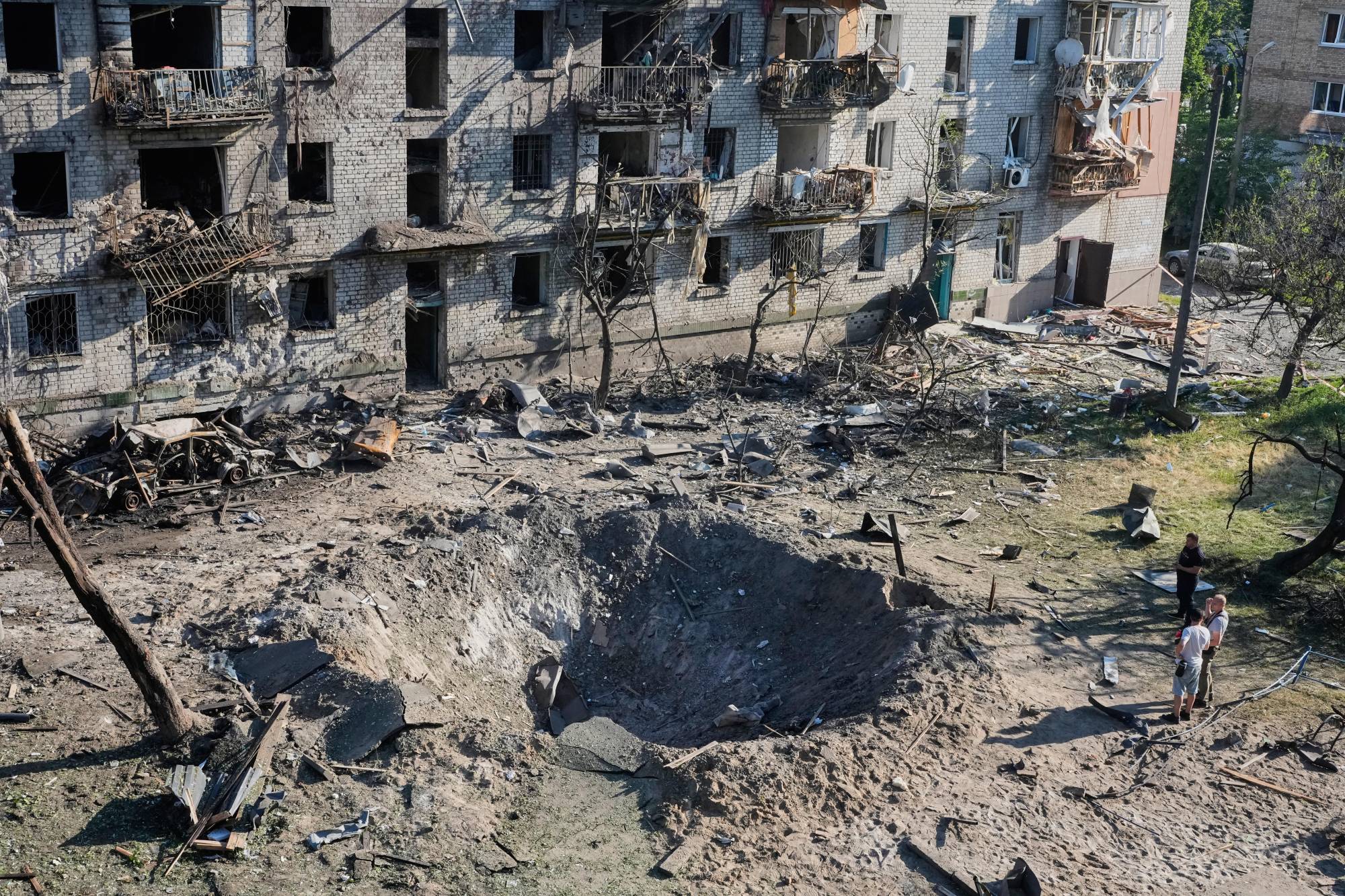
People look at the site of a Russian missile strike that hit a residential building in Kyiv, Ukraine, Thursday, July 2, 2026. (AP Photo/Efrem Lukatsky)
AFP reporters met several Kyiv residents outside an apartment building largely destroyed in the attack.
"Half the building has been destroyed. The roof is gone," said 32-year-old factory worker Sabina Mambetova, standing outside the rubble of her home in the eastern Darnytskyi district.
"I've been left without an apartment, alone with my child. I don't know what to do now."
An AFP journalist at the site saw rescuers extracting the body of another victim of the attack, which ripped a multi-story building open.
Some 52,000 people, including 4,500 children packed into underground stations to shelter from the barrage -- the highest number in recent years, according to the Kyiv metro.
Others hunkered down in basements or corridors through the night as blasts shook buildings across the city.
"It's hard. My child is used to sleeping in complete silence and darkness," 32-year-old doctor Kateryna Kucheryava told AFP from the metro as the attack was unfolding.
"I picked her up and carried her down. She woke up and now she's not sleeping anymore."
Along station platforms, locals set up tents and lay on air mattresses and camping chairs, while mothers tried to sleep clutching babies to their chests.
The EU's top diplomat Kaja Kallas said she would propose new sanctions on Moscow over the attack.
But the Kremlin showed no signs it would back down, more than four years into an invasion that has killed hundreds of thousands.
The attack came hours after Zelensky cut short a visit to Dublin on Wednesday, citing intelligence reports of an impending Russian strike.
Zelensky said Russian President Vladimir Putin "has been preparing this massive strike against Ukraine for some time now".
Ukraine has stepped up long-range drone attacks inside Russia in recent weeks, targeting energy infrastructure and military targets.
Russian officials have reported repeated strikes in border regions, while Moscow has said its air defenses have intercepted hundreds of drones from Ukraine in recent days.
US efforts to broker an end to the conflict have so far failed.
WFP: Expanding Conflict Drives Record Hunger in Northern Nigeriahttps://english.aawsat.com/world/5291216-wfp-expanding-conflict-drives-record-hunger-northern-nigeria
WFP: Expanding Conflict Drives Record Hunger in Northern Nigeria
A soldier patrols outside burned homes, days after an attack in the village of Woro, Nigeria, Thursday, Feb. 5, 2026. (AP Photo/Pelumi Salako)
Hunger across Nigeria's conflict-hit north is at levels not seen in a decade as violence spreads and aid shrinks, the UN's World Food Program warned Thursday, with more than three million people "acutely food insecure".
The country has been battling an extremist insurgency centered in the northeast since 2009, with a resurgence in violence since 2025.
Extremists have also been expanding into the northwest, which is already facing a separate, overlapping crisis from armed "bandit" gangs.
"What concerns us most is how this crisis is expanding," WFP regional director for west and central Africa, Kinday Samba, said in a statement, noting the spread of violence "across a much wider area and forcing people from farmland, driving displacement and restricting humanitarian access".
Aid cuts under US President Donald Trump and other western countries have hit some of Nigeria's poorest households in recent years.
At the same time, the International Monetary Fund reported last month that poverty has risen under President Bola Tinubu, who has embarked on a raft of economic reforms supported by economists but which have also driven punishing inflation.
As conflict in the country's troubled north has expanded, so has the number of areas too dangerous for WFP to operate in, it said.
"The number of inaccessible locations has doubled: a further 15 areas are now considered partially inaccessible for WFP's frontline staff," it said,
Government control is scanty outside urban centers, leaving swathes of rural areas prone to attacks from armed groups.
More than 17 million people across northern Nigeria "are experiencing crisis, emergency, or catastrophic levels of hunger", WFP said.
"Nigeria's food security crisis is worsening faster than previously anticipated," it said. "Conflict is driving hunger in some northern states, particularly the northeast, to levels not seen in almost a decade".
In Borno state, the epicenter of the militants conflict, more than three million people are "acutely food insecure", including 10,000 people facing "catastrophic hunger".
But WFP's footprint is shrinking amid a donor shortfall, it said.
At the height of 2025 "lean season", when the previous year's foodstocks are running low but the current year's crops aren't ready for harvest, the agency delivered food and nutrition aid to 1.3 million people.
Amid "extreme funding shortfalls", it has projected it will reach slightly over half that number this year.
Iran Warns Oil Tankers to Use Approved Routes in Strait of Hormuz or Face a 'Forceful Response'https://english.aawsat.com/world/5291188-iran-warns-oil-tankers-use-approved-routes-strait-hormuz-or-face-forceful-response
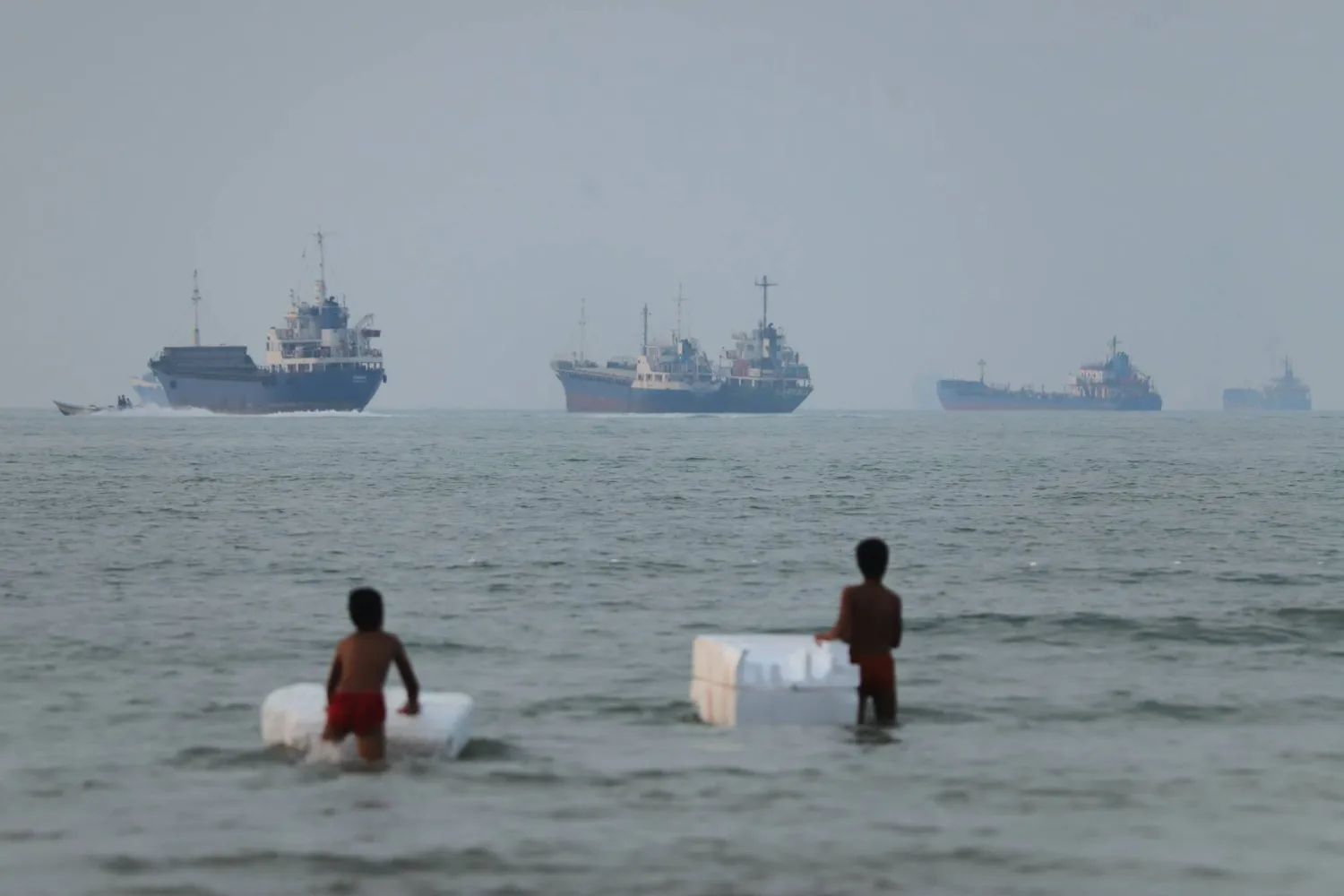
Two boys stand in shallow water with foam floats as cargo ships and other vessels are seen in the Strait of Hormuz off Bandar Abbas, Iran, Tuesday, June 30, 2026. (Amirhosein Khorgooi/ISNA via AP)
Iran Warns Oil Tankers to Use Approved Routes in Strait of Hormuz or Face a 'Forceful Response'
Two boys stand in shallow water with foam floats as cargo ships and other vessels are seen in the Strait of Hormuz off Bandar Abbas, Iran, Tuesday, June 30, 2026. (Amirhosein Khorgooi/ISNA via AP)
Iran’s joint military command warned Thursday that all oil tankers moving through the Strait of Hormuz must use its approved routes or face a “forceful response,” again ratcheting up tensions over a waterway crucial for international energy supplies.
The strait, the narrow mouth of the Arabian Gulf, has emerged as one of the top issues in negotiations to reach a permanent end to the Iran war. The statement from the Khatam al-Anbiya military command, reported by Iranian state television, comes after both US and Iranian diplomats met with mediators on Wednesday in Qatar, The Associated Press said.
It wasn’t immediately clear what sparked the threat from Iran. However, the US military's Central Command had put out a statement about having a meeting with officials from Mideast nations in Bahrain that said “leaders underscored their shared commitment to the free flow of commerce through the Strait of Hormuz.”
“Any failure to comply, deviation from the designated route, or disregard for the navigation protocols of the Islamic Republic of Iran in the Strait of Hormuz will be met with an immediate and forceful response from the armed forces, endangering the security of the violating vessels,” the Iranian statement said.
It also said the continued presence of US fighter jets over the strait “causes insecurity in this waterway and threatens regional security.”
“Any attempt by the United States to interfere in security matters or any disruptive action in the Strait of Hormuz will be considered a threat to Iran’s national sovereignty and will be met with a rapid and decisive reaction,” the Iranian warning added.
Iran and the United States agreed as part of an interim deal to allow ships to pass without paying charges for 60 days. But Tehran insisted it must control the routes of the vessels and later charge fees for passage, upending decades of practice in the waterway.
An effort by Oman and a United Nations agency to launch a new route near Oman’s shore sparked attacks across the Mideast last weekend, highlighting the tensions.
لم تشترك بعد
انشئ حساباً خاصاً بك لتحصل على أخبار مخصصة لك ولتتمتع بخاصية حفظ المقالات وتتلقى نشراتنا البريدية المتنوعة