
Hesitant Handshakes, Masked Smiles: A Papal Trip in Pandemic-Hit Iraq

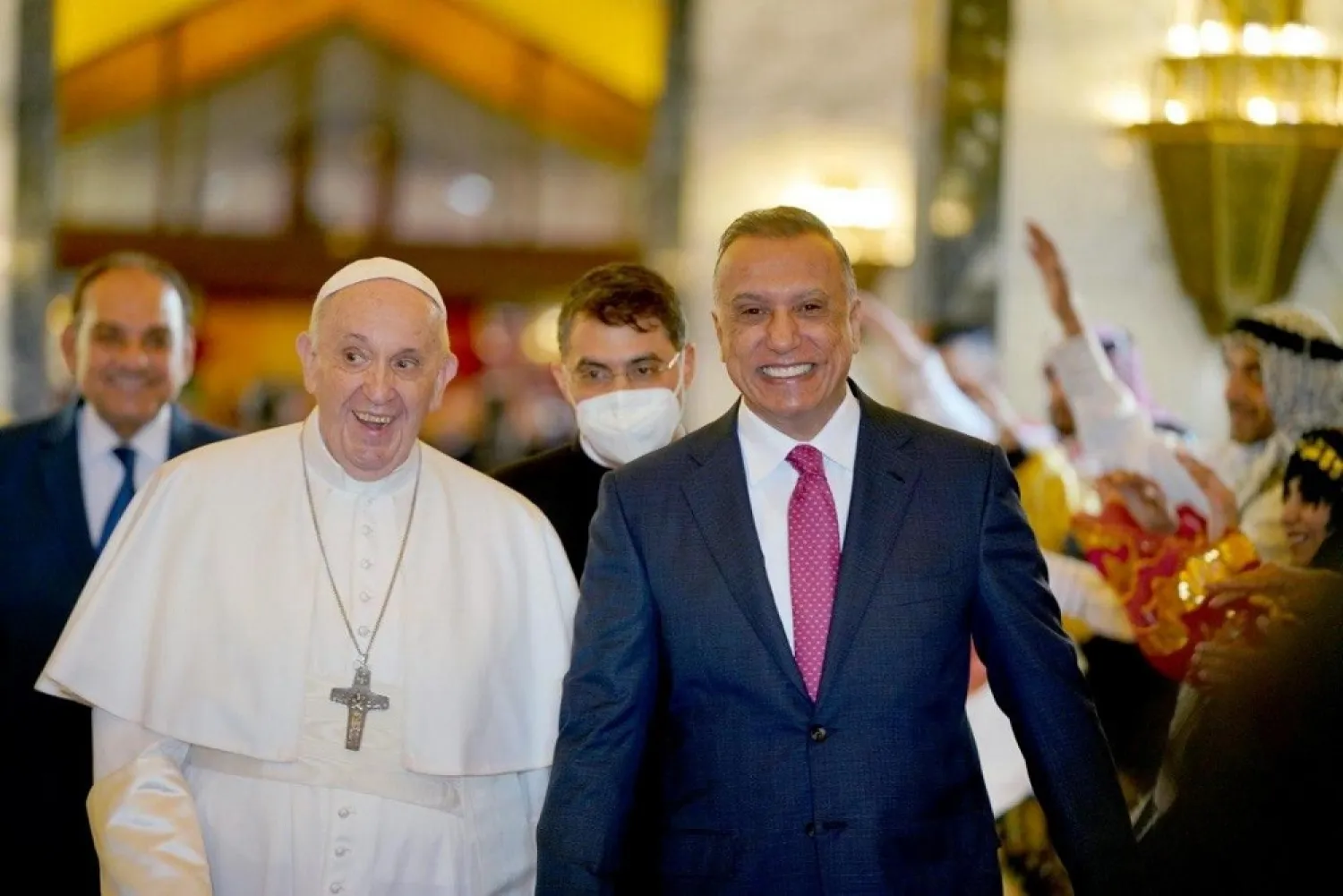
Iraqi Prime Minister Mustafa al-Kadhimi welcomes Pope Francis at Baghdad International Airport. (Reuters)
TT

Hesitant Handshakes, Masked Smiles: A Papal Trip in Pandemic-Hit Iraq

Iraqi Prime Minister Mustafa al-Kadhimi welcomes Pope Francis at Baghdad International Airport. (Reuters)

Hesitant handshakes, smiles blocked by masks and a strict no-hugging rule: the first-ever papal trip to Iraq will be all the more memorable for the pandemic-imposed restrictions.

"I'll try to follow directions and not shake hands with everyone, but I don't want to stay too far," Pope Francis told reporters while en route to Baghdad on Friday.

But soon after he stepped off the plane, the Pope could not hold back, extending his hand in greeting to the Iraqi dignitaries waiting for him on the tarmac at Baghdad International Airport.

The 84-year-old Argentinian pontiff was vaccinated before his history-making trip to Iraq, gripped this week by a second deadly wave of the coronavirus pandemic.

At the airport, Francis stripped off his white mask -- matching his pristine papal robe -- to smile warmly at the children in folkloric dress who had gathered to greet him.

Following his lead, Iraqi Prime Minister Mustafa al-Kadhimi removed his mask too, as did the head of the premier's protocol office.

The anti-coronavirus measures have otherwise been strict.

Authorities have imposed a full lockdown for the entirety of the Pope's visit, leaving the streets eerily empty of the crowds that have typically welcomed Francis on similar visits.

The half-dozen prayer services he will lead in the coming days will have ticketed attendance to ensure social distancing.

The churches he will visit have all been sprayed with disinfectant by Iraq's civil defense teams.

At the Our Lady of Salvation Church, where the Pope addressed fellow clergy on Friday, masked priests sat about a meter (yard) apart on wooden benches.

One figure was notably absent: the Vatican's ambassador to Iraq, who tested positive for Covid-19 after spending weeks making papal preparations across the country.

The Pope usually stays at the nuncio's residence during foreign trips -- so to make it safe for his boss, Mitja Leskovar was whisked away to an undisclosed location.

Francis has a safety net in that he and the entirety of the press corps travelling with him were vaccinated with the Pfizer/BioNTech jab ahead of the trip.

Iraq just began its own modest inoculation campaign with 50,000 jabs gifted by China, which went straight to the country's medical facilities.

Some Iraqi officials, however, had already been vaccinated before the official roll-out, telling AFP in January they had received doses of "the Chinese vaccine", without revealing which one.

On Friday, Pope Francis insisted that all Iraqis should have fair access to vaccinations.

"This crisis calls for concerted efforts by all to take necessary steps, including an equitable distribution of vaccines for everyone," he said.

Sudanese Schoolchildren Race to Make Up for Years Lost to War

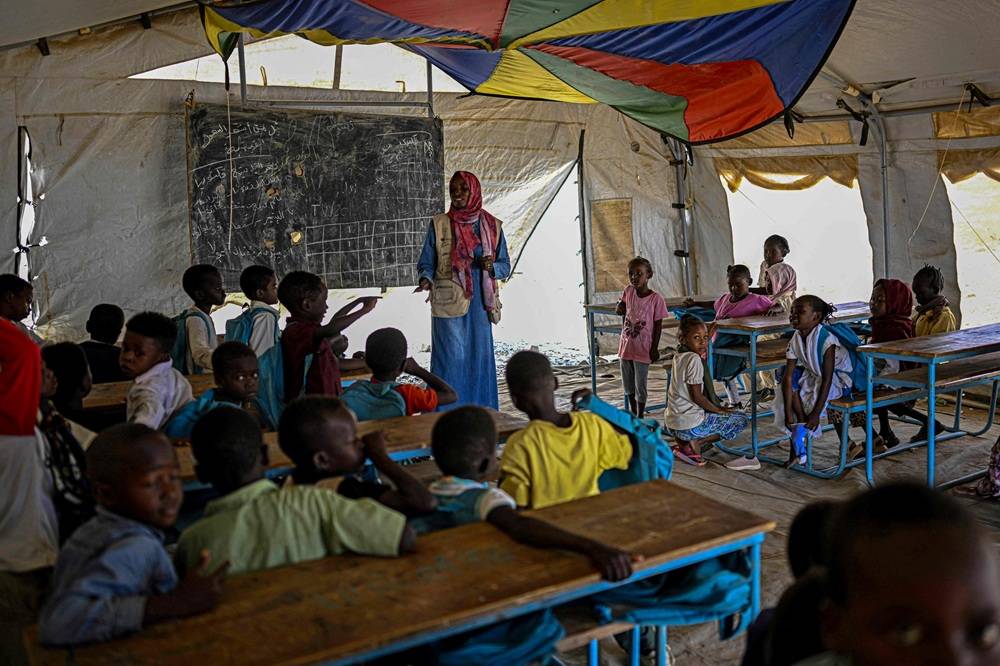
Displaced Sudanese students attend a class at an elementary school run by the Sudanese Coalition for Education in partnership with the United Nations International Children's Emergency Fund (UNICEF), south of Port Sudan, on April 26, 2026. (AFP)
TT

Sudanese Schoolchildren Race to Make Up for Years Lost to War

Displaced Sudanese students attend a class at an elementary school run by the Sudanese Coalition for Education in partnership with the United Nations International Children's Emergency Fund (UNICEF), south of Port Sudan, on April 26, 2026. (AFP)

Sudanese 13-year-old Afrah wants to become a surgeon, and nothing will stop her, not even the war that has ravaged her country and forced millions of children out of school.

Quiet and determined, she kept learning on her own for months, uprooted by the now three-year conflict between Sudan's army and the paramilitary Rapid Support Forces (RSF).

"I would study my lessons again and again," she told AFP at a displacement camp in Port Sudan, where she is again receiving an education thanks to UNICEF and local organization SCEFA.

Afrah is one of more than 25 million minors in Sudan, or half the total population, of whom eight million are currently out of school, according to the UN children's agency.

At the Al-Hishan camp, tents arranged in a square function as an elementary school for more than 1,000 children -- nearly a third of whom required an accelerated curriculum to make up for lost time.

Laughter fills the camp now, but most of the children arrived traumatized by horrors including starvation and rocket fire.

Their drawings, educators said, were at first dominated by war: depictions of the tanks, weapons and death they saw as their families fled.

"They come here scared, exhausted, isolated, but over time you see their drawings change," UNICEF spokesperson Mira Nasser told AFP.

"They start to adapt and process."

In one tent, children repeated hand-washing instructions after a social worker, while in another, they recited a poem in choral unison.

Elsewhere, a teacher -- herself displaced and living at the camp -- explained chemical and physical reactions to her class, as her three-year-old son pulled at her skirt.

"These children's future is at stake, and education is itself a form of protection," Nasser said.

"Here they can at least get a sense of normalcy, even in a displacement site. They can resume their education, they can play, they can make friends."

Displaced Sudanese students attend a class at an elementary school run by the Sudanese Coalition for Education in partnership with the United Nations International Children's Emergency Fund (UNICEF), south of Port Sudan, on April 26, 2026. (AFP)

- DIY operation -

Awatef al-Ghaly, a 48-year-old Arabic teacher who was displaced from North Darfur, remembered her first days at the site, when thousands of families were left listless with their kids in tow.

"There were 60 teachers here. We just got to work," she told AFP, at the same empty plot where they started, in the shadow of the Red Sea mountains.

They lined the students up by grade, threw together a schedule and started going through old lessons.

Soad Awadallah, 52, taught English for four decades in South Darfur before arriving in Port Sudan.

"It took a lot of patience, we had the kids all sat on the ground at first," she said, gesturing towards the rows of desks that now fill the tents, a welcome addition even if students have to squeeze in four to a bench.

According to Nasser, because of the time that students lost, ranging from months to years, "some even forgot how to read and write".

But their determination was indomitable, and the makeshift school recently graduated its first class from elementary to middle school, Ghaly said with pride.

"Even when things were difficult, in the heat of summer with bugs everywhere, the kids wanted to learn," she said.

Before the final exam, "some of them would follow us teachers home begging for more review sessions".

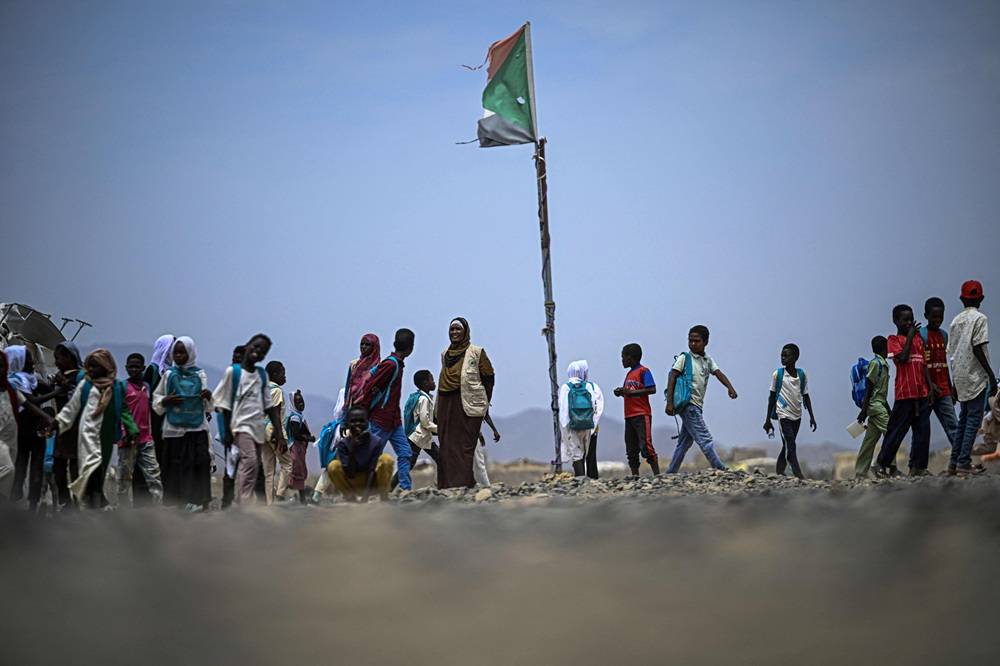
Sudanese students leave a school operated by the Sudanese Coalition for Education for All, in partnership with the United Nations International Children's Emergency Fund (UNICEF), south of Port Sudan on April 26, 2026. (AFP)

- 'Want to help people' -

Fatma, 16, wants to become a psychiatrist to help those hurt by the fighting in Sudan.

"This war has destroyed people emotionally... My father was in the main market in Khartoum when the RSF went through killing people. He ran away, and he still feels that pain," she told AFP.

"When I sit with the social worker, I feel better. I want to help people like that."

One little girl, who came up to an AFP journalist's hip, was missing her right arm, amputated after she was wounded in the capital Khartoum.

She high-fived with her left hand.

Across Sudan, five million children are internally displaced, according to UNICEF. Millions are going hungry, including over 825,000 children under five suffering severe acute malnutrition.

The use of child soldiers has been reported across the country, and rampant sexual violence against minors has prevented many from returning to school even in areas now safe from the fighting.

Many just want to go home.

"I miss my friends and my family, I miss my school in Khartoum -- it was full of trees," 14-year-old Ibrahim said.

But he has a goal. "I want to become a petroleum engineer," he told AFP, as the sound of children playing outside filled the tent.

During recess, dozens of pupils dashed around their teachers, laughing, playing and making hearts at AFP's cameras.

One boy named Rizeq, clad in a red Manchester United jersey, steeled himself and walked up to the adults.

His voice a little shaky but his chest puffed out, he said: "I want more English classes in the evening."


Timeline of Decades of Conflict Between Israel and Hezbollah

 Mourners carry coffins during a funeral ceremony of four Hezbollah fighters and two civilians, amid a temporary ceasefire between Lebanon and Israel, in the village of Maaroub, southern Lebanon, April 26, 2026. (Reuters)
Mourners carry coffins during a funeral ceremony of four Hezbollah fighters and two civilians, amid a temporary ceasefire between Lebanon and Israel, in the village of Maaroub, southern Lebanon, April 26, 2026. (Reuters)
TT

Timeline of Decades of Conflict Between Israel and Hezbollah

 Mourners carry coffins during a funeral ceremony of four Hezbollah fighters and two civilians, amid a temporary ceasefire between Lebanon and Israel, in the village of Maaroub, southern Lebanon, April 26, 2026. (Reuters)
Mourners carry coffins during a funeral ceremony of four Hezbollah fighters and two civilians, amid a temporary ceasefire between Lebanon and Israel, in the village of Maaroub, southern Lebanon, April 26, 2026. (Reuters)

The ongoing war between Israel and the Lebanese armed group Hezbollah is far from the first conflict between them. The two have an enmity that goes back more than four decades, with outbursts of fighting or outright war punctuated by periods of tense calm.

Here is a timeline of some significant events in the hostilities between the two:

1982: Israel invades Lebanon in an offensive against the Palestine Liberation Organization and allied groups. Hezbollah is formed, with Iranian backing and based on the Iran's revolution model, to fight Israel’s ensuing occupation of southern Lebanon. It launches a guerrilla war against Israel.

1992: Hezbollah leader Abbas Mousawi is killed by an Israeli helicopter attack. His successor is Hassan Nasrallah, who will lead the group for the next three decades.

1996: Israel launches an offensive aiming to push Hezbollah north of the Litani River, some 30 kilometers (20 miles) from the border. Israeli artillery shelling on a United Nations compound housing hundreds of displaced people in Qana kills at least 100 civilians and wounds scores more.

2000: After a long war of attrition, Israel withdraws its forces from southern Lebanon, which is heralded around the Arab world as a major victory for Hezbollah.

2006: Hezbollah fighters ambush an Israeli patrol, killing three Israeli soldiers and taking two hostage in a cross-border raid, sparking a monthlong war between Hezbollah and Israel that ends in a draw. Israeli bombardment razes villages and residential blocks in southern Lebanon and Beirut's southern suburbs, a scorched-earth approach that is dubbed the “Dahiyeh Doctrine.”

2008: Imad Mughniyeh, Hezbollah’s military chief, is killed when a bomb planted in his car exploded in Damascus. The assassination is blamed on Israel.

2012: Hezbollah enters the Syrian civil war in support of then-President Bashar Assad. In the years that follow, Israel begins periodically carrying out airstrikes in Syria targeting Iranian and Hezbollah facilities and officials or weapons shipments that it said were bound for Hezbollah. Israel still avoided carrying out strikes on Hezbollah on Lebanese territory during this period.

OCT. 8, 2023: One day after the Hamas-led attack in southern Israel sparks the war in Gaza, Hezbollah fires missiles across the border. Israel responds with airstrikes and shelling and the two enter into a low-level conflict that initially remains mainly confined to the border area.

SEPT. 17, 2024: Israel launches an attack in Lebanon using remotely-triggered explosive-laden pagers issued to Hezbollah fighters and civilian employees. A day later, a similar attack targets walkie-talkies. The attacks kill dozens of people and maim thousands, most of them Hezbollah members but also including women and children.

SEPT. 27, 2024: Hassan Nasrallah is killed in a series of massive airstrikes in Beirut's southern suburbs.

NOV. 27, 2024: A US-brokered ceasefire nominally ends the Israel-Hezbollah war. Israel continues to carry out regular strikes in Lebanon that it says aim to stop Hezbollah from rebuilding.

MARCH 2, 2026: Two days after Israel and the US attacked Iran, triggering a wide-reaching war in the Middle East, Hezbollah launches missiles toward Israel. It says the salvo is in retaliation for the killing of Iranian Supreme Leader Ali Khamenei and for “repeated Israeli aggressions” in Lebanon.


Why Iran’s Oil Industry Is Increasingly Threatened by US Blockade

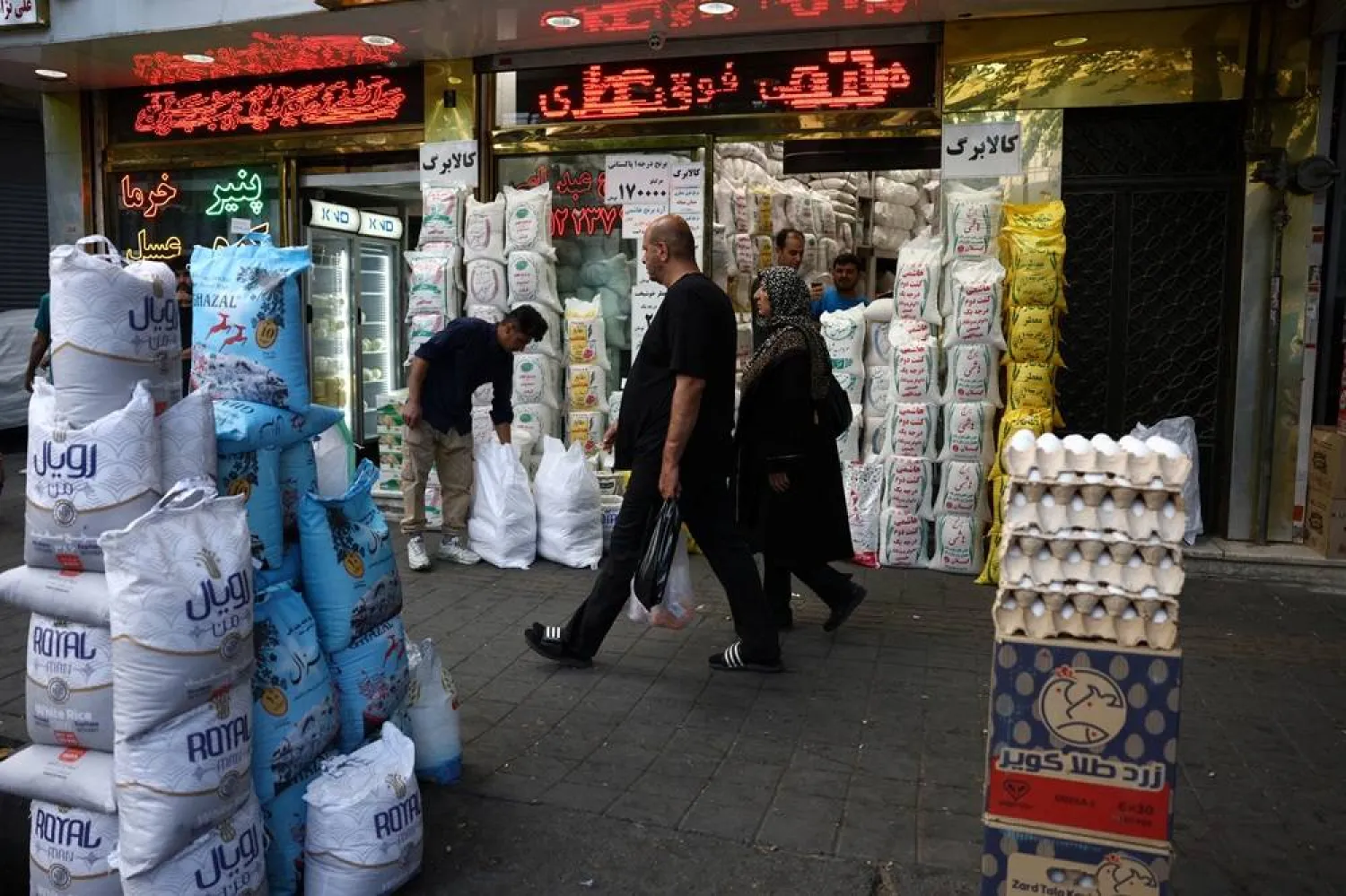
People walk in a local market in Tehran, Iran, April 28, 2026. Majid Asgaripour/WANA (West Asia News Agency) via Reuters
TT

Why Iran’s Oil Industry Is Increasingly Threatened by US Blockade

People walk in a local market in Tehran, Iran, April 28, 2026. Majid Asgaripour/WANA (West Asia News Agency) via Reuters

Even as Iran squeezes world energy supplies with its chokehold on the Strait of Hormuz, its own oil industry is increasingly being threatened by an American blockade.

With no way to export the oil it is pumping out and diminishing room to store it at home, Iran may be forced to dramatically reduce or cease production from some of its wells, perhaps beginning in as little as two weeks, experts say.

The situation likely isn’t as dire as US President Donald Trump recently described, colorfully suggesting pipelines could start exploding within days. But once shut down, production from the aging wells may not be restarted so easily, if at all, undermining Iran’s future oil output. Iran appears to have begun dialing back production already, analysts say, to avert outright shutdowns.

The pressure is building as the US Treasury Department ratchets up sanctions on Iranian oil shipments already at sea. The US military has seized at least two tankers off Asia believed to be carrying Iranian oil.

With its oil trade constrained, Iran is seeing less hard currency flow back into an economy mauled by weeks of war, months of unrest and decades of international sanctions. But with fewer tankers shipping Iranian oil, the effects of the Strait of Hormuz shutdown are only being magnified, leading to shortages of jet fuel and rising gasoline prices around the world.

Iran's leaders “are really resisting” shutting down oil wells because of how painful that would be long-term, said Miad Maleki, a former sanctions expert at the US Treasury who is now a senior fellow at the Washington-based Foundation for Defense of Democracies.

“They’ve been under sanctions, they’ve been isolated for 47 years now. Those oil wells are not maintained well. Their machinery is not maintained well," Maleki said. Once shut off, he added, the wells won't easily “snap back after a few months.”

The squeeze on Iran intensifies

Iran had been pumping over 3 million barrels of crude oil a day before the war, with a little more than half going toward its domestic market. But since the American blockade began on April 13, ships have been filled with oil and unable to get out.

“It looks like there’s been a significant slowdown in production,” said Antoine Halff, the co-founder and chief analyst at Kayrros, an environmental intelligence company that tracks emissions and energy supply chains. He pointed to signs that storage is not filling as fast as usual at Kharg Island, Iran’s main oil export terminal in the Gulf.

Iran is likely storing some of its oil in tankers positioned around Kharg Island, Halff noted.

Kpler, a firm monitoring commodities markets, said it believes Iran has enough capacity left to store about two weeks worth of oil production, even after reducing output.

“While the immediate revenue impact is limited, operational constraints are now forcing production cuts and setting up a delayed but significant financial squeeze,” wrote Homayoun Falakshahi, an analyst at Kpler.

Wood Mackenzie, another oil analysis firm, estimates Iran will run out of storage capacity in about three weeks.

“If the blockade persists, cuts become inevitable,” wrote Alexandre Araman of Wood Mackenzie. Shutdowns of more than a month “risk long-term damage” to Iran’s oil reservoirs, he wrote, adding that recovering older fields “remains uncertain.”

Iran’s oil industry long a shaky lifeline

From the moment it first struck oil in 1908, Iran’s oil industry has been entangled in the region’s politics. A move to nationalize Iran’s oil fields and wrest control from the British sparked the CIA-backed 1953 coup that cemented Shah Mohammad Reza Pahlavi’s rule.

That also lit a long fuse to Iran’s 1979 revolution that toppled the shah. During the revolution, oil workers went on strike and brought production down from 6 million barrels a day to around 1.5 million.

Iran’s oil industry never recovered and faced decades of international sanctions, during which its infrastructure aged and faltered.

In his first term, Trump exerted a “maximum pressure” campaign, hiking sanctions to severely cut Iran’s oil exports. Forced to store oil in tankers at sea, the Iranian government lost tens of billions of dollars in revenues. Still, the pressure failed to push Tehran into reaching a nuclear deal with the US.

Now Iran faces a combination of hiked sanctions and the blockade. Trump on Tuesday claimed that Iran was “in a ‘State of Collapse.’”

US Treasury Secretary Scott Bessent piled on, writing on X, “Iran’s creaking oil industry is starting to shut in production thanks to the US BLOCKADE. Pumping will soon collapse. GASOLINE SHORTAGES IN IRAN NEXT!”

There have been no immediate signs of any gasoline shortages in Iran. However, Iran does seem to be acknowledging some of the pain indirectly.

A segment on state TV, which is run by hard-liners, included journalists discussing the possibility of an oil storage crisis. One noted that if empty tankers get blocked from returning to Iran, “we won’t be able to export.” Oil Minister Mohsen Paknejad on Monday praised oil terminal staff for their “continuous perseverance."

Maleki, the analyst from the Foundation for Defense of Democracies, said that if the blockade continues and production slows further or halts, oil workers could potentially lose their jobs — which could cause new unrest.

“In 1979 when the oil industry was disrupted, in the 1980s war with Iraq ... you can go and look at to see how effective they were in really pressuring the regime,” he said. “It’s really going to affect some of the most strategic provinces in Iran and the most strategic industry.”