


Sanctions Paralyze Goods' Imports via Iranian Ports

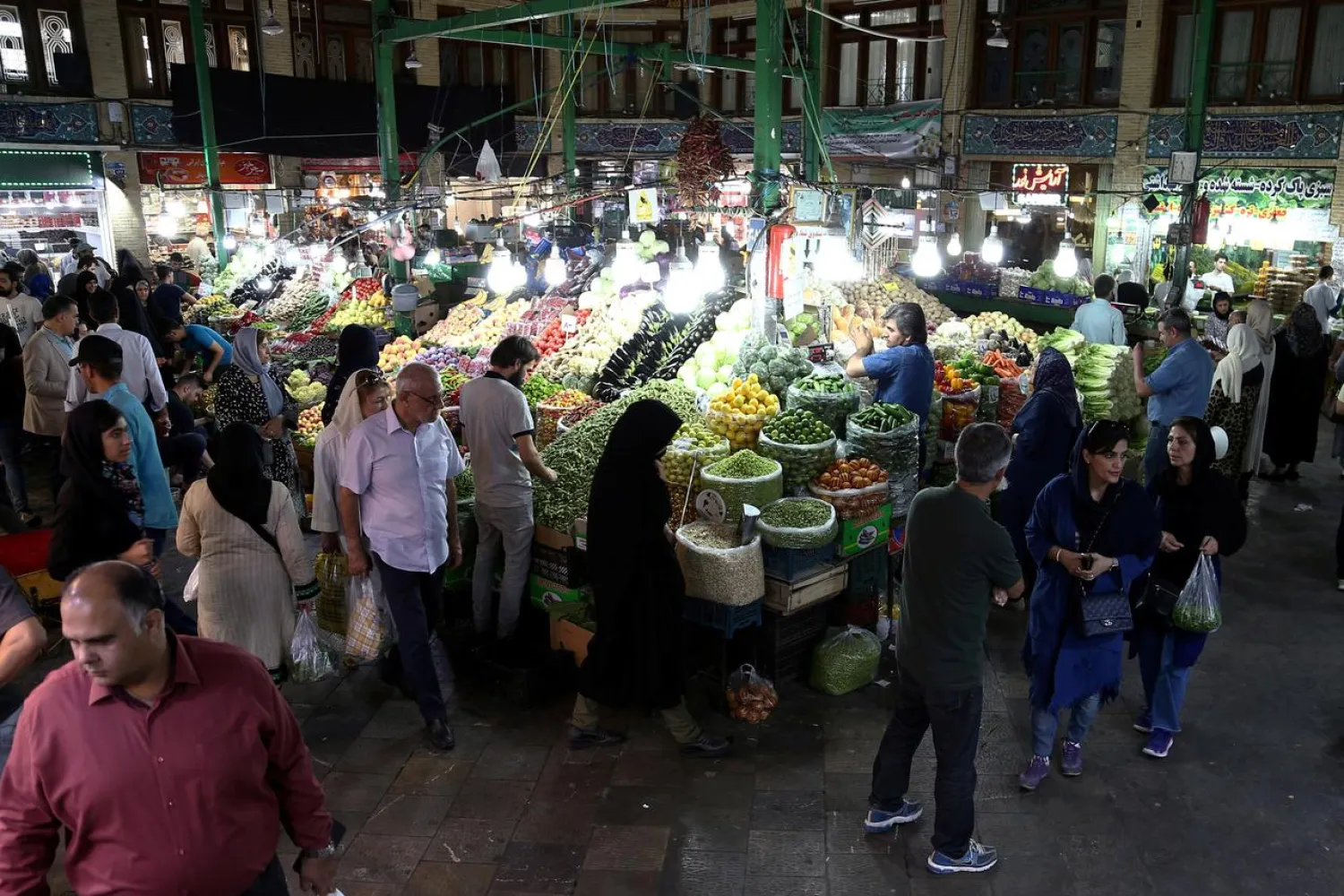
 People buy fruits and vegetables from Tajrish Bazaar in Tehran, Iran August 1, 2019. Nazanin Tabatabaee/WANA (West Asia News Agency) via REUTERS/File Photo
People buy fruits and vegetables from Tajrish Bazaar in Tehran, Iran August 1, 2019. Nazanin Tabatabaee/WANA (West Asia News Agency) via REUTERS/File Photo
TT

Sanctions Paralyze Goods' Imports via Iranian Ports

 People buy fruits and vegetables from Tajrish Bazaar in Tehran, Iran August 1, 2019. Nazanin Tabatabaee/WANA (West Asia News Agency) via REUTERS/File Photo
People buy fruits and vegetables from Tajrish Bazaar in Tehran, Iran August 1, 2019. Nazanin Tabatabaee/WANA (West Asia News Agency) via REUTERS/File Photo

More than 20 ships carrying around one million tonnes of grain are stuck outside Iranian ports as US sanctions create payment problems and hamper the country’s efforts to import vital commodities, sources directly involved in the trade said.

Trading companies such as Bunge (BG.N) and China’s COFCO International have been hit by payment delays and additional costs of up to $15,000 a day as the renewed US restrictions stifle the processing of transactions, trade sources said.

According to Reuters, food, medicine and other humanitarian supplies are exempt from sanctions Washington re-imposed after US President Donald Trump said he was walking away from a 2015 international deal over Iran’s nuclear program.

But the US measures targeting everything from oil sales to shipping and financial activities have deterred several foreign banks from doing any Iranian business, including humanitarian deals such as food shipments.

The few remaining lenders still processing Iranian business face multiple hurdles to facilitate payments as financing channels freeze up.

Six Western and Iranian sources said the situation was contributing to the cargoes being held up for more than a month outside Iran’s biggest ports for goods, Bandar Imam Khomeini and Bandar Abbas.

The ships are carrying cargoes including soybeans and corn mostly from South America, the sources said. The grain vessels are also visible through ship tracking data.

“There are no restrictions on humanitarian business, but you can’t get paid for it,” one European source said. “You can be waiting for months to get a payment.”

“There is nervousness among traders about making more sales to Iran before the backlog (of ships) is cleared,” said another source.

A senior Iranian port official, who declined to be named, told Reuters there had been problems since US sanctions were imposed on its financial system in November 2018.

“What has changed is that now the number of banks, traders that are staying away from doing business with Iran is increasing,” the official said.

Separate US sanctions imposed in September on Iran’s central bank - following attacks on oil facilities in Saudi Arabia that US, UK, France, Germany and Saudi Arabia blamed on Tehran - have added to difficulties with transactions.

The United Nations Food and Agriculture Organization (FAO) estimated last month that Iran’s total cereal stocks in 2019 would total 5.1 million tonnes, falling to 4.8 million tonnes in 2020, versus 9.9 million tonnes in 2016.

Trade sources said Iranian ports were also struggling to process ships due to a lack of available berths.

Of the vessels still anchored, at least 20 dry bulk ships were waiting outside Bandar Imam Khomeini, Refinitiv data showed. A further two vessels had managed to discharge their cargoes after waiting for weeks, the data showed.

Separate data from shipping intelligence platform MarineTraffic showed a similar number of ships stationary for more than a month. A separate Iranian government official confirmed that ships were waiting but declined to give details.

Trade sources said Turkey’s Halkbank (HALKB.IS) - one of the main banks that Iran has relied on for such humanitarian trade - had not been able to process payments fast enough because of the complexity of the process and in some cases did not complete transactions with suppliers.

Suppliers have been left with additional costs, known as demurrage, of up to $15,000 a day as they wait to unload.

Trade sources said US agribusiness group Bunge and China’s COFCO International were among the companies affected, together with smaller Turkish and Iranian suppliers.

Bunge spokesman Frank Mantero said: “While we don’t comment on or confirm commercial contracts, Bunge exports agricultural commodities in accordance with all applicable legislative frameworks.”

Two sources said the increasing difficulties had prompted US agribusiness company ADM (ADM.N) to halt trading with Iran since August.

Trade sources told Reuters in December that Bunge and rival US group Cargill as well as other suppliers had halted new food supply deals to Iran due to payment issues.

Cargill said in a statement: “In certain countries where international sanctions exist, we provide that food using the humanitarian exception for medicine and food.”

A US Treasury spokesperson said Washington designated Iran’s central bank under its counter terrorism authorities, adding that the broad exceptions to the sanctions such as for humanitarian trade that once applied to transactions involving the central bank no longer applied.



Thousands of Somalis Protest Israeli Recognition of Somaliland

This picture taken on November 7, 2024 shows a general view of the city of Hargeisa, capital and largest city of the self-proclaimed Republic of Somaliland. (Photo by LUIS TATO / AFP)
TT

Thousands of Somalis Protest Israeli Recognition of Somaliland

This picture taken on November 7, 2024 shows a general view of the city of Hargeisa, capital and largest city of the self-proclaimed Republic of Somaliland. (Photo by LUIS TATO / AFP)

Large protests broke out in several towns and cities across Somalia on Tuesday in opposition to Israel's recognition of the breakaway region of Somaliland.

Israel announced on Friday that it viewed Somaliland -- which declared independence in 1991 but has never been recognized by any other country -- as an "independent and sovereign state".

Somali President Hassan Sheikh Mohamud has condemned the move as a threat to stability in the Horn of Africa. He travelled Tuesday to Türkiye, a close ally, to discuss the situation, AFP reported.

Thousands of protesters marched through the streets of Somali capital Mogadishu and gathered at a stadium, waving placards with anti-Israeli slogans alongside Somali and Palestinian flags.

"We will never allow anyone to violate our sovereignty," one attendee, Adan Muhidin, told AFP, adding that Israel's move was "a blatant violation of international law".

Demonstrations also took place in Lascanod in the northeast, Guriceel in central Somalia, and Baidoa in the southwest.

"There is nothing we have in common with Israel. We say to the people of Somaliland, don't bring them close to you," said Sheikh Ahmed Moalim, a local religious leader, in Guriceel.

Somaliland has long been a haven of stability and democracy in the conflict-scarred country, with its own money, passport and army.

It also has a strategic position on the Gulf of Aden that makes it an attractive trade and military partner for regional and international allies.

But Israel's decision to recognize its statehood has brought rebukes from across the Muslim and African world, with many fearing it will stoke conflict and division.

There have been celebrations in Somaliland's capital Hargeisa, with the rare sight of Israeli flags being waved in a Muslim-majority nation.


Iranian Students Protest in Tehran and Isfahan, Says Local Media

Shopkeepers and traders walk over a bridge during a protest against the economic conditions and Iran's embattled currency in Tehran on December 29, 2025. (Handout / Fars News Agency / AFP)
TT

Iranian Students Protest in Tehran and Isfahan, Says Local Media

Shopkeepers and traders walk over a bridge during a protest against the economic conditions and Iran's embattled currency in Tehran on December 29, 2025. (Handout / Fars News Agency / AFP)

Student protests erupted on Tuesday at universities in the capital Tehran and the central city of Isfahan, decrying declining living standards following demonstrations by shopkeepers, local media reported.

"Demonstrations took place in Tehran at the universities of Beheshti, Khajeh Nasir, Sharif, Amir Kabir, Science and Culture, and Science and Technology, as well as the Isfahan University of Technology," reported Ilna, a news agency affiliated with the labor movement.


Iran Designates Royal Canadian Navy a Terrorist Organization

Iranians drive past a huge banner of former Iranian Revolutionary Guard Corps (IRGC) Quds Force commander Qassem Soleimani ahead of the sixth anniversary of his assassination at Valiasr Square in Tehran, Iran, 30 December 2025. (EPA)
TT

Iran Designates Royal Canadian Navy a Terrorist Organization

Iranians drive past a huge banner of former Iranian Revolutionary Guard Corps (IRGC) Quds Force commander Qassem Soleimani ahead of the sixth anniversary of his assassination at Valiasr Square in Tehran, Iran, 30 December 2025. (EPA)

The Iranian foreign ministry designated the Royal Canadian Navy a terrorist organization on Tuesday in what it said was retaliation for Canada's 2024 blacklisting of Iran's Revolutionary Guards.

In a statement, the ministry said that the move was in reaction to Ottawa declaring the Guards, the ideological arm of Iran's military, a terror group "contrary to the fundamental principles of international law".

Iran "within the framework of reciprocity, identifies and declares the Royal Canadian Navy as a terrorist organization," the statement added, without specifying what ramifications if any the force will face.

On June 19, 2024, Canada declared the IRGC a terror group. This bars its members from entering the country and Canadians from having any dealings with individual members or the group.

Additionally, any assets the Guards or its members hold in Canada could also be seized.
Canada accused the Guards of "having consistently displayed disregard for human rights both inside and outside of Iran, as well as a willingness to destabilize the international rules-based order."

One of the reasons behind Ottawa's decision to designate the force as a terror group was the Flight PS752 incident.

The flight was show down shortly after takeoff from Tehran in January 2020, killing all 176 passengers and crew, including 85 Canadian citizens and permanent residents.

The IRGC admitted its forces downed the jet, but claimed their controllers had mistaken it for a hostile target.

Ottawa broke off diplomatic ties with Tehran in 2012, calling Iran "the most significant threat to global peace".

Iran's archenemy, the United States, listed the Guards as a foreign terrorist organization in April 2019 while Australia did the same last month, accusing the force of being behind attacks on Australian soil.