Syria: Formation of Constitutional Committee Initiates 'Normalization Battle' With Damascus

UN envoy Geir Pedersen (AFP)
TT

Syria: Formation of Constitutional Committee Initiates 'Normalization Battle' With Damascus

UN envoy Geir Pedersen (AFP)

The formation of the Syrian Constitutional Committee and its rules of action put forward the battle of normalization with Damascus and the restoration of legitimacy to the Syrian regime, between Russia's rush to bring Syria back to the Arab family on one hand, and US's adherence to “isolating” Damascus on the other.

Last month, UN envoy Geir Pedersen and Syrian Foreign Minister Walid al-Moallem agreed on the list of 150 candidates for the Constitutional Committee and its rules.

UN Secretary-General Antonio Guterres announced the “political achievement” and declared the committee’s first meeting in Geneva on October 30.

Meanwhile, Russian Foreign Minister Sergei Lavrov told Asharq Al-Awsat that the breakthrough came based on the decision of the Syrian National Dialogue Conference in Sochi, and within achievements of the three Astana guarantor countries: Russia, Turkey, and Iran.

Lavrov said he welcomes the formation of the constitutional committee, pointing out that progress on the political track will address the need for Syria to return to the “Arab family,” which namely depends on Saudi Arabia’s position.

Moallem said after an accidental meeting with Arab League Secretary-General Ahmed Aboul Gheit in New York, that the Arab League should return to Syria “to become Arab.”

Aboul Gheit said that the time has not come for Syria to return to the Arab League.

“Not yet...This answer still holds in the Arab arena, even though [several] Arab countries have restored their relations with Syria and opened embassies there. The collective Arab will has not yet arrived at the moment when it announces that we have no problem with the regime in Syria,” said Arab League Sec-Gen.

He said when matters stabilize and the new Syria sets out on its path: “I anticipate its return to its seat in the Arab League. There is a most important matter - that the new Syria will not fall into the arms of Iran. This is a central Arab condition that will allow Syria to return to the Arab League."

Meanwhile, US Syria Envoy Ambassador James Jeffrey urged the Arab League to confront any efforts to bring the Assad regime back before meeting the criteria set out in Resolution 2254.

He added that any attempt to welcome the Assad regime again in the League, or the resumption of relations with it, would undermine the collective efforts to move towards a lasting, peaceful and political solution to the ongoing conflict in Syria.

US and UK led efforts to install elements of the political situation through a meeting of foreign ministers in New York including Egypt, France, Germany, Jordan, Saudi Arabia, Britain, and the US.

EU High Representative Federica Mogherini and UN Envoy Pederson also called for a meeting on the sidelines of the UN Assembly General Assembly.

The countries welcomed the UN’s declaration that “an agreement was reached with all concerned parties to form a credible, balanced, comprehensive, Syria-owned and Syria-led constitutional committee.”

They described it as a “long-awaited positive step”, which still requires a serious commitment and a pledge to deliver promises to succeed.

The countries reiterated the importance of providing a suitable and neutral environment for the political process that enables Syrians of holding free, credible and fair elections, under the auspices of the United Nations, in a way that allows the participation of displaced citizens, refugees, and migrants.

They also confirmed their support to all efforts to hold all violators of international humanitarian law and international human rights law accountable, including those responsible for crimes against humanity.

Meanwhile, US Secretary of State Mike Pompeo announced that his country has concluded that the Assad regime used chlorine as a chemical weapon in May in an attack on Latakia.

“Today I am announcing that the United States has concluded that the Assad regime used chlorine as a chemical weapon on 19 May,” Pompeo said.

UK supported the US’ position in imposing new sanctions on Syrian entities.

So far, there have been no fundamental changes in the positions of European countries and the US on the conditions of “normalizing” relations with Damascus, “legitimizing the regime”, and contributing to the reconstruction of Syria.

However, some European countries are concerned about this matter, especially after Hungary announced the opening of its embassy in Damascus, which prompted the call for meetings before the European Ministerial Meeting in Brussels mid-month.

Meanwhile, France presented a document that set four conditions for the “restoration of legitimacy”, and the recognition of the results of the elections, including “full UN supervision” on the parliamentary elections next year, and the presidential one in 2021.

Paris proposed four principles for accepting the polls, such as: establishing confidence-building measures on the ground, to create an atmosphere to ensure that the electoral process is credible.

It also wants guarantees that ensure the safe access of internally displaced people and refugees to polling stations.

Third, France wants concessional legal and practical conditions for the pluralistic voting, especially with 12 million refugees and internally displaced people in Syria, adding that it is crucial that all Syrian diaspora citizens can vote, and have the right to stand in the upcoming elections.

Finally, the paper conditions the United Nations’ supervision of the elections to provide strict neutrality in the electoral process and prevent any form of manipulation.

The document stated the position of the European Union countries, and that they are fully prepared to play their role in the reconstruction of Syria, in the event of a real comprehensive political transition, based on Security Council resolution 2254.

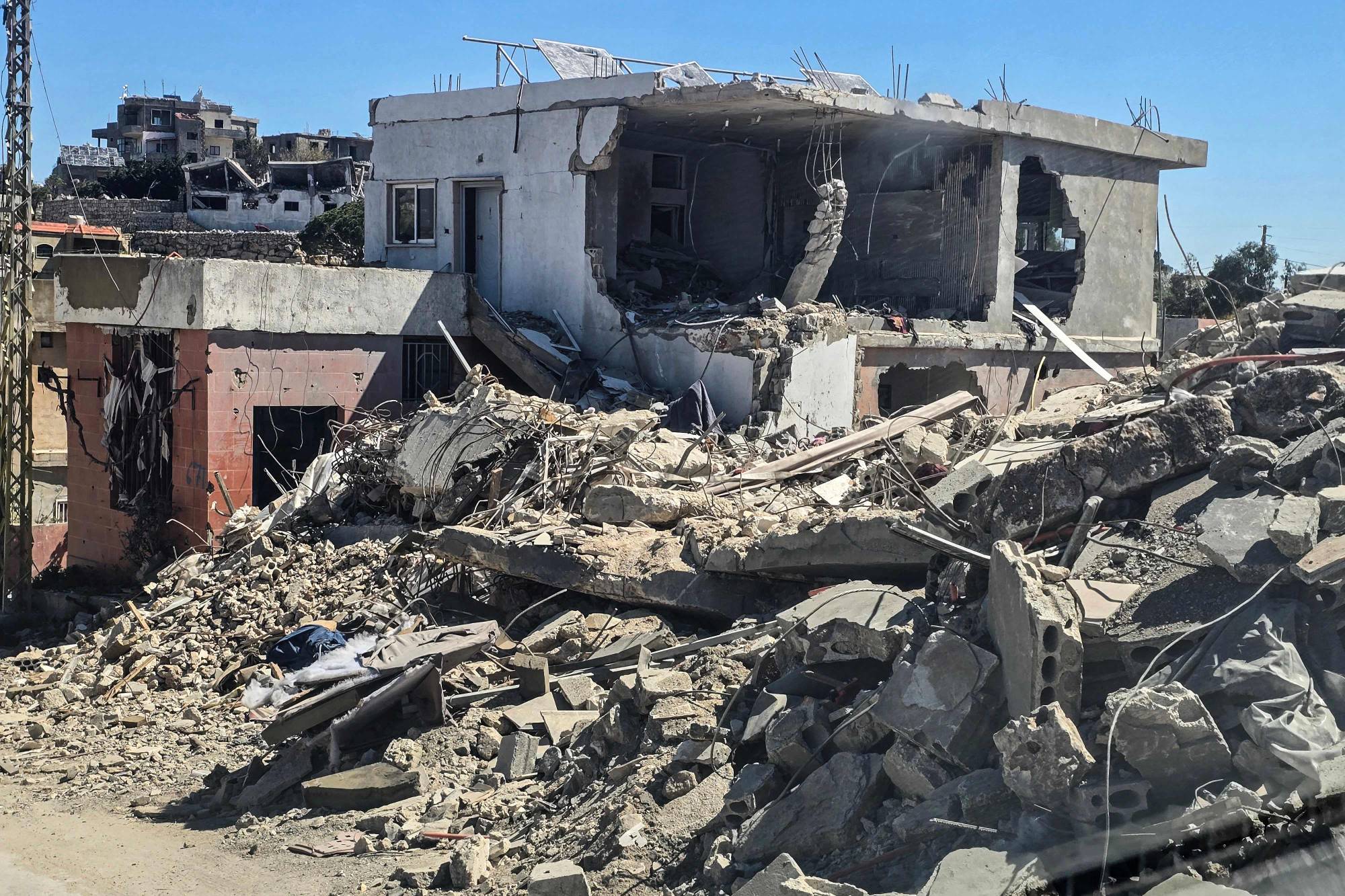
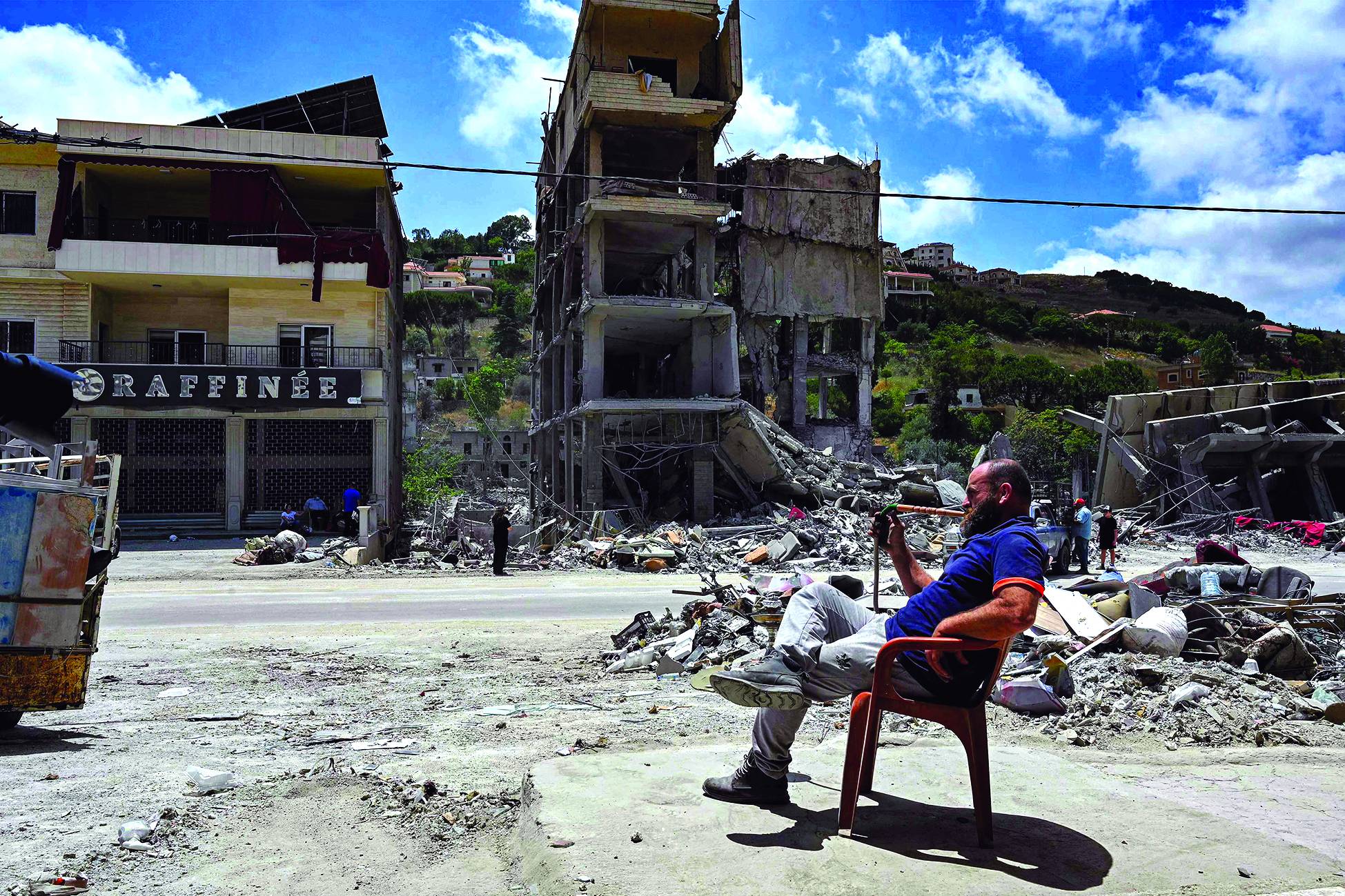
Israel Army Issues Evacuation Warning for Lebanon Village ahead of Strikes

 Smoke rises after Israeli strikes following Israeli military's evacuation orders, in Chehour, southern Lebanon November 19, 2025. REUTERS/Ali Hankir
Smoke rises after Israeli strikes following Israeli military's evacuation orders, in Chehour, southern Lebanon November 19, 2025. REUTERS/Ali Hankir
TT

Israel Army Issues Evacuation Warning for Lebanon Village ahead of Strikes

 Smoke rises after Israeli strikes following Israeli military's evacuation orders, in Chehour, southern Lebanon November 19, 2025. REUTERS/Ali Hankir
Smoke rises after Israeli strikes following Israeli military's evacuation orders, in Chehour, southern Lebanon November 19, 2025. REUTERS/Ali Hankir

The Israeli army issued an evacuation warning on Sunday for the village of Kafr Hatta in southern Lebanon ahead of air strikes on Hezbollah targets in the area, AFP reported.

"The Israeli (army) will soon, and once again, strike terrorist Hezbollah military infrastructure in the village, in order to address the prohibited attempts it is making to rebuild its activities there," Arabic-language spokesman Colonel Avichay Adraee wrote on X, posting a map of the expected target.

The Lebanese army said Thursday that it had completed disarming Hezbollah south of the Litani river, the first phase of a nationwide plan. Kafr Hatta is located north of the river.


Sudan PM Announces Govt Return to Khartoum from Wartime Capital

File Photo: Some shops reopen despite extensive damage (Asharq Al-Awsat)
TT

Sudan PM Announces Govt Return to Khartoum from Wartime Capital

File Photo: Some shops reopen despite extensive damage (Asharq Al-Awsat)

Sudan's Prime Minister Kamil Idris announced on Sunday the government's return to Khartoum, after nearly three years of operating from wartime capital of Port Sudan, AFP reported.

"Today, we return, and the Government of Hope returns to the national capital," Idris told reporters in Khartoum, ravaged by the war between the army and the Rapid Support Forces.

"We promise you better services, better healthcare and the reconstruction of hospitals, the development of educational services... and to improve electricity, water and sanitation services," he said.


Iran Protest Death Toll Rises as Alarm Grows over Crackdown 'Massacre'

Smoke rises as protesters gather amid evolving anti-government unrest at Vakilabad highway in Mashhad, Razavi Khorasan province, Iran, released on January 10, 2026, in this screen grab obtained from a social media video. SOCIAL MEDIA/via REUTERS
TT

Iran Protest Death Toll Rises as Alarm Grows over Crackdown 'Massacre'

Smoke rises as protesters gather amid evolving anti-government unrest at Vakilabad highway in Mashhad, Razavi Khorasan province, Iran, released on January 10, 2026, in this screen grab obtained from a social media video. SOCIAL MEDIA/via REUTERS

At least 192 protesters have been killed in Iran's biggest movement against the Islamic republic in more than three years, a rights group said Sunday, as warnings grew that authorities were committing a "massacre" to quell the demonstrations.

The protests, initially sparked by anger over the rising cost of living, have now become a movement against the theocratic system in place in Iran since the 1979 revolution and have already lasted two weeks.

The mass rallies are one of the biggest challenges to the rule of supreme leader Ali Khamenei, 86, coming in the wake of Israel's 12-day war against the Islamic republic in June, which was backed by the United States.

Protests have swelled in recent days despite an internet blackout that has lasted more than 60 hours, according to monitor Netblocks, with activists warning the shutdown was limiting the flow of information and the actual toll risks being far higher.

"Since the start of the protests, Iran Human Rights has confirmed the killing of at least 192 protesters," the Norway-based non-governmental organization said, warning that the deaths "may be even more extensive than we currently imagine".

Videos of large demonstrations in the capital Tehran and other cities over the past three nights have filtered out despite the internet cut that has rendered impossible normal communication with the outside world via messaging apps or even phone lines.

Video verified by AFP showed large crowds taking to the streets in new protests on Saturday night in several Iranian cities including Tehran and Mashhad in the east, where images showed vehicles set on fire.

Several circulating videos, which have not been verified by AFP, allegedly showed relatives in a Tehran morgue identifying bodies of protesters killed in the crackdown.

The US-based Center for Human Rights in Iran (CHRI) said it had received "eyewitness accounts and credible reports indicating that hundreds of protesters have been killed across Iran during the current internet shutdown".

"A massacre is unfolding in Iran. The world must act now to prevent further loss of life," it said.

It said hospitals were "overwhelmed", blood supplies were running low and that many protesters had been shot in the eyes in a deliberate tactic.


- 'Significant arrests' -


The US-based Human Rights Activists News Agency said it had confirmed the deaths of 116 people in connection with the protests, including 37 members of the security forces or other officials.

State TV on Sunday broadcast images of funeral processions for security forces killed in recent days, as authorities condemned "riots" and "vandalism".

National police chief Ahmad-Reza Radan said authorities made "significant" arrests of protest figures on Saturday night, without giving details on the number or identities of those arrested, according to state TV.

Iran's security chief Ali Larijani drew a line between protests over economic hardship, which he called "completely understandable", and "riots", accusing them of actions "very similar to the methods of terrorist groups", Tasnim news agency reported.

Iran's President Masoud Pezeshkian said "rioters" must not distrupt Iranian society.

"The people (of Iran) should not allow rioters to disrupt society. The people should believe that we (the government) want to establish justice," he told state broadcaster IRIB.

In Tehran, an AFP journalist described a city in a state of near paralysis.

The price of meat has nearly doubled since the start of the protests, and while some shops are open, many others are not.

Those that do open must close at around 4:00 or 5:00 pm, when security forces deploy in force.


- 'Legitimate targets' -


Reza Pahlavi, the exiled son of the ousted shah, who has played a prominent role in calling for the protests, called for new actions later Sunday.

"Do not abandon the streets. My heart is with you. I know that I will soon be by your side," he said.

US President Donald Trump has spoken out in support of the protests and threatened military action against Iranian authorities "if they start killing people".

Israel's Foreign Minister Gideon Saar urged the European Union on Sunday to designate Iran's Revolutionary Guards Corps as a "terrorist organization" over the suspected violence against protesters.

He also said Israel supports the Iranian people's "struggle for freedom".

Iran's parliament speaker Mohammad Bagher Ghalibaf said Iran would hit back if the US launched military action.

"In the event of a military attack by the United States, both the occupied territory and centers of the US military and shipping will be our legitimate targets," he said in comments broadcast by state TV.

He was apparently also referring to Israel, which the Islamic republic does not recognize and considers occupied Palestinian territory.