


Turkish Strike Kills 3 Yazidi Militiamen in Northern Iraq, Local Officials Say

A Turkish military truck patrols next to a Turkish flag hoisted at the border with Syria on Aug. 14, 2019, in Akcakale, in Sanliurfa, southeastern Türkiye. (AFP via Getty Images)
TT

Turkish Strike Kills 3 Yazidi Militiamen in Northern Iraq, Local Officials Say

A Turkish military truck patrols next to a Turkish flag hoisted at the border with Syria on Aug. 14, 2019, in Akcakale, in Sanliurfa, southeastern Türkiye. (AFP via Getty Images)

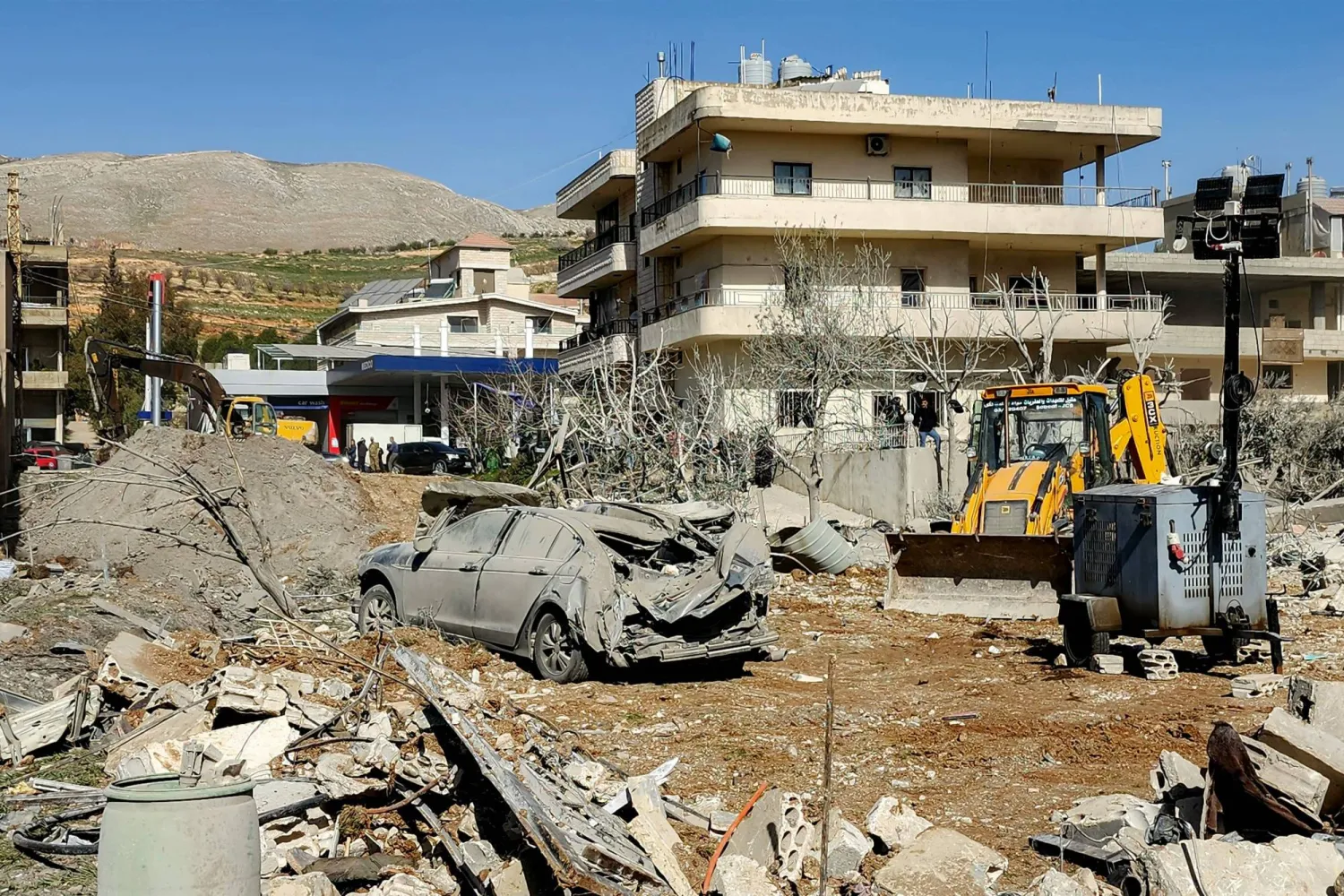
A Turkish strike in northern Iraq killed three Yazidi militiamen and wounded three others on Tuesday, regional officials said. A local official affiliated with the militia disputed that account, saying none of its fighters were killed, but that a shepherd died in the Turkish drone strike.

According to the semi-autonomous Iraqi Kurdish regional government, the early morning strike in the district of Sinjar targeted a headquarters of the Shingal Resistance Units, or YBS, in the village of Chumu-Khalaf.

An official with the central government in Baghdad, who spoke on condition of anonymity, said the strike had targeted a meeting of high-ranking YBS officials.

Naif Shemo, head of the Sinjar Yazidi council, told The Associated Press that the area targeted by Turkish drones was an abandoned Yazidi village where most of the houses had been previously destroyed by the militant ISIS group.

The YBS, made up of mostly minority Yazidis, was instrumental in driving ISIS from Sinjar after the collapse of the Iraqi army and withdrawal of the semi-autonomous Kurdish forces in 2014. The ISIS extremists’ takeover of Sinjar killed and captured about 10,000 Yazidis in attacks that the United Nations classified as genocide.

Tuesday's attack was the second such strike in just over a week. A similar strike earlier this month killed three Yazidi militiamen, the Iraqi-Kurdish authorities said. Also at that time, a local official affiliated with the YBS denied any deaths.

The Turkish Defense Ministry did not respond to requests for comment.  

On Tuesday, Turkish Defense Minister Hulusi Akar said the Turkish military had “neutralized 126 terrorists” in the past month, according to Türkiye's state-owned broadcaster TRT.

The group has been a frequent target of Turkish attacks in recent years for its ties to the insurgent Kurdistan Worker’s Party, or PKK, a separatist movement banned in Türkiye.

Continued violence in Sinjar has stunted beleaguered efforts to return Yazidis to their ancestral homeland in the province of Nineveh in northern Iraq after years of displacement.

Clashes last year between the Yazidi militia and the Iraqi army in heavily populated areas of war-scarred Sinjar caused as many as 10,000 people to flee the area, many of whom had returned from previous displacement, according to Kurdish officials.



US Makes Plans to Reopen Embassy in Syria after 14 Years

This handout picture released by the Syrian Presidency's Telegram page, shows Syria's President Ahmed al-Sharaa (R) shaking hands with US envoy Tom Barrack at the Presidential Palace in Damascus on January 18, 2026. (Photo by Handout / Syrian Presidency Telegram Page / AFP)
TT

US Makes Plans to Reopen Embassy in Syria after 14 Years

This handout picture released by the Syrian Presidency's Telegram page, shows Syria's President Ahmed al-Sharaa (R) shaking hands with US envoy Tom Barrack at the Presidential Palace in Damascus on January 18, 2026. (Photo by Handout / Syrian Presidency Telegram Page / AFP)

The Trump administration has informed Congress that it intends to proceed with planning for a potential re-opening of the US Embassy in Damascus, Syria, which was shuttered in 2012 during the country’s civil war.

A notice to congressional committees earlier this month, which was obtained by The Associated Press, informed lawmakers of the State Department’s “intent to implement a phased approach to potentially resume embassy operations in Syria.”

The Feb. 10 notification said that spending on the plans would begin in 15 days, or next week, although there was no timeline offered for when they would be complete or when US personnel might return to Damascus on a full-time basis.

The administration has been considering re-opening the embassy since last year, shortly after longtime strongman Bashar Assad was ousted in December 2024, and it has been a priority for President Donald Trump's ambassador to Türkiye and special envoy for Syria, Tom Barrack.

Barrack has pushed for a deep rapprochement with Syria and its new leadership under Ahmad al-Sharaa and has successfully advocated for the lifting of US sanctions and a reintegration of Syria into the regional and international communities. Last May, Barrack visited Damascus and raised the US flag at the embassy compound, although the embassy was not yet re-opened.

The same day the congressional notification was sent, Barrack lauded Syria's decision to participate in the coalition that is combating the ISIS militant group, even as the US military has withdrawn from a small, but important, base in the southeast and there remain significant issues between the government and the Kurdish minority.

“Regional solutions, shared responsibility. Syria’s participation in the D-ISIS Coalition meeting in Riyadh marks a new chapter in collective security,” Barrack said.

The embassy re-opening plans are classified and the State Department declined to comment on details beyond confirming that the congressional notification was sent.

However, the department has taken a similar “phased” approach in its plans to re-open the US Embassy in Caracas, Venezuela, following the US military operation that ousted former President Nicolás Maduro in January, with the deployment of temporary staffers who would live in and work out of interim facilities.


Israeli Druze Leader Says Syrian Community 'Besieged' Months after Clashes

Sheikh Mowafaq Tarif, the spiritual leader of the Druze community in Israel, during an interview in the village of Julis on February 15, 2026 (AFP)
TT

Israeli Druze Leader Says Syrian Community 'Besieged' Months after Clashes

Sheikh Mowafaq Tarif, the spiritual leader of the Druze community in Israel, during an interview in the village of Julis on February 15, 2026 (AFP)

Seven months after deadly clashes between Syria's Druze minority and government-backed forces, the spiritual leader of Druze in neighboring Israel said members of the community across the border remained in peril.

"They're still besieged -- completely encircled. They aren't allowed to bring in any humanitarian aid, including the aid we're trying to deliver," Sheikh Mowafaq Tarif told AFP in an interview this week.

The cleric spoke in Julis, a quiet Druze village in northern Israel, where the community has set up an "emergency room" to coordinate aid efforts for Druze in Syria.

Israeli and Druze flags hang on the walls of the room, alongside posters in Hebrew and Arabic calling for an end to the killing of Syrian Druze.

The Druze spread across parts of Syria, Israel, Lebanon and the Israeli-occupied Golan Heights.

Clashes erupted last July in southern Syria between Druze fighters and Bedouin tribes.

The Syrian authorities said their forces intervened to stop the clashes.

Israel bombed Syria during the violence, saying it was acting to defend the minority group.

The UN Office for the Coordination of Humanitarian Affairs estimated that some 187,000 people were displaced by the violence.

- 'Why not let them return?' -

"There are still more than 120,000 people displaced from their homes," Sheikh Tarif said.

"Thirty-eight villages have been captured, and residents aren't allowed to return. There are more than 300 captives, including children and women."

AFP was unable to verify those claims.

Although a ceasefire was reached in July, access to Sweida remains difficult.

Residents accuse the government of imposing a blockade on the province, which Damascus denies. Several aid convoys have entered since then.

"Why not let them return to their villages? We're in the depths of winter and that is a mountainous area. It's very cold," Tarif said.

With Syria's government and Kurdish-led forces agreeing last month to integrate Kurdish fighters and civil institutions into state structures, Sweida is the last major area outside Damascus's control.

Tarif said the community did not need government security forces in the region.

"The Druze have forces capable of defending themselves and maintaining order," he said.

Nevertheless, Israel and Syria, which have no official diplomatic ties, have held several rounds of direct talks in recent months.

Following negotiations in January, and under US pressure, both sides agreed to set up an intelligence-sharing mechanism as they moved toward a security agreement.

One issue under discussion is the possibility of Syrian Druze working in Israel.

Sheikh Tarif confirmed "that is something we have heard" and added that he wished any Syrian could come to work as a daily laborer "because the (economic) situation in Syria is very difficult".

He also called for Druze across the Middle East to be able to visit their religious sites in neighboring countries, "just as our Christian and Muslim brothers visit their holy places" in states with which they may not have diplomatic relations.

"The Druze also deserve to access and pray at our holy sites in Syria and Lebanon and for them to come visit our holy places" in Israel, he said.


US Calls on Sudan Parties to Immediately Accept Humanitarian Truce

US Senior Advisor for Arab and African Affairs Massad Boulos addresses the UN Security Council. (US Senior Advisor for Arab and African Affairs Massad Boulos on X)
TT

US Calls on Sudan Parties to Immediately Accept Humanitarian Truce

US Senior Advisor for Arab and African Affairs Massad Boulos addresses the UN Security Council. (US Senior Advisor for Arab and African Affairs Massad Boulos on X)

US Senior Advisor for Arab and African Affairs Massad Boulos revealed on Friday that the US had called on all Sudanese parties to immediately and unconditionally accept a humanitarian truce backed by the United Nations mechanism.

Boulos took part in several diplomatic meetings on the sidelines of a UN Security Council meeting on Sudan.

The US calls on all parties to accept the truce so that lifesaving aid can be delivered to civilians and so that dialogue can kick off, he stressed.

He said the US continues to work with its partners towards achieving fair and permanent peace in Sudan. He underlined their commitment to holding those responsible for genocide in Sudan to account.

They also back the trusted transition towards civilian rule, he added.

The Sudanese people deserve to live in security, dignity and without fear, Boulos said.

He joined other world leaders at the Security Council “to address the dire crisis in Sudan and the urgent need to end more than 1,000 days of needless conflict,” he wrote on X.

“The Council delivered a clear and unified message: there is no military solution to this conflict, and the time to end the fighting is now,” he added.

“The suffering of the Sudanese people has been devastating — with widespread displacement, food insecurity, and atrocities that demand both global attention and action. I reaffirmed that achieving durable peace in Sudan remains a priority for US President Donald Trump and underscored America’s commitment to helping bring this war to an end,” Boulos stated.

He outlined “five key pillars for international alignment: an immediate humanitarian truce; sustained humanitarian access and protection of civilians; a permanent ceasefire and credible security arrangements; an inclusive, civilian-led political transition; and a long-term path toward recovery and reconstruction that restores stability and opportunity for the Sudanese people.”

“The United States will continue working closely with allies and partners, including our Quad partners, the UK, and others to press for a humanitarian truce and expand life-saving assistance,” he vowed.

“We will also continue holding accountable those responsible for atrocities, even as we push urgently for the peace the Sudanese people deserve,” he declared.