


World Bank Expects Economic Growth Amid Lasting Peace in Yemen

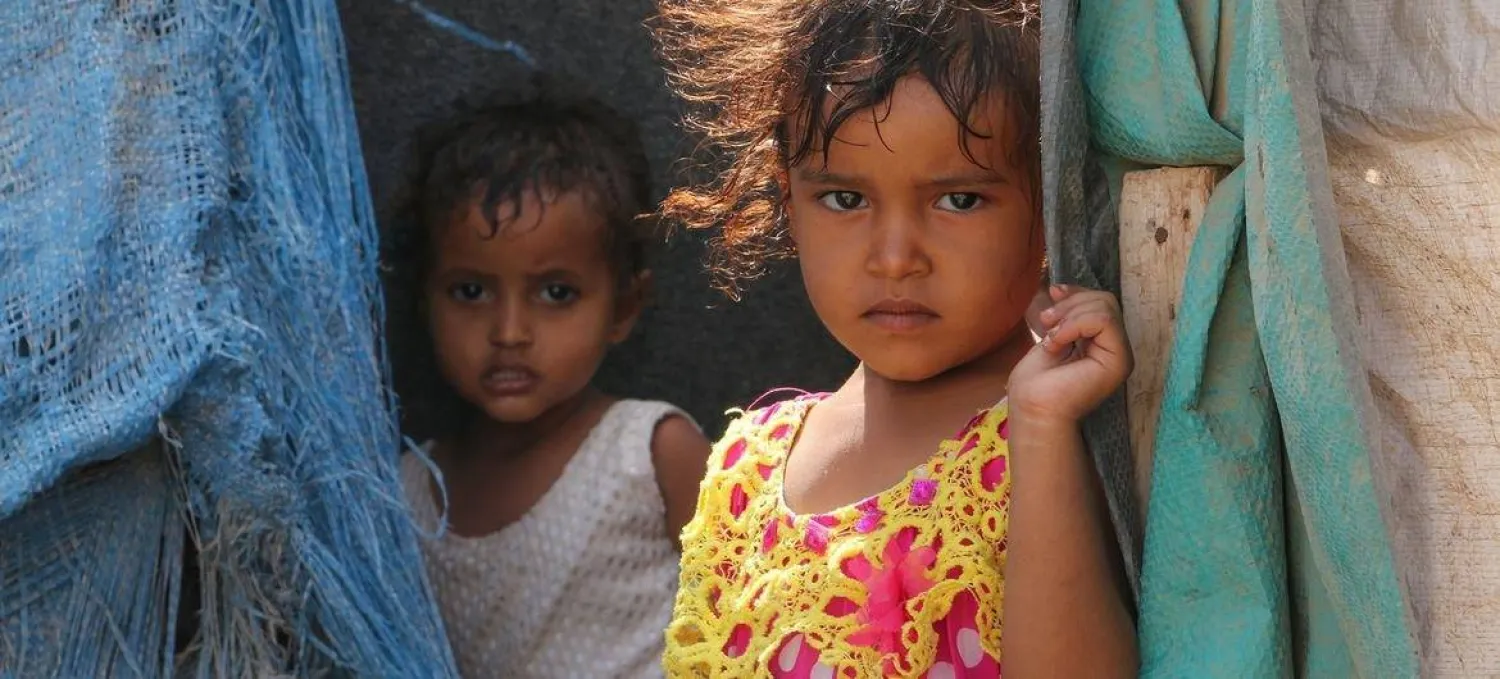
Displaced Yemeni children in Aden (UN)
TT

World Bank Expects Economic Growth Amid Lasting Peace in Yemen

Displaced Yemeni children in Aden (UN)

The World Bank expected that a permanent peace agreement in Yemen would achieve significant economic revenues and contribute to economic growth, despite its previous assessment of Yemen's need for billions of dollars for economic recovery.

In its report entitled "The Future: Glimmers of Hope in Dark Times," the World Bank said if Yemen attains a lasting peace agreement, there could be a significant "peace dividend" for the population, a six percentage point increase in GDP growth trajectory which would result in a cumulative increase in real GDP by one third over the next five years compared to the status quo.

It noted that this would be accompanied by significant growth in public and private investment, employment, productivity, and poverty reduction.

It must be accompanied by external donor assistance at scale for accelerated reconstruction and recovery.

The conflict led to a contraction in real GDP by approximately 50 percent between 2011 and 2022. It has damaged or destroyed over one-third of the country's homes, schools, hospitals, and water and sanitation facilities.

Productivity plummeted as violence intensified, while productivity indicators were weak before the conflict.

The war severely disrupted oil production, which is crucial to the economy, undermined the government's ability to support the population by providing essential services, and affected public employment.

Many civil servants have been paid only partially or not regularly.

- A glimmer of hope

The report's in-depth political economy analysis and innovative data analytics suggest that Yemen's de facto decentralization could help support its future growth, corroborating a perspective consistently voiced in informant interviews.

The report cited other reasons for guarded optimism about potential recoveries, such as the strong entrepreneurial spirit of the Yemeni people, including, notably, women, the proximity of the high-income adjacent markets of the Gulf states, and Yemen's economic potential for agricultural, agro-processing and light manufacturing production, and exports.

World Bank Country Manager for Yemen, Tania Meyer, said that peace must enable inclusive growth, foster sustainable development, and improve the living conditions for the people of Yemen.

Meyer cautioned: “We must remain clear-eyed about the realities on the ground – the hardships faced by the Yemeni people are immense," noting that "high inflation, poor job quality, and an unstable public sector persist as major hurdles."

Earlier, the World Bank announced that nearly 17 million Yemenis suffer from food insecurity because of the wars and deteriorating economic conditions.

It warned that hunger, food insecurity, and malnutrition were among the most pressing challenges, exacerbated by the protracted conflict in the country.

Last March, the World Bank approved a second additional financing of $207 million for the Emergency Social Protection Enhancement and COVID-19 Response Project (ESPECRP) in Yemen to address chronic food insecurity and malnutrition.

However, a month later, it announced that Yemen needed between $11.82 and $16 billion in 2023 and between $11 and $22 billion next year to rebuild the local economy.

Ahead of the World Bank report, the UN Office for the Coordination of Humanitarian Affairs (OCHA) allocated $18 million for the urgent needs of people affected by humanitarian crises in Yemen to prevent famine and address rising levels of food insecurity driven by conflict, economic shocks, and climate change.

The Office warned in its statement that the humanitarian crisis would affect 17.3 million people in 2023.

By the end of May 2023, the Yemen Humanitarian Response Plan (HRP) was only 23.5 percent funded. In February, the Response Plan seeking $4.34 billion to assist 17.9 million people was only 10.4 percent funded, forcing aid organizations to reduce or close critical assistance programs.

- Development is the solution

The report indicated that relief agencies in Yemen are facing a significant funding shortfall amidst increasing humanitarian needs, which endangers the life-saving response of millions of people.

The UN repeatedly cautioned about a lack of funding compared to the proposed plans to finance the humanitarian crisis in Yemen, considered the worst in modern times.

A previous donor conference fell far short of the needed humanitarian aid, as world leaders pledged less than $1.2 billion in February for the humanitarian response that requires more than $4.3 billion.

The advisor to the Yemeni Minister of Local Administration and Coordinator of the Relief Committee, Jamal Balfaqih, wondered if the international organization could conduct accurate statistics on the numbers of needy families and those threatened with starvation.

Balfagih told Asharq Al-Awsat that he doubts the UN can reach all regions.

He added that relief work and aid provision are based on predictions of the numbers of those targeted without actual statistics and surveys.

The official presented his point of view to provide practical solutions to save Yemeni families from famine by defining targeted areas and supporting families with an integrated program that links food with production.

He noted that food in exchange for production in agriculture, livestock trade, or other medium-sized income-generating projects are viable solutions.



Türkiye Calls Israel’s Recognition of Somaliland ‘Illegitimate’

This handout photograph taken and released by the Turkish presidential press service on December 30, 2025, shows Türkiye’s President Recep Tayyip Erdogan (R) and Somalia's President Hassan Sheikh Mohamud (L) shaking hands before their meeting in Istanbul. (Photo by Handout / Turkish Presidential Press Service / AFP)
TT

Türkiye Calls Israel’s Recognition of Somaliland ‘Illegitimate’

This handout photograph taken and released by the Turkish presidential press service on December 30, 2025, shows Türkiye’s President Recep Tayyip Erdogan (R) and Somalia's President Hassan Sheikh Mohamud (L) shaking hands before their meeting in Istanbul. (Photo by Handout / Turkish Presidential Press Service / AFP)

Türkiye’s president on Tuesday called Israel's recognition of Somaliland "illegitimate and unacceptable" as he hosted a visit by his Somali counterpart.

"Preserving the unity and integrity of Somalia in all circumstances holds special importance in our view. Israel's decision to recognize Somaliland is illegitimate and unacceptable," Turkish leader Recep Tayyip Erdogan said in a press conference alongside Somali President Hassan Sheikh Mohamud.

Israel sparked criticism last Friday when it said it was officially recognizing Somaliland -- a breakaway territory in Somalia's north.

The declaration was a first for the territory, which in 1991 had unilaterally declared secession from Somalia.

Israel's move has drawn widespread criticism from the African Union, Egypt and the European Union, which insist on war-torn Somalia's sovereignty.

Türkiye has frequently clashed with Israel over a range of issues, especially over the conflict in Gaza and Israeli obstruction of aid to the Palestinian territory.

Mohamud said Israeli Prime Minister Benjamin Netanyahu's "aggressive position, which also includes Somalia, is unacceptable".

He called Netanyahu's Somaliland declaration "a violation of international law" and "the start of insecurity and instability, especially for Somalia and the African region".


10 Countries Warn of ‘Catastrophic’ Gaza Situation

 Palestinians stand next to a tent set up on the rubble of buildings destroyed during Israeli air and ground operations in the Sheikh Radwan neighborhood, in Gaza City, Tuesday, Dec. 30, 2025. (AP)
Palestinians stand next to a tent set up on the rubble of buildings destroyed during Israeli air and ground operations in the Sheikh Radwan neighborhood, in Gaza City, Tuesday, Dec. 30, 2025. (AP)
TT

10 Countries Warn of ‘Catastrophic’ Gaza Situation

 Palestinians stand next to a tent set up on the rubble of buildings destroyed during Israeli air and ground operations in the Sheikh Radwan neighborhood, in Gaza City, Tuesday, Dec. 30, 2025. (AP)
Palestinians stand next to a tent set up on the rubble of buildings destroyed during Israeli air and ground operations in the Sheikh Radwan neighborhood, in Gaza City, Tuesday, Dec. 30, 2025. (AP)

The foreign ministers of 10 nations on Tuesday expressed "serious concerns" about a "renewed deterioration of the humanitarian situation" in Gaza, saying the situation was "catastrophic". 

"As winter draws in, civilians in Gaza are facing appalling conditions with heavy rainfall and temperatures dropping," the ministers of Britain, Canada, Denmark, Finland, France, Iceland, Japan, Norway, Sweden and Switzerland said in a joint statement released by the UK's Foreign Office. 

"1.3 million people still require urgent shelter support. More than half of health facilities are only partially functional and face shortages of essential medical equipment and supplies. The total collapse of sanitation infrastructure has left 740,000 people vulnerable to toxic flooding," the statement added. 

The ministers said they welcomed the progress that had been made to end the bloodshed in Gaza and secure the release of Israeli hostages. 

"However, we will not lose focus on the plight of civilians in Gaza," they said, calling on the government of Israel to take a string of "urgent and essential" steps. 

These included ensuring that international NGOs could operate in Gaza in a "sustained and predictable" way. 

"As 31 December approaches, many established international NGO partners are at risk of being de-registered because of the government of Israel's restrictive new requirements," the statement said. 

It also called for the UN and its partners to be able to continue their work in Gaza and for the lifting of "unreasonable restricts on imports considered to have a dual use". 

This included medical and shelter equipment. 

The foreign ministers also called for the opening of crossings to boost the flows of humanitarian aid into Gaza. 

While welcoming the partial opening of the Allenby crossing, they said other corridors for moving goods remained closed or severely restricted for humanitarian aid, including Rafah. 

"Bureaucratic customs processes and extensive screenings are causing delays, while commercial cargo is being allowed in more freely," the statement said. 

"The target of 4,200 trucks per week, including an allocation of 250 UN trucks per day, should be a floor not a ceiling. These targets should be lifted so we can be sure the vital supplies are getting in at the vast scale needed," it added. 


UN Condemns Israel's Moves against Agency for Palestinian Refugees

UNRWA center targeted by Israeli shelling in northern Gaza (DPA)
TT

UN Condemns Israel's Moves against Agency for Palestinian Refugees

UNRWA center targeted by Israeli shelling in northern Gaza (DPA)

The United Nations warned Tuesday that recent actions by Israel against the UN agency for Palestinian refugees risked depriving millions of people of basic services such as education and healthcare.

Israel's parliament passed new legislation on Monday formally stripping the United Nations Relief and Works Agency (UNRWA) of diplomatic immunity, and barring Israeli companies from providing water or electricity to the agency's institutions, AFP reported.

According to UNRWA, the legislation also grants the Israeli government the authority to expropriate the agency's properties in East Jerusalem, including its headquarters and main vocational training center.

UNRWA chief Philippe Lazzarini condemned the legislation as "outrageous", decrying it on social media as "part of an ongoing, systematic campaign to discredit UNRWA and thereby obstruct the core role that the agency plays providing human-development assistance and services to Palestine refugees".

Filippo Grandi, the outgoing head of the UN refugee agency, UNHCR, and a former UNRWA chief, also criticised the move as "very unfortunate".

In an interview with AFP, he highlighted that UNRWA, unlike other UN agencies, provides basic public services such as education and healthcare to the millions of registered Palestinian refugees it serves across Gaza and the West Bank, as well as in Lebanon, Jordan and Syria.

"If you deprive those people of those services... then you had better find a substitute," he said, warning: "I think it would be very difficult."

"At the moment, there is a great risk that millions of people will be deprived of basic services if UNRWA is further deprived of space to work, and resources to work."

Israel has been ratcheting up pressure on UNRWA over the past two years.

It has accused the agency of providing cover for Hamas militants, claiming that some UNRWA employees took part in the militant group's October 7, 2023 assault on Israel, which sparked the war in Gaza.

A series of UN-linked internal and external investigations found some "neutrality-related issues" at UNRWA, but stressed Israel had not provided conclusive evidence for its headline allegation.

Grandi criticised the torrent of accusations that have swirled around the agency.

"UNRWA is a very indispensable organization in the Middle East," he said.

"Contrary to much of the frankly baseless rhetoric that we have heard in the past couple of years, UNRWA is a force for peace and stability," he added.

"In a region in which you need every bit of stability and efforts towards peace, it would be really irresponsible to let such an important organization decline further."