


Iraq: Parliament Likely to Adopt Budget Law after Secret Deal to Settle Kurdish Demands

A meeting between Iraq Parliament speaker Mohammad al-Halbousi and Head of the State of Law Coalition Nuri al-Maliki last month (Iraqi Parliament)
TT

Iraq: Parliament Likely to Adopt Budget Law after Secret Deal to Settle Kurdish Demands

A meeting between Iraq Parliament speaker Mohammad al-Halbousi and Head of the State of Law Coalition Nuri al-Maliki last month (Iraqi Parliament)

Iraqi political sources said that a “secret political agreement” was likely to speed up the adoption of the Iraqi budget next week.

According to the sources, Head of the State of Law Coalition Nuri al-Maliki highlighted technical and political issues in his address to the Coordination Framework regarding the budget, which have stalled the legislation process and sparked a dispute with the Kurdistan Democratic Party (KDP).

Parliament’s Finance Committee had made surprise amendments on the draft budget late last month. Those included three items pertaining to the share of the Kurdistan region from oil and the export mechanism from its territory.

Parliament was preparing to hold a session to vote on the budget, last Saturday, according to its speaker, Mohammad al-Halbousi. But the new amendments renewed negotiations on the draft law.

The sources said that the former prime minister objected to the mechanisms for disbursing funds to the Kurdistan region, and expressed reservations over items, which he said could shake the power equation within the State Administration coalition, which includes, in addition to the coordination framework, Sunni and Kurdish forces.

In this context, the sources stressed that the controversy over the share of the Kurdistan region and the oil export mechanism has turned the agreement between the governments of Baghdad and Erbil into an understanding with explicit guarantees between the KDP and Al-Maliki.

The Kurds’ demands to restore the old version of the budget will be settled by a secret political agreement, with minor amendments that do not anger the leaders of the Coordination Framework, according to the sources.

A leader in the State Administration coalition expects that the vote on the country's general budget will be decided this week, as political actors are now convinced that the secret settlement is the only solution that the Framework can offer to its partners in the government.

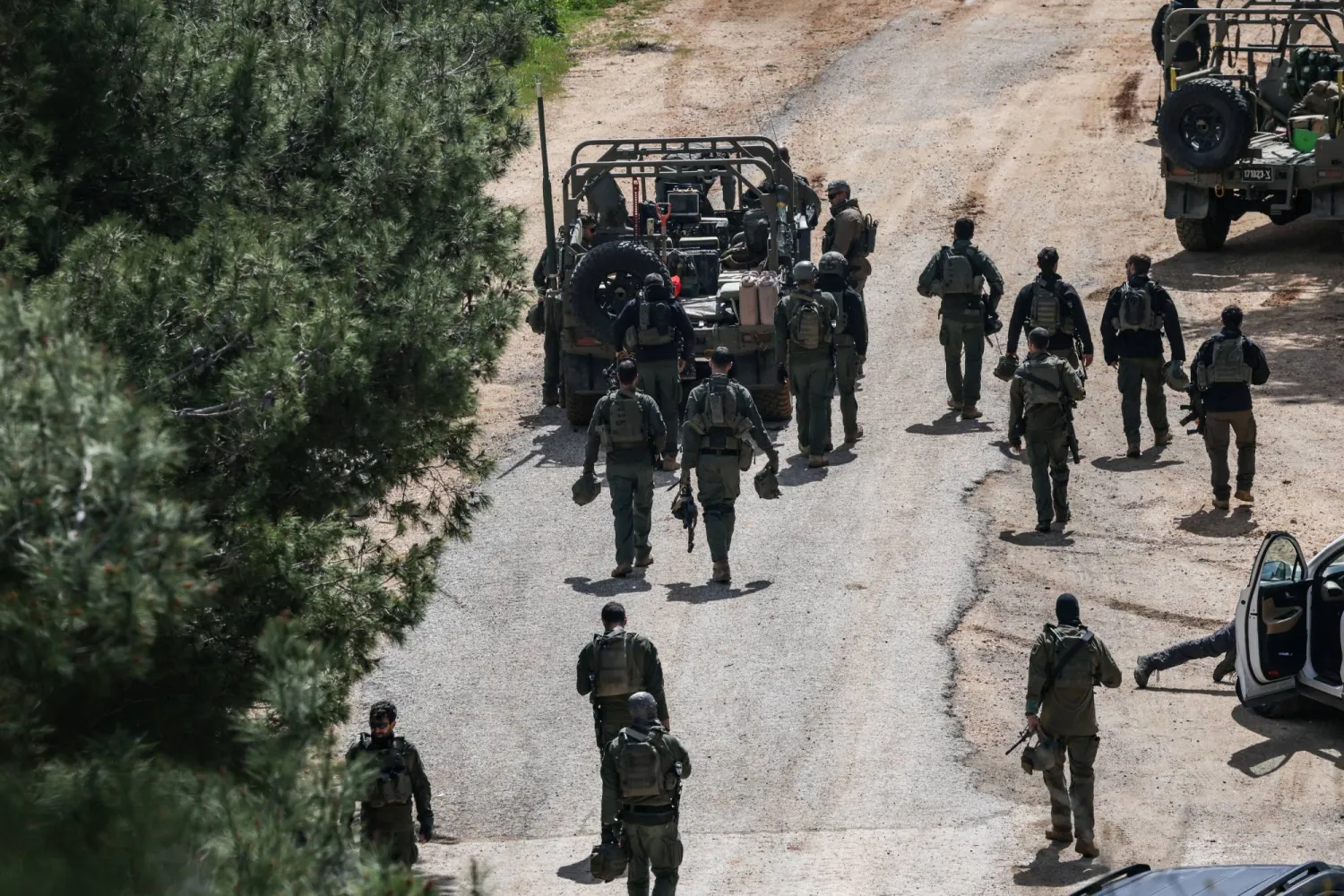


Israel Army Says Begun 'Limited Targeted Ground Operations' against Hezbollah in South Lebanon

An Israeli artillery unit fires, amid escalation between Hezbollah and Israel, and amid the US-Israeli conflict with Iran, on the Israeli side of the Israel-Lebanon border, March 15, 2026. REUTERS/Shir Torem
TT

Israel Army Says Begun 'Limited Targeted Ground Operations' against Hezbollah in South Lebanon

An Israeli artillery unit fires, amid escalation between Hezbollah and Israel, and amid the US-Israeli conflict with Iran, on the Israeli side of the Israel-Lebanon border, March 15, 2026. REUTERS/Shir Torem

The Israeli military said on Monday it had begun what it described as "limited ground operations" against Hezbollah in southern Lebanon.

The military said in a statement that in recent days, Israeli army “troops from the 91st division have begun limited and targeted ground operations against key Hezbollah strongholds in southern Lebanon, aimed at enhancing the forward defense area”.

"This activity is part of broader defensive efforts to establish and strengthen a forward defensive posture, which includes the dismantling of terrorist infrastructure and the elimination of terrorists operating in the area, in order to remove threats and create an additional layer of security for residents of northern Israel," it said.

"Prior to the troops' entry into the area,” the Israeli army “conducted strikes using both artillery and the Israeli Air Force against numerous terrorist targets in order to mitigate threats in the operational environment."

Lebanon was dragged into the Middle East war on March 2 when Iran-backed Hezbollah attacked Israel in response to the killing of Iranian supreme leader Ali Khamenei in US-Israeli strikes, with Israel launching air raids on the neighboring country and troop incursions into border areas.


UN Force in Lebanon Says Peacekeepers Fired Upon ‘Likely by Non-State Armed Groups’

United Nations peacekeepers with the UN Interim Force in Lebanon (UNIFIL) drive past a destroyed healthcare center building in the aftermath of an Israeli strike in the southern Lebanese town of Burj Qalawiya on March 14, 2026. (AFP)
TT

UN Force in Lebanon Says Peacekeepers Fired Upon ‘Likely by Non-State Armed Groups’

United Nations peacekeepers with the UN Interim Force in Lebanon (UNIFIL) drive past a destroyed healthcare center building in the aftermath of an Israeli strike in the southern Lebanese town of Burj Qalawiya on March 14, 2026. (AFP)

The United Nations Interim Force in Lebanon said its peacekeepers were fired upon three times on Sunday, "likely by non-state armed groups" in the country's south.

The incident came two days after a different UN position was hit by fire that official Lebanese media blamed on Israel, with UNIFIL saying it was investigating.

"Today, UNIFIL peacekeepers were fired upon, likely by non-state armed groups, on three separate occasions while conducting patrols around their bases" in south Lebanon, the force said in a statement.

In one of the locations, the fire struck "as close as five meters from the peacekeepers", it added.

"Two patrols returned fire in self-defense and after brief exchanges, the patrols resumed their planned activities. No peacekeeper was injured," the statement said.

"We strongly remind all actors of their obligations under international law to ensure the safety and security of UN personnel at all times."

Lebanon was drawn into the broader Middle East war on March 2, when the Tehran-backed group Hezbollah attacked Israel in retaliation for the killing of Iranian supreme leader Ali Khamenei in US-Israeli strikes.

Israel has since launched waves of air strikes on its northern neighbor and deployed troop into border areas, while Hezbollah has launched rockets and missiles towards Israeli territory and troops.

Lebanese state media said that Israeli fire hit a UNIFIL base in southern Lebanon on Friday.

UNIFIL spokesperson Kandice Ardiel said the position was hit "likely by heavy machine gun fire", without identifying the source, and said an investigation had been launched into the incident, which left one peacekeeper lightly wounded.

Earlier this month, three peacekeepers serving with a Ghanaian contingent were wounded in south Lebanon, with Lebanese President Joseph Aoun accusing Israel of being responsible and UNIFIL saying it would investigate.

On Saturday, during a visit to Beirut, UN chief Antonio Guterres said attacks against peacekeepers and their positions were "completely unacceptable and... may constitute war crimes".

UNIFIL has acted as a buffer between Israel and Lebanon since 1978. Its mission concludes at the end of this year.


WHO Releases $2 Million in Emergency Funds to Lebanon, Iraq and Syria

 A child poses for a photo, at a school hosting displaced people, following an escalation between Hezbollah and Israel, amid the US-Israeli conflict with Iran, in Lebaa, Lebanon, March 15, 2026. (Reuters)
A child poses for a photo, at a school hosting displaced people, following an escalation between Hezbollah and Israel, amid the US-Israeli conflict with Iran, in Lebaa, Lebanon, March 15, 2026. (Reuters)
TT

WHO Releases $2 Million in Emergency Funds to Lebanon, Iraq and Syria

 A child poses for a photo, at a school hosting displaced people, following an escalation between Hezbollah and Israel, amid the US-Israeli conflict with Iran, in Lebaa, Lebanon, March 15, 2026. (Reuters)
A child poses for a photo, at a school hosting displaced people, following an escalation between Hezbollah and Israel, amid the US-Israeli conflict with Iran, in Lebaa, Lebanon, March 15, 2026. (Reuters)

The World ‌Health Organization said on Sunday it had released $2 million from its Contingency Fund for Emergencies (CFE) to support the health response in Lebanon, Iraq and Syria amidst the ongoing crisis in the Middle East.

The conflict has triggered a large-scale population movement, the WHO ‌said last week, ‌estimating that more ‌than 100,000 ⁠people in Iran ⁠have relocated, and up to 700,000 people in Lebanon have been internally displaced.

$1 million has been allocated to Lebanon to strengthen the WHO's emergency coordination ⁠through the Public Health Emergency Operations ‌Center, scale ‌up trauma care, reinforce disease surveillance, ‌and procure and distribute essential ‌medicines and medical supplies, the agency said in a statement.

Iraq and Syria have each been allocated $500,000 to support emergency ‌coordination and mass-casualty management, procure and distribute essential medicines ⁠and ⁠supplies, provide health services for displaced populations, and strengthen disease surveillance and community outreach, it added.

"At a time when health services are already facing significant challenges, support is essential to sustain frontline health workers and maintain critical care services," Hanan Balkhy, WHO Regional Director for the Eastern Mediterranean said.