


Iraq’s Summer: From ‘Father of the Poor’ to ‘Unbearable Hell’

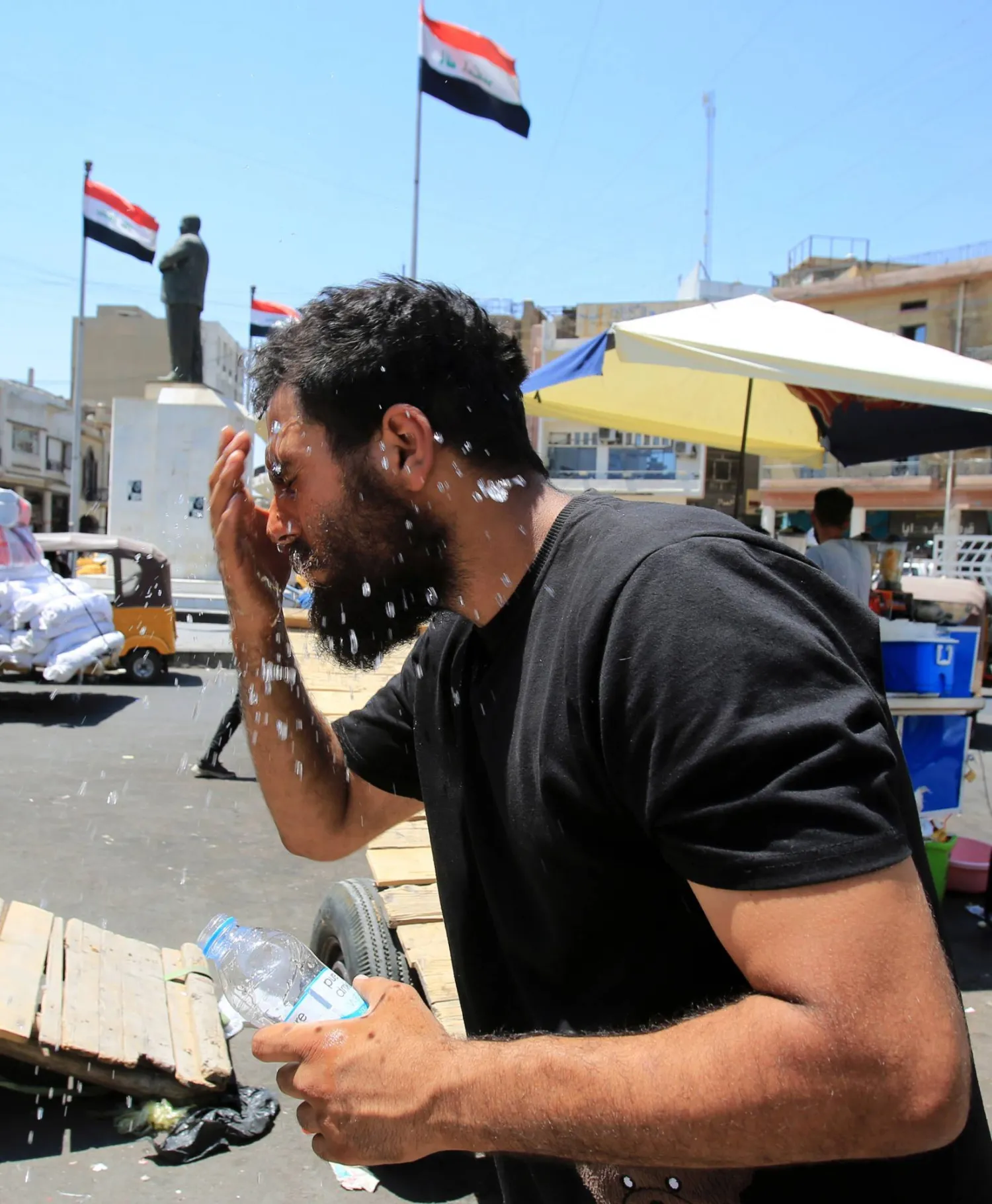
Iraq experiences scorching temperatures reaching nearly 50°C (AP)
TT

Iraq’s Summer: From ‘Father of the Poor’ to ‘Unbearable Hell’

Iraq experiences scorching temperatures reaching nearly 50°C (AP)

Many Iraqis, especially from the older generations, hold on to the saying that “summer is the father of the poor.”

This belief stems from the fact that people, particularly those in the impoverished classes, could fulfill their nutritional needs during this season through the abundance of vegetables and fruits before modern agricultural methods, greenhouses, and genetically modified organisms revolutionized crop production, making such produce available even in the harshness of winter.

In bygone decades, most individuals used to make do with simple and rudimentary cooling devices, in contrast to the expensive air conditioning units commonly used today, which poorer families could not afford.

Nowadays, almost everything has changed. The impoverished and others endure long days of unbearable heat that starts around the beginning of June.

In recent years, this scorching weather has extended into early October before the temperatures, which often surpass 50°C on many days during these months, finally start to recede.

Consequently, governmental authorities have been compelled to announce additional official holidays due to the difficulty of venturing out in such extreme temperatures.

While governments and nations can contribute to alleviating the suffering of their citizens from high temperatures through various means, including meeting the population’s electricity needs and increasing the cultivation of trees and green areas, the issue of summer in Iraq, with its severity and harshness, appears to be complex and multi-faceted, defying simple solutions.

The problem stems from a severe decline in green areas, coupled with the major and persistent electricity issue that worsens during the summer, resulting in reduced energy supply to homes and other facilities, sometimes dropping to less than 8 hours per day.

This situation is exacerbated by Iran’s decision to cut off gas supplies that power a significant number of the country’s power stations.

Despite the flow of Iranian gas following the latest allowance granted by the US to Iraq to settle its dues to Tehran, the total energy production (around 24,000 megawatts) falls short of meeting the country’s growing electricity demands, making summer an oppressive season for the population.



Israel Hits Lebanon after Hezbollah Fire

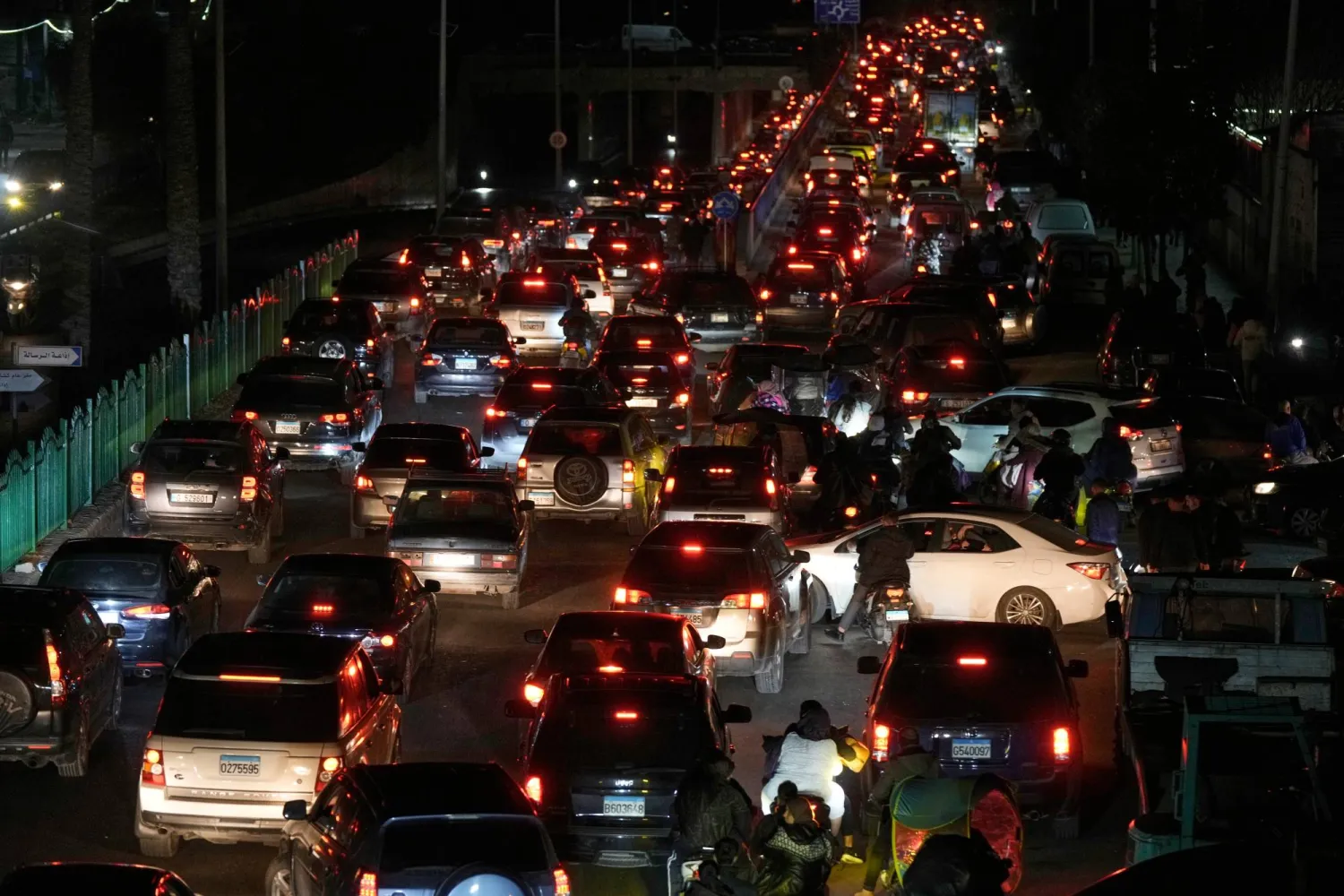
Cars sit in traffic as residents flee Israeli airstrikes in Dahiyeh, a southern suburb of Beirut, Lebanon, early Monday, March 2, 2026. (AP Photo/Bilal Hussein)
TT

Israel Hits Lebanon after Hezbollah Fire

Cars sit in traffic as residents flee Israeli airstrikes in Dahiyeh, a southern suburb of Beirut, Lebanon, early Monday, March 2, 2026. (AP Photo/Bilal Hussein)

Israel carried out airstrikes in Lebanon on Monday after Hezbollah launched missiles and drones towards Israel to avenge the killing of Iran's Supreme Leader Ali Khamenei.

More than a dozen explosions rocked Beirut, in the most intensive strikes on the southern suburbs since a war between Israel and Hezbollah in 2024.

People fled on foot and by car, clogging the roads, after the series of strikes began around 2:40 a.m. (0040 GMT).

The Israeli military said it had begun striking Hezbollah targets across Lebanon, including ⁠senior Hezbollah members ⁠in Beirut’s southern suburbs.

"Hezbollah opened a campaign against Israel overnight, and is fully responsible for any escalation," Israeli Chief of the General Staff, Eyal Zamir, said in a statement.

The Israeli military issued a warning ordering residents of dozens of villages in southern and eastern Lebanon to evacuate.

"Hezbollah's actions force the IDF (army) to act against it... For your safety, evacuate your homes immediately and move at least 1,000 meters (0.6 miles) away from your village to open areas," army spokeswoman Ella Waweya said in a statement on X.

The Israeli military said several projectiles that crossed from Lebanon fell in open areas and one was intercepted by the Israeli airforce.

"No ⁠injuries or damages were reported," it said.

Hezbollah said it had targeted an Israeli military missile defense facility south of the city of Haifa in revenge for "the pure blood" of Khamenei and in response to what it described as repeated Israeli attacks.

It was the first time the group has carried out such an attack since the 2024 war.

"The resistance leadership has always emphasized that the continuation of Israeli attacks and the assassination of our leaders, youth, and people gives us the right to defend ourselves and respond at the appropriate time and place," Hezbollah said in a statement.

Since a US-backed ceasefire between Israel and Lebanon in 2024, Israel has carried out regular strikes against what it has identified as Hezbollah targets in Lebanon, accusing the group of seeking to rearm.

It was Israel's first attack on the southern suburbs since it killed the group's top military official, ⁠Ali Tabtabai, in November.

Israel also ⁠carried out airstrikes in southern Lebanon and the Bekaa Valley in eastern Lebanon, Lebanese security sources said.

Lebanese Prime Minister Nawaf Salam said the firing of projectiles from south Lebanon was irresponsible, calling it a suspicious act that jeopardized Lebanon's security.

Without naming Hezbollah, Salam vowed to "stop the perpetrators and protect the Lebanese people.”

Salam will convene an emergency meeting on Monday "to discuss the developments... and to take the necessary measures,” his office said in a statement.

Lebanon's presidency said on Saturday it had been told by the US ambassador that Israel would not escalate against Lebanon as long as there are no hostile acts from the Lebanese side.


Lebanon, France Postpone Conference to Support Lebanese Army

01 March 2026, Lebanon, Qliyaa: Smoke trails left by interceptor missiles launched from Israeli air defense systems to counter Iranian missiles is seen over the Israeli settlement of Metula as seen from the Lebanese southern border village Qliyaa.(dpa)
TT

Lebanon, France Postpone Conference to Support Lebanese Army

01 March 2026, Lebanon, Qliyaa: Smoke trails left by interceptor missiles launched from Israeli air defense systems to counter Iranian missiles is seen over the Israeli settlement of Metula as seen from the Lebanese southern border village Qliyaa.(dpa)

Lebanon and France postponed on Sunday an upcoming conference to support the Lebanese army and security forces, a joint statement by both countries' presidencies said, citing unfavorable conditions in the region.

The statement said Lebanese President Joseph Aoun and his French counterpart Emmanuel Macron "decided to postpone until April the conference... which was to be held on March 5 in Paris" after discussing "the latest developments affecting the security of the entire region".

"The conditions were not met to hold the meeting on the scheduled date."

The decision comes after the United States and Israel began strikes against Iran on Saturday, sparking swift retaliation from Tehran.

Lebanon, which is still reeling from a 2024 war between Israel and the Iran-backed Hezbollah, fears the group may intervene in the conflict.

The conference is meant to support the military, whose mission is to disarm Hezbollah after Beirut committed to doing so last year.

Aoun and Macron stressed that "the gravity of the regional situation reinforces the need to preserve the stability of Lebanon, to support its legitimate institutions and to guarantee the full restoration of its sovereignty".


Lebanon's Hezbollah Vows to 'Confront Aggression' of US, Israel

29 July 2024, Iran, Tehran: Then Hezbollah deputy leader Sheikh Naim Qassem is pictured during a meeting in Tehran. (Iranian Presidency/dpa)
TT

Lebanon's Hezbollah Vows to 'Confront Aggression' of US, Israel

29 July 2024, Iran, Tehran: Then Hezbollah deputy leader Sheikh Naim Qassem is pictured during a meeting in Tehran. (Iranian Presidency/dpa)

Lebanese militant group Hezbollah vowed Sunday to confront the United States and Israel over their strikes on the group's key backer Iran.

"We will undertake our duty of confronting the aggression," Hezbollah chief Naim Qassem said in a statement, adding that his movement would not leave "the field of honor and resistance".

The Lebanese group has so far not taken action since the US and Israel began striking Iran on Saturday.

It is nonetheless organizing a gathering on Sunday afternoon in its stronghold in Beirut's southern suburb in a show of support for its ally Iran.

Hezbollah also called on mosques to recite the Koran and organize mourning ceremonies to mark the death of Iran's supreme leader Ali Khamenei, both in the Beirut suburb and other areas of Lebanon where the group wields influence.

Khamenei was killed on Saturday as the United States and Israel jointly launched a barrage of ongoing strikes on the Iranian republic.

Having emerged heavily battered from its own war with Israel, Hezbollah did not intervene on behalf of Iran during its 12-day war with Israel last June.

Qassem, who succeeded Hassan Nasrallah as the group's chief following his death in an Israeli strike in September 2024, on Sunday said the assassination of Khamenei and other Iranian officials was "the height of crime".

Lebanon's Prime Minister Nawaf Salam on Saturday rejected the prospect of being dragged into war following the US-Israeli strikes on Iran.